eSports
20 years of HyperX: How Has the Gaming Industry Changed?

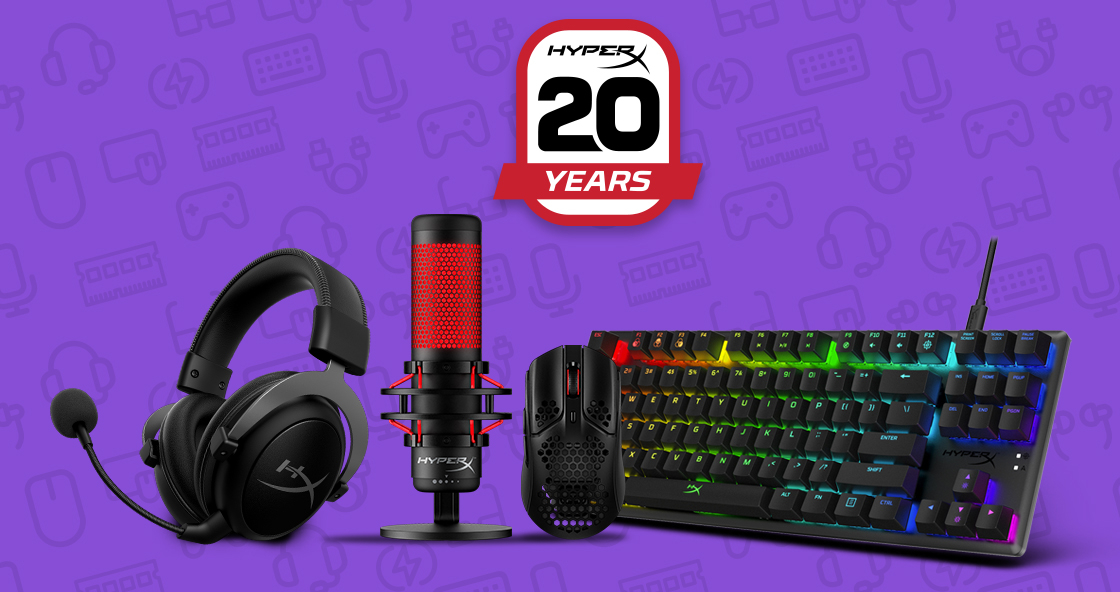
Paul Leaman, Vice President EMEA, HyperX provides some insight into just how much the gaming industry has changed in the last 20 years.
Over the last 20 years the gaming industry has changed and grown exponentially. By 2026 it is expected to be worth $321 billion. Besides this financial growth, we’ve seen huge strides in the visual aspect: video games from 8-bit graphics to almost lifelike characters and the introduction of VR. But it isn’t just the look and feel of games that has changed over the last 20 years. The technology we use to game, how we consume our games and who games, have all evolved in ways that few could have predicted in 2002. Here’s a look at some of the most fascinating developments in the gaming industry and what has led us to where we are today.
Evolving tech – the rise of wireless
Rewind 20 years and the PS2 and Xbox were still relatively new consoles to the market, having both launched within two years prior. For those who are not familiar with them, what they will probably find most surprising by today’s standards is that they came with wired controllers. Fast-forward a mere six years and we truly saw the beginning of a new wave of gaming technology – the rise of wireless. Xbox, PS3 and Nintendo Wii, all came with wireless controllers as standard and it would be the start of the modernisation of how people gamed. Wireless became the norm rather than the exception for controllers, headsets, mice, keyboards and chargers. As the technology continues to expand, more users are upgrading to wireless gaming hardware. The wireless gaming headset market alone, is expected to grow by 996.69 million USD during 2020-2024.
For a long time, wired connections led the way for enthusiast gamers. Having a more reliable, stable, physical connection would give you the least amount of lag or delay. However, significant research and development in the modern space has meant this is no longer the case. The ability to deliver to near-zero latency connectivity in wireless hardware has paved the way for its rise. Another important determining factor for gamers switching to wireless is due to aesthetics. Gamers can now create clean and tidy gaming set-ups that seamlessly fit into the design of their room.
Wireless headsets are becoming one of the most popular wireless gaming technologies. They offer freedom to gamers, with no cables to get tangled up in and the ability to move and talk freely. In today’s market most wireless gaming headsets have been designed so gamers spend less time charging and more time gaming in complete comfort with ergonomic designs. The biggest question mark has always been battery life and battery life degradation. However, this year we saw the first headset with up to 300 hours battery life and now gamers even have the option of in-ear buds, perfect for gaming on the move. Which begs the question, what will be possible next?
Gaming as a force for good
As the passion for gaming continues to grow around the world, it is no longer just seen as a hobby, but a thriving industry that is showing no signs of slowing down. Over 439 million people around the world tuned into esports events in 2020. This is a huge development from 2002 when competitive gaming was still very much in its infancy. While there is still a long way to go for gaming to be more inclusive, there have been huge strides taken in the last 20 years.
There is a long way to go to make gaming more inclusive for women and as it should be. However, over the last 20 years the industry has massively changed. There are now dedicated communities for women gamers, such as Sugar Gamers, r/GirlGamers and Women in Games International. These offer female gamers a greater voice and a safer space to make friends, share their experiences and learn more about the industry. We also have more female gaming ambassadors, that are improving women’s representation in games and communities specifically for female gamers. These play their part in facilitating a healthier environment and help pave the way to a brighter future for gaming.
Gaming is a great force for connecting different people, regardless of race, sexuality and gender. Gamers and the gaming industry is misunderstood by many, with typical stereotypes wildly outdated. In reality, the gaming community is over two billion globally and is very diverse and inclusive. For example, in the US alone, 65% of women between the ages of 10 and 65 play mobile games and research shows that 86% of UK parents game. If we think about COVID-19 and the global shutdown that ensued, gaming provided people with a way to stay connected virtually, even when they were physically isolated. Our research also showed that 50% of parents in the UK felt gaming improved their child’s mental health during lockdown and 52% felt their child coped better in lockdown because of gaming. And while we all need to stay on top of our screen time, gaming has a lot of benefits and can teach people values and skills. Multiplayer games foster teamwork and communication, gaming communities nurture belonging, and games can provide people a useful escape in troubling times. It is different for each person but ultimately, gaming has the power to be a force for good.
Online gaming
In the last 20 years, the world of online gaming has burst onto the scene and grown at a mindboggling rate. Since 2007, the online gaming market has continued to grow at a significant rate, with an annual growth rate of over 20% over the last five years. In the last 20 years, esports has gone from a vibrant niche to a central form of entertainment across the globe. Over 439 million people around the world tuned into esports events in 2020 and research from Nielsen found that 82% of global consumers played video games or watched video game content during the peak of the COVID-19 pandemic.
This meteoric rise has led to the opening of arenas such as the HyperX Esports Arena in Las Vegas. A multilevel arena designed to host every form of competitive gaming, the size and standard of the arena is one which historically was associated with traditional professional sports teams. Gaming is no longer just something people do in their spare time at home, it has place in a 30,000 square foot arena. We’re also seeing this level of growth as for many young gamers their idols and the “celebrities” they follow are no longer always in the traditional media. They’re streamers and content creators, such as Tim The Tatman or Valkyrae.
What to expect next
The transformation of the gaming industry over the last 20 years is nothing short of remarkable. The developments of huge online communities, the rise of gamers from all over the globe, from all different backgrounds, the constantly evolving technologies, and the growth of esports and online communities. Like any budding industry, it won’t stop here and it is going to be a fascinating journey. With the rise of new technologies, developing VR even further, completely immersive gaming; the possibilities are endless. And no doubt the next 20 years will be even more exciting.
Powered by WPeMatico

Adam Conway General Manager of the Esports Business Unit at BETER
BETER strengthens eFootball roster with rollout of 4,200 monthly events ahead of 2026 World Cup

With the excitement of FIFA World Cup 2026 approaching, BETER is assisting operators in providing continuous bettor interaction by adding over 4,200 new eFootball matches monthly.
BETER, the recognized supplier of quick-betting content, live streams, real-time data, and odds for esports and sports, has broadened its eFootball portfolio with new specialized tournaments designed for World Cup 2026, providing over 4,200 events each month to assist operators in maintaining bettor engagement throughout the day, even during lulls and match intervals.
The launch features matches inspired by the World Cup, plus extra events scheduled around peak betting times to maintain bettor interest before, during, and after the World Cup 2026 games, providing operators with expanded eFootball coverage leading up to one of the largest events in the international sports schedule.
The updated material improves BETER’s extensive, dynamic eFootball framework, providing operators with more options to maintain bettor engagement around the clock.
Tournaments tailored to U.S. betting hours, delivering over 4,200 monthly matches
BETER added 140+ daily matches designed to suit U.S. bettors and maintain engagement throughout the day.
All of these matches are delivered in the 2×4 format and are scheduled daily (UTC+2) as follows:
01:00–03:00 — Premier League
03:10–05:10 — World Cup B
05:30–07:30 — Conference League
16:10–18:10 — Serie A
18:20–20:20 — World Cup B
20:40–22:40 — Europa League
22:50–00:50 — LaLiga
This new content addition is focused on supporting operator performance ahead of and during World Cup 2026 by maintaining betting activity across relevant time slots for U.S. audiences and helping fill downtime between major football fixtures.
World Cup–inspired tournaments, delivering over 3,600 monthly matches (within the 4,200+ expansion)
As part of this content boost, BETER is rolling out three dedicated World Cup–themed eFootball leagues. These form a major part of the expansion and mirror the excitement, structure, and national-team focus of the tournament, delivering 120+ matches per day and featuring teams such as the United States, the Netherlands, Norway, Mexico, Morocco, France, England, Portugal, Argentina, Spain, and more canonical world best teams.
The schedule includes the following (UTC+2):
World Cup A: 12:00–14:00 and 01:20–02:20 (2×4 format)
World Cup B: 18:20–20:20 and 03:10–05:10 (2×4 format)
Volta World Cup: 00:10–01:40 and 07:00–08:30 (2×3 format)
These World Cup–inspired eFootball matches reflect the build-up to the tournament and help operators drive bettor engagement ahead of kick-off.
With this rollout, which is already available with the majority of BETER’s partners, the supplier now delivers over 40,000 esports matches each month, further strengthening its position as one of the industry’s most in-demand providers of fast-paced content.
BETER exclusively delivers nearly 500,000 esports events annually through its exclusive ESportsBattle tournaments, which include eFootball, eBasketball, eHockey, and eTennis, offering up to 50 markets per match and an average operator margin of 7.5%+, exceeding the market standard.
Adam Conway, General Manager of the Esports Business Unit at BETER, said: “World Cup 2026 is the pinnacle of football excitement, and it presents an incredible opportunity for operators to keep fans and bettors engaged around the clock. Our expanded eFootball offering is designed to capture that energy, with content built to mirror the drama, intensity, and rivalries of the tournament.
“By combining dedicated World Cup–inspired competitions with strategically timed matches during key betting hours, we’re helping operators fill downtime, bridge match gaps, and keep bettors active before, during, and after every fixture.
“With over 40,000 fast-paced esports matches delivered every month, BETER now offers one of the largest and most dynamic content portfolios in the industry, bringing the thrill of the World Cup straight to every screen.”
The post BETER strengthens eFootball roster with rollout of 4,200 monthly events ahead of 2026 World Cup appeared first on Eastern European Gaming | Global iGaming & Tech Intelligence Hub.
eSports
Esports Nations Cup 2026 Awards Official Partner Status Across 100+ Nations to Build the Future of Nation-Based Esports
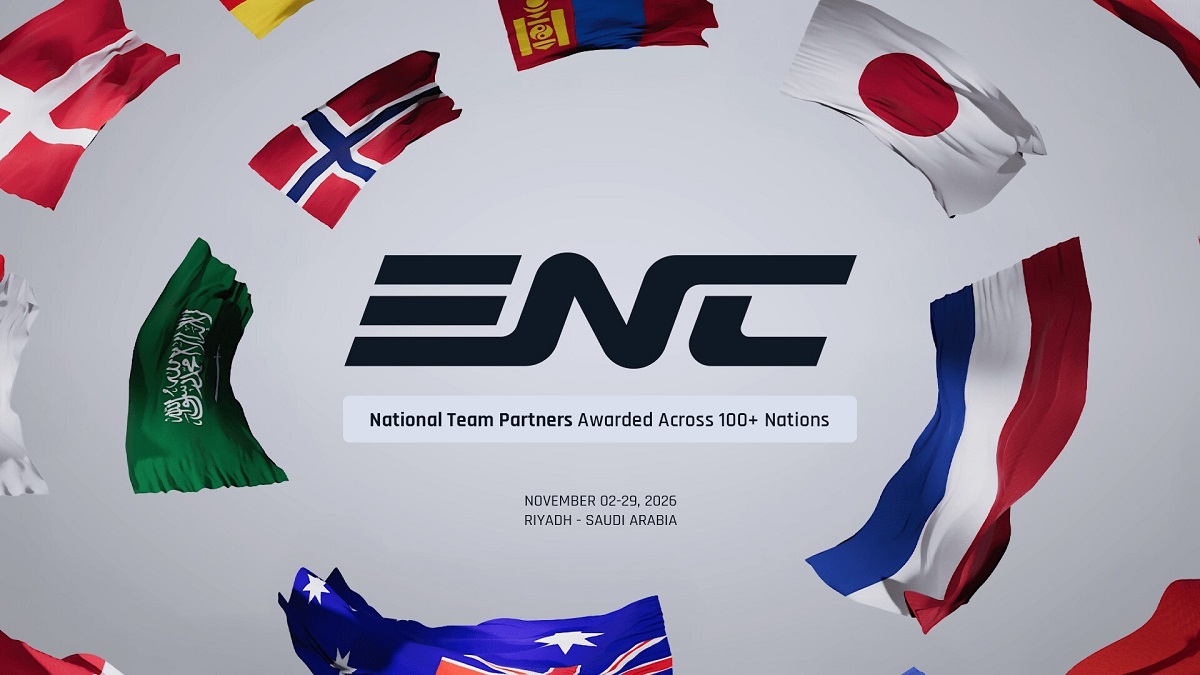
The Esports Foundation (EF) awarded National Team Partner status to organisations and individuals across more than 100 countries and territories for the Esports Nations Cup 2026 (ENC), the global nation-based esports competition set to debut in Riyadh from November 2-29, 2026.
This marks the first time esports introduces a structured global system for national teams at scale, adding a new layer to the industry’s ecosystem alongside club-based competition. Designed to complement existing frameworks rather than replace them, the ENC will work with local stakeholders closest to the sport to strengthen connections and support long-term national development.
National Team Partners will lead team formation, mobilize local communities and establish the structures needed to enable participation and the growth of esports. To ensure worldwide participation, countries and territories without a partner will be supported through regional structures provided by the EF.
The EF received more than 630 applications from 150 countries and territories, reflecting the global interest in and opportunity for nation-based esports. The partners represent legacy esports organisations that have shaped their national scenes for decades alongside emerging forces driving the next wave of competitive gaming. The list of organisations and individuals who have been awarded this status is available on the ENC website and will be updated as additional appointments are confirmed.
‘The Esports Nations Cup introduces something esports has never had before: a global system for national teams at an unprecedented scale. The response we received from across the world shows that communities are ready for this next step. Together with our partners, we are building the structures that will allow players to represent their nations and compete on the biggest stage in esports. With more than 100 nations now part of the system, the Esports Nations Cup moves from concept to reality, establishing national esports as a lasting part of the global competitive landscape,” said Ralf Reichert, CEO of the Esports Foundation.
Recognising that esports has developed differently in many nations, the ENC adopts a partnership-led approach rather than relying on a single model, marking a first in global sport and esports alike. By working with recognised local stakeholders, whether institutions, Clubs or community-led organisations, this model is designed to unlock the full creative and competitive potential of each nation.
National Team Partners will operate through a range of structures, from established national bodies such as the Korea Esports Association and the Saudi Esports Federation, to club-led coalitions in Brazil and the US, and hybrid public-private alliances in countries like Germany, Canada and the UAE.
In markets such as Malaysia, Turkey and Thailand, partners include federations working closely with grassroots communities, while in emerging regions like Indonesia and Mongolia, partners are being supported through structured development to represent their nations on a global stage.
For the first time in the history of esports, national teams will be formed from these local structures, bringing players together to compete for their nation and unlocking a new dimension of fandom built on identity and pride. From South Korea’s legendary League of Legends dominance and India’s Chess affinity, to Brazil’s Counter-Strike tradition, Japan’s fighting games heritage and Southeast Asia’s mobile games’ powerhouses, the ENC creates a new global stage for competition.
The post Esports Nations Cup 2026 Awards Official Partner Status Across 100+ Nations to Build the Future of Nation-Based Esports appeared first on Eastern European Gaming | Global iGaming & Tech Intelligence Hub.
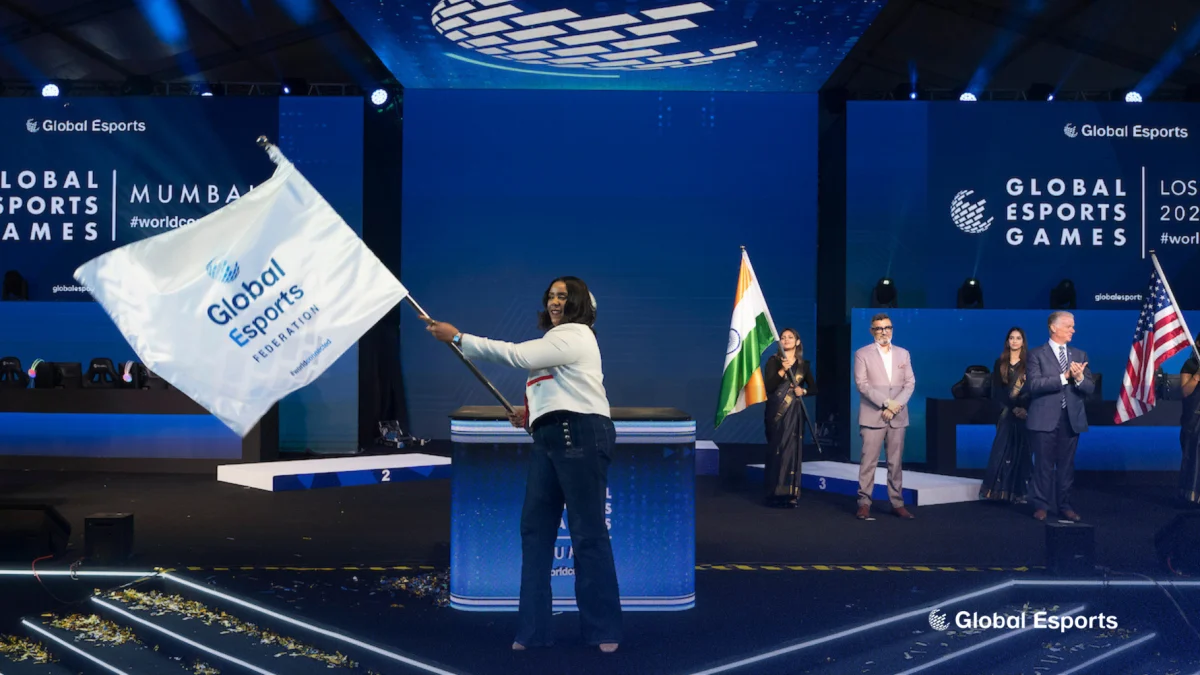
Team India and Türkiye won Gold at the Global Esports Games Mumbai, delivering electrifying performances in front of a packed arena and thousands more tuning in online worldwide. India’s Anuhith Gosala edged Kazakhstan 3–2 in a thrilling Clash Royale Grand Final, while Türkiye secured a commanding 3–1 victory over Mongolia in the Dota 2 Grand Final. With a Gold in Clash Royale and a Bronze in Dota 2, Team India was crowned Overall Champion.
India stormed into the Clash Royale Grand Final with a 2–1 win over the USA in a tense lower bracket decider, setting up a rematch with Kazakhstan. Having fallen 0–2 in the upper bracket, India turned the tables when it mattered most, as Anuhith Gosala delivered a clutch performance to seal a dramatic 3–2 victory and the Gold medal.
In Dota 2, Team India secured Bronze after falling to Mongolia in the lower bracket. Mongolia advanced to the Grand Final, where Türkiye asserted its dominance with a composed 3–1 victory to take the title.
Sharing his thoughts on the victory, Team India’s Clash Royale gold medallist, Anuhith Gosala, said: “This moment is surreal. To win the Grand Finals here in India, in front of a home crowd, makes it even more emotional. The preparation was relentless, the pressure was intense, and every match tested my limits—but that’s what makes this victory so special. Hearing the cheers, feeling that energy, and lifting this title for the country is an indescribable pride. This is for India, and for everyone who believes in us. I hope this win inspires many others to follow in our path.”
Sir Paul J. Foster, President & CEO, Global Esports Federation, said: “As the Global Esports Games Mumbai comes to a close, we celebrate not only the incredible performances of our athletes, but the spirit of unity and connection that defines our global community. Mumbai has delivered exceptional energy, passion, and hospitality, reinforcing our belief that esports transcends borders and brings the world together. We are deeply grateful to our partners in India for setting a new benchmark for excellence—and we now look ahead with excitement to Los Angeles, where this journey continues on an even greater stage.”
Shripad Ashtekar, Founder of Eflag Corp, said: “Over the past few days, we have witnessed not just world-class competition, but the coming together of talent, innovation, and community on a truly global stage. We hope to keep delivering such platforms and strong foundations for future growth by unlocking new opportunities for Indian players, creators, and the broader AVGC ecosystem. We are proud to have played a key role and look forward to building on this momentum in the years ahead.”
Organized by the Global Esports Federation in partnership with Eflag Corp, with the support of Maharashtra Tourism, the Global Esports Games Mumbai was inaugurated by the Hon’ble Chief Minister of Maharashtra, Shri Devendra Fadnavis. Over four days, Mumbai welcomed 48 elite athletes from 19 countries, emerging from a global field of 78 nations in the Regional Qualifiers.
The post Team India and Türkiye Win Gold at the Global Esports Games Mumbai appeared first on Eastern European Gaming | Global iGaming & Tech Intelligence Hub.

-

 bingo5 days ago
 -
Africa6 days ago
Virgin Bet goes live in South Africa
-
Charity Space Scotland6 days ago
Scottish Government Announces £7.9M Investment to Tackle Gambling Harms
-
BetMGM6 days ago
PA Gaming Control Board Imposes $100,000 Fine on BetMGM
-
ELA Games6 days ago
2026 SiGMA Americas Awards Features ELA Games in Two Major Categories
-
apuestas6 days ago
Brasil 2026: Bets presionan el presupuesto de los hogares y redefinen la competencia por el consumo
-
Compliance Updates6 days ago
Peter Knutsson Becomes New Director General of Swedish Gambling Authority
-
Eilers & Krejcik – Fantini Game Performance Report6 days ago
Zitro Remains Latin America’s Top-Performing Supplier in the Eilers & Krejcik – Fantini Report