Canada
History of Slot Games

Slot machines are easily one of the world’s most recognizable and iconic forms of gambling. Because of this, it is estimated that almost 1.8 million slot machines are active in casinos around the globe.
Like anything else, however, slots were not always this popular. From a humble beginning, they have grown in complexity, ingenuity, and entertainment value over the years. This has been especially true since the advent of online slots – the best of which you can find on visit slotsource.com.
To trace back the origins of these great gambling machines, we’ve outlined the history of the slot. So, read on to see how your favorite gambling medium grew to be what it is today.
The Idea of Slots
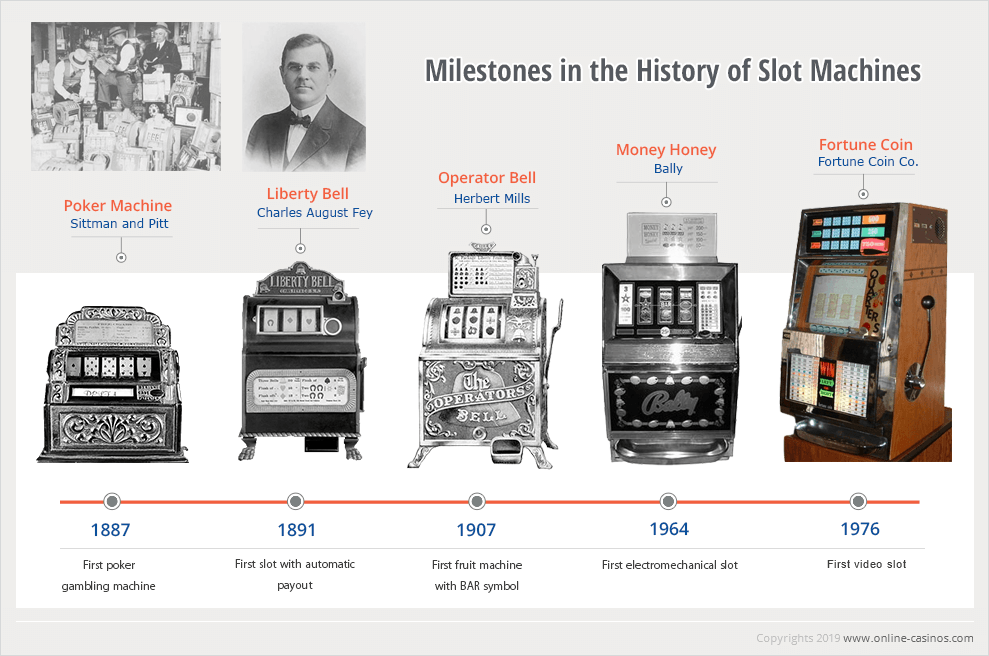
While technically it is a slot machine, the first ever slot is not considered actually to be one by most people. This is because the machine, invented in 1891 by Sittman and Pitt in New York, didn’t pay out any cash. Instead, all prizes were paid out in free drinks or cigars. This makes sense because these machines were mainly found in pubs and bars.
The machine was relatively simple and gave the main idea from which modern slot machines evolved. The slot had five drums used to play. These drums rotated on a central pin until a lever was used to activate a stopping mechanism, which stopped the drums one at a time. This lever is what is credited for the nickname one-armed bandit.
Each drum held ten cards from a standard playing deck totaling 50 cards. The only cards missing from this deck were the ten of spades and the jack of hearts. The reason for excluding these cards was to increase the house edge and give players a lower chance of winning.
The First Slot
Building on the idea of Sittman and Pitt, Charles Fey began working on his version of a slot machine. Because it offered automatic payouts and, in later versions, even featured coin checkers to detect fake coins, Charles is credited with being the father of slot machines and first released his invention in 1895.
After using bells as a symbol in the game, his machine (called the Liberty Bell) only featured three reels rather than the five of Sittman and Pitt. It also didn’t feature any cards. Instead, it used hearts, diamonds, spades, horseshoes, and the iconic liberty bell.
The reduced reels and symbols made it easier for the machine to detect a win and pay out accordingly. However, while the machine was hugely popular, Fey forgot to patent his design. Because of this, other producers quickly began cloning the machine and flooding the market.
Due to the influx of machines and the popularity of gambling, the government decided to take action. So, in 1902, gambling was officially outlawed. However, slot manufacturers found a unique way around the ban rather than curbing the problem.
Machines were designed to offer payouts of prizes like candy or other treats rather than money. These offered people the same thrill of gambling but ensured they only received something they could snack on rather than cash. During this era, a manufacturer called Herbert Mills produced the first ever machine using fruit symbols, which are still widely used today.
The Electrical Slot Revolution
By 1964, many companies were trying to develop the next big slot machine. This development was accelerated because gambling was seen as more acceptable, and the laws regarding the activity were beginning to soften. No company made as much progress, however, as Bally.
Bally is credited with inventing the first ever electromechanical slot machine. This machine, titled Money Honey, featured fully electric reels that could pay out up to 500 coins — a feat no other slot could boast. Even though the machine was electric, the trusted lever was still present, as it was thought that removing it would throw off people from what they had been used to doing.
The release of Money Honey sparked a new era in slots, and soon many other companies began producing fully electric slot machines. During the evolution of the machines, the popular lever used was abandoned in favor of a simple button.
Slots continued in much the same vein until 1976, when something new blew the industry wide open.
Video Slots
In 1976, after many years of much of the same, a company called Fortune Coin (which would later be bought by IGT) produced the world’s first video slot machine. The game used a TV screen display and a random number generator that strongly resembles today’s slot machines.
After initial testing in Vegas, the machine grew massively in popularity, and video slots became the norm worldwide. Then, in 1996, the industry was again shaken up by the introduction of the first slot that also had a bonus round.
Adding a bonus to games made slots the most popular form of gaming by far. As such, slots began taking over most space in physical casinos. At the same time, online slots started making an appearance in the library of online casinos.
Online Slots and Onward
While the first online casinos, which appeared in the late 90s, usually only offered games like roulette, slots soon began making their way into many different casino game libraries. Their popularity soon caught on like wildfire, and many developers started looking to develop the next great game in earnest.
Soon, online slots took on a life of their own and were no longer developed to emulate the games offered in physical casinos. Instead, because of the freedom to be creative, developers began producing many unique and wonderful games that accelerated the popularity of gambling online.
Since then, online slots have become an almost unbelievably big industry. The online gambling market, worth $61.5 billion in 2021, is said to be comprised of as much as 70% slots. This means that of this massive amount, slot games alone generate almost $43.05 billion.
This growth means that slots have continued to grow and are still actively being developed. Today, work is underway to adapt slots to virtual and augmented reality to try and discover the next great leap in the evolution of this gambling icon.
Powered by WPeMatico

Canada
XSOLLA STRENGTHENS COMMITMENT TO ATLANTIC CANADA’S GROWING GAME INDUSTRY WITH EXPANDED EVENT PRESENCE

Global Video Game Commerce Company To Support Industry Growth Through Panels, Workshops, And Community Engagement Across Atlantic Canada
Xsolla, a leading global video game commerce company, today announced its participation in two major gaming industry events taking place across Atlantic Canada from June 3-5, 2026, reinforcing the company’s commitment to supporting regional game development ecosystems and fostering industry collaboration.
Xsolla will participate in both Game Invest East and XP Game Connect Atlantic, joining developers, publishers, investors, and industry leaders for discussions centered on the future of game development, investment, and innovation in the local area.
At Game Invest East, held in partnership with Scaffold, Xsolla will contribute to conversations around funding, growth opportunities, and the evolving business landscape for game studios.
Featured on the panel titled “If You Can Make It Here,” Xsolla’s Manny Hachey, Senior Director of Developer Success, joins Kate Edwards, CEO and Principal Consultant of Geogrify, and Amir Satvat, Business Development Director at Tencent Games, founder of Always Supporting the Games Community (ASGC), and a 2026 GamesBeat Visionary Award honoree, to explore how new regions and new entrants can survive and thrive in disruptive times.
Hachey, a native of Atlantic Canada, was personally requested by Scaffold to represent Xsolla at the event — a homecoming that adds a personal dimension to the panel’s central thesis. Having built her career and made her mark in Germany’s games industry, she returns with a firsthand perspective on what it takes to leave, build something meaningful abroad, and come back with proof of concept.
Xsolla will continue its Atlantic Canada engagement at XP Game Connect Atlantic in Halifax on June 5. John Nguyen, Regional Vice President, Canada at Xsolla, and Ted DiNola, Developer Evangelist at Xsolla, will host a workshop titled ‘Full Picture to Fast Lane: Xsolla Ecosystem Overview & Live SDK 3 Integration’, providing practical insights and actionable strategies for developers navigating today’s rapidly evolving gaming market.
Nguyen will also host a panel titled, ‘What Does the Future of Game Development Look Like in Atlantic Canada?’ where he will be joined by industry experts, including Ryan Filsinger from Iron Fox; Shawn Woods, CEO at Alpha Dog and VP of Interactive Society of Nova Scotia; George Greer, Founder of Besszong; and Jade Yhap, President of Interactive NB. The panel will explore the region’s growing role in the global games industry and the opportunities ahead for studios, talent, and ecosystem partners.
|
.png)
“Atlantic Canada continues to emerge as an exciting hub for game development talent and innovation,” said John Nguyen, Regional Vice President, Canada, at Xsolla. “Xsolla is proud to support these events and contribute to conversations that help empower developers, build ecosystems, strengthen industry connections, and accelerate growth across the region.”
|
.jpg)
“Events like Game Invest East and XP Game Connect Atlantic are critical for building stronger connections across the games industry,” said Berkley Egenes, Chief Marketing & Growth Officer at Xsolla. “Atlantic Canada has a growing community of talented developers, creators, and industry leaders, and we’re excited to be part of conversations that help to shape the future of gaming in the region while supporting studios at every stage of growth.”
Through its participation in these events, Xsolla aims to deepen relationships within the Atlantic Canadian game development community while supporting knowledge-sharing, collaboration, and long-term ecosystem growth.
For more information about Xsolla’s participation in these events across Atlantic Canada, visit: xsolla.pro/Atlantic-Canada
The post XSOLLA STRENGTHENS COMMITMENT TO ATLANTIC CANADA’S GROWING GAME INDUSTRY WITH EXPANDED EVENT PRESENCE appeared first on Americas iGaming & Sports Betting News.
Ben Scobie-Trumper Head of Sales at mkodo
GGPoker selects GeoLocs geolocation service for regulated Ontario market


mkodo’s GeoLocs will handle in-platform location checks for GGPoker players in Ontario, removing the need for a separate verification app.
GGPoker has selected GeoLocs by mkodo as its geolocation service provider for the operator’s regulated Ontario offering.
Under the partnership, GeoLocs will provide in-platform location verification for GGPoker players across Ontario, with the aim of supporting regulatory compliance without requiring an additional app download or separate approval process.
“Our priority is to ensure players have a seamless experience on GGPoker whilst staying fully compliant with regulations. We chose GeoLocs because of their proven expertise, industry and regulatory knowledge and the fact that players don’t need to verify location through a separate app or download.” – Sarne Lightman, Managing Director of GGPoker.
“The partnership with GGPoker is very exciting. We’re proud to support a globally recognised operator in delivering a seamless, compliant player experience in Ontario. With Alberta opening in July, the partnership with GGPoker in Ontario further reinforces GeoLocs’ expansion across the Canadian gaming market.” – Ben Scobie-Trumper, Head of Sales at mkodo.
GeoLocs is a geolocation product built by mkodo for regulated markets, supporting web and mobile location checks for gaming, sports betting, poker and lottery operators, according to the company.
The post GGPoker selects GeoLocs geolocation service for regulated Ontario market appeared first on Eastern European Gaming | Global iGaming & Tech Intelligence Hub.
Business Development
Xsolla expands Atlantic Canada event push with Game Invest East and XP Game Connect
Xsolla will take part in two Atlantic Canada industry events—Game Invest East and XP Game Connect Atlantic—running June 3-5, 2026, as it increases its presence in the region’s game development ecosystem.
The company said it will join discussions with developers, publishers, investors, and other stakeholders focused on game development, investment, and innovation. At Game Invest East, held in partnership with Scaffold, Xsolla will participate in a panel titled “If You Can Make It Here.” Xsolla’s Manny Hachey, Senior Director of Developer Success, will appear alongside Kate Edwards, CEO and Principal Consultant of Geogrify, and Amir Satvat, Business Development Director at Tencent Games, founder of Always Supporting the Games Community (ASGC), and a 2026 GamesBeat Visionary Award honoree.
Xsolla’s Halifax stop comes on June 5 at XP Game Connect Atlantic. John Nguyen, Regional Vice President, Canada at Xsolla, and Ted DiNola, Developer Evangelist at Xsolla, will host a workshop titled “Full Picture to Fast Lane: Xsolla Ecosystem Overview & Live SDK 3 Integration.”
Nguyen will also host a panel, “What Does the Future of Game Development Look Like in Atlantic Canada?”, joined by Ryan Filsinger from Iron Fox; Shawn Woods, CEO at Alpha Dog and VP of Interactive Society of Nova Scotia; George Greer, Founder of Besszong; and Jade Yhap, President of Interactive NB.
“Atlantic Canada continues to emerge as an exciting hub for game development talent and innovation,” said John Nguyen, Regional Vice President, Canada, at Xsolla. “Xsolla is proud to support these events and contribute to conversations that help empower developers, build ecosystems, strengthen industry connections, and accelerate growth across the region.”
The post Xsolla expands Atlantic Canada event push with Game Invest East and XP Game Connect appeared first on Eastern European Gaming | Global iGaming & Tech Intelligence Hub.

-

 Asia4 days ago
EGT Brings High-Impact Asian-Themed Portfolio to SiGMA Asia 2026
-
Africa4 days ago
Greentube partners with World Sports Betting to expand in South Africa
-
Conference4 days ago
Danish regulator to speak at Gaming in the Nordics launch event
-
Africa4 days ago
Gaming Realms expands into three African markets via SportyBet partnership
-
BETER4 days ago
BETER expands US footprint with Illinois approval
-
affiliate marketing4 days ago
CasinoCanada partners with LolaJack Casino to expand Canadian visibility
-
Argentina4 days ago
Stake continues Latin American expansion with Argentina launch
-
Ben Wood CCO at Playson4 days ago
Playson strengthens North American footprint with Caesars Entertainment partnership