Gaming
Over 50% of Video Games Market Revenue Spurred by Mobile Gaming: Fact.MR Study


The latest intelligence report published by an ESOMAR-certified market research and consulting firm estimates that the video games market revenue will maintain a progressive growth rate between 2021 and 2031, following a CAGR of nearly 13% to reach US$ 510 Bn by the end of the said forecast period. In the short-run, by 2022, revenues are likely to reach US$ 140 Bn.
Historically, from 2016 to 2020, video games sales witnessed impressive growth, registering a CAGR of around 8% to top US$ 151 Bn by the end of the said period. Sales have especially catapulted amidst the COVID-19 pandemic, with online videogames anticipated to be the fastest-growing segment over the forecast period.
The advent of online streaming and adoption of VR in gaming are amongst the prominent factors for market growth. Furthermore, the rapid growth in internet users is propelling the global revenue gathering. In 2020, Asia dominated the market with nearly 55% revenue and is predicted to witness substantial growth in the forthcoming years.
Key Takeaways from the Market Study:
- The global video games market is anticipated to add over 3x value by 2031
- Mobile/tablet video gaming to account for 55% revenue, reaching US$ 162 Bn by 2020
- Based on hardware, handheld consoles to contribute US$ 60 Bn in revenue by 2022-end
- By type, action video games to remain in the limelight, accounting for 1/3rd of total sales
- Sales of video games in the U.S likely to expand at a CAGR of 11% through 2031
- China accounted for around US$ 30 Bn in value terms in 2020, especially for mobile gaming
- India likely to be a lucrative market, attributed to increasing smartphone adoption
“Prominent video game developers are increasingly focusing on providing highly sophisticated interface experiences by including advancements such as AI, VR and augmented reality, which will spur numerous innovations in forthcoming years,” comments a Senior Research Analyst.
Competitive Landscape
Prominent players are embracing innovative approaches such as ground-breaking marketing tactics, technological advances for cancer screening, mergers, and acquisitions.
- In June 2016, Tencent announced the acquisition of 85% ownership of Supercell, the massively profitable Finnish firm behind hit game Clash of Clans, for around $8.6 billion.
- In March 2021, Microsoft finalized its US$7.5 Bn deal to acquire ZeniMax Media, the parent company of Doom and Fallout studio Bethesda Softworks. The finalization comes just a day after Microsoft secured regulatory approval from the EU for the acquisition, and it will now bolster the company’s first-party Xbox games studios up to a total of 23.
These insights are based on a report on Video Games Market by Fact.MR.
Powered by WPeMatico



G2, one of the world’s leading entertainment and esports brands, announced the upcoming English-language launch of its original fantasy-action series, Red Aura, on WEBTOON, a leading digital comics platform. Launching on Saturday, 6th June under the platform’s WEBTOON Originals label, the series marks the next step in G2’s expansion into digital-first entertainment. Inspired by the defining moments and competitive spirit behind G2’s rise, Red Aura reimagines the organisation’s legacy through bold shonen-inspired storytelling.
After debuting in Japan on LINE MANGA in October 2025, where it reached #9 in New Series on the opening weekend, Red Aura now launches on WEBTOON’s English-language platform as an Originals series. With 20 episodes available immediately, including 15 free episodes and 5 Fast Pass chapters, Red Aura offers readers expanded access to the series from day one, ahead of weekly releases across a planned 42-episode first season.
At the centre of the series is Asa, a young girl who dreams of becoming the greatest Nomad who ever lived. Driven by the same pursuit of greatness at the heart of G2, Red Aura unfolds in a fantasy-action world shaped by rivalry, perseverance and competition, where Asa must learn to master her abilities while facing dangerous enemies and the brutal consequences of ambition.
Red Aura was brought to life through collaboration with KISAI Entertainment, the studio behind the webcomic adaptations of AVATAR: The Last Airbender and The Beginning After the End, alongside Japanese Art Director Runbel, who works on the previously #1 action fantasy series in Japan and Korea – Skill Master Levels Up. Designed specifically for WEBTOON’s vertical-scroll format, the series also experiments with platform-native creative techniques, including a chapter that visually integrates music into the reading experience.
To celebrate the launch, G2 creator and VALORANT streamer Shanks will host a live reading of Red Aura, with further details to be announced soon.
“Red Aura was created as a way to reimagine the ambition and competitive spirit that have defined G2 over the last decade. Following the response to the Japanese launch, we’re excited to now bring the series to a global audience through WEBTOON. Expanding into original entertainment has been a major focus for G2, and Red Aura is only the beginning of what we want to build,” said Sabrina Ratih, COO of G2.
“The world of Red Aura is fresh and original, which made it really enjoyable to work on. It was a lot of fun working with producer Daniel using camera work to create cool action panels that have never been seen before, and I was always inspired by his passion to try new things. I am very honored to have been a part of it. I hope you enjoy it.”
Since its inception over a decade ago, G2 has expanded beyond esports through ventures across entertainment, culture, and original content. From collaborations with Smiley and Solo Leveling, to the launch of G2’s 62 media house and expansion into Gerard Piqué’s Kings League, Red Aura represents G2’s continued investment in anime-inspired entertainment and original storytelling designed for digital-first audiences.
The post G2 Esports Announces Global English Launch of Webcomic “Red Aura” on WEBTOON appeared first on Eastern European Gaming | Global iGaming & Tech Intelligence Hub.
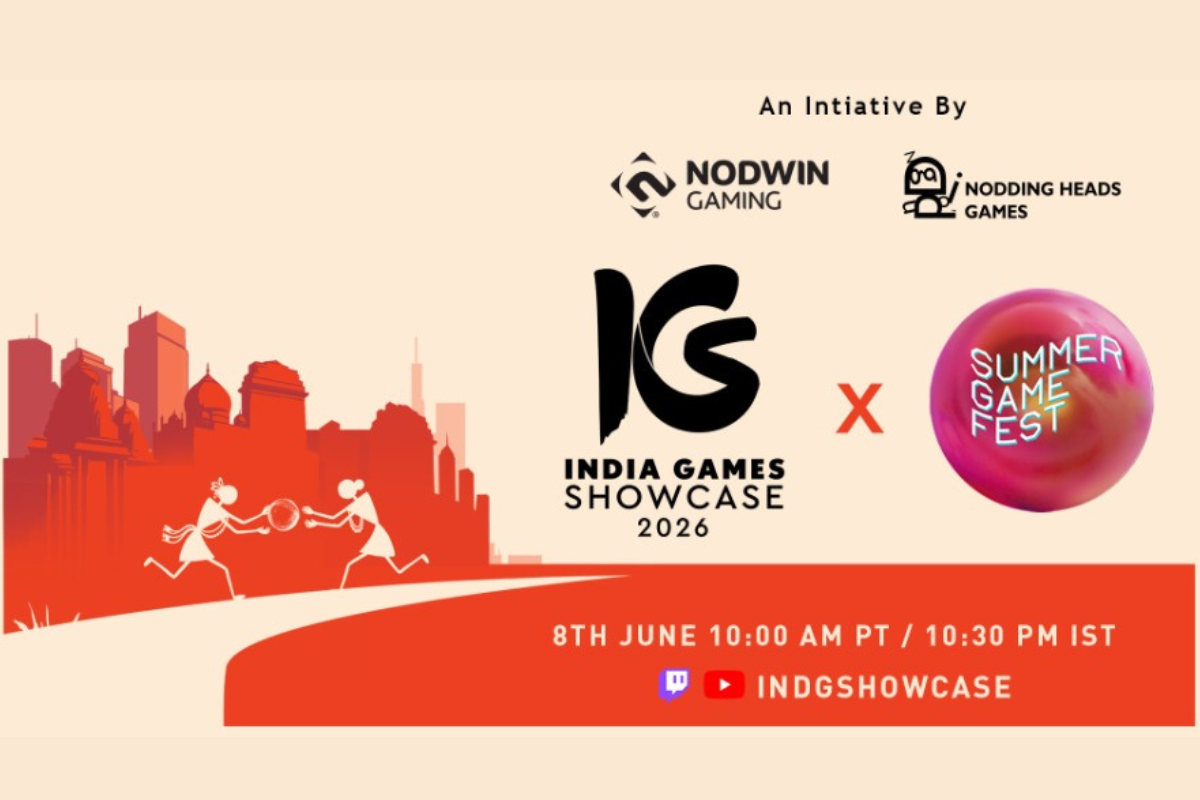
NODWIN Gaming and Nodding Heads Games are launching the inaugural India Games Showcase (IGS), a digital event set to premiere on June 8 as an official partner showcase of Summer Game Fest. The broadcast will feature 40 curated Indian indie games across trailers, reveals, gameplay segments and announcements.
The India Games Showcase will be accompanied by a dedicated Steam event aimed at helping players discover, follow and wishlist participating titles. The event is scheduled for 10 AM PT / 10:30 PM IST and will stream on YouTube and Twitch.
NODWIN Gaming Co-founder and Managing Director Akshat Rathee said: “There is a raw, untapped creative energy in the Indian indie ecosystem right now that is completely unique. We are seeing developers blend world-class mechanics with incredibly rich, localized storytelling that the global gaming community hasn’t experienced before. We want to make sure that a brilliant game built in India doesn’t just stay a local secret, but gets the global eyeballs, distribution, and recognition it rightfully deserves.”
Nodding Heads Games Co-founder and Game Director Avichal Singh added: “The debut of India Games Showcase proves that Indian indies are making strides as they arrive and make a presence internationally. The rise of quality and genre variety titles in recent years is very promising. Our partnership with the world’s biggest showcase, Summer Game Fest, is another mark of approval for the country. We’re excited for the times ahead.”
Ahead of the broadcast, the organisers named the first set of participating games, including Raahi (Kalp), Dodo Duckie (BornMonkie), Loop : Beginning Of Never Ending Journey (Pravin Nikam), Rakshasa (Odd Compass Studio), and Silkgrove (Gallic Entertainment). The showcase is spearheaded by Nodding Heads Games, the studio behind Raji: An Ancient Epic.
The post NODWIN and Nodding Heads launch India Games Showcase with Summer Game Fest appeared first on Eastern European Gaming | Global iGaming & Tech Intelligence Hub.
Canada
XSOLLA STRENGTHENS COMMITMENT TO ATLANTIC CANADA’S GROWING GAME INDUSTRY WITH EXPANDED EVENT PRESENCE

Global Video Game Commerce Company To Support Industry Growth Through Panels, Workshops, And Community Engagement Across Atlantic Canada
Xsolla, a leading global video game commerce company, today announced its participation in two major gaming industry events taking place across Atlantic Canada from June 3-5, 2026, reinforcing the company’s commitment to supporting regional game development ecosystems and fostering industry collaboration.
Xsolla will participate in both Game Invest East and XP Game Connect Atlantic, joining developers, publishers, investors, and industry leaders for discussions centered on the future of game development, investment, and innovation in the local area.
At Game Invest East, held in partnership with Scaffold, Xsolla will contribute to conversations around funding, growth opportunities, and the evolving business landscape for game studios.
Featured on the panel titled “If You Can Make It Here,” Xsolla’s Manny Hachey, Senior Director of Developer Success, joins Kate Edwards, CEO and Principal Consultant of Geogrify, and Amir Satvat, Business Development Director at Tencent Games, founder of Always Supporting the Games Community (ASGC), and a 2026 GamesBeat Visionary Award honoree, to explore how new regions and new entrants can survive and thrive in disruptive times.
Hachey, a native of Atlantic Canada, was personally requested by Scaffold to represent Xsolla at the event — a homecoming that adds a personal dimension to the panel’s central thesis. Having built her career and made her mark in Germany’s games industry, she returns with a firsthand perspective on what it takes to leave, build something meaningful abroad, and come back with proof of concept.
Xsolla will continue its Atlantic Canada engagement at XP Game Connect Atlantic in Halifax on June 5. John Nguyen, Regional Vice President, Canada at Xsolla, and Ted DiNola, Developer Evangelist at Xsolla, will host a workshop titled ‘Full Picture to Fast Lane: Xsolla Ecosystem Overview & Live SDK 3 Integration’, providing practical insights and actionable strategies for developers navigating today’s rapidly evolving gaming market.
Nguyen will also host a panel titled, ‘What Does the Future of Game Development Look Like in Atlantic Canada?’ where he will be joined by industry experts, including Ryan Filsinger from Iron Fox; Shawn Woods, CEO at Alpha Dog and VP of Interactive Society of Nova Scotia; George Greer, Founder of Besszong; and Jade Yhap, President of Interactive NB. The panel will explore the region’s growing role in the global games industry and the opportunities ahead for studios, talent, and ecosystem partners.
|
.png)
“Atlantic Canada continues to emerge as an exciting hub for game development talent and innovation,” said John Nguyen, Regional Vice President, Canada, at Xsolla. “Xsolla is proud to support these events and contribute to conversations that help empower developers, build ecosystems, strengthen industry connections, and accelerate growth across the region.”
|
.jpg)
“Events like Game Invest East and XP Game Connect Atlantic are critical for building stronger connections across the games industry,” said Berkley Egenes, Chief Marketing & Growth Officer at Xsolla. “Atlantic Canada has a growing community of talented developers, creators, and industry leaders, and we’re excited to be part of conversations that help to shape the future of gaming in the region while supporting studios at every stage of growth.”
Through its participation in these events, Xsolla aims to deepen relationships within the Atlantic Canadian game development community while supporting knowledge-sharing, collaboration, and long-term ecosystem growth.
For more information about Xsolla’s participation in these events across Atlantic Canada, visit: xsolla.pro/Atlantic-Canada
The post XSOLLA STRENGTHENS COMMITMENT TO ATLANTIC CANADA’S GROWING GAME INDUSTRY WITH EXPANDED EVENT PRESENCE appeared first on Americas iGaming & Sports Betting News.

-

 Asia4 days ago
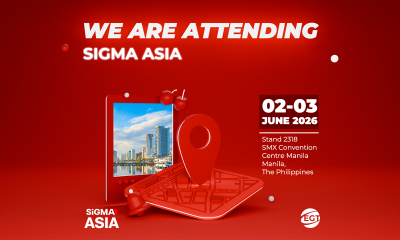
EGT Brings High-Impact Asian-Themed Portfolio to SiGMA Asia 2026
-
Africa4 days ago
Greentube partners with World Sports Betting to expand in South Africa
-
Conference4 days ago
Danish regulator to speak at Gaming in the Nordics launch event
-
Africa4 days ago
Gaming Realms expands into three African markets via SportyBet partnership
-
BETER4 days ago
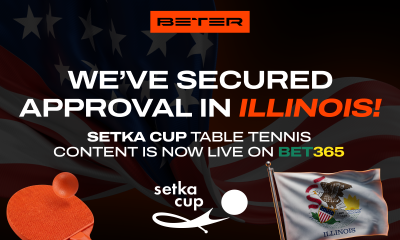
BETER expands US footprint with Illinois approval
-
Argentina4 days ago
Stake continues Latin American expansion with Argentina launch
-
affiliate marketing4 days ago
CasinoCanada partners with LolaJack Casino to expand Canadian visibility
-
Evoplay4 days ago
Evoplay launches Crimson Crown slot with Hold & Win jackpots