Gaming
Pollen VC launches first live lending facility for app and game makers

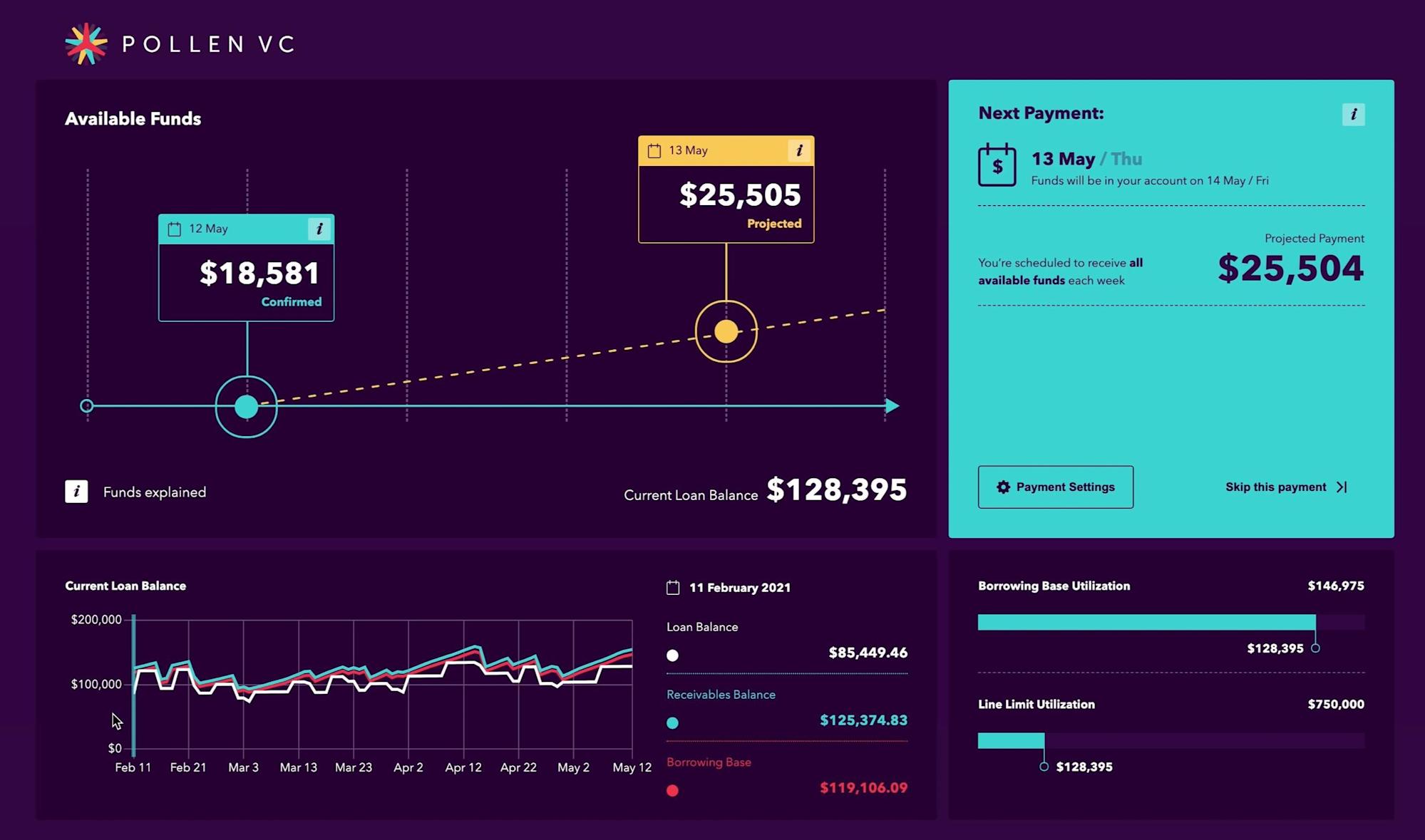
Fintech lender Pollen VC, a leading provider of credit facilities to app and game developers, has expanded the amount developers can borrow to up to 4x their monthly revenues. Pollen VC’s data driven credit models now have a more granular view of how revenue is generated over time, enabling them to expand credit lines based on live performance metrics. Access to additional capital via a transparent revolving credit facility enables developers to supercharge their growth without relying on venture capital or revenue based loans.
In contrast to the increasingly ubiquitous revenue-based lending (RBL) approach, Pollen VC provides a flexible line of credit that is based on a live picture of a developers accounts receivable (AR), plus an estimate of the residual value remaining in live user cohorts. The company had previously provided pure AR financing, but with the addition of the ability to borrow against the value of existing users combined into one simple facility, it’s now possible to borrow more via this model than through RBL, and with a much more transparent structure.
App and game developers rely on finance to help them market and promote their products whilst they wait to be paid from the Apple App Store or the Google Play Store. With more than $120Bn being spent on apps and games globally, these businesses face cashflow squeezes on a regular basis. Martin Macmillan, CEO & Founder at Pollen VC commented: “Developer revenue isn’t just realised at the point of download, monetization occurs over their consumer’s lifetime usage of the app or game. Our ability to base our lending decisions not just on AR, but also now in a developer’s existing user base is unique and will be a game changer for the industry. The amount of available credit is recalculated on a daily basis so as marketing performance improves, so the amount available to borrow will grow.”
“The revenue-based lending model works well for industries such as SaaS where stable, predictable revenue streams exist. But, in mobile gaming, users can churn much faster, making the model less applicable for the app and gaming sector generally, and opening up both developers and lenders to additional risk if loans can’t be repaid. Our “AR plus residual cohort” model is our take on the revenue-based lending model, but built from the ground up for our vertical” added Martin Macmillan.
At the core of Pollen VC’s vision is improving the financial literacy of developers. All too often developers rely just on equity financing to fuel their growth and don’t consider forms of alternative financing, sometimes needlessly diluting their equity instead of considering more capital efficient funding. Pollen VC has launched a range of resources for the app and game developer community to help them better understand their cash flow, financials and user acquisition metrics. The company’s CFO resources page includes a range of free to access calculators, content and templates to help the gaming and app development ecosystem improve their overall level of financial awareness and make more informed financing decisions.
Looking ahead, Martin Macmillan added: “We have worked with hundreds of app and gaming developers since 2014 and the industry has changed radically since the early days. Our new lending approach provides a breath of fresh air to the industry which will enable gaming and app founders to really understand their numbers and enable faster growth and the ability to scale in a capital efficient way. We will provide developers with greater access to capital and financial knowledge to really transform the industry”.
Pollen VC provides revolving credit lines to game and app developers to help them scale faster. Their finance works alongside venture capital funding as a non-dilutive complimentary funding source. Application criteria: the business must have one or more live apps on the Apple App Store or Google Play Store, $20,000 – $5,000,000 in monthly revenue and 3 months or more of transaction history in its business bank account.
Powered by WPeMatico



HIPTHER has launched HALLO (Highly Aligned Leaders in Legal Operations), a new platform designed to help organizations find and engage compliance professionals, legal operations experts and industry vendors. The company announced the launch in Europe.
HIPTHER said HALLO brings together a professional directory, industry intelligence hub, community platform and visibility tools aimed at sectors including gaming, fintech, payments, AI, cybersecurity, digital identity, AML and blockchain. The platform includes an Individual Professional Membership and an Enterprise Membership, with HIPTHER stating that all memberships include a 14-day free trial.
Alongside membership options, HIPTHER said compliance professionals can create free, publicly visible “Expert” profiles outlining experience and areas of specialization, with additional premium visibility opportunities available. The company positioned the platform as a way for organizations to discover and evaluate qualified compliance and legal operations expertise.
A core feature at launch is “HALLO Resources,” which HIPTHER described as an open-access compliance intelligence section that aggregates more than 17,000 regulatory and compliance-focused articles from the HIPTHER media network. HIPTHER said the section is updated daily, includes search by topic, jurisdiction and keyword, and covers areas such as gaming, fintech, AI, payments, AML, digital policy, cybersecurity and regulatory affairs.
Zoltan Tuendik, Co-Founder & Head of Business at HIPTHER, said: “Navigating the modern regulatory landscape requires more than just standard legal advice; it demands highly specialized, agile compliance expertise. With the launch of HALLO, we are bridging the critical gap between organizations facing complex global standards and the elite professionals who can guide them through. By combining an active directory with a massive intelligence hub, we are setting a new standard for compliance collaboration and empowering businesses to move forward with absolute confidence.”
HIPTHER also linked HALLO to its conference and media activities, including advertising and thought leadership opportunities through the Wayseers Booklet, an annual handbook it said is distributed at HIPTHER conferences in Europe and reaches more than 1,500 professionals across gaming, fintech, AI, compliance and regulatory sectors.
The post HIPTHER Launches HALLO: The Standard in Compliance Expertise appeared first on Americas iGaming & Sports Betting News.


HLTV will stage the HLTV Awards presented by 1xBet in Belgrade, Serbia on January 9, 2027, returning to the Sava Center. The company said more than 1,000 players, industry professionals, creators, and fans are expected to attend.
HLTV also confirmed Dust2 creator David Johnston will feature as an award announcer. HLTV linked the booking to the 25th anniversary of Dust2.
For 2026, HLTV is updating its Hall of Fame process and eligibility rules. Four players will be inducted again, with “at least two and up to three” slots reserved for players from the Counter-Strike 1.6 and early eras. HLTV also removed the former “neo rule,” allowing players to be inducted for their playing careers even if they remain active in other roles such as coaching.
HLTV is adding a Lifetime Achievement Award, which will be decided by the Hall of Fame Board. The ceremony will also move Community Awards onto the main stage show for the first time, rather than the pre-show segment.
Separately, HLTV will kick off the 2027 Awards season with an invite-only “HLTV Awards by 1xBet Launch Party x GRID” in Cologne during the Major. HLTV said industry members can apply for an invite to the ceremony via its awards page.
The post HLTV Awards returns to Belgrade on January 9, 2027, adding Lifetime Achievement honor appeared first on EE Gaming | Global iGaming & Tech Intelligence Hub.
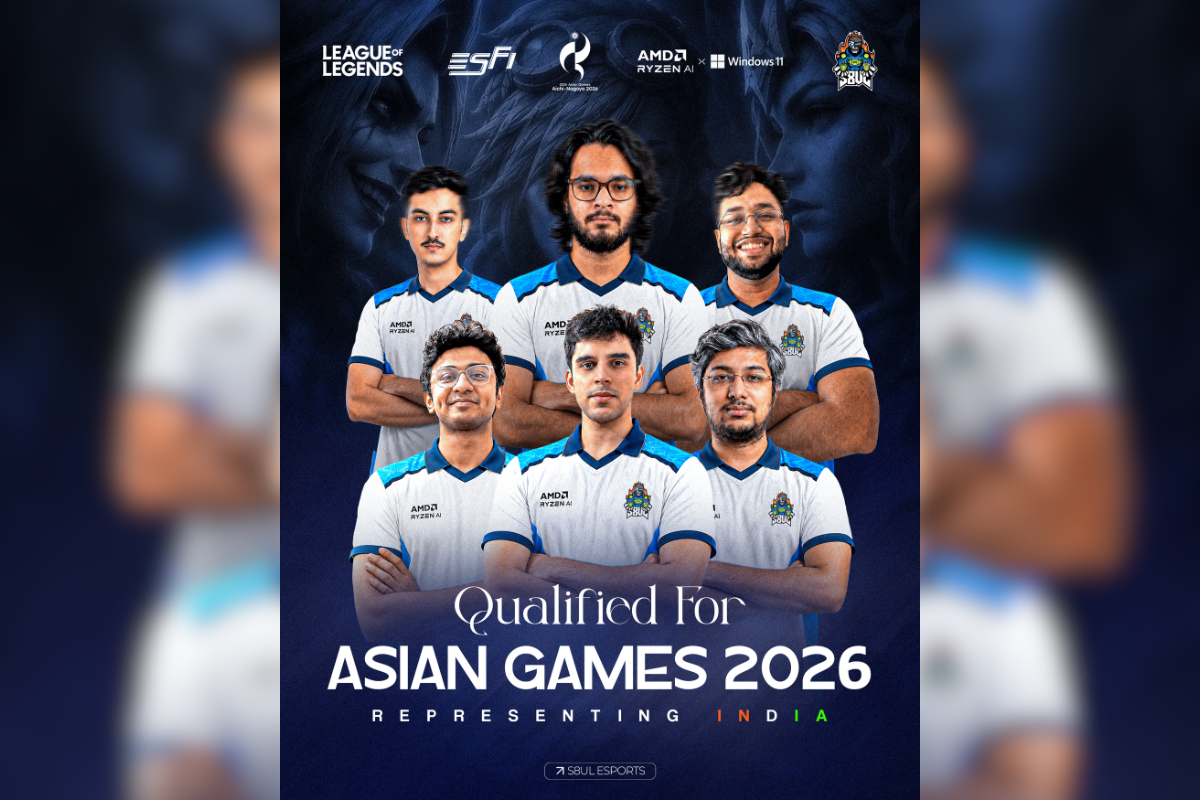
S8UL Esports’ League of Legends roster has qualified to represent India at the Asian Games 2026 in Aichi-Nagoya, Japan, running from September 19 to October 4. The organisation said the team secured qualification through the regional qualifiers after winning the National Esports Championships (NESC) 2026, described as the official national qualification tournament for the Asian Games.
S8UL said the roster competing under India’s banner is Akshaj Shenoy (Kat Bot), Aakash Shandilya (Infi), Sanindhya Malik (Deadcorporal), Mihir Ranjan (Lotus), Ahmed Shahid (Nero), and Rahul Bisht (Bob). The regional qualifiers featured 14 teams across a group stage and a split stage, with top performers advancing to the Asian Games main event.
In Group B, the team went unbeaten against Jordan, Sri Lanka, and Kazakhstan to progress, according to S8UL. In the split stage, it lost to Vietnam, Hong Kong, and Saudi Arabia but did enough to secure a berth. India will now face opponents including Japan, Chinese Taipei, and Vietnam at the main event.
Four players—Kat Bot, Infi, Deadcorporal, and Lotus—were also part of India’s League of Legends contingent at the Hangzhou Asian Games 2023, where S8UL said the team finished fifth.
Akshaj Shenoy aka Kat Bot, captain of India’s League of Legends team, said, “Qualifying for the Asian Games is a proud moment for all of us. We knew the regional qualifiers would be extremely competitive, and every match demanded complete focus. For many of us, this will be our second Asian Games, which makes this qualification even more special because we understand the level of competition that awaits us. We are grateful to S8UL for believing in this roster and providing us with the support, stability, and opportunities needed to keep improving as a team. Representing India is always an honour, and we’ll do everything we can to make the country proud in Aichi-Nagoya.”
S8UL co-founder and CEO Animesh Agarwal aka 8Bit Thug added, “Representing India at the Asian Games is among the highest honours an athlete can achieve, and seeing our League of Legends roster earn that opportunity is incredibly special. This team has demonstrated resilience, discipline, and a willingness to continually improve, qualities that are essential for success at the international level. At S8UL, our goal has always been to create pathways for Indian athletes to compete on the biggest stages in the world. We have no doubt they will give their all when they step onto the stage in Aichi-Nagoya and compete for the nation with pride,” S8UL also noted that Gurashish Singh (Soul) and Prateek Bhaunt (B Haunt) previously qualified for the Asian Games in Tekken 8 and Street Fighter 6 after winning at NESC 2026.
The post S8UL’s League of Legends roster qualifies to represent India at Asian Games 2026 appeared first on EE Gaming | Global iGaming & Tech Intelligence Hub.

-

 DBET7 days ago
HockeyAllsvenskan names DBET main partner in three-year deal from 2026/27
-
Baltics7 days ago
Digitain Named Best Sportsbook Provider at HIPTHER Baltic & Nordics Gaming Awards 2026
-
Asia7 days ago
S8UL’s League of Legends roster qualifies to represent India at Asian Games 2026
-
Blazing Flower7 days ago
CT Interactive Strengthens its Presence in Romania with Newly Certified Games
-
Australia5 days ago
Former Star Entertainment Executives Mathias Bekier and Paula Martin Disqualified and Ordered to Pay Penalties
-
CFTC6 days ago
Novig Secures CFTC Designation, Bringing the First Prediction Market Built for Sports Fans Nationwide
-
Alberta6 days ago
MediaTroopers lines up eight operator partners ahead of Alberta launch
-
LatAm6 days ago
Innovative payment solutions provider teams up with leading LATAM fintech platform to expand digital wallet access for online betting customers in Mexico