Gaming
Jagex Partners continues to grow its capabilities with new key team additions

Leading UK game developer and publisher of living games, Jagex has today announced that it has further expanded the studio’s partnerships and third-party publishing capabilities. The hires are made as Jagex Partners readies for the upcoming announcement and release of its maiden title, developed by Flying Wild Hogs and its Cracow studio development team.
Chris Pfeiffer is Jagex Partners’ new Director of Product Management, with responsibility for leading a team of product managers and developing a strategy for driving long-term player retention for new titles. Chris has more than 20 years in the industry having been Director of Gameplay Programming for such games as Ratchet & Clank and Resistance: Fall of Man at Insomniac Games, as well as Executive Producer roles at Kabam and Wargaming.
Thomas Hopper joins Jagex as Senior Producer for Third-Party games. Thomas has 13 years of experience in live game operations, having worked at Blizzard Entertainment and Bethesda Games Studios, where he was Live Production Lead for Fallout 76. In his time there he managed the live operations team for the game and oversaw the rollout of the Wastelanders and Steel Dawn expansions.
Stuart Bottell comes onboard as Platform Partnerships Lead at Jagex, responsible for adding new capabilities to Jagex Partners, helping to position Jagex as the publishing partner of choice for third-party developers of living games, and extending the audience reach of those games to more platforms and markets. With 15 years of industry experience, Stuart has previously held commercial manager roles at EA and then PlayStation, where he owned and oversaw strategy for first-party and third-party games.
Robert Fox-Galassi completes the line-up as Lead Product Manager across Jagex Partners projects. Robert has more than 13 years’ experience in the gaming space and joins from Wargaming where he was a Product Manager and Senior Game Designer.
Jeff Pabst, VP of Jagex Partners, said: “Each of these new hires brings a wealth of industry experience in developing high-quality games and in overseeing the kind of high-performance third-party development teams we are and will be working with in the future. As we prepare to lift the lid on the first JXP title, developed by the team at Flying Wild Hog in Cracow, these additions come at a very exciting time.”
Phil Mansell, Jagex CEO, added: “2021 is proving to be yet another important year for us in terms of recruiting, with new additions to the Jagex Partners’ third-party publishing team just one part of a concerted effort to build capabilities across the company. These new hires will play a crucial role in Jagex’s further growth by accelerating the development of new and existing games for wider global audiences.”
Powered by WPeMatico



HLTV will stage the HLTV Awards presented by 1xBet in Belgrade, Serbia on January 9, 2027, returning to the Sava Center. The company said more than 1,000 players, industry professionals, creators, and fans are expected to attend.
HLTV also confirmed Dust2 creator David Johnston will feature as an award announcer. HLTV linked the booking to the 25th anniversary of Dust2.
For 2026, HLTV is updating its Hall of Fame process and eligibility rules. Four players will be inducted again, with “at least two and up to three” slots reserved for players from the Counter-Strike 1.6 and early eras. HLTV also removed the former “neo rule,” allowing players to be inducted for their playing careers even if they remain active in other roles such as coaching.
HLTV is adding a Lifetime Achievement Award, which will be decided by the Hall of Fame Board. The ceremony will also move Community Awards onto the main stage show for the first time, rather than the pre-show segment.
Separately, HLTV will kick off the 2027 Awards season with an invite-only “HLTV Awards by 1xBet Launch Party x GRID” in Cologne during the Major. HLTV said industry members can apply for an invite to the ceremony via its awards page.
The post HLTV Awards returns to Belgrade on January 9, 2027, adding Lifetime Achievement honor appeared first on EE Gaming | Global iGaming & Tech Intelligence Hub.
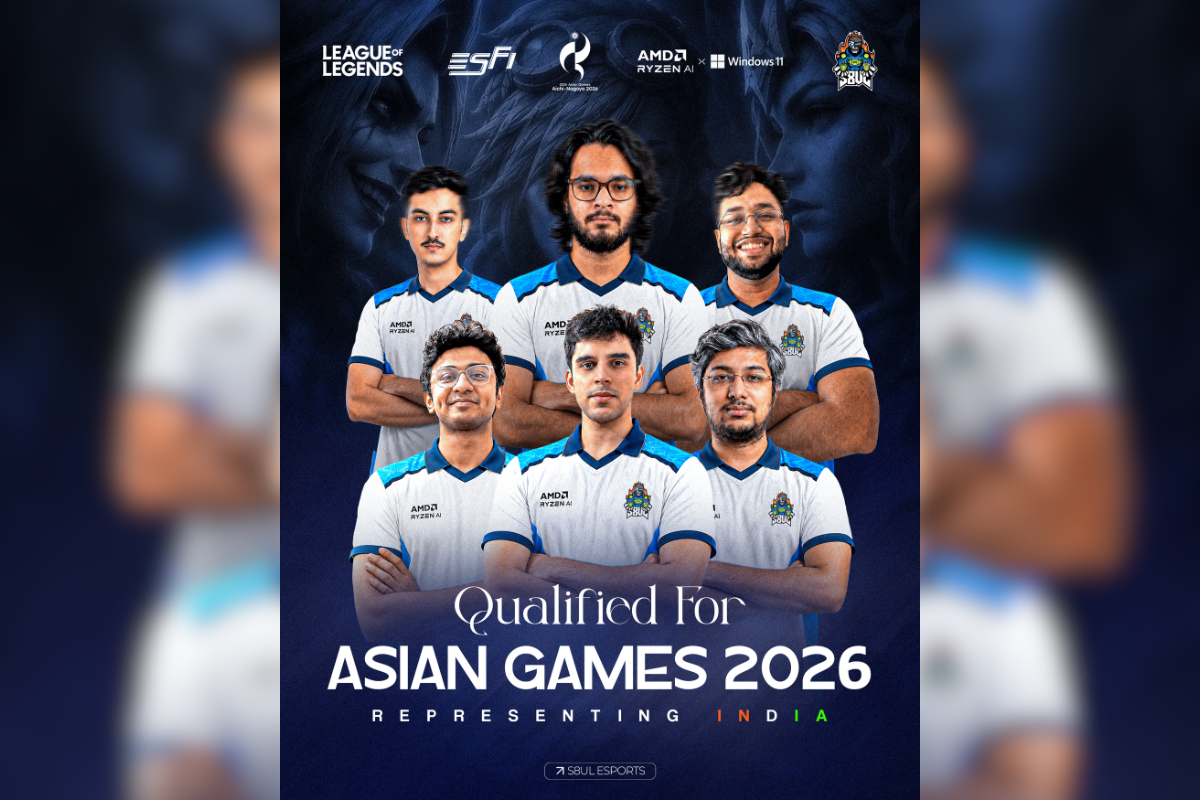
S8UL Esports’ League of Legends roster has qualified to represent India at the Asian Games 2026 in Aichi-Nagoya, Japan, running from September 19 to October 4. The organisation said the team secured qualification through the regional qualifiers after winning the National Esports Championships (NESC) 2026, described as the official national qualification tournament for the Asian Games.
S8UL said the roster competing under India’s banner is Akshaj Shenoy (Kat Bot), Aakash Shandilya (Infi), Sanindhya Malik (Deadcorporal), Mihir Ranjan (Lotus), Ahmed Shahid (Nero), and Rahul Bisht (Bob). The regional qualifiers featured 14 teams across a group stage and a split stage, with top performers advancing to the Asian Games main event.
In Group B, the team went unbeaten against Jordan, Sri Lanka, and Kazakhstan to progress, according to S8UL. In the split stage, it lost to Vietnam, Hong Kong, and Saudi Arabia but did enough to secure a berth. India will now face opponents including Japan, Chinese Taipei, and Vietnam at the main event.
Four players—Kat Bot, Infi, Deadcorporal, and Lotus—were also part of India’s League of Legends contingent at the Hangzhou Asian Games 2023, where S8UL said the team finished fifth.
Akshaj Shenoy aka Kat Bot, captain of India’s League of Legends team, said, “Qualifying for the Asian Games is a proud moment for all of us. We knew the regional qualifiers would be extremely competitive, and every match demanded complete focus. For many of us, this will be our second Asian Games, which makes this qualification even more special because we understand the level of competition that awaits us. We are grateful to S8UL for believing in this roster and providing us with the support, stability, and opportunities needed to keep improving as a team. Representing India is always an honour, and we’ll do everything we can to make the country proud in Aichi-Nagoya.”
S8UL co-founder and CEO Animesh Agarwal aka 8Bit Thug added, “Representing India at the Asian Games is among the highest honours an athlete can achieve, and seeing our League of Legends roster earn that opportunity is incredibly special. This team has demonstrated resilience, discipline, and a willingness to continually improve, qualities that are essential for success at the international level. At S8UL, our goal has always been to create pathways for Indian athletes to compete on the biggest stages in the world. We have no doubt they will give their all when they step onto the stage in Aichi-Nagoya and compete for the nation with pride,” S8UL also noted that Gurashish Singh (Soul) and Prateek Bhaunt (B Haunt) previously qualified for the Asian Games in Tekken 8 and Street Fighter 6 after winning at NESC 2026.
The post S8UL’s League of Legends roster qualifies to represent India at Asian Games 2026 appeared first on EE Gaming | Global iGaming & Tech Intelligence Hub.

Geckos Games launched Momentum, a patent-pending real-time sports prediction game unlike anything in the market. THRILLZZ Free Social Sportsbook gone live as the exclusive launch partner on the opening day of the world’s biggest Soccer tournament.
Five Minutes. One Question. Pure Adrenaline.
Every five minutes of a live match, Momentum asks players one question: which team has the Momentum right now? Not who will win the game. Not what the final score will be. Who has the upper hand – this minute, on this pitch – based on every pass, attack, and pressure play happening in real time.
Makes it different from anything that has come before: the Momentum shift on a single event. A yellow card. A saved shot. A dangerous run. Every on-field event recalculates the balance – and players watch their position move with it in real time. It is not a black box. Players see each event land inside the game – the moment it happens on the pitch.
Then comes the timer. As the five-minute window counts down to zero, the tension becomes almost unbearable. Players who are in the win zone are watching every second, knowing a single event in the dying moments can flip everything. The last few seconds of every round are unlike anything else in sports gaming – raw, unscripted, impossible to put down.
Zero Latency. Official Data. Real Stakes.
Momentum is powered by an official match data with zero latency. Every event flows instantly into the game engine. There is no delay, no approximation. What players see is what is happening on the field right now.
This is not a simulation. It is not a simplified model. It is live sport, translated into a game in real time and that distinction is everything.
The post Geckos Games Launches Momentum – The Most Adrenaline-Charged Live Sports Game Ever Built appeared first on Americas iGaming & Sports Betting News.

-

 América Latina5 days ago
Las diferencias locales de Argentina representan tanto un desafío como una oportunidad para el sector del iGaming
-
Latest News5 days ago
Connect with N1 Partners at G Gate Conf 2026
-
game-launch5 days ago
Million Games launches East West Wild slot with progressive multipliers
-
AI5 days ago
Veikkaus rolls out OpenBet’s Neccton responsible gambling platform ahead of 2027 reform
-
Gmonitor.ai4 days ago
Gmonitor llega a Latinoamérica: la plataforma de inteligencia de mercado para operadores debuta en seis mercados regulados
-
Africa5 days ago
Booming Games signs content deal with World Sports Betting in South Africa
-
eSports5 days ago
G2 partners with PUBG MOBILE Esports to scale Western Europe competition
-
 Latest News4 days ago
Sportradar Report | World Cup 2026: Opportunities for the Latin American Sports Betting Market