Canada
Leading Mobile Entertainment Company Jam City to Become Publicly Traded Company Through Merger with DPCM Capital, Inc


Jam City, Inc., a leading mobile entertainment company behind some of the world’s highest grossing and most enduring mobile games, and DPCM Capital, Inc., a publicly traded special purpose acquisition company led by Emil Michael, announced that they have entered into a definitive merger agreement that will result in Jam City becoming a publicly listed company. The transaction values the combined company at an enterprise value of $1.2 billion. Upon closing, the combined company will operate as Jam City Holdings, Inc. and its Class A common stock is expected to be listed on the New York Stock Exchange under the ticker symbol “JAM”.
In conjunction with the closing of the business combination, Jam City will use the cash proceeds to acquire a leading Montreal-based mobile game publisher Ludia, Inc. (“Ludia”) from FremantleMedia Canada Inc. (“Fremantle”), bringing together two highly creative leaders in mobile gaming and further strengthening Jam City’s market position and global player network. The combined company’s well-balanced, diversified portfolio of critically acclaimed, top grossing games is expected to include Harry Potter: Hogwarts Mystery; Cookie Jam; Panda Pop; and Jurassic World Alive. It is also expected to benefit from a strong pipeline of tentpole owned and licensed game releases with leading brands such as DC, and some of Disney’s biggest brands, which are expected to accelerate organic growth for the next several years.
“We have built and are scaling one of the world’s leading mobile entertainment platforms by bringing art – including storylines, characters and game mechanics – together with a powerful technology platform that leverages data to drive user acquisition and live game operations,” said Chris DeWolfe, Chairman and Chief Executive Officer of Jam City. “We expect going public will provide us with a source of capital to accelerate our growth and advance our strategic priorities, while acquiring and teaming up with Ludia adds compelling new intellectual property and gaming genres to our catalog. Together, we believe these transactions will advance our vision to create premium, social mobile games that are an enduring part of our players’ lives.”
The combined company will be led by Chris DeWolfe and the rest of Jam City’s highly experienced management team including co-Founder, President and Chief Operating Officer Josh Yguado, and Chief Financial Officer Jae Yu. Denmark West, founding partner and Chief Investment Officer of Connectivity Ventures and former executive at BET, Viacom Media Networks and Microsoft, will join the combined company’s Board of Directors. Existing Jam City stockholders are expected to own approximately 65% of the outstanding shares of Class A common stock of the combined company at close, assuming no redemptions by DPCM Capital stockholders. Netmarble Corporation (“Netmarble”), Jam City’s valued strategic investor, will own a significant portion of the combined company.
A group of leading institutional investors, along with Netmarble, DPCM’s sponsor, and members of the combined company management teams have committed to a private investment of $100 million in Class A common stock of the combined company that will close concurrently with the business combination and, subject to any redemptions by DPCM Capital’s shareholders, there is approximately $300 million currently held in DPCM Capital’s trust account. Proceeds from the transaction will be used to finance the $175 million acquisition of Ludia from Fremantle, provide liquidity to an early investor, and pay fees and expenses associated with the transaction. It is expected that the combined company will have approximately $115 million of cash on its balance sheet, which is anticipated to be used to accelerate growth by introducing new games that appeal to broad global audiences, continuing to enhance its proprietary technology, and pursuing future M&A opportunities and other strategic initiatives.
“We believe our central technology platform, Jam City Live, is what sets us apart and provides us with a sustainable competitive advantage by driving performance and growth to create enduring franchises,” said Yguado. “We believe that games are the next-generation of social engagement, and that our longstanding relationships throughout the global gaming ecosystem provide us access to a rich pipeline of untapped, accretive growth opportunities that we are poised to capitalize on.”
“We believe Jam City is at the forefront of mobile gaming, and its unique Games-as-a-Service model has proven to sustain player retention and drive monetization,” said Emil Michael, Chairman and CEO of DPCM Capital. “We are proud to partner with Chris, Josh and the team in their efforts to continue Jam City’s growth and further define the company as a category-defining entertainment brand.”
Combined Company Overview
As a well-capitalized leader in mobile entertainment, we believe Jam City is uniquely positioned to capitalize on the large, fast-growing global mobile gaming market, a market which includes more than 2.7 billion players and that is expected to exceed $205 billion in revenue by 2023, according to Newzoo.
Jam City benefits from a world-class talent base, a global studio network and a proprietary technology platform that enables it to consistently deliver deep, rich and engaging mobile entertainment experiences that appeal to fans around the world. In addition to introducing new game franchises, Jam City has fueled growth through a successful and scalable M&A strategy that involves acquiring assets and studios that have created deep entertainment experiences and leveraging Jam City Live to improve game performance.
With the addition of Ludia, Jam City’s game portfolio will include seven forever franchises, which it considers its most enduring games with at least $100 million in lifetime bookings and receive ongoing Jam City support. Our forever franchises are anticipated to include Cookie Jam; Panda Pop; Genies & Gems; Harry Potter: Hogwarts Mystery; Bingo Pop; Disney Emoji Blitz[1]; and Jurassic World games (Jurassic World: The Game, Jurassic World Alive).[2] These franchises are diversified across game genres and types of intellectual property, with no single game contributing more than 20% of Jam City’s and Ludia’s combined $570 million total bookings in 2020. By leveraging its strengths to improve performance across Ludia’s portfolio, Jam City expects to generate $868 million in bookings and $112 million in Adjusted EBITDA in 2022, representing 23% and 30% CAGRs, respectively, from 2019 to 2022E.
“Joining forces with Jam City enables us to leverage their technology platform to further enhance performance across our portfolio and collaborate on exciting new projects,” said Alex Thabet, President and Chief Executive Officer of Ludia. “This combination is expected to benefit our collective stakeholders and create new avenues for sustained growth.”
In 2020, Jam City was a top 10-featured game publisher in the U.S. across the App Store and Google Play. Together with Ludia, Jam City has built an engaged global player network of 31 million monthly active users and 1.3 billion cumulative game installs as of fourth quarter of 2020. Jam City and Ludia also generated a combined 3 billion total hours played and 9 billion advertising impressions last year.
Powered by WPeMatico


CasinoCanada.com, an online casino information portal operated by SEOBROTHERS, has partnered with the IntellectBet online casino. The collaboration focuses on content development, traffic acquisition, and informational coverage of the IntellectBet platform for users in Canada.
Eugene Ravdin, Head of PR at SEOBROTHERS, said: “The partnership with IntellectBet implies the creation of content describing the platform’s offering, its game portfolio, provider network, and payment systems. The collaboration includes traffic acquisition focused on directing users from Canada to the platform.”
The platform provides access to a library of 16,000 games aggregated from more than 85 studios. The portfolio includes slots, live dealer games, and RNG table games, as well as additional categories such as crash and penny games from the likes of Booming Games, InOut, Playson, and BGaming.
The platform supports more than 15 payment methods, including Interac, Bitcoin, and MiFinity. IntellectBet Casino operates in Canada under the Curacao licence and reports around 94,000 active players monthly.
IntellectBet is operated by Casiworx, which also unites other casino brands such as RockstarWin, StakeBro, FreakyBillion, PokerbetCasino, VipCasino, SlotyStake, Slotobit, StakeMania, SlotoRush, Norsewin.
The post CasinoCanada Partners with IntellectBet appeared first on Americas iGaming & Sports Betting News.
Adam Pentecost Chief Revenue Officer at Gaming Corps
Gaming Corps Taps Betty to Boost Content Options for Ontario Players

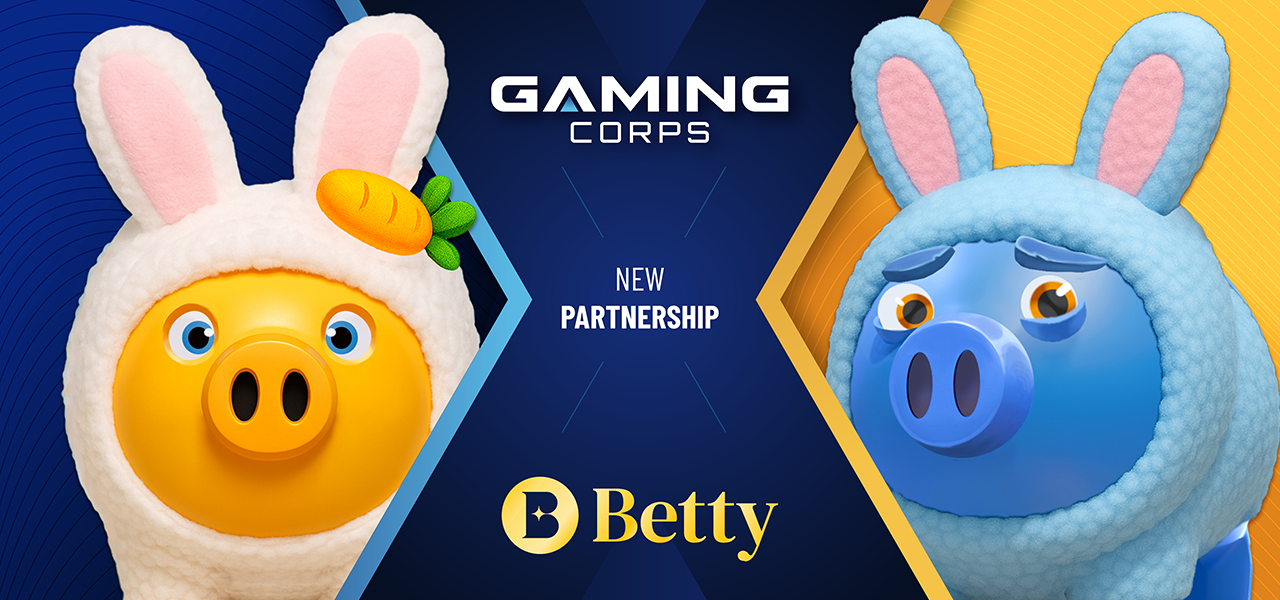
Gaming Corps, a publicly traded game development firm located in Sweden, has entered into a new distribution deal with Betty, one of the rapidly expanding iGaming operators in Ontario. The agreement enhances Betty’s platform with Gaming Corps’ growing collection of content, increasing options for players in a market where the brand currently provides over 2,800 slot titles.
Thanks to the collaboration, Betty customers will soon enjoy the latest slot releases from Gaming Corps, featuring 3 Easter Pigs, the latest chapter in the well-known 3 Pigs series, which adds a new seasonal element to one of the studio’s most iconic franchises. Players will also gain access to the latest release, Vendetta Fury, from DEGEN Studios, Gaming Corps’ newest RGS partner.
This launch leverages the solid success of the broader 3 Pigs franchise, featuring games like 3 Pigs of Olympus and 3 Pigs of the Caribbean that are already part of Gaming Corps’ collection. These are included with the studio’s wider range of Slots, Plinko, Mine, Crash, and Table games.
Adam Pentecost, Chief Revenue Officer at Gaming Corps, said: “Ontario has become one of the most exciting regulated markets in North America, and Betty has built an impressive reputation by offering players both quality and variety. We’re delighted to partner with such a progressive operator and look forward to showcasing how our latest content can bring something genuinely different to their already rich portfolio.”
Paraskeva Smirnova, Senior Casino Operations Manager at Betty, added: “Betty has built its identity on being a homegrown Ontario brand with a clear focus on what local players want. Working with Gaming Corps allows us to continue that mission, adding content that stands out and gives our players something new to discover alongside the thousands of titles we already host.”
The post Gaming Corps Taps Betty to Boost Content Options for Ontario Players appeared first on Eastern European Gaming | Global iGaming & Tech Intelligence Hub.
Adam Pentecost Chief Revenue Officer at Gaming Corps
Gaming Corps partners with Betty to expand content choice in Ontario
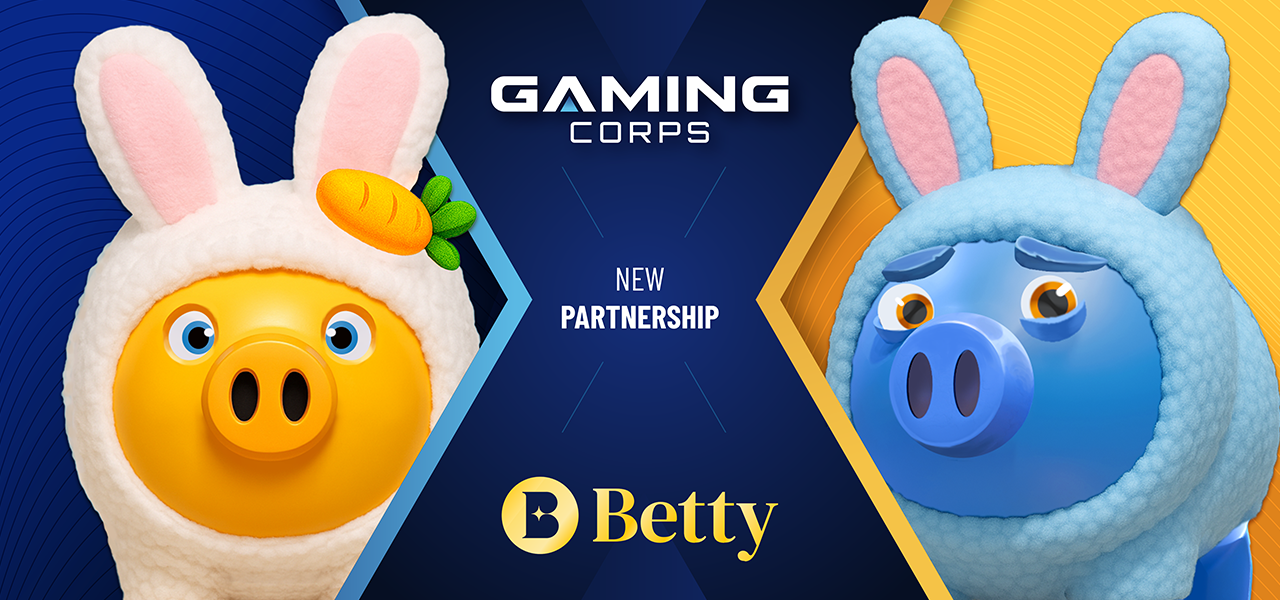
Gaming Corps has signed a new distribution agreement with Betty, one of Ontario’s fastest-growing iGaming operators. The deal adds Gaming Corps’ expanding suite of content to Betty’s platform, strengthening the choice for players in a market where the brand already offers more than 2,800 slot titles.
Through the partnership, Betty customers will soon have access to the latest Gaming Corps slot releases, including 3 Easter Pigs, the newest instalment in the popular 3 Pigs series, which introduces a fresh seasonal twist on one of the studio’s most recognisable franchises. Players will also have access to Gaming Corps’ newest RGS partner, DEGEN Studios’, latest release, Vendetta Fury.
This launch builds on the strong performance of the wider 3 Pigs franchise, with titles such as 3 Pigs of Olympus and 3 Pigs of the Caribbean already established within Gaming Corps’ portfolio. These sit alongside the studio’s broader offering of Slots, Plinko, Mine, Crash and Table games.
Adam Pentecost, Chief Revenue Officer at Gaming Corps, said: “Ontario has become one of the most exciting regulated markets in North America, and Betty has built an impressive reputation by offering players both quality and variety. We’re delighted to partner with such a progressive operator and look forward to showcasing how our latest content can bring something genuinely different to their already rich portfolio.”
Paraskeva Smirnova, Senior Casino Operations Manager at Betty, added: “Betty has built its identity on being a homegrown Ontario brand with a clear focus on what local players want. Working with Gaming Corps allows us to continue that mission, adding content that stands out and gives our players something new to discover alongside the thousands of titles we already host.”
The post Gaming Corps partners with Betty to expand content choice in Ontario appeared first on Americas iGaming & Sports Betting News.

-

 bingo6 days ago
 -
Compliance Updates6 days ago
EGBA Urges EC to Tackle Rising Online Fraud in Gambling Sector
-
Greentube6 days ago
Greentube hauls in big wins with Rumble Riches™ Haulin’ Gold™
-
DEGEN Studios6 days ago
DEGEN Studios ignites a brutal blood feud with Vendetta Fury
-
Bonus Rush5 days ago
RAW iGaming launches BONUS RUSH® – a new family of feature-focused games
-
Baroness Fiona Twycross4 days ago
BGC AGM 2026 Discussed About Surging Illegal Gambling Black Market
-
Adam Pentecost Chief Revenue Officer at Gaming Corps6 days ago
Gaming Corps Taps Betty to Boost Content Options for Ontario Players
-
BetConstruct AI6 days ago
BetConstruct AI Showcases Full Platform at SiGMA South America 2026