Gaming
Check out the trailer for the game Fishkeeper — an aquarium Sims game!!


Fishkeeper is the newly announced game from the Blinkclick Games studio from Poland. It can be referred to as “Sims in an aquarium” or “Underwater Tamagotchi”. The announced title will be a unique mix of economic strategy and aquarium simulator in full 3D.
In the game, we will play the role of a hobbyist looking after an aquarium: we will buy our own tank, equipment and in real time we will take care of the fish, satisfying their various needs, depending on the species. As in other life simulators, we will have to ensure that the fish we care for are fed, safe, healthy, and even that they do not lack good company. There are also more complicated parameters to deal with: water pH, salinity level, temperature and tank contamination.
The future game offers a whole range of freshwater and saltwater aquarium fish, shrimps, snails, plants and corals, allowing you to fully recreate the ecosystem of an artificial reservoir. Each animal and plant species will vary not only in appearance but also in terms of the conditions of the aquarium: eating, space and the specificity of reproduction. Just as in real life, all organisms will interact with each other in a specific way and will influence their environment. The game contains recreated mechanisms that naturally occur in nature among the different species of organisms. The player’s task will be to maintain a natural balance in the tank, fostering the development of the ecosystem and preventing environmental disasters.
By caring for fish and other animals, we will achieve the gradual development of the biosystem — the organisms grow and reproduce, passing the stages of life from egg to fry to a fully developed adult. In time, we will be able to start selling fish to free up space in the aquarium and at the same time raise funds for further development. The rarest and most beautiful specimens can be sold at auction, bringing the biggest earnings.
We will be able to admire our created aquarium by cruising in a specially designed bathyscaphe — something that can be described as a water drone. You can customize your bathyscaphe by changing its appearance, color, battery capacity, speed, replacing parts and adding modules. This device will also allow us to record films, take photos, clean the aquarium and perform other tasks to help in keeping the biosystem working.
Main features of the game:
Combining an economic strategy with a simulator: meet the needs of fish and observe their lives in real time, while ensuring good breeding results;
A wide variety of freshwater, marine, coral, shrimp, snails and other aquatic species are available;
Customize the aquarium equipment, shape, size and appearance of tanks;
Buy various animal and plant species, sell bred fish in the store and, exceptionally, fine and rare specimens at an auction;
Watch the views from the bathyscaphe cabin as you control it inside the aquarium; you can also use it to clean the tank from the inside;
Decorate your aquarium with lots of decorations, corals, posters etc.
The creators of Fishkeeper announce its PC premiere for the last quarter of 2021. Later console ports are also planned. In the meantime, you can add a game to the Steam Wishlist, which the creators kindly request.
Steam Page: https://store.steampowered.com/app/1425780/Fishkeeper/
Powered by WPeMatico



HIPTHER has launched HALLO (Highly Aligned Leaders in Legal Operations), a new platform designed to help organizations find and engage compliance professionals, legal operations experts and industry vendors. The company announced the launch in Europe.
HIPTHER said HALLO brings together a professional directory, industry intelligence hub, community platform and visibility tools aimed at sectors including gaming, fintech, payments, AI, cybersecurity, digital identity, AML and blockchain. The platform includes an Individual Professional Membership and an Enterprise Membership, with HIPTHER stating that all memberships include a 14-day free trial.
Alongside membership options, HIPTHER said compliance professionals can create free, publicly visible “Expert” profiles outlining experience and areas of specialization, with additional premium visibility opportunities available. The company positioned the platform as a way for organizations to discover and evaluate qualified compliance and legal operations expertise.
A core feature at launch is “HALLO Resources,” which HIPTHER described as an open-access compliance intelligence section that aggregates more than 17,000 regulatory and compliance-focused articles from the HIPTHER media network. HIPTHER said the section is updated daily, includes search by topic, jurisdiction and keyword, and covers areas such as gaming, fintech, AI, payments, AML, digital policy, cybersecurity and regulatory affairs.
Zoltan Tuendik, Co-Founder & Head of Business at HIPTHER, said: “Navigating the modern regulatory landscape requires more than just standard legal advice; it demands highly specialized, agile compliance expertise. With the launch of HALLO, we are bridging the critical gap between organizations facing complex global standards and the elite professionals who can guide them through. By combining an active directory with a massive intelligence hub, we are setting a new standard for compliance collaboration and empowering businesses to move forward with absolute confidence.”
HIPTHER also linked HALLO to its conference and media activities, including advertising and thought leadership opportunities through the Wayseers Booklet, an annual handbook it said is distributed at HIPTHER conferences in Europe and reaches more than 1,500 professionals across gaming, fintech, AI, compliance and regulatory sectors.
The post HIPTHER Launches HALLO: The Standard in Compliance Expertise appeared first on Americas iGaming & Sports Betting News.


HLTV will stage the HLTV Awards presented by 1xBet in Belgrade, Serbia on January 9, 2027, returning to the Sava Center. The company said more than 1,000 players, industry professionals, creators, and fans are expected to attend.
HLTV also confirmed Dust2 creator David Johnston will feature as an award announcer. HLTV linked the booking to the 25th anniversary of Dust2.
For 2026, HLTV is updating its Hall of Fame process and eligibility rules. Four players will be inducted again, with “at least two and up to three” slots reserved for players from the Counter-Strike 1.6 and early eras. HLTV also removed the former “neo rule,” allowing players to be inducted for their playing careers even if they remain active in other roles such as coaching.
HLTV is adding a Lifetime Achievement Award, which will be decided by the Hall of Fame Board. The ceremony will also move Community Awards onto the main stage show for the first time, rather than the pre-show segment.
Separately, HLTV will kick off the 2027 Awards season with an invite-only “HLTV Awards by 1xBet Launch Party x GRID” in Cologne during the Major. HLTV said industry members can apply for an invite to the ceremony via its awards page.
The post HLTV Awards returns to Belgrade on January 9, 2027, adding Lifetime Achievement honor appeared first on EE Gaming | Global iGaming & Tech Intelligence Hub.
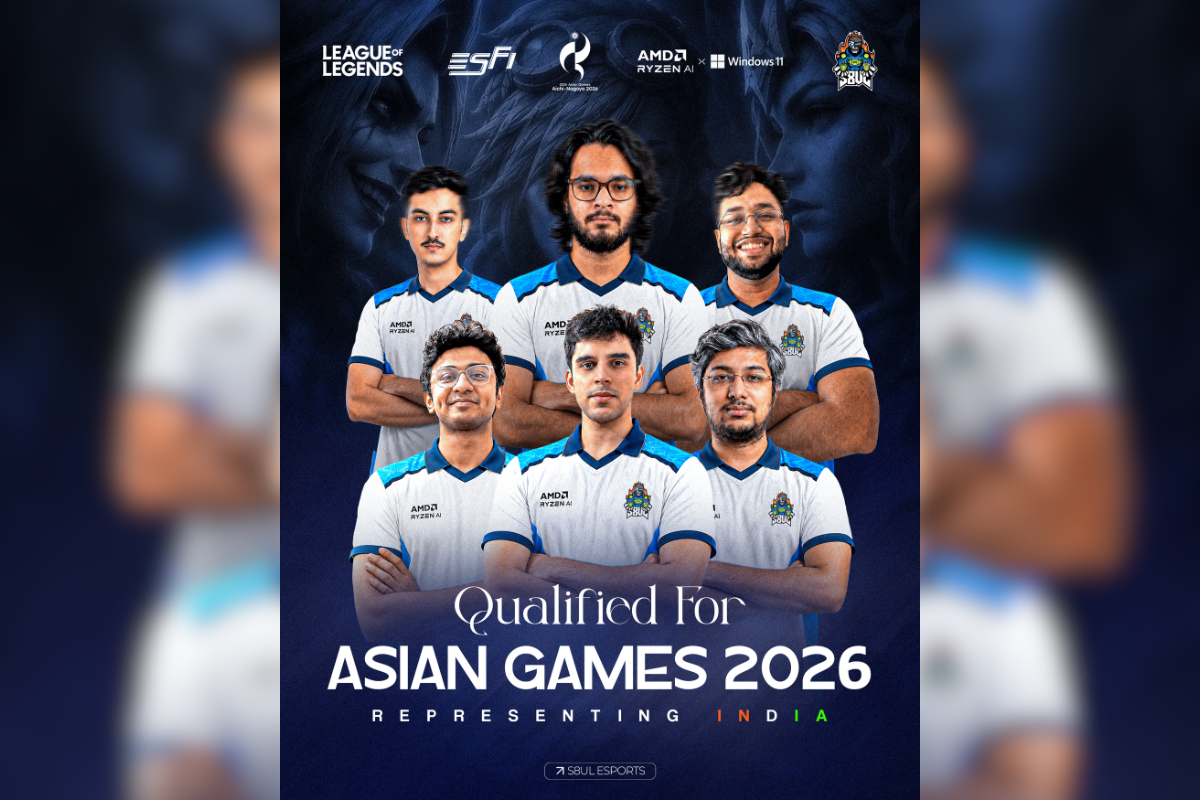
S8UL Esports’ League of Legends roster has qualified to represent India at the Asian Games 2026 in Aichi-Nagoya, Japan, running from September 19 to October 4. The organisation said the team secured qualification through the regional qualifiers after winning the National Esports Championships (NESC) 2026, described as the official national qualification tournament for the Asian Games.
S8UL said the roster competing under India’s banner is Akshaj Shenoy (Kat Bot), Aakash Shandilya (Infi), Sanindhya Malik (Deadcorporal), Mihir Ranjan (Lotus), Ahmed Shahid (Nero), and Rahul Bisht (Bob). The regional qualifiers featured 14 teams across a group stage and a split stage, with top performers advancing to the Asian Games main event.
In Group B, the team went unbeaten against Jordan, Sri Lanka, and Kazakhstan to progress, according to S8UL. In the split stage, it lost to Vietnam, Hong Kong, and Saudi Arabia but did enough to secure a berth. India will now face opponents including Japan, Chinese Taipei, and Vietnam at the main event.
Four players—Kat Bot, Infi, Deadcorporal, and Lotus—were also part of India’s League of Legends contingent at the Hangzhou Asian Games 2023, where S8UL said the team finished fifth.
Akshaj Shenoy aka Kat Bot, captain of India’s League of Legends team, said, “Qualifying for the Asian Games is a proud moment for all of us. We knew the regional qualifiers would be extremely competitive, and every match demanded complete focus. For many of us, this will be our second Asian Games, which makes this qualification even more special because we understand the level of competition that awaits us. We are grateful to S8UL for believing in this roster and providing us with the support, stability, and opportunities needed to keep improving as a team. Representing India is always an honour, and we’ll do everything we can to make the country proud in Aichi-Nagoya.”
S8UL co-founder and CEO Animesh Agarwal aka 8Bit Thug added, “Representing India at the Asian Games is among the highest honours an athlete can achieve, and seeing our League of Legends roster earn that opportunity is incredibly special. This team has demonstrated resilience, discipline, and a willingness to continually improve, qualities that are essential for success at the international level. At S8UL, our goal has always been to create pathways for Indian athletes to compete on the biggest stages in the world. We have no doubt they will give their all when they step onto the stage in Aichi-Nagoya and compete for the nation with pride,” S8UL also noted that Gurashish Singh (Soul) and Prateek Bhaunt (B Haunt) previously qualified for the Asian Games in Tekken 8 and Street Fighter 6 after winning at NESC 2026.
The post S8UL’s League of Legends roster qualifies to represent India at Asian Games 2026 appeared first on EE Gaming | Global iGaming & Tech Intelligence Hub.

-

 Australia6 days ago
Former Star Entertainment Executives Mathias Bekier and Paula Martin Disqualified and Ordered to Pay Penalties
-
CFTC7 days ago
Novig Secures CFTC Designation, Bringing the First Prediction Market Built for Sports Fans Nationwide
-
LatAm7 days ago
Innovative payment solutions provider teams up with leading LATAM fintech platform to expand digital wallet access for online betting customers in Mexico
-
Alberta7 days ago
Why Alberta Represents the Next Major Growth Opportunity for Gaming Operators
-
Alberta7 days ago
MediaTroopers lines up eight operator partners ahead of Alberta launch
-
Alina Mihaela Popa Chief Commercial Officer at ICONIC217 days ago
ICONIC21 launches live casino and RNG titles with Maxbet in Romania
-
ATG6 days ago
ATG Casino player in Sweden wins €2m jackpot powered by EveryMatrix
-
game launches6 days ago
Pragmatic Play releases Mahjong Wins Triple Pot with 100,000x bonus prize