Finland
Finland Unveils New B2B Operating Model: Mandatory Supplier Licensing and Veikkaus Split Confirmed for 2027


Helsinki-based industry analyst Bonusetu breaks down the new dual-license structure and the legal separation of the state monopoly, citing crucial data for operators planning market entry.
HELSINKI, Dec. 02, 2025 (GLOBE NEWSWIRE) — Following the Finnish government’s submission of legislative proposal HE 16/2025 vp, Bonusetu.com has released an analysis of the new operational framework that will govern Finland’s transition to a licensed gambling market by January 1, 2027.
The proposal introduces a strict B2B licensing regime that will fundamentally reshape the supply chain for the Finnish market. It also confirms the legal unbundling of the state-owned operator, Veikkaus Oy, to ensure competitive neutrality.
The New Dual-License Structure for the Finnish Casino Market
The legislation creates two distinct license categories for the competitive market, with a clear dependency between them:
- Gambling Game License (rahapelitoimilupa): For B2C operators offering online betting (fixed-odds, pool, and virtual) and online casino games (slots, table games, and bingo).
- Application Window: Applications are scheduled to open in early 2026.
- Duration: Licenses will be valid for a maximum of five years.
- Cost: Operators will be subject to a 22% tax on Gross Gaming Revenue (GGR).
- Game Software License (peliohjelmistotoimilupa): For B2B suppliers manufacturing, providing, installing, or modifying gambling software.
- Requirement: Licensed operators are strictly prohibited from using software from unlicensed suppliers.
- Transition Timeline: Software license applications will open in early 2027, with the mandatory requirement to use only licensed software coming into full effect by January 1, 2028.
- Duration: Like operator licenses, these will be valid for a maximum of five years.
“This is a critical detail for the supply chain,” says Tommi Korhonen of Bonusetu.com. “Operators planning their Finland strategy must audit their game aggregators and platform providers now. If your suppliers don’t intend to license in Finland by 2028, you will not be able to offer their content.”
Structural Separation of Veikkaus Oy
To comply with EU competition laws and ensure a fair market, the proposal confirms the separation (eriytetään) of Veikkaus Oy’s operations into distinct legal entities within the same group:
- The Monopoly Entity: Will retain exclusive rights (yksinoikeustoimilupa) for the national lottery, physical slot machines, and land-based casinos. This license will be valid for 10 years.
- The Competitive Entity: A separate company will be formed to compete in the licensed online casino and betting market. This entity will operate under the same 5-year license terms and 22% tax rate as private international operators.
Regulatory Market Oversight and Fees
The new market will be overseen by a dedicated supervisory authority within the upcoming Lupa- ja valvontavirasto (Permit and Supervision Agency). The authority’s operations will be funded directly by the industry through a supervision fee (valvontamaksu).
“The ‘grey market’ era in Finland ends with this law. The requirement for B2B supplier licensing creates a closed loop of accountability that will make it very difficult for unlicensed actors to operate.” Tommi Korhonen, CEO, Bonusetu.com
About Bonusetu.com
Founded in 2016 and headquartered in Helsinki, Bonusetu.com is a leading Finnish comparison platform for the iGaming industry. We provide data-driven analysis and reviews to help consumers and industry stakeholders navigate the Finnish market.
For more information, please visit https://www.bonusetu.com.
-
- LinkedIn: https://www.linkedin.com/company/bonusetu/
- X (Twitter): https://x.com/bonusetu_com
Contact:
Tommi Korhonen, Veteran of the Finnish Casino industry and acting CEO of Bonusetu. [email protected]
Note to Editors: Data cited in this release is sourced directly from the Finnish Government Proposal Hallituksen esitys HE 16/2025 vp, available at [https://www.eduskunta.fi/FI/vaski/HallituksenEsitys/Sivut/HE_16+2025.aspx].
CONTACT: [email protected]


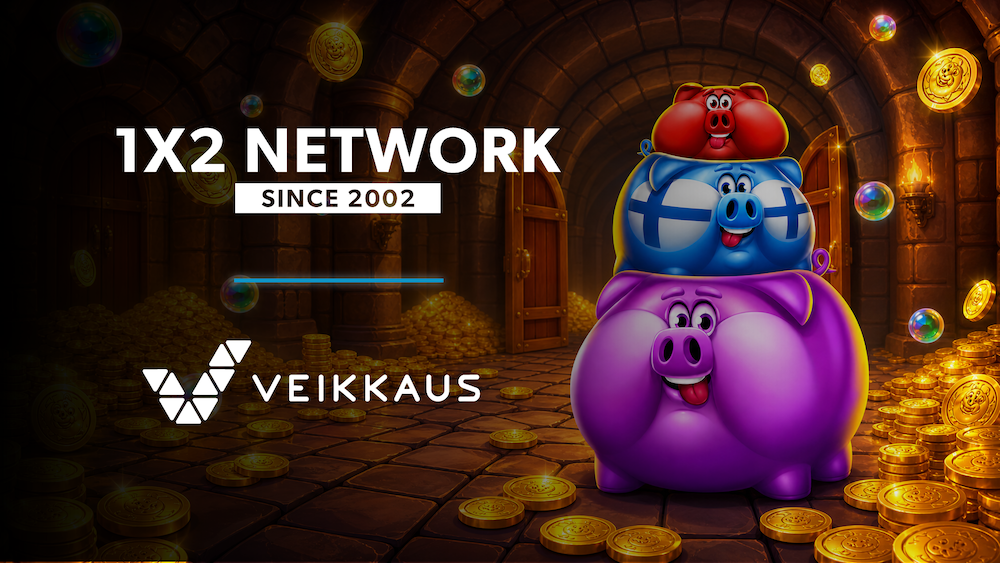
Initial rollout brings 10 slots from Iron Dog Studio and Prospect Gaming to the state-owned operator, via Light & Wonder.
1X2 Network has entered the Finnish market after signing a content partnership with Veikkaus, Finland’s state-owned gaming operator.
Under the agreement, a selection of titles from 1X2 Network studios Iron Dog Studio and Prospect Gaming will go live for Finnish players for the first time. The initial rollout includes 10 games, with named titles including 3 HOT CHILLI PEPPERS, 3 PORKY BANKS HOLD and WIN EXTRA, BURN IN HELL, and PIÑATA GO GO.
1X2 Network said the integration was enabled through its collaboration with Light & Wonder, which is supplying the route to market for the content.
Kevin Reid, Chief Executive Officer at 1X2 Network said: “We are delighted to partner with Veikkaus and bring our games to players in Finland. Veikkaus has built a strong reputation as a trusted and responsible operator, and this launch represents an exciting opportunity for us to introduce titles from our flagship studios, Iron Dog Studio and Prospect Gaming to a brand-new audience.”
Riikka Seppänen, VP, iCasino at Veikkaus said: “We are pleased to welcome content from 1X2 Network to our platform. Their games offer engaging gameplay and popular features that we believe will resonate well with our players while supporting our commitment to delivering high quality and responsible entertainment.”
The post 1X2 Network launches in Finland via Veikkaus deal appeared first on Eastern European Gaming | Global iGaming & Tech Intelligence Hub.
Compliance Updates
Licence to Operate: The New Regulatory Frontier in Ireland, Finland and New Zealand

Overview
For years, many jurisdictions were content to sit back while offshore operators captured players and revenue. Ireland has created a dedicated, centralised regulator. Finland has dismantled its standing state monopoly. New Zealand is finally trying to pull a largely unregulated grey market into a controlled framework. Each of these markets is at a different stage, but the direction of travel is the same: licensing, enforcement, and a far tougher stance on consumer protection.
For operators, this is a mixed picture. Genuine commercial opportunities are opening, but the compliance bar is rising fast, and the days of entering a market through an offshore licence are numbered.
Ireland: The Gambling Regulatory Authority of Ireland (GRAI)
The main legislation dated back to 1931, enforcement was fragmented, and nobody could quite agree on who was responsible for what. The Gambling Regulation Act 2024 was the overhaul the industry had been waiting for, and it came with real teeth.
The Gambling Regulatory Authority of Ireland (GRAI) was set up in March 2025 and became fully operational in February 2026, when it started accepting licence applications. It now acts as a single national regulator with the power to supervise and issue substantial penalties.
The new licensing fees are tiered rather than flat, which is a significant change. Previously, fees bore almost no relationship to an operator’s size or revenue. Now they scale with turnover and the type of operation. That’s fairer for smaller entrants and means larger operators are paying something closer to their actual market cost.
What the Rules Cover
The new framework touches most areas of the market. A few standout provisions:
- Licences: The GRAI’s digital Operator Portal went live in early 2026. Both remote and land-based products are covered, and the documentation requirements are clearly set out.
- Penalties: Serious breaches can result in fines of up to €20 million or 10% of annual turnover, whichever is higher.
- Consumer protections: Credit card gambling is banned. Gambling advertising is subject to tighter restrictions.
How to Apply
The application process runs in stages:
- Publish a notice of intention at least 28 days before submitting and send proof to the GRAI.
- Pull together the required documentation, financial records, ownership details, and operational plans.
- Submit the online application and pay the non-refundable tiered fee.
- The GRAI reviews the application.
- A written decision is issued. If the licence is granted, operators move into post-licence compliance obligations, including reporting any material changes to ownership, finances or senior personnel.
The GRAI was allocated €9.1 million for its first year to cover licensing, enforcement, recruitment and public awareness. Annual inspections are expected to begin shortly, with dedicated enforcement units in place by Q3 2026. There’s clearly an appetite from both domestic and overseas operators; the market is attracting serious interest.
Finland: After the Monopoly
Veikkaus has run Finland’s gambling market for a long time. Lotteries, sports betting, and online casinos all sat under one state-owned roof. That changed in December 2025, when the Finnish parliament passed landmark gambling legislation. Online casino and sports betting are now open to competition, though Veikkaus will keep its monopoly over lotteries, scratch cards and land-based slots and casinos.
It’s worth noting the transition timeline: Veikkaus retains its monopoly until 30 June 2027. Until that point, no other company may run or market gambling in Finland. The new competitive market, and with it the first licensed private operators, only goes live on 1 July 2027.
Applications opened on 1 March 2026. The regulator is targeting a three-to-six-month processing window, which means operators who move now have plenty of time to be ready for the July 2027 launch.
Structure and Costs
Operators need a Finnish licence to legally serve local players from July 2027. Applications must be submitted in Finnish or Swedish, and the authority reviews them in the language used.
Two licence types cover the market:
- Gambling Licences: Covering betting, online casinos and money bingo. Applications are open now; operations can commence from 1 July 2027. Licences run for up to five years.
- Gambling Software Licences: Required for developers and suppliers. Applications open from 1 July 2027. From 1 July 2028, only software from licensed providers may be used.
The application fee is €29,000, with €1,120 for licence amendments. Annual supervisory fees are linked to gross gaming revenue. Operators will also pay a 22% tax on gross gaming revenue.
For international brands, Finland is a highly attractive opportunity. It’s a high-income, digitally engaged market that has been effectively closed to competition for decades. The reform is also explicitly aimed at drawing players back from offshore platforms; estimates suggest that between €600 million and €900 million a year is currently flowing outside the regulated system. Operators who get licensed early stand to benefit from a genuine shift in where Finns choose to play.
New Zealand: Closing the Grey Market
New Zealand’s online casino market has been a grey market for many years. Offshore operators have been able to take bets from New Zealand players without holding a local licence. That’s about to change. Estimates vary, but local players are spending approximately NZ$700–750 million a year outside any domestic regulatory framework, and the Online Casino Gambling Bill is the government’s attempt to bring that spending onshore and under regulatory control.
How the Licences Will Work
New Zealand is deliberately limiting the number of licences to 15, each tied to a single brand. The allocation process runs in stages: expressions of interest, an auction, then detailed assessments covering financial strength, operational capability and consumer protection. Restrictions on how many licences a single group can hold (a maximum of three) are also built in, which should prevent a few large operators from dominating the market.
Licences run for three years with a right of renewal up to five. Application fees will cover regulatory assessment costs based on operator revenue.
Timeline
- Legislation: The Bill passed its first reading in July 2025 and was at its third reading stage as of late March 2026. Royal Assent is anticipated around May 2026, though the exact timing depends on parliamentary scheduling.
- Regulations: Detailed rules on harm prevention, advertising, consumer protection and compliance are expected to be finalised by mid-2026, ahead of the licensing process.
- Licensing opens: The three-stage licensing process is expected to begin in July 2026. From 1 December 2026, any operator without a licence or a pending application must cease serving New Zealand players entirely.
Penalties and Player Protections
Operating without a licence after the deadline, or breaching key requirements like targeting minors, carries civil penalties of up to NZ$5 million for companies – a clear enforcement signal. All licensed operators will also need to implement age verification, spending controls and integration with national exclusion systems.
The Select Committee recommended increasing that duty from 12% to 16%, which, when combined with GST of approximately 13%, would push the total tax burden for licensed operators to around 29% of gross betting revenue. Note that the 16% duty rate was still subject to final parliamentary approval at the time of writing.
The upside for operators willing to commit is a market that’s been largely uncontested from a regulatory standpoint. The 15-licence cap means the field will be small, and early movers who make it through the process will be operating in a structurally limited competitive environment.
Where This Leaves Operators
Ireland, Finland and New Zealand don’t have a huge amount in common on the surface: different sizes, different regulatory histories and different market structures. But the logic driving each of these changes is the same: governments have decided that letting offshore operators capture their markets unchallenged is no longer an acceptable policy.
For operators, that means more paperwork, higher compliance costs, and in some cases entirely new licencing regimes in markets where none existed before. It also means real, regulated access to markets that have been effectively closed. Finland’s player base has never had a competitive licensed market to choose from. New Zealand’s offshore-dominated status quo is about to be dismantled.
The operators who will do well in these markets are the ones who take the licensing process seriously from the start and don’t assume that doing things right in one jurisdiction automatically translates across borders.
The post Licence to Operate: The New Regulatory Frontier in Ireland, Finland and New Zealand appeared first on Eastern European Gaming | Global iGaming & Tech Intelligence Hub.
Cristiano Blanco CEO of SpinCore Group
SpinCore Group Enters Finnish Market via Finnplay Partnership
Finnplay, the Finnish technology provider for iGaming platforms, unveils a partnership with SpinCore Group, a European operator set to enter the newly regulated online gambling market in Finland. SpinCore Group has filed its Finnish license application and intends to introduce two brands on Finnplay’s platform when the market starts in July 2027.
The collaboration signifies an important achievement for both firms as Finland advances toward a competitive licensing regime. SpinCore Group is one of the initial clients of Finnplay to officially submit its license application, placing the company among the pioneers getting ready for the regulated market launch.
Jaakko Soininen, Managing Director at Finnplay, said: “Finland’s regulated market represents one of the most anticipated developments in the European iGaming space. SpinCore Group has moved quickly and decisively, and we are proud to support their entry with our platform technology and regulatory expertise. As a Finnish company, it is particularly exciting for us to work with ambitious operators preparing to launch in our home market.”
Cristiano Blanco, CEO of SpinCore Group, commented: “Finland represents an exciting opportunity for operators who understand regulated environments and long-term market development. We decided to partner with Finnplay because of the proven success of its technology platform and its strong roots in Finland. We look forward to launching our brands and delivering a high-quality gaming experience to Finnish players.”
With solid bases in the Netherlands and Belgium, SpinCore Group seeks to broaden its reach across regulated European markets by merging global operational scale with a region-specific strategy in every jurisdiction it enters.
The post SpinCore Group Enters Finnish Market via Finnplay Partnership appeared first on Eastern European Gaming | Global iGaming & Tech Intelligence Hub.

-

 Asia5 days ago
EGT Brings High-Impact Asian-Themed Portfolio to SiGMA Asia 2026
-
Africa5 days ago
Greentube partners with World Sports Betting to expand in South Africa
-
Africa5 days ago
Gaming Realms expands into three African markets via SportyBet partnership
-
Conference5 days ago
Danish regulator to speak at Gaming in the Nordics launch event
-
BETER5 days ago
BETER expands US footprint with Illinois approval
-
Argentina5 days ago
Stake continues Latin American expansion with Argentina launch
-
affiliate marketing5 days ago
CasinoCanada partners with LolaJack Casino to expand Canadian visibility
-
Ben Wood CCO at Playson5 days ago
Playson strengthens North American footprint with Caesars Entertainment partnership