Acquisition
The GMGI Acquisition of Meridianbet Receives High Praise from IPO Edge

Esteemed financial analysts at IPO Edge recognize the merged GMGI and Meridianbet entity as a burgeoning global gaming leader with a promising financial outlook and innovation
LAS VEGAS and VALLETTA, Malta, April 11, 2024 (GLOBE NEWSWIRE) — Golden Matrix Group, Inc. (NASDAQ: GMGI) and Meridianbet Group, the newly consolidated entity in online gaming world, are honored to receive positive analysis from IPO Edge, a leading portal known for its insightful and credible financial analyses.
The distinguished coverage highlighted the GMGI’s acquisition of Meridianbet as having a significant potential to reshape the gaming landscape, focusing on the combined entity’s strategic positioning for expansive growth and technological innovation.
IPO Edge Insights: A Testament to the Strategic Vision of Golden Matrix and Meridianbet
The recent article by IPO Edge analysts casts a spotlight on the strategic merits of the $300 million acquisition of Meridianbet Group by GMGI. According to the portal, this bold move is poised to establish a global gaming juggernaut, with projected sales reaching $182 million by 2025. The merger not only signifies a monumental leap in market expansion, spanning 15+ markets, including Serbia, Montenegro, and Bosnia, but also underscores the entity’s prowess in emerging markets such as Mexico, Tanzania, and Peru.
A Story of Strategic Growth and Innovation
At the heart of the GMGI’s acquisition of Meridianbet lies a shared commitment to innovation and customer satisfaction, as the combined group owns a scalable tech platform that leverages machine learning for continuous improvement, alongside unique betting features like Empty Bet, which empowers players to craft their own bets. This synergy of technological advancement and market intelligence sets the stage for an unprecedented growth trajectory in the online gaming sector.
Financial Prudence and Future Prospects
Underscoring the merger’s financial strategy, IPO Edge commends the conservative financing approach, with an anticipated 2x leverage post-merger. This prudent fiscal management, coupled with the leadership of CEO Brian Goodman, enhances the company’s capacity for further strategic mergers and acquisitions. The valuation of the combined company at 5x 2025 Ebitda, as contrasted with its mainstream industry counterparts, further accentuates the attractive investment potential of GMGI.
Corporate Social Responsibility
The merger’s dedication to corporate social responsibility, with initiatives aimed at converting players into patrons of meaningful CSR programs, distinguishes it beyond financials and market expansion. This commitment reflects a broader vision of achieving profitability while fostering a positive social impact.
The Market Potential Is Not Yet Anticipated
As pointed out by this analysis, the market may not fully recognize GMGI’s potential yet. The company has an enterprise value, adjusted for net debt of $400 million, only 5 times 2025 expected Ebitda. That compares with multiples of 8 times for Caesar’s Entertainment and a whopping 22 times for DraftKings, according to Sentieo, an AI-enabled research platform.
For more information about our journey and future initiatives, please visit:
https://goldenmatrix.com/company/
About Meridianbet
Founded in 2001, the Meridianbet Group is a well-established online sports betting and gaming group, licensed and currently operating in more than 15 jurisdictions across Europe, Africa, and South America. The Meridianbet Group’s successful business model utilizes proprietary technology and scalable systems, thus allowing it to operate in multiple countries and currencies and with an omni-channel approach to markets, including retail, desktop online and mobile.
For more information, visit https://ir.meridianbet.com.
Twitter – https://twitter.com/meridianbet_ofc
Contact: [email protected]
About Golden Matrix
Golden Matrix Group, based in Las Vegas, NV, is an established B2B and B2C gaming technology company operating across multiple international markets. The B2B division of Golden Matrix develops and licenses proprietary gaming platforms for its extensive list of clients, and RKings, its B2C division, operates a high-volume eCommerce site enabling end users to enter paid-for competitions on its proprietary platform in authorized markets. Besides Meridianbet and Expanse Studios, the Company also owns and operates MEXPLAY, a regulated online casino in Mexico.
Our sophisticated software automatically declines any gaming or redemption requests from within the United States, in strict compliance with current US law.
A photo accompanying this announcement is available at https://www.globenewswire.com/NewsRoom/AttachmentNg/229ae852-a9ae-4be4-b1c7-0b0a64b09462



2026 sports betting
For Sportradar, the 2026 World Cup is set to reshape acquisition and engagement in sports betting

With expectations of generating approximately US$ 50 billion in bets worldwide, the 2026 World Cup is already seen by the industry as the largest commercial event in the recent history of sports betting.
In an expanded tournament with 48 teams, 104 matches and a duration of 39 days across three different countries, Latin American operators are preparing to compete for attention, retention and conversion in an increasingly competitive environment driven by real-time data.
More than media volume or massive campaigns, experts point out that the competitive differentiator in the next World Cup will be the ability for personalization, automation and dynamic activation during the micro moments of the match.
Technologies based on artificial intelligence, live data and micro betting are already transforming the way operators approach acquisition and engagement in major international tournaments.
At the same time, regulatory advancement in Latin America and the maturation of bettor behavior are increasing pressure for more efficient, contextual campaigns aligned with local compliance requirements.
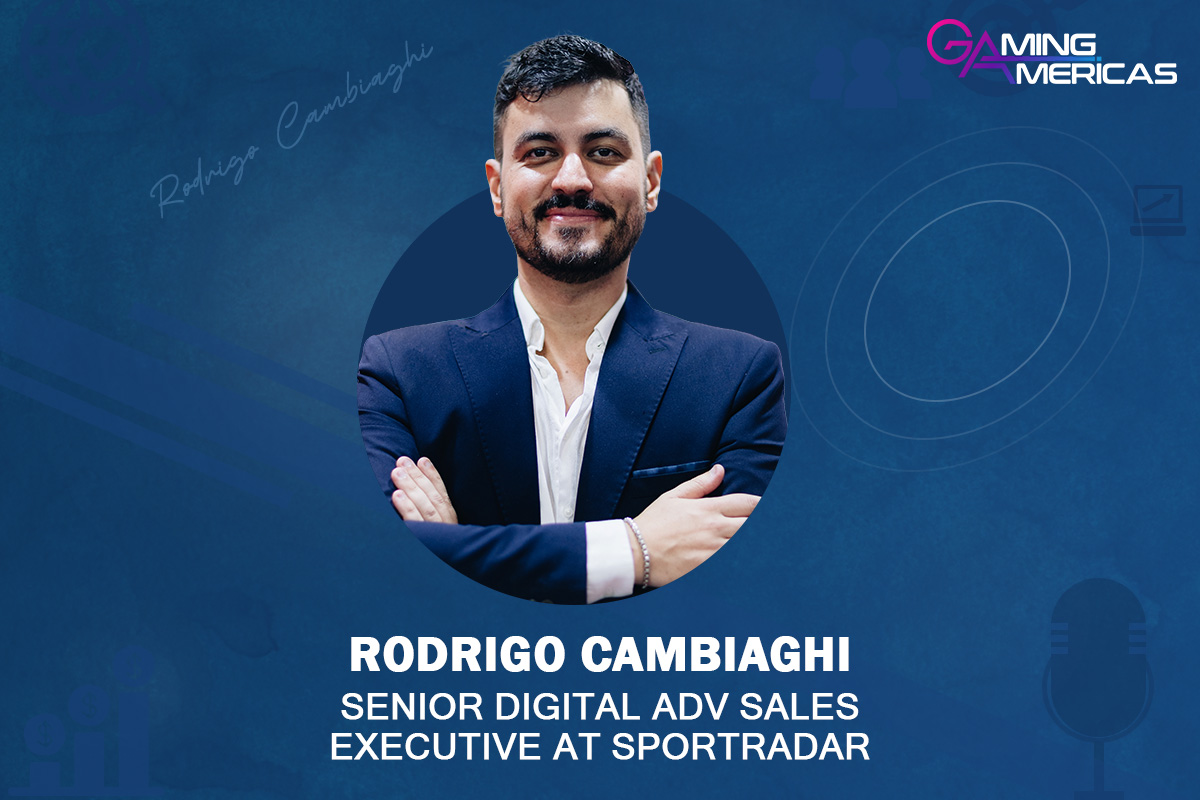
In this interview, Sportradar, represented by Rodrigo Cambiaghi, Senior Digital Advertising Sales Executive for Latin America, analyzes how operators can prepare for the 2026 World Cup, which strategies performed best in the Euro Cup and Copa América, the impact of real-time personalization and the challenges of executing regional campaigns in a fragmented regulatory landscape.
The estimated global betting volume for the 2026 World Cup is US$ 50 billion. What does this number represent in terms of real opportunity for Latin American operators, and what are the main risks for those who do not prepare?
Sportradar – The estimated US$ 50 billion betting volume during the 2026 World Cup shows the scale of the opportunity the tournament represents for Latin American operators.
We are talking about the largest attention and engagement event in the industry, in an edition that will feature 48 teams and 104 matches, creating more moments of connection with fans and more acquisition opportunities over 39 days of competition.
But the competitive differentiator will not lie solely in the size of media investment. The most prepared operators will be those capable of using data, technology and personalization to activate real-time campaigns aligned with the emotional context of the match.
Today, consumers expect more relevant experiences connected to what is happening on the field at that exact moment, whether it is a goal, a comeback or an outstanding individual performance.
At the same time, there is a significant risk for those who fail to prepare properly. Generic campaigns, relying only on bonuses or media volume, tend to lose efficiency in an extremely competitive environment.
Without robust real-time data infrastructure and continuous optimization capabilities, it becomes much more difficult to capture moments of highest betting intent and transform increased tournament traffic into sustainable long-term growth.
In the end, the 2026 World Cup should consolidate an important shift in the industry, where scale remains relevant, but technology, personalization and real-time execution become the true competitive differentiators.
You mention a “generalized sameness” in the market. What did the most successful operators at Euro 2024 and Copa América do differently in terms of advertising technology?
What we saw in Euro 2024 and Copa América was an important shift in approach.
The most successful operators moved away from broad and generic campaigns to adopt strategies much more driven by data, context and real-time fan behavior.
Instead of treating every minute of a match the same way, they began activating campaigns at moments of highest emotion and betting intent.
Advertising technology played a central role in this. Campaigns started using live data, automation and artificial intelligence to adjust messages, offers and creatives according to what was happening on the field.
A goal, a period of attacking pressure, an outstanding individual performance or even changes in match dynamics became triggers for dynamic campaign activation across multiple channels, including social, video, audio and programmatic.
The result was much more relevant and efficient communication. During Euro 2024 and Copa América, operators that combined branding, performance and moment-driven campaigns saw significant growth in deposits and a reduction in CPA, even in a highly competitive environment.
How do dynamic creative ads triggered by match moments actually work in practice — a goal, a corner, a shift in pace? Can you give a concrete example of a campaign?
Today, dynamic creative ads operate in a way that is closely connected to the logic of micro betting, which is precisely betting on fast and specific events within the match.
Instead of waiting for the final result of the game, fans interact with micro moments in real time, such as the next corner, the next shot on goal or whether a specific player will hit the target in the next play.
In practice, the technology monitors live match data and identifies moments of increased intensity or betting intent.
If a team starts applying heavy pressure, for example, the system can automatically activate campaigns related to the next corner, next shot on goal or other relevant offensive actions.
All of this happens within seconds, with personalized creatives being distributed across digital channels while the emotion of the play is still unfolding.
This model makes the experience much more contextual and relevant for the user. Instead of generic campaigns, fans receive messages aligned with the exact moment of the game and their own consumer behavior. It is precisely this combination of real-time data, automation and micro betting that is reshaping how operators approach acquisition and engagement during major sporting events.
The concept of “always on” is central to your approach. How do operators maintain relevance in the minutes between goals, when betting intent still exists but the peak moment has passed?
The “always on” concept is based on the understanding that fan engagement does not disappear between major match events.
Even when the game enters a period without goals, attention still exists in live statistics, anticipation of the next play, individual player performance and social media conversations. It is precisely in this interval that the most prepared operators are able to maintain relevance using real-time data and personalization.
In practice, this means activating campaigns and betting suggestions aligned with the current context of the game. If a team is applying more pressure, for example, users may receive offers related to the next corner, next shot on goal or other micro betting markets.
The focus shifts away from only the major event, such as a goal, and expands to include the entire dynamics of the match.
The key difference lies in the ability to transform live data into more relevant and continuous experiences. With automation, AI and behavior-driven campaigns, operators are able to keep users engaged throughout the entire match journey, not only during peak emotional moments.
The 2026 World Cup lasts 39 days and takes place across three countries. How should an operator structure its marketing budget to be agile enough to capitalize on unexpected outcomes without losing brand consistency?
In a tournament like the 2026 World Cup, flexibility becomes just as important as budget size. The most efficient operators do not work with a rigid plan from start to finish.
They structure campaigns capable of redistributing investment in real time, based on performance, audience behavior and narratives that emerge throughout the tournament.
This is especially important in a World Cup with 104 matches, multiple time zones and different markets involved.
Unexpected stories always emerge, such as surprise teams, viral players or matches that generate much higher-than-expected spikes. Prepared operators are able to react quickly to these moments, increasing presence in channels and campaigns that are performing best in that specific context.
At the same time, brand consistency remains fundamental. A common mistake is concentrating almost all investment solely on acquisition and immediate performance.
The strongest brands are able to balance awareness, acquisition and retention throughout the 39 days of competition, maintaining a clear identity while adjusting messaging, formats and campaign intensity as fan behavior evolves during the tournament.
What are the main differences between Latin American markets in terms of bettor behavior during major tournaments, and how does this affect campaign strategy?
Although football is a shared cultural element across Latin America, the region’s markets present very different levels of maturity, regulation and digital behavior.
In more mature markets, users already hold multiple accounts and have greater familiarity with live betting, making personalization, retention and user experience key factors. In newer markets, there is still a very strong focus on acquisition and awareness building.
We also see important differences in emotional fan behavior. During major tournaments, engagement tends to grow strongly as local teams progress in the competition.
This makes highly localized campaigns much more impactful than generic regional strategies. User behavior changes rapidly according to narrative, team performance and social media momentum at that moment.
For this reason, campaign strategy must be flexible and driven by real-time data. There is no single approach for the entire region.
The most efficient operators are able to adapt creatives, messaging, channels and even investment intensity based on the specific behavior of each market, maintaining cultural relevance and higher acquisition and retention efficiency.
The regulatory landscape in Latin America is fragmented. How can operators working across multiple markets run efficient campaigns without compromising local compliance?
Regulatory fragmentation is one of the main challenges in the industry today in Latin America, especially for operators working across multiple markets at the same time.
Each country has different rules regarding advertising, targeting, permitted channels and responsible communication, which requires campaigns to be much more adaptable and compliance-driven from the very beginning of planning.
In this scenario, technology and automation play a fundamental role. The most prepared operators work with platforms capable of applying market-specific restrictions in real time, adjusting targeting, formats, frequency and messaging according to local regulation. This allows operational efficiency without compromising compliance or regulatory safety.
At the same time, it is important to find a balance between standardization and local relevance. Regional strategy can be centralized in terms of brand, technology and data intelligence, but activation must respect the cultural and regulatory context of each country.
The most efficient campaigns today are precisely those that manage to combine regional scale with highly localized execution.
The post For Sportradar, the 2026 World Cup is set to reshape acquisition and engagement in sports betting appeared first on Americas iGaming & Sports Betting News.

In a strategic move set to reshape the competitive landscape of iGaming marketing technology, Optimove has announced the acquisition of Smartico. Despite the deal, both companies will continue to operate independently—preserving their brands, leadership teams, and product strategies.
This acquisition comes at a pivotal moment for the global online gambling industry. According to recent market research, the sector reached an estimated $95.3 billion in 2024 and is projected to nearly double to $185.17 billion by 2033. As the industry scales, so does its complexity, driven by evolving regulations in Europe, fragmentation in the United States, and rapid expansion across Latin America, Africa, and Asia. In this environment, robust customer relationship management (CRM) solutions are no longer optional—they are essential.
A Strategic Alliance Without Integration
Unlike traditional acquisitions that lead to integration, Optimove’s approach is notably different. Smartico will remain a fully autonomous business unit, with its founders continuing to lead strategic direction, product development, and day-to-day operations. Clients can expect no disruption in services, pricing, or product offerings.
This independence reflects a deliberate strategy: fostering competition within the same ecosystem. Both companies will continue to innovate separately, pushing each other—and the broader industry—forward.
Two Distinct Visions of iGaming CRM
The deal unites two of the most influential approaches to CRM in iGaming:
- Optimove built its reputation on advanced data analytics and AI-driven marketing. As the originator of the “Positionless Marketing” concept, the company enables marketers to orchestrate campaigns using intelligent agents that deliver hyper-personalized experiences at scale. This approach has reportedly improved campaign efficiency by up to 88%.
- Smartico, on the other hand, carved out its niche by integrating gamification directly into CRM systems. By embedding game-like mechanics into player engagement strategies, Smartico has helped operators drive deeper interaction and retention. The company is now advancing further by incorporating generative AI across its platform.
Together, these two philosophies—data-centric intelligence and gamified engagement—represent the future of player retention and marketing in iGaming.
Strengthening Market Leadership
According to Pini Yakuel, the decision to acquire Smartico was driven by its originality and execution. He emphasized that Smartico stood out as a competitor due to its pioneering role in combining gamification with CRM—an innovation that has since become a key differentiator in the market.
Similarly, Arman Gal highlighted that the partnership allows Smartico to scale faster while maintaining its identity. With Optimove’s backing, the company gains additional resources to expand its innovation capabilities and global reach.
Competition as a Catalyst for Innovation
Interestingly, both companies will continue to compete in the same market. Optimove will further develop its gamification solution, Optimove Gamify, while Smartico continues executing its independent roadmap. This dual-track strategy is rooted in the belief that competition drives better outcomes for operators.
Rather than consolidating power, the acquisition creates a dynamic ecosystem where two leading platforms evolve side by side—each pushing the boundaries of what CRM can achieve in iGaming.
The Role of AI in the Next Phase of Growth
Artificial intelligence remains at the core of this transformation. Optimove has been embedding AI into its platform since 2012, long before it became industry standard. Today, its AI-powered decisioning agents enable real-time campaign orchestration across multiple channels.
Smartico is following a similar trajectory, integrating generative AI to enhance its gamification-driven engagement model. This convergence signals a broader trend: the fusion of AI, CRM, and user experience design as the next frontier in digital marketing.
A Defining Moment for iGaming Marketing
This acquisition underscores the maturation of the iGaming CRM sector. What began as a niche category has evolved into a critical component of modern marketing infrastructure. With two leading innovators now aligned—yet independent—the industry is poised for accelerated innovation.
For operators navigating an increasingly complex global market, the message is clear: the future belongs to those who can combine data intelligence, personalization, and immersive engagement.
Similar Content
A high-authority source covering similar developments in iGaming and martech is:
- Forbes – Known for in-depth coverage of tech acquisitions and marketing innovation. A relevant article on AI-driven marketing trends in gaming and customer engagement can be found on their platform.
The post Optimove Buys Smartico, Keeps Independence appeared first on Eastern European Gaming | Global iGaming & Tech Intelligence Hub.

-

 Compliance7 days ago
HIPTHER Launches HALLO: The Standard in Compliance Expertise
-
Bonusetu.com6 days ago
Finland Sets Casino Gambling Risk Limits at 2% of Income, 4 Days, 2 Game Types
-
Compliance Updates7 days ago
HIPTHER Launches HALLO: The Standard in Compliance Expertise
-
Compliance Updates5 days ago
Dutch Gambling Trade Association Sues Meta Over Illegal Gambling Ads
-
Acquisitions/Merger6 days ago
Super agrees to acquire Romania’s Crafting Technologies for new Cluj tech hub
-
30-0 Kongeserien6 days ago
Kongebonus launches 30-0 Kongeserien Eliteserien fantasy draft game
-
BetWarrior5 days ago
Kambi Group Extends its Partnership with BetWarrior
-
Latest News6 days ago
Play’n GO Releases its Latest Slot Game “Shark Feast”