Latest News
Mobile Gambling Market Assessment and Forecast 2020-2027 – Poker Segment Corners a 16.5% Share in 2020

The “Mobile Gambling – Global Market Trajectory & Analytics” report has been added to ResearchAndMarkets.com’s offering.
The publisher brings years of research experience to this 9th edition of the report. The 185-page report presents concise insights into how the pandemic has impacted production and the buy side for 2020 and 2021. A short-term phased recovery by key geography is also addressed.
Global Mobile Gambling Market to Reach US$250.4 Billion by the Year 2027
Amid the COVID-19 crisis, the global market for Mobile Gambling estimated at US$79.5 Billion in the year 2020, is projected to reach a revised size of US$250.4 Billion by 2027, growing at a CAGR of 17.8% over the analysis period 2020-2027.
Betting, one of the segments analyzed in the report, is projected to grow at a 17.6% CAGR to reach US$141.4 Billion by the end of the analysis period. After an early analysis of the business implications of the pandemic and its induced economic crisis, growth in the Casino segment is readjusted to a revised 18% CAGR for the next 7-year period. This segment currently accounts for a 11.9% share of the global Mobile Gambling market.
The U.S. Accounts for Over 26.9% of Global Market Size in 2020, While China is Forecast to Grow at a 22.9% CAGR for the Period of 2020-2027
The Mobile Gambling market in the U.S. is estimated at US$21.4 Billion in the year 2020. The country currently accounts for a 26.91% share in the global market. China, the world second largest economy, is forecast to reach an estimated market size of US$59.1 Billion in the year 2027 trailing a CAGR of 22.9% through 2027.
Among the other noteworthy geographic markets are Japan and Canada, each forecast to grow at 12.8% and 15.7% respectively over the 2020-2027 period. Within Europe, Germany is forecast to grow at approximately 14% CAGR while Rest of European market (as defined in the study) will reach US$59.1 Billion by the year 2027.
Poker Segment Corners a 16.5% Share in 2020
In the global Poker segment, USA, Canada, Japan, China and Europe will drive the 13.9% CAGR estimated for this segment. These regional markets accounting for a combined market size of US$9.9 Billion in the year 2020 will reach a projected size of US$24.5 Billion by the close of the analysis period.
China will remain among the fastest growing in this cluster of regional markets. Led by countries such as Australia, India, and South Korea, the market in Asia-Pacific is forecast to reach US$39.4 Billion by the year 2027, while Latin America will expand at a 16.4% CAGR through the analysis period.
Competitors identified in this market include, among others:
- Betfair Group PLC
- Ladbrokes Coral Group plc
Total Companies Profiled: 38
For more information about this report visit https://www.researchandmarkets.com/r/zfv23n
Powered by WPeMatico


The esports organisation’s second anime apparel collaboration will be sold exclusively via g2esports.com/shop.
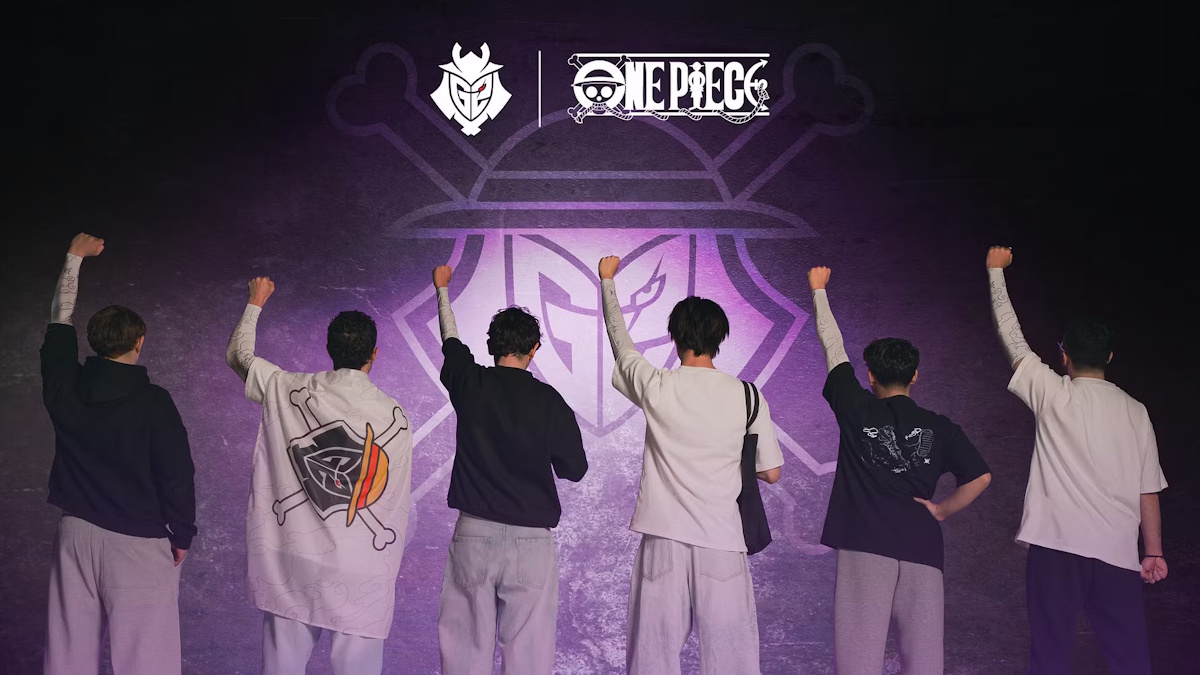
G2 is launching a limited-edition G2 | One Piece capsule collection on June 25, with the drop available exclusively through the organisation’s online store at g2esports.com/shop.
The collection is inspired by One Piece’s Gear 5 Monkey D. Luffy and includes hoodies, zip-ups, t-shirts, caps, sleeves, and tote bags. According to G2, the items use a black-and-white palette and feature a minimalist embroidered logo alongside a custom G2 | One Piece Jolly Roger that combines the G2 samurai emblem with Luffy’s straw hat.
“At G2, we’re continuing to push the culture and fashion of esports beyond competition alone, and this One Piece collection is a natural extension of that,” says Sabrina Ratih, COO of G2 Esports. “We wanted to create a capsule that continues to elevate the esports fashion space – understated, premium, and stylish enough for everyday wear, while still carrying the spirit of adventure, ambition, and individuality that defines One Piece and G2 alike. Every piece is designed to bridge the gap between fandom and everyday style, and continuing our mission to redefine what esports fashion can be.”
G2 described the drop as its second anime collaboration, following a previous apparel collaboration with Solo Leveling. The company positioned the release as part of its broader effort to connect esports, anime, and streetwear.
One Piece debuted in 1999 and remains one of the largest anime franchises globally. G2 cited over 600 million manga copies sold and more than 1,160 episodes for the series.
The post G2 drops limited-edition One Piece streetwear capsule on June 25 appeared first on EE Gaming | Global iGaming & Tech Intelligence Hub.
Projects sit within UKRI’s Research Programme on Gambling and the GHR-UK Evidence Centre, backed by the statutory levy.
Ygam has been named as a partner on four projects funded through the UKRI Research Programme on Gambling, supported by the statutory levy. The charity will work with academic teams including the University of Birmingham, Bournemouth University, the University of Plymouth, Lancaster University, and Liverpool John Moores University.
The four projects sit within the Gambling Harms Research UK (GHR-UK) Evidence Centre, which coordinates 19 one-year Innovation Partnerships under the programme. UKRI has been appointed by the UK Government to oversee research commissioned through the new statutory Gambling Levy. Under the levy, 20% of annual funding will be allocated to research, equating to £22.1 million in 2025/26.
Emily Tofield, Chief Executive of Ygam, said: “We are pleased to be working in partnership with leading university partners, contributing our expertise in a key strategic area of our work. A defining strength of our approach is that it is grounded in robust insight and research, underpinning everything we do. This enables us to understand how and why harms emerge and translate that into practical, preventative education that is credible and scalable. We look forward to achieving these outcomes together and informing effective measures to prevent harms among children and young people.”
Ygam said its advisory panels — including young people, individuals with lived experience, community and faith leaders, gaming and esports representatives, and student ambassadors — will help shape the research to reflect “real-world experience and diverse community perspectives.”
The four partnerships are: INTEGRATE (University of Birmingham, Ygam, Al-Hurraya and Community Connexions), focused on intersectional gambling harm and interventions for children, young people and emerging adults; “From Evidence to Action: Safeguarding Neurodivergent Young People in Gamified Digital Environments” (Bournemouth University, Ygam, Work’n’Diversity CIC), focused on gambling-like risks in gamified digital environments; GRASP (University of Plymouth-led partnership including NatCen, NHS and third-sector organisations, and Ygam), mapping support pathways and gaps in prevention and recovery; and GRACE-Net (Lancaster University and Liverpool John Moores University with local authorities, NHS partners, third-sector organisations and Ygam), testing collaborative approaches in the North West of England and sharing learning more widely.
The post Ygam joins four UKRI-funded gambling harms research partnerships appeared first on EE Gaming | Global iGaming & Tech Intelligence Hub.
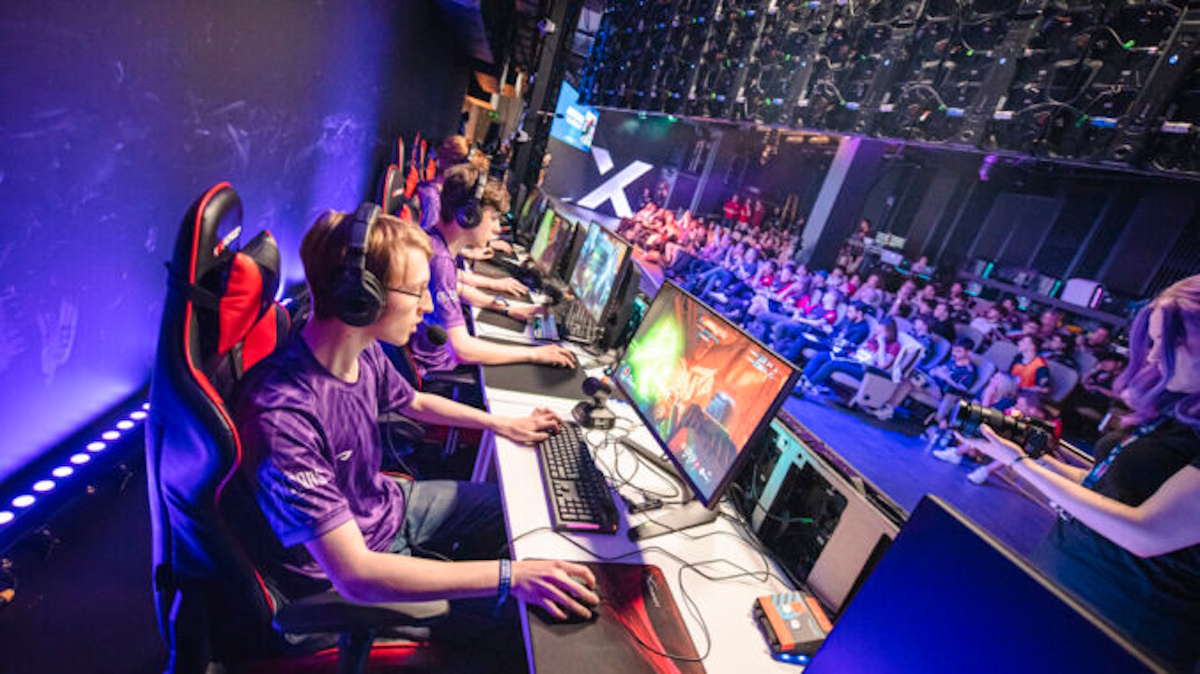
EFG, Hero Esports and Niko Partners survey 8,000 fans across eight markets; 74% report ads and brand presence influence buying.
ESL FACEIT Group (EFG), Hero Esports and Niko Partners have released a multi-country Gen Z esports study claiming around 400 million Gen Z consumers (20%) regularly engage with esports. The findings were published on 25th June 2026 in Cannes, France, in a white paper titled The Esports Generation: Who They Are & Why They Spend.
The report is based on survey data from 8,000 Gen Z esports fans aged 13-30 across eight markets. It positions esports as a high-attention channel for brands: 85% of respondents said they notice branding in esports, while 74% self-reported that advertising and brand participation in gaming spaces influences their purchasing behaviour. The study also reports that 66% have bought a product following a collaboration or co-branding partnership with an esports team, game or player.
On consumption and fandom touchpoints, the study found 71% regularly watch gaming content, including 66% who watch gaming livestreams and 33% who watch or listen to gaming podcasts. It also points to offline reach: 21% said they regularly attend gaming conventions and esports events, with the average respondent attending at least one in-person event in the past nine months.
The white paper also breaks out claimed purchase categories linked to esports collaborations over the past year, led by food and beverage (33%), electronics (33%) and fashion (32%). Beyond core categories, it reports 28% bought esports-related collectibles, 17% purchased makeup, beauty, or skincare products, and 10% bought from partnered brands in other categories.
Niccolo Maisto, CEO at ESL FACEIT Group said: “Esports has evolved into one of the most effective channels for companies looking to connect with Gen Z audiences at scale. What makes it unique is not just its reach, but the depth of engagement and trust that exists between fans, players, teams, and events. This research shows that esports fans are highly invested participants, not passive viewers, creating an opportunity for brands that show up authentically and build meaningful and lasting connections with this key audience.”
Danny Tang, Co-Founder and CEO of Hero Esports said: “This whitepaper confirms what we at Hero Esports have long believed: esports has evolved into a global cultural and economic force. The data shows an audience that is young, diverse, and deeply engaged. For brands, the message is clear—esports is no longer a niche market; it is the premier platform to connect with the next generation of consumers. We are proud to partner with Niko Partners and EFG to provide this blueprint for understanding and succeeding in this dynamic industry.”
Lisa Hanson, CEO at Niko Partners said: “Our data shows that, much like fans of other sports, Gen Z esports fans are incredibly passionate and have formed strong bonds within their communities. However, their media and consumer affinities extend well beyond gaming and esports, with our research revealing naturally connected interest areas that create valuable overlapping opportunities for brands and partners that show up authentically in this ecosystem.”
The post Study: 400m Gen Z esports fans say brand activations drive purchases appeared first on EE Gaming | Global iGaming & Tech Intelligence Hub.

-

 Australia7 days ago
Former Star Entertainment Executives Mathias Bekier and Paula Martin Disqualified and Ordered to Pay Penalties
-
Alejandra Burato7 days ago
Record Attendance, Exciting New Releases, and a Resounding Success: This was Zitro Experience Peru
-
Amusnet7 days ago
Weekend Reels | Week 25: Slot Drops & Trends
-
ArenaPlus7 days ago
DigiPlus Wins “Digital Operator of the Year” Award at 2026 Global Gaming Awards Asia-Pacific
-
Anthony Dalla-Giacoma7 days ago
Elysium Studios Releases its Latest Slot Game “Hood and Loot”
-
Greece7 days ago
SYNOT Games Announces New Partnership with Superbet
-
Bragg Gaming Group4 days ago
Massive Gaming launches Blitzcrown titles on Superbet Brazil via Bragg Hub
-
BurraPay7 days ago
Byte Federal Announces Successful Launch of Custom-Built Integration Supporting BurraPay’s Historic Entry into America’s Regulated Gaming Market