Austria
Austrian Brand Value Study: NOVOMATIC Defends Top Ranking

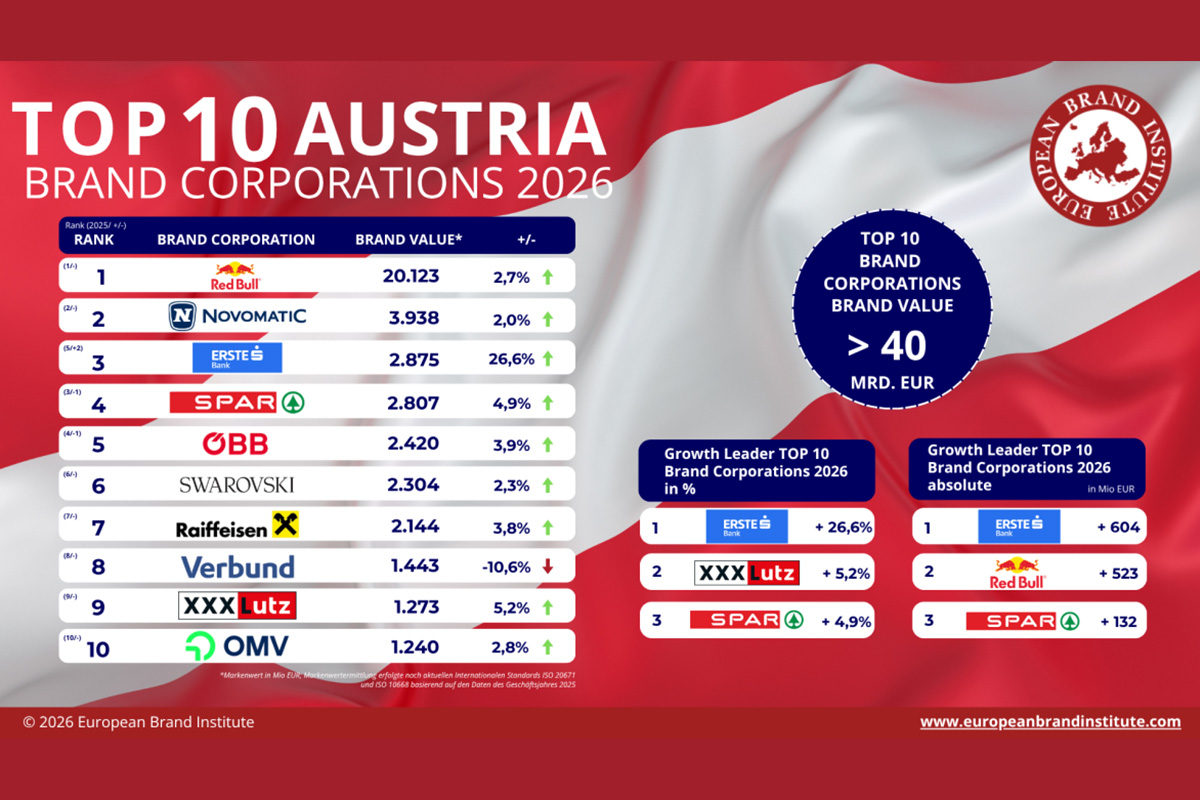
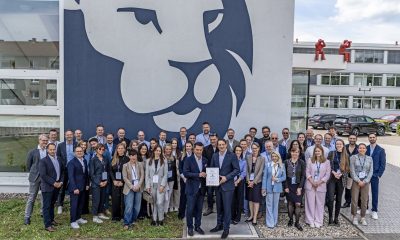
In the 23rd edition of the Austrian Brand Value Study, the European Brand Institute (EBI) once again recognised the country’s most valuable and sustainable brands. NOVOMATIC continues its winning streak, ranking second behind Red Bull for the seventh consecutive year with a brand value of EUR 3.938 billion, up 2.0% from the previous year.
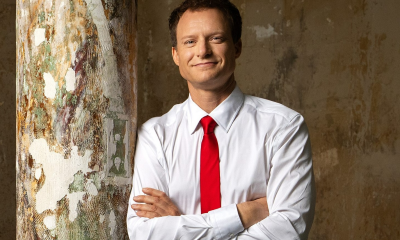
“This top ranking once again confirms the strong international appeal of the NOVOMATIC brand and the success of our long-term corporate strategy. We have succeeded in further strengthening the NOVOMATIC brand worldwide through continuous innovation, the expansion of our global presence, and a consistent focus on sustainable growth. The fact that we are once again among the leading companies in the Sustainable Brand Ranking shows that economic success and responsible business practices are inextricably linked at NOVOMATIC,” said Stefan Krenn, Member of the NOVOMATIC AG Executive Board.
This prestigious award highlights NOVOMATIC’s strong market position and sustainable growth. The company has consistently ranked among Austria’s most valuable corporate brands since 2020. The evaluation is based on international standards and considers factors including brand strength, brand potential, trends and economic performance.
NOVOMATIC’s renewed second place reaffirms its position as a leader in the Sustainable Brand Ranking. A key factor in this success is the Group’s corporate responsibility and ESG program, which firmly integrates environmental, social and governance aspects into the long-term corporate strategy. The effectiveness of these measures is regularly confirmed by independent ESG rating agencies.
The Austrian Brand Value Study is conducted annually by the European Brand Institute. For the 2026 ranking, 180 brand-name companies from 16 industries were analyzed, more than 45% of which are Austrian-owned. The evaluation is conducted in accordance with the international standards ISO 10668 and ISO 20671.
With its top rankings in both the Brand Value and Sustainable Brand categories, NOVOMATIC AG has once again underscored its position as one of Austria’s most important companies with international influence.
The post Austrian Brand Value Study: NOVOMATIC Defends Top Ranking appeared first on EE Gaming | Global iGaming & Tech Intelligence Hub.







Background
Austria’s governing coalition — ÖVP, SPÖ and NEOS — has agreed a sweeping overhaul of the Gambling Act. The draft bill entered parliamentary consultation on, Monday 29 June 2026. Lead negotiators Andreas Ottenschläger (ÖVP), Jan Krainer (SPÖ) and Christoph Pramhofer (NEOS) call it the biggest reform of the law in 26 years. Two pillars: tougher player protection, and a ground-up rewrite of online licensing.
Timing
No formal Council of Ministers resolution is public yet. What is public: the draft amendments went into parliamentary consultation today. Next comes TRIS — the draft must be notified to the European Commission, says Vienna-based gambling lawyer Arthur Stadler, triggering a standstill of at least three months before parliament can hold a final vote. Extensions are possible.
Cooling-off / non-offering period
The bad-actor clause has three teeth: retroactive tax payment, settlement of player claims, and a non-offering period. On the last point: Under the draft, operators must clear that freeze properly: from 1 January 2027 until the licence is actually granted, they have to shut down their existing unlicensed online offering. Fail to comply, and the penalty escalates fast: any operator that doesn’t observe the cooling-off phase faces an 18-month lock-out from licensing altogether. Stadler’s math: That’s a minimum nine-month freeze, 1 January to end-September 2027 at least depending when the licenses are awarded individually. It looks like that first license might be granted to those new market entrants adopting such early blackout, timewise landing exactly after the moment when Austrian Lotteries’ win2day concession expires on 30 September 2027.
The bad-actor clause has three teeth: retroactive tax payment, settlement of player claims, and a non-offering period. On the last point: Under the draft, operators must clear that freeze properly: From 1 January 2027 until the licence is actually granted, they have to shut down their existing unlicensed online offering. Fail to comply, and the penalty escalates fast: any operator that doesn’t observe the cooling-off phase faces an 18-month lock-out from licensing altogether. Stadler’s math: the legislator has, without saying so explicitly, built in an incentive structure. The floor is a nine-month freeze — 1 January through end-September 2027 — though actual length depends on when individual licences get awarded. The likely sequencing: new entrants who front-load the blackout early position themselves first in line, with awards landing right after Austrian Lotteries’ win2day concession expires on 30 September 2027.
Contradiction
Stadler sees a basic contradiction baked into the package. “Two of the three major elements work against each other. If the Finance Ministry wants to maximise retroactive tax recovery, a mandatory blackout period hands you a tax base of zero for that exact stretch. You can’t optimise for both. Operators are left asking whether the real goal is revenue or exclusion.”
Austria as a high-tax jurisdiction
Beyond the clearance condition — and an unresolved question of whether repaid player amounts can be offset against ongoing tax liabilities — sits the headline number: a 45% GGR tax rate. That puts Austria in elite company, in the same bracket as the UK (40% from April 2026) and the Netherlands (37.8%). “It’s a top-of-the-table tax rate for a market that doesn’t even have a functioning licensed channel yet,” Stadler says. But the tax rate alone doesn’t tell the whole story, he adds. “Even at 45% GGR, whether Austria actually functions as a licensed market depends on the regulatory mix around it (player protection rules, advertising limits, deposit and stake caps, AML obligations and more). You have to look at the framework as a whole and ask whether it’s actually attractive enough for new entrants. That’s the kind of detail that decides whether the channelisation target is achievable.”
Author: Arthur Stadler | STADLER PARTNER
The post Austria: Draft bill entered parliamentary consultation appeared first on EE Gaming | Global iGaming & Tech Intelligence Hub.
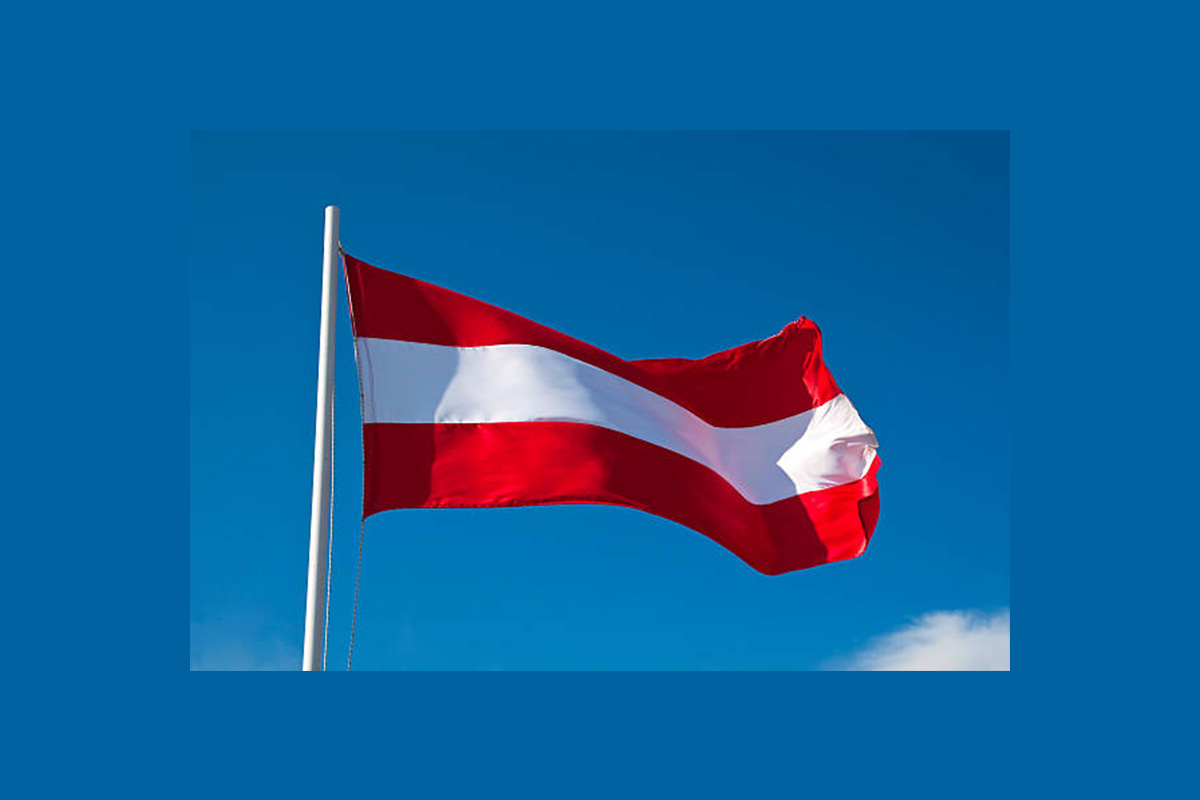
Debate is raging within the Austrian government about whether to impose a cooling off period and freeze ex-grey market operators out of its upcoming open online casino market, with local operators looking to inflict maximum punishment and legal experts arguing that the proposal would be self-defeating.
Austria is on course for an historic opening of its long monopolized online casino market. Currently, only Casinos Austria, via its brand Win2Day, has the approval of the Austrian government to offer online casino games to the general public.
But for many years, that legal status was ignored by operators based largely out of Malta, who populated a vibrant grey market by leaning on the controversial argument that Austria’s monopoly model is in violation of EU law.
These offshore operators were eventually forced to retreat by a series of high profile court rulings that found Austrian consumers have the right to reclaim any and all losses to an operator without an Austrian licence.
Facing potentially hundreds of millions of euros in compensation claims, grey market providers have largely retreated to Malta, where Bill 55 continues to protect them.
With liberalisation now on the horizon, some forces within the Austrian government and the local gambling industry are insistent that companies which took part in the grey market should not be allowed to simply apply for a licence and wipe the slate clean.
Who’s in favour?
Those lobbying the hardest for a cooling off period are Austrian incumbents.
“One day you’re offering illegal services and the next day you get a license – that’s absurd,” a spokesperson for Casinos Austria told the Kronen Zeitung newspaper.
They are joined by German-headquartered gambling giant Novomatic, which operates a number of land-based venues in Austria under the brand Admiral.
Having sat on the sidelines of the online market for many years, Admiral is incensed by the idea that it could be competing on day one of a new market with operators who did not take the same approach.
The three parties that form Austria’s coalition government are still debating the issues, according to reports.
The only major practical example of a true “cooling off” period occured in the Netherlands, where an 18-month prohibition was in place that prevented many companies from entering the market when it opened in 2021.
At the time, Kindred reported that being forced to sit out market launch had cost it $16.2m a month, wiping out effectively 50 percent of the group’s EBITDA.
Kindred, which has since transformed into FDJ United following an acquisition by the French lottery giant, subsequently regained its strong Dutch position following the end of the cooling off window.
Likely to cool
At least one Austrian legal expert believes that there is a good chance that some form of cooling off, or an equivalent punishment, will be enacted as part of the new law.
“At the moment, it is likely that some form of cooling-off period will be introduced, perhaps by introducing sanctions that apply prior to licensing, but the details are yet to be determined,” said Nicholas Aquilina, a partner at Brandl Talos law firm.
“Whether a cooling-off period will be introduced and how restrictive measures will be will have a substantial impact on the success of the long-overdue opening of Austria’s online gambling market,” he added.
The time pressures referenced by Aquilina relate to the expiry of Win2Day’s exclusive licence, which is set to run out in October 2027. The government intends to establish its new online gambling regime well ahead of that date, so that new licences can be issued in time.
Any attempt to extend Win2Day’s monopoly could run into challenges with EU tender laws and the other highly unpalatable option is to leave the nation in limbo with no legal providers at all.
Complications
Despite how the debate has been framed by some parties, the reality will not be as simple as either allowing ex-grey market offenders into the new Austrian online casino marketplace free of consequence or forcing them to spend time in the sin bin.
There is broad political agreement that any international operator looking to obtain a licence in Austria must pay back taxes owed on its former activity in order to be granted approval.
Operators will also need to settle any outstanding player refund claims, something which could cost companies huge sums and may ultimately keep some of them out of the market for good.
There are thought to be thousands of pending refunds, which operators have largely been refusing to pay while they take refuge behind Malta’s Bill 55.
Against that backdrop, lawyers Christian Rapani and Felix Hohenthanner argue that the penalties for returning to Austria will likely be harsh enough.
“A further exclusion of two to three years on top of that would, in our view, work against the reform’s own central objective. The operators currently holding the largest share of Austrian play are exactly the ones a cooling-off period would shut out. If they cannot offer a licensed product for two to three years, their customers, it is highly likely, will not migrate to the licensed providers,” they told EEGaming.
Ultimately, the two lawyers said, the push for a cooling off period is more about protecting the vested interests in Austria’s casino market than an attempt to keep gamblers safe.
“Our impression is that the proposal is supported essentially only by the land-based operators and by the single provider that already holds a licence in Austria, in other words by those who benefit from keeping new entrants out. We therefore see it less as a genuine player-protection measure than as a last attempt to preserve existing market positions,” they said.
The post Austria Could Force Offshore Operators To Sit Out Market Launch appeared first on EE Gaming | Global iGaming & Tech Intelligence Hub.
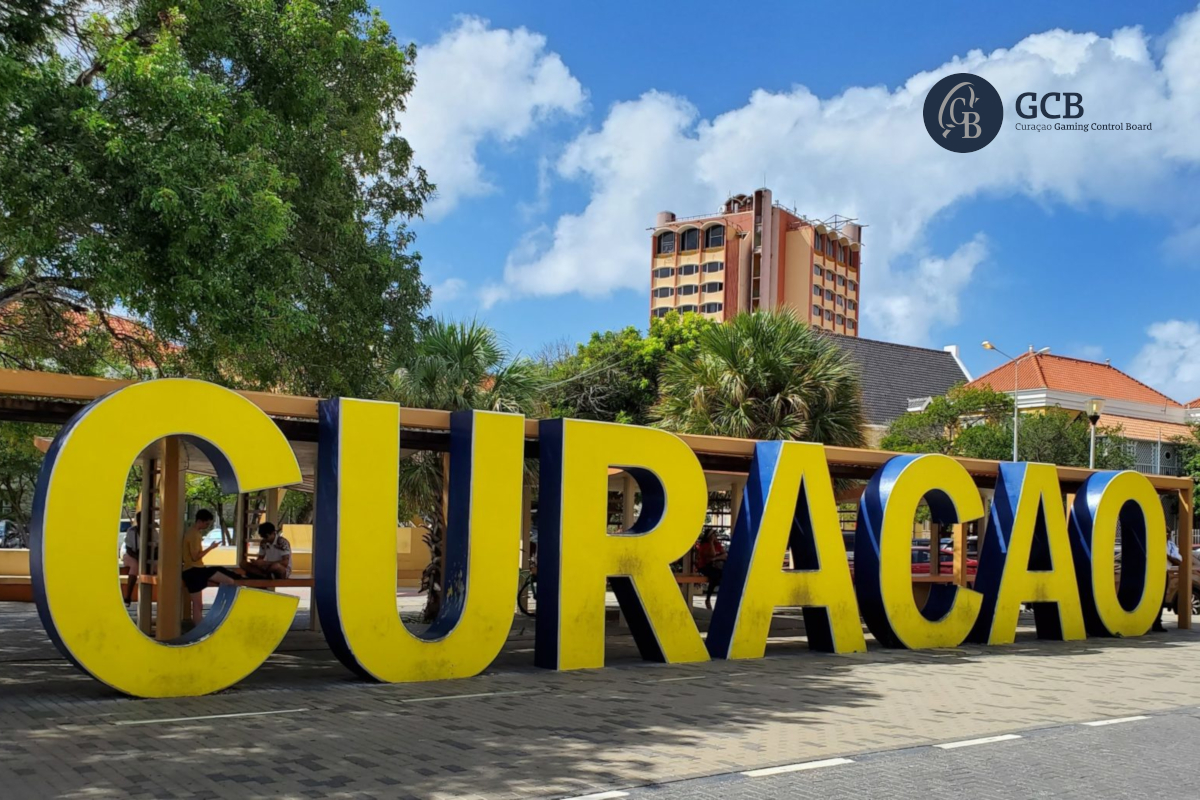
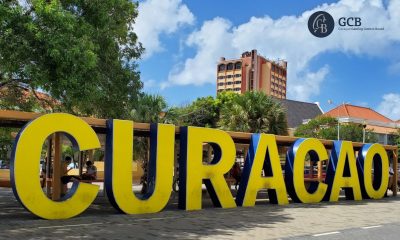
The sprawling tendrils of the player refund drama look to finally have ensnared Curacao, much in the way they have imperilled Malta for the past few years, after a local court ruled that a refund owed to a player in Austria must be paid by an operator based on the Caribbean island.
Experts believe the ruling marks a turning point for Curacao in the long-running player refund saga — the attempts by players to reclaim all of their losses from offshore operators in European grey markets.
Last week, the highest legal authority of the Dutch Caribbean islands — The Joint Court of Justice of Aruba, Curaçao, Sint Maarten, and of Bonaire, St. Eustatius and Saba — found in favour of an Austrian gambler.
The individual had originally won their case back in 2023, when an Austrian court ruled that she was entitled to all of the €25,518.42 lost to Raging Rhino N.V., which operates the brand LuckyDays.
This ruling is just one of thousands that have been issued in Austria and Germany over the past five years, with hundreds of millions of euros in refunds either already paid out via judgements and settlements or, more likely, blocked by gambling-friendly jurisdictions.
For the most part, this wave of pro-player judgements has created issues for Malta, where a larger number of current and former grey market gambling providers are headquartered.
That ultimately led to the infamous Bill 55, a piece of legislation which empowers judges in Malta to block rulings from foreign courts against local gambling companies, on the grounds that permitting the refunds to go ahead would violate the country’s public order.
Bill 55 remains highly controversial and is coming under sustained pressure from a series of cases currently being heard before the Court of Justice of the European Union (CJEU).
Order maintained
Curacao has also traditionally offered a friendly environment for online gambling operators, albeit with a considerably more tarnished reputation than Malta.
So it has come as a surprise to many observers that judges in the Raging Rhino case have ultimately sided with lawyers attempting to transfer a refund judgement from Austria.
According to reports in the Curacao Chronicle, Raging Rhino attempted to match the Maltese defense, arguing that allowing the refund to go through would violate Curacao’s public order
Judges also refused to allow the gambling company to re-litigate the case in any way, asserting that their task was simply establishing whether the foreign judgment could be safely recognised in Curacao.
Raging Rhino were also ordered to pay €2,286.72 in legal costs, the Chronicle said.
A tipping point
Although the volume of cash involved in this case is relatively minor, it represents the tip of a potentially vast iceberg that could cost operators in Curacao huge sums.
Lawyers and litigating funding companies have spent years finding potential clients and buying up claims from anyone who gambled in Austria and Germany with an operator without a local licence.
That includes plenty of gambling companies in Curacao, which has long hosted a bustling offshore gambling community.
Until recently, that sector was almost completely hidden by opaque layers of regulation, however recent reforms on the island have forced operators to apply for new licence and, in so doing, join a public register that displays their status.
According to that register, Raging Rhino’s Curacao licence expired on March 26, but it has an application which is currently being assessed.
Although this new era of transparency remains the target of criticism, last week’s ruling demonstrates that forcing companies out into the open is also opening them up to greater legal risk.
The Raging Rhino judgement is blood in the water for the many legal teams and litigating funding firms that have hundreds, if not thousands, of player refund cases on their books.
With major support from Malta, lawyers representing gambling companies have been fairly successful in protecting their clients, following an initial wave of settlements.
Although the tide may be gradually turning against the industry, thanks to the CJEU, pro-industry lawyers still believe that player lawyers who have spent considerable sums acquiring claims are desperate to find ways to generate income while they remain stymied by Bill 55.
A weak point in the armour of Curacao operators, who have for so long resisted any international enforcement, is likely to spur a flurry of new claims and attempts to have judgments transferred from Germany and Austria.
At least one expert in online gambling law believes that this judgment will effectively end all operations in Germany and Austria for Curacao-based companies.
This would mirror the experience of Malta, which saw its local operators pushed out of Austria by the threat of refund judgments.
Maltese firms that chose not to apply for an online slots or betting licence have also exited Germany.
With judges having established a precedent that European refund judgments can be transferred to Malta, a wave of similar cases is sure to follow, raising serious questions about the status of Curacao as a haven for the offshore online gambling industry.
The post Landmark Player Refund Ruling Threatens Curacao appeared first on Eastern European Gaming | Global iGaming & Tech Intelligence Hub.

-

 Casino Content7 days ago
PopOK Gaming secures Argentina certification to supply iGaming content
-
Argentinian market7 days ago
PopOK Gaming Strengthens Latin American Expansion with Argentina Certification
-
Canada7 days ago
Tonybet pays first $15,000 CAD prize in World Cup Card Collection Canada promo
-
Canada7 days ago
Tonybet’s World Cup Card Collection campaign lands first $15k Bronze winner
-
Alberta4 days ago
Octoplay secures conditional Alberta iGaming supplier approval from AGLC
-
Canada4 days ago
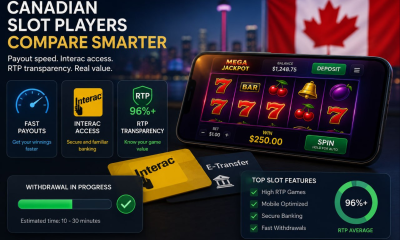
What Canadian Slot Players Are Really Comparing in 2026: Payout Speed, Interac and RTP Transparency
-
Africa3 days ago
SpringbokCasino ties July free spins to ‘Minions in the Wild’ campaign
-
content-supply4 days ago
Million Games launches Skull King’s Treasure with partner studio Arcane Pixel