Boomerang Partners
Boomerang Partners reveals first Golden Boomerang Awards 2026 leaders in the race for Wimbledon

Boomerang Partners has shared the first leaderboard results from the Kickoff stage of the Golden Boomerang Awards 2026. One month into the tournament’s third season, the first frontrunners have appeared in the race for the stage’s main prize – a trip to the Wimbledon Championships.
The race for Wimbledon starts to take shape
The Kickoff stage has started at a fast pace. After the first month, the leading team has reached 256 points. The rest of the top five currently stand at 218, 156, 142, and 100 points, followed by teams with 93, 62, 30, 26, and 20 points in the top ten.
The early gap is not only about traffic volume. The top teams are also actively using boosts, special tasks, and stage-based opportunities. For the rest of the field, leaving those mechanics unused can quickly turn into lost points.
For now, the top ten are closest to the stage’s main prize – a trip to the Wimbledon Championships, taking place from June 29 to July 12, 2026. But the Kickoff stage runs until June 9, and May leaves enough room for movement. Several major sports events are still ahead, giving active teams more opportunities to earn points before the stage closes.
The Mystery Box draw looks ahead to football summer
Boomerang Partners is also running the first Mystery Box draw during the Kickoff stage of the Golden Boomerang Awards 2026. This mechanic is separate from the leaderboard: five active participants have already been selected at random, with another five to be named by the end of the month. The first Mystery Boxes go to Zitora Agency, AskGamblers & Gentoo Media, alfa:search, Gdc group, and AskBonus.
The Mystery Box is tied to the FIFA World Cup 2026, although Boomerang Partners is not revealing the full contents in advance. For now, the company is only hinting at exclusive football items connected to national teams competing in the tournament.
The next stage of the Golden Boomerang Awards 2026 will run during one of the busiest football periods of the year. By then, the Mystery Box will have a direct connection to what many fans will be watching most closely – the FIFA World Cup.
May brings more room to move
May is the busiest part of the Kickoff stage. The month brings the decisive rounds of European football competitions, the NBA and NHL playoffs, Roland Garros, and other events that tend to concentrate audience interest around key match days.
For affiliate teams, this is where planning becomes important. A steady flow of traffic is useful, but the bigger gains are likely to come from choosing the right days to push, completing additional tasks, and using the remaining point-earning opportunities before June 9.
The first month has shown who started strongest. May will show who can keep that pace – and who can use the final stretch to move closer to Wimbledon.
Kristina Shkredova, Affiliate Team Lead at Boomerang Partners, commented: “The first month has shown that teams are treating the Kickoff stage as a real competition, not just a short campaign. The leading positions are already backed by a clear strategy: teams are using boosts, planning around sports peaks, and staying active across different mechanics. But this is exactly why the stage is still open. In May, one well-timed push can change a team’s position quickly, so consistency and timing will matter as much as the current point gap.”
The road to London remains open
The Kickoff stage of the Golden Boomerang Awards 2026 continues until June 9. Until then, the leaderboard remains open, with updates on the stage results, the remaining Mystery Box winners, and the race for the main prize in London available on the official Golden Boomerang Awards website.
About Boomerang
Boomerang Partners is a rapidly growing global marketing agency offering a wide range of services. Boomerang Partners is an Official Regional Partner of AC Milan. In 2024, it launched the inaugural Golden Boomerang Awards – a global tournament for affiliate teams. More than 400 affiliate teams participated in the second season of the tournament in 2025. Partners of the Agency launched six new products in 2024-2025, contributing to a nearly 1.5-fold increase in product users.
The Agency’s clients’ portfolio contains 10+ brands offering affiliate and entertainment services across 40+ markets in compliance with local regulations. These products provide incentive programs and 24/7 multilingual support.
References to Wimbledon, FIFA, and other third-party brands are made for descriptive purposes only. Boomerang Partners is not affiliated with, endorsed by, or officially connected to these entities in any way.
Boomerang Partners acts as an Official Regional Partner of AC Milan. Any experiences related to AC Milan are provided within the scope of this partnership.
The post Boomerang Partners reveals first Golden Boomerang Awards 2026 leaders in the race for Wimbledon appeared first on Americas iGaming & Sports Betting News.







Boomerang Partners
Boomerang Partners delivered expert sports insights during two days of iGB L!VE London 2026

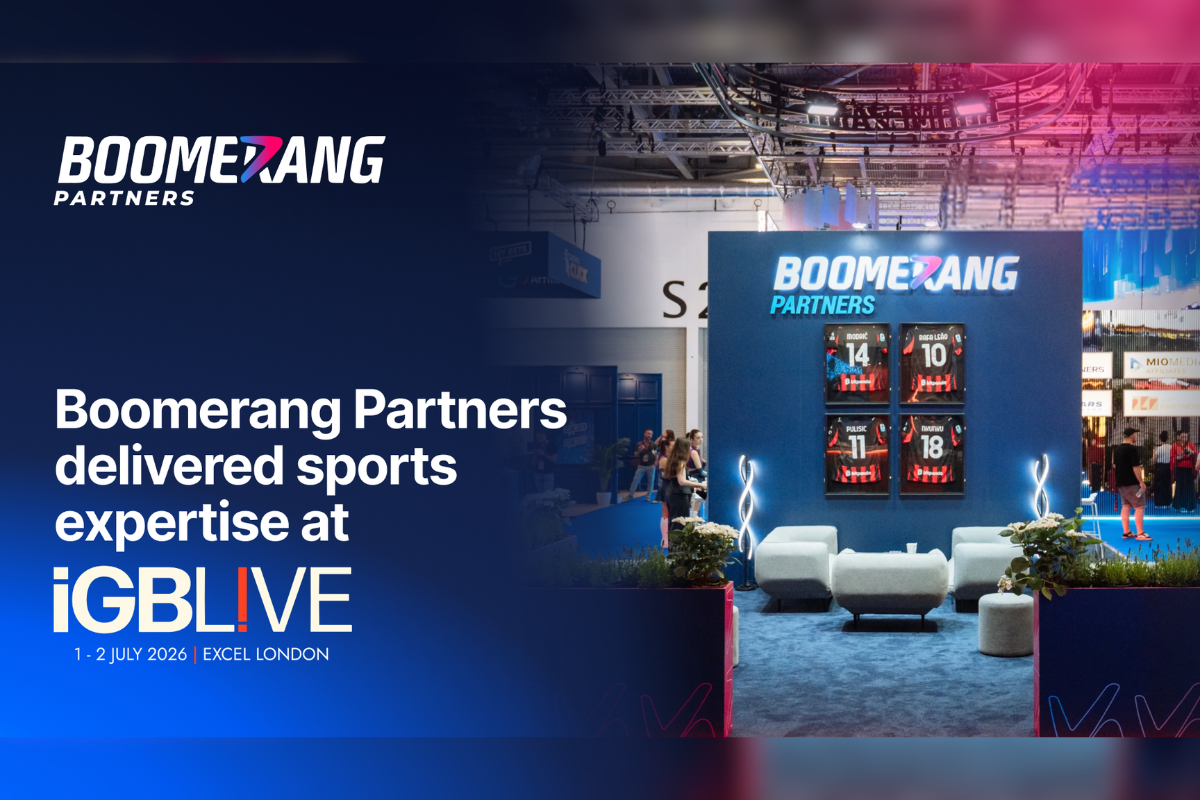
From July 1 to 2 inclusive, Boomerang Partners, an Affiliate Gambling & Betting Marketing Agency, participated in iGB L!VE London on stand F50. One of the world’s largest iGaming events was held on a grand scale at ExCeL London. It proved to be an effective networking platform for major operators, affiliate teams, tech vendors, and game providers.
Meetings, sports expertise, and new agreements
One of the main topics attracting visitors to the stand was Boomerang’s expertise in sports. The company runs one of the leading sports-focused affiliate programs in the industry and is eager to share its expertise with market players. This knowledge is built on the support of a strong in-house analytics department, and one of its results was the launch of the Sports Marketing and Betting Calendar 2026 earlier this year. Numerous affiliate teams use insights from this guide to launch and run campaigns throughout the current year, which is packed with high-level sports competitions.
Shortlist in the Best Affiliate Programme category
On July 2, the final day of the conference, the iGB Affiliate Awards 2026 ceremony took place in a stylish venue at the legendary The Shard. Boomerang Partners were shortlisted in the prestigious Best Affiliate Programme category. This marked a high recognition of the company’s achievements by industry leaders. In 2026, it celebrates its 5th anniversary. Boomerang has over 3,000 active affiliate partners, 10+ partner brands in its portfolio, and is an Official Regional Partner of AC Milan. Since July 2026, the partnership has entered its third season – a collaboration that has become a benchmark for cooperation between one of the world’s leading football clubs and a top iGaming company.
Kristina Shkredova, Affiliate Team Lead at Boomerang Partners, commented: “iGB L!VE London is always a powerful platform for meaningful dialogue and professional networking. This year, we felt a particularly strong interest in our sports-focused expertise, which confirms that affiliates are looking for deep market knowledge, not just traffic volumes. Now our sights are set on SBC Summit Lisbon, where we will once again connect with affiliates and showcase what we do best.”
What’s next
The next major industry exhibition where affiliate teams can see Boomerang Partners will be the SBC Summit Lisbon. The event will take place from September 29 to October 1, and the company has announced that it will also hold the Golden Boomerang Awards 2026 award ceremony in Lisbon. The TOP 30 teams of this landmark annual affiliate traffic tournament will visit a secret location, where the company will announce the winners in 11 categories. The third season is in full swing – affiliate teams can follow its progress or join the participation on the GBA’s official website.
About Boomerang
Boomerang Partners is a rapidly growing global marketing agency offering a wide range of services. Boomerang Partners is an Official Regional Partner of AC Milan. In 2024, it launched the inaugural Golden Boomerang Awards – a global tournament for affiliate teams. More than 400 affiliate teams participated in the second season of the tournament in 2025. Partners of the Agency launched six new products in 2024-2025, contributing to a nearly 1.5-fold increase in product users.
The Agency’s clients’ portfolio contains 10+ brands offering affiliate and entertainment services across multiple markets in compliance with local regulations. These products provide incentive programs and 24/7 multilingual support.
The post Boomerang Partners delivered expert sports insights during two days of iGB L!VE London 2026 appeared first on EE Gaming | Global iGaming & Tech Intelligence Hub.
Boomerang Partners
Boomerang Partners delivered expert sports insights during two days of iGB L!VE London 2026
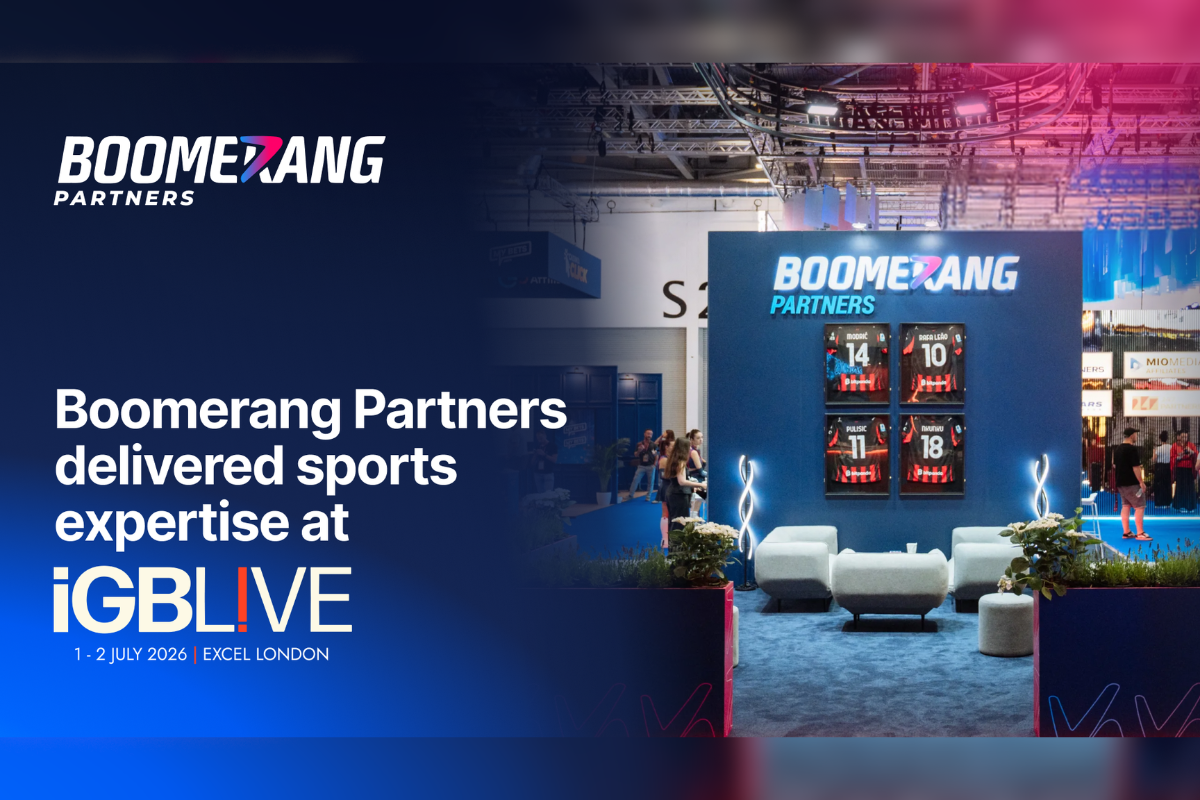
From July 1 to 2 inclusive, Boomerang Partners, an Affiliate Gambling & Betting Marketing Agency, participated in iGB L!VE London on stand F50. One of the world’s largest iGaming events was held on a grand scale at ExCeL London. It proved to be an effective networking platform for major operators, affiliate teams, tech vendors, and game providers.
Meetings, sports expertise, and new agreements
One of the main topics attracting visitors to the stand was Boomerang’s expertise in sports. The company runs one of the leading sports-focused affiliate programs in the industry and is eager to share its expertise with market players. This knowledge is built on the support of a strong in-house analytics department, and one of its results was the launch of the Sports Marketing and Betting Calendar 2026 earlier this year. Numerous affiliate teams use insights from this guide to launch and run campaigns throughout the current year, which is packed with high-level sports competitions.
Shortlist in the Best Affiliate Programme category
On July 2, the final day of the conference, the iGB Affiliate Awards 2026 ceremony took place in a stylish venue at the legendary The Shard. Boomerang Partners were shortlisted in the prestigious Best Affiliate Programme category. This marked a high recognition of the company’s achievements by industry leaders. In 2026, it celebrates its 5th anniversary. Boomerang has over 3,000 active affiliate partners, 10+ partner brands in its portfolio, and is an Official Regional Partner of AC Milan. Since July 2026, the partnership has entered its third season – a collaboration that has become a benchmark for cooperation between one of the world’s leading football clubs and a top iGaming company.
Kristina Shkredova, Affiliate Team Lead at Boomerang Partners, commented: “iGB L!VE London is always a powerful platform for meaningful dialogue and professional networking. This year, we felt a particularly strong interest in our sports-focused expertise, which confirms that affiliates are looking for deep market knowledge, not just traffic volumes. Now our sights are set on SBC Summit Lisbon, where we will once again connect with affiliates and showcase what we do best.”
What’s next
The next major industry exhibition where affiliate teams can see Boomerang Partners will be the SBC Summit Lisbon. The event will take place from September 29 to October 1, and the company has announced that it will also hold the Golden Boomerang Awards 2026 award ceremony in Lisbon. The TOP 30 teams of this landmark annual affiliate traffic tournament will visit a secret location, where the company will announce the winners in 11 categories. The third season is in full swing – affiliate teams can follow its progress or join the participation on the GBA’s official website.
About Boomerang
Boomerang Partners is a rapidly growing global marketing agency offering a wide range of services. Boomerang Partners is an Official Regional Partner of AC Milan. In 2024, it launched the inaugural Golden Boomerang Awards – a global tournament for affiliate teams. More than 400 affiliate teams participated in the second season of the tournament in 2025. Partners of the Agency launched six new products in 2024-2025, contributing to a nearly 1.5-fold increase in product users.
The Agency’s clients’ portfolio contains 10+ brands offering affiliate and entertainment services across multiple markets in compliance with local regulations. These products provide incentive programs and 24/7 multilingual support.
The post Boomerang Partners delivered expert sports insights during two days of iGB L!VE London 2026 appeared first on Americas iGaming & Sports Betting News.
Boomerang Partners
Golden Boomerang Awards First Half by Boomerang Partners wrapped: next prize – the Formula 1 Grand Prix experience
The third season of the Golden Boomerang Awards by Boomerang Partners is not losing momentum. Following the conclusion of the First Half, the tournament has confirmed one of the main ideas behind this season: long-term mechanics can increase partner engagement, while a sports-focused strategy can help turn that activity into measurable results.
First Half leaderboard and highlights
The Kickoff stage concluded on June 9, with impressive participant engagement. Mystery Boxes were raffled off among all participants, featuring exclusive prizes such as limited-edition FIFA World Cup 2026 jerseys – three per box, each representing a different participating country. The winner of this opening stage – team AskBonus – will attend the Wimbledon Championships from June 29 to July 12, 2026. For Boomerang Partners, sport remains one of the key areas of expertise, which is why it runs through the tournament mechanics, partner activities, and even the prize pool.
The rules are the same across all stages: the top 10 teams qualify for a random draw for the main stage prize, while Mystery Boxes are available to all active participants – not only the leaders. This keeps the competition open for everyone.
Tracking the leaders: The GBA 2026 standings update
Currently, a clear leader has emerged in the tournament. Team Lily has already scored 6,029 points (of which nearly 5,200 points come from sports FTDs). Team O follows in second place with 2,677 points. The rest of the top five – third, fourth, and fifth – currently hold 750, 504, and 341 points respectively. At the same time, the leaderboard is changing dynamically, driven by high participant activity.
The sports vertical accounts for nearly half of all FTD activity
According to Boomerang Partners, about half of the FTDs brought by Golden Boomerang Awards participants to the partner brands in the company’s portfolio come from the sports segment. This confirms a strong audience interest in sports events, especially given the active stage of the FIFA World Cup in North America.
The organizers have noted on multiple occasions that the third season of GBA prioritizes long-term strategy over participants’ short-term successes. This point is backed up by data on activities in the online casino segment. So, about a third of participating teams actively use the LUCKY FIVE mechanic. It allows affiliate teams to earn 5 bonus points per week if they generate 10 or more Casino FTDs during the reporting week.
The second half has introduced upgraded mechanics
The Second Half kicked off on June 10 – the winner of this stage will visit the Formula 1 Grand Prix on September 6. The stage runs through July 19. Thus, even for those joining the race now, there is every chance of catching up with the leaders and seriously competing for the prize.
To help teams with this, Boomerang Partners introduced a key feature for the Second Half aimed at new participants – WELCOME BOOST. Every new affiliate team will receive double points for every FTD throughout the first 14 days from the moment of joining. The LUCKY FIVE and LAST MINUTES WINNER mechanics also continue to be active, with the latter allowing participants to earn three times the points for every FTD during the last 7 days of the stage. In addition, the value of sports FTDs has increased – compared to the first stage, teams can now earn 3 points instead of 2 for each such FTD. This will be particularly beneficial for sports-focused affiliates, especially given that the stage runs alongside the FIFA World Cup and Wimbledon, both of which are driving high demand from audiences.
Race remains open at any stage of the season
As soon as the Second Half concludes, the Overtime stage will begin, featuring its own prizes, bonus mechanics, and enhanced point scoring. This keeps the tournament challenges completely open, giving every active participant a real opportunity to reach the top ranks. The awards ceremony in 11 categories will take place in September in Lisbon as part of the SBC Summit, allowing winners to gain not just physical prizes, but a sense of belonging among the best in the affiliate marketing industry – a feeling that fully aligns with the concept of the third season, Beyond the Moment. More details are available on the official Golden Boomerang Awards website.
About Boomerang
Boomerang Partners is a rapidly growing global marketing agency offering a wide range of services. Boomerang Partners is an Official Regional Partner of AC Milan. In 2024, it launched the inaugural Golden Boomerang Awards – a global tournament for affiliate teams. More than 400 affiliate teams participated in the second season of the tournament in 2025. Partners of the Agency launched six new products in 2024-2025, contributing to a nearly 1.5-fold increase in product users.
The Agency’s clients’ portfolio contains 10+ brands offering affiliate and entertainment services across multiple markets in compliance with local regulations. These products provide incentive programs and 24/7 multilingual support.
Disclaimer:
The FIFA World Cup and Wimbledon Championships are made for descriptive purposes only. Boomerang Partners is not affiliated with, endorsed by, or officially connected to these entities in any way.
The post Golden Boomerang Awards First Half by Boomerang Partners wrapped: next prize – the Formula 1 Grand Prix experience appeared first on EE Gaming | Global iGaming & Tech Intelligence Hub.

-

 10bet7 days ago
Ellis Park Stadium signs five-year naming rights deal with 10bet
-
central asia7 days ago
Groove confirms attendance at SBC Summit Tbilisi 2026
-
Bucharest6 days ago
Eeze opens 1,200 sqm Bucharest hub for technical teams
-
AB Trav och Galopp5 days ago
BetMakers Technology Group Selected to Distribute ATG Horse Racing Content Across Australia and New Zealand
-
API integration6 days ago
Belatra signs cooperation deal to distribute slots via VeliGames
-
BETANO6 days ago
Play’n GO strengthens Latin American presence with Betano Colombia launch
-
affiliate marketing7 days ago
SEOBROTHERS’ Aleksandra Drigo flags higher barriers for affiliates in regulated Alberta
-
Aviator6 days ago
Pernambuco court revokes Spribe’s interim relief in Aviator trademark dispute