Latest News
N1 Insights: iGaming Trends You Can’t Ignore This May

May reinforces the iGaming trends that emerged in Q2: the market is clearly shifting away from aggressive scaling toward controlled efficiency. While growth was previously often driven by volume and “quick-win” setups, the key factors now are predictable performance, LTV optimization, and funnel stability over time.
In this edition of N1 Insights, you’ll learn which traffic sources and approaches remain effective in May, where new growth opportunities are emerging, and which common mistakes are holding back scaling — with fresh insights from N1 Partners experts across different направления.
1. Traffic sources and channel mix
1.1 Underrated approaches within Facebook that can deliver results when tested
Many still rely on splitting audiences and searching for the “perfect targeting,” even though the system now works differently.
| “Broad audiences perform best — but only under one condition: if events are properly set up and high-quality signals are being passed (who pays, how much they pay, etc.). Without this, broad targeting will simply dilute the budget,” says Alexey Gusarov, Affiliate Team Lead at N1 Partners. |
It’s also worth highlighting short-form videos — they’re still underutilized. At the same time, CPMs there are often lower, while performance can match other formats, especially when the creative feels natural.
1.2 Balancing FB and alternative traffic sources (In-App, ASO) in May
Facebook remains a leading source in terms of traffic volume, but recently we’ve seen more frequent updates leading to mass bans, ad rejections, drops in optimization, and overall making campaign launches more difficult. Diversifying across traffic sources is one of the key ways teams can navigate these “storms” without major losses.
At the same time, alternative sources are gaining strength: In-App can deliver significant volume, while ASO provides higher-quality traffic when keywords and rankings are managed properly.
PPC (Google / UAC / Search)
1.3 PPC channels (Search, UAC, Demand Gen): underrated vs high-potential
Search is currently overheated and often overestimated as a scaling channel — competition is high, CPCs are expensive, and growth in Tier-1 is limited. At the same time, it remains one of the most stable and high-converting channels, as it captures already established user intent.
| “UAC can be considered an underrated channel — but only for those who know how to work with data and LTV. It often seems weak due to the lack of control, but in practice it can deliver strong scale and efficiency,” says Daria Smirnova, Affiliate Team Lead at N1 Partners. |
Demand Gen is often used incorrectly or treated as a replacement for YouTube, which makes it seem weak. In reality, it can effectively warm up audiences and deliver strong results when paired with the right creatives and integrated with Search and retargeting.
1.4 Balancing PPC and alternative sources (FB, In-App, ASO) in May
The balance has clearly shifted from PPC dominance to a multi-channel model. Previously, PPC (especially search) could account for up to 60–80% of total traffic, but its share has now dropped to around 30–50% due to rising CPCs and increased competition.
At the same time, alternative sources have grown significantly. FB is effective at attracting new audiences and generating demand, In-App networks provide scalable, lower-cost traffic, and ASO helps drive the most cost-efficient installs.
Overall market
1.5 Most stable traffic sources in May
Google and Facebook continue to deliver the most stable ROI.
1.6 How will media buying dependence on major platforms (Meta, Google) evolve?
Dependence remains high — there are still no alternatives with comparable scale. There are emerging platforms like Moloco Ads, which are developing as additional traffic sources, but they lag behind in quality and are tightening their policies. Recently, there has been a trend toward greater compliance, with grey brands and arbitrage teams increasingly being pushed out.
Dynamics and scaling
1.7 Traffic sources expected to recover or grow in May
Facebook stands out clearly here. After a weaker February, the platform is showing recovery and once again demonstrating strong scaling potential.
2. Traffic quality and key metrics
2.1 Critically important KPIs for evaluating FB traffic from the brand side
FB traffic in 2026 has become noticeably more heterogeneous: even with the same setup, quality can vary significantly from cohort to cohort. That’s why evaluation is no longer based on a single metric, but on a combination of indicators.
| “Key metrics remain the total deposit volume over a given period and its cohort dynamics, which allow you to see how traffic behaves across days and how LTV is built over time. At the same time, particular focus is placed on the share of repeat deposits — as they typically determine the true profitability of the traffic,” says Alexey Gusarov, Affiliate Team Lead at N1 Partners. |
It’s important to note that high rollers are not always a sign of high-quality traffic: their presence can be either consistent or purely random, especially at larger volumes.
2.2 How has the focus shifted from volume to profitability in FB after Q1?
Previously, Facebook was often treated as a channel for large-scale spending, with profitability relying on a few high-value players. After Q1 2026, this approach has changed. Brands are now willing to offer better terms, but only for setups that demonstrate consistent profitability.
The focus has shifted toward traffic quality and predictability of results. This is especially evident in strategies that rely on “cleaner” setups (e.g., slots or offline), which allow for better control over unit economics.
2.3 Common mistakes in evaluating FB traffic quality
Teams often underestimate the importance of LTV and draw conclusions based on short-term results. Traffic may perform well in the first month, but this doesn’t guarantee sustained player activity over time — in reality, it can burn out quickly.
Another common mistake is the lack of flow structure analysis. At high volumes, profitability may be driven by a few high rollers, creating an illusion of stability. The share of single-deposit users is also often overlooked, even though it directly impacts long-term sustainability.
PPC
2.4 Key KPIs for evaluating PPC traffic from the brand side today
In 2026, brands evaluate PPC traffic much more deeply than before. Beyond basic metrics, a key role is played by ROAS across different timeframes — most commonly at 1, 2, and 4 weeks — allowing them to assess not just initial performance, but how user behavior evolves over time.
LTV and overall long-term user value are also taken into account. As a result, evaluation is focused on how well traffic pays off over time, rather than just short-term performance.
2.5 How has the focus shifted from volume to profitability in PPC after Q1?
Previously (especially at the end of the year and in Q4), many brands aggressively scaled traffic and were willing to break even or even operate at a loss to drive volume. After Q1, the priority has shifted back to quality. The current approach is clear: it’s better to have less traffic with positive ROAS and predictable LTV than large volumes with questionable profitability.
2.6 Common mistakes in evaluating PPC traffic quality
In 2026, the most common mistakes in evaluating PPC traffic quality are driven by oversimplifying metrics. Many still focus solely on CPA, treating low-cost leads as a sign of efficiency, while ignoring LTV and the user’s real long-term value.
| “The key issue is trying to evaluate complex traffic economics using short-term, superficial metrics instead of analyzing long-term profitability and user quality,” says Daria Smirnova, Affiliate Team Lead at N1 Partners. |
Overall metrics and funnel
2.7 Top metrics for understanding the real value of a player
The evaluation approach depends on the business model. For in-house teams, the key metric remains the ratio of spend to profit, as it directly reflects overall unit economics.
For affiliates, ROI remains the primary metric as the most universal indicator of performance.
In both cases, the focus is on actual profit.
2.8 Where does the funnel most often break when working with paid traffic?
In practice, the main issues arise not at the traffic entry point, but within the funnel itself. Most commonly, these are related to PWA apps, push funnels within them, and unstable cloaking setups, which can fail at any moment and significantly impact results — even when traffic quality is high.
- Working with brands and market requirements
3.1 How willing are brands to offer flexible terms for FB given good traffic quality?
It varies from brand to brand. Some have learned how to properly measure profitability and build predictive models, while others still avoid this source due to rising costs and significantly lower average ticket sizes compared to organic channels like PPC or SEO.
| “FB is a source that can meet the demand for large traffic volumes. If an advertiser knows how to work with it and identify high-quality traffic streams, they are willing to pay well above the market,” says Alexey Gusarov, Affiliate Team Lead at N1 Partners. |
3.2 How have advertiser requirements for FB traffic changed?
The main shift is that almost everyone now evaluates traffic more deeply than before. It’s no longer enough to simply bring in users. What matters now is player TLV, the RD-to-FD ratio, and whether the traffic is profitable over a given timeframe.
There is also a growing demand for transparency. Advertisers want at least a basic understanding of what’s happening with the traffic — which creatives are being used, what setups are being tested — rather than just seeing numbers in a report.
PPC
3.3 Changes in requirements for PPC traffic (especially in Tier-1 GEOs)
| “In Tier-1, PPC has definitively stopped being a volume-driven channel. It’s no longer enough for brands to receive a flow of FTDs — what matters now is that the traffic is profitable and sustainable in the long run,” says Daria Smirnova, Affiliate Team Lead at N1 Partners. |
In practice, PPC has become a tool for controlled efficiency, where each campaign is evaluated through the lens of unit economics.
3.4 How quickly are decisions made to stop or scale PPC campaigns?
Decisions are made faster now, but remain strictly data-driven. During testing, campaigns can be shut down within the first week once the baseline economics and average player value become clear.
If the traffic shows strong quality, scaling happens relatively quickly — teams aim to fully leverage available volume and replicate successful setups across other brands.
4. Approaches, hypotheses, and creatives
4.1 FB hypotheses to test in May
The main focus has shifted toward creatives and data.
On the creative side, simple formats that don’t look like ads perform best. It also makes sense to test a wider variety of creatives, as a single winning concept rarely lasts long now.
On the data side, anything related to passing user value (not just the conversion event itself) gives the algorithm a better understanding of who to target.
Another effective approach is not trying to cover everything with a single campaign. Different audience segments (new, warm, already engaged) often require different messaging.
4.2 The importance of audience segmentation (interests, behavior, payments) in the current landscape
Segmentation hasn’t disappeared, but its role has changed. Previously, it was the main lever for managing ads — through interests and detailed targeting.
Now it’s more of a supporting tool. What matters гораздо больше is the data you pass and the audiences you build based on that data.
In other words, the focus has shifted from “who to target” to “how to train the algorithm.” You need to provide Facebook with the right creative and signals — and it will find the right audience itself.
4.3 Mistakes in FB testing that lead to budget loss
The most common issue is making decisions too quickly. Campaigns don’t have enough time to learn before being turned off or reworked.
The second problem is overly complex structures. When there are too many ad sets and audiences, the system struggles to optimize properly.
The third is weak or poorly configured data. If the algorithm receives low-quality signals, it will target the wrong users.
Another common mistake is relying on a single winning creative and pushing it for too long. This no longer works well, as creatives burn out much faster now.
Finally, many ignore new placements. While not critical on its own, it often results in higher traffic costs without a clear reason.
PPC
4.4 PPC hypotheses to test in May
In May, PPC testing should focus on hypotheses that drive growth not through “more traffic,” but through higher quality and conversion efficiency — this has become the standard in 2026.
4.5 Working with user intent in search traffic
In 2026, working with user intent in search traffic is critical — it is effectively the key factor behind Search performance.
| “Search PPC today is not just about ‘responding to a query,’ but about engaging with the user’s level of intent. The more precisely the query matches the user’s intent, the higher the conversion rate and the lower the cost of acquiring a quality player,” says Daria Smirnova, Affiliate Team Lead at N1 Partners. |
4.6 Is there a trend toward simplifying or complicating PPC funnels?
In 2026, PPC funnels are becoming structurally simpler but more complex in logic. The number of campaigns and funnel layers is decreasing due to automation from Google and FB, while the focus on data, creatives, and signals is increasing.
The result: fewer complex setups and less manual control, but more analysis, testing, and focus on traffic quality.
Funnels and approaches
4.7 Relevance of hybrid funnels (FB + Telegram + SEO) from a media buying perspective
In Tier-1, such funnels still do not deliver stable results — audience perception of Telegram hasn’t changed significantly.
In Tier-3, they can work, but only with deep optimization and properly structured content.
4.8 Best approaches in paid traffic right now
At the moment, the market remains relatively stable: no fundamentally new approaches have emerged. Classic setups continue to work and deliver predictable results.
Creatives
4.9 Approach to creatives in Tier-1 GEOs in May: what to consider
The key requirement is alignment between the creative and the entire funnel. Stable conversions in these markets are only achievable when all stages are consistent.
4.10 Types of creatives that burn out the fastest right now
Aggressive and “loud” formats, as well as crash-style approaches, lose effectiveness the fastest — they can deliver quick results but burn out just as quickly.
4.11 How critical is constant creative rotation for maintaining volume?
Rotation has become essential. Relying on a single creative no longer delivers stable volume, so continuous testing of new variations is a must.
4.12 Common mistakes when scaling creatives
The main mistake is trying to scale by duplicating creatives without changes. This no longer works — especially on Facebook, where creative variation is required, otherwise performance drops quickly.
5. GEO, risks, and future (regulations + AI)
GEO
5.1 Where is it currently hardest to maintain stable ROI when buying traffic?
Australia remains a challenging market: in recent months, it has been highly volatile, making it difficult to maintain stable ROI.
5.2 Tier-1 GEOs where competition is lower than it seems
With a strong funnel, Germany and Austria can be promising — competition there may be lower than in other GEOs.
5.3 Top demanding GEOs requiring maximum creative and funnel adaptation
Recently, Australia and Canada have required the highest level of adaptation in both creatives and funnels.
5.4 Regions for testing new setups with minimal risk right now
Eastern European countries are most commonly chosen for testing new setups with lower risk.
Regulations and risks
5.5 Sources with stricter moderation in May
Facebook and Google remain the most challenging platforms in terms of moderation.
Both are tightening control, while requirements are becoming less transparent and more sensitive to details. This leads to more rejections and makes stable operations harder even for experienced teams.
5.6 Triggers that lead to account and creative bans
The list of ban triggers remains unstable: even minor changes, such as adjustments in promo codes or creative copy, can result in blocks.
Sensitivity to behavioral and technical account signals has also increased, making risks less predictable. Selfie verification remains a separate issue — its mechanics are not fully understood and can be triggered without obvious reasons.
5.7 How teams are adapting to the decline of “grey” approaches
Teams are adapting by working more deeply on setups and cutting unnecessary costs.
5.8 Risks in scaling that are often underestimated
When scaling, teams often underestimate the risk of account overspend, which can occur even on older accounts when budgets are increased.
AI and automation
5.9 The impact of AI on media buying. Which processes can already be automated without losing quality?
At this stage, AI is not a “magic solution” for arbitrage, especially in grey verticals. It does not replace the buyer’s expertise and does not deliver stable results when it comes to analyzing or optimizing such setups.
As a result, it’s clear that while automation is already widely used in white marketing, its potential in arbitrage remains limited. Expertise and the ability to adapt to market changes still play a key role.
May further reinforces the rapid shift of the iGaming market toward quality and predictable profitability. Against the backdrop of increasing competition and stricter moderation from Meta and Google, the focus is moving from volume to LTV, repeat deposits, and stable unit economics.
The key advantage now is the ability to manage traffic quality and risks over time.
10 days left until the end of the N1 SEO Traffic Cup — there’s still time to join!
Reasons to start working with N1 Partners today:
- 14+ casino and betting brands with high Reg2Dep and LTV
- 10+ Tier-1 GEOs
- CPA up to €700 and RevShare up to 55% + NNCO for top partners, as well as hybrid and spend models
Be number one with N1!















The new football-themed title keeps CreedRoomz’ existing mechanics and adds a Maradona-branded visual overhaul and 10,000x max payout claim.
CreedRoomz has launched a new live game show, “Maradona Run,” which the supplier says is backed by official rights and is now available to partner operators on the CreedRoomz Live Casino platform.
The company positions the release around the upcoming World Cup games, with a football-themed reskin of its existing interactive game show concept. CreedRoomz said the game’s “logic and core mechanics remain exactly the same,” while the visual identity has been rebuilt around a 3D animated caricature of Diego Maradona in a number 10 jersey.
Maradona Run combines a lottery-style ball draw, where players can manage up to eight interactive cards, with an “endless runner” bonus round. In the bonus sequence, the Maradona character runs through an obstacle course collecting glowing soccer balls that the supplier says translate into gameplay advantages including multipliers, speed boosts and prize doublers. CreedRoomz stated the game has a maximum payout potential of up to 10,000x the bet.
“Securing the official rights for Maradona Run allows us to hand our partners a massive competitive advantage just in time for the World Cup games,” said Armen Mnatsakanyan, Head of Sales Department at CreedRoomz. “By merging the legendary global appeal of Maradona with our high-retention endless-runner mechanic, we have created a premium crossover product that effortlessly converts football fans into loyal live casino players. The proven logic and math models are exactly what operators trust, but the brand power and vibrant new look make this a must-have commercial powerhouse.”
The title features a live presenter alongside the animated character and includes three bonus ticket tiers—Sprint, Trailblaze, and Marathon—intended to provide multiple bonus-entry paths per round, according to the supplier.
The post CreedRoomz launches Maradona Run live game show with licensed rights appeared first on EE Gaming | Global iGaming & Tech Intelligence Hub.
Armen Mnatsakanyan Head of Sales Department at CreedRoomz
“Maradona Run” Launched by CreedRoomz as New Live Game Show with Official Rights


Leading live casino provider CreedRoomz has officially announced the launch of its highly anticipated new live game show, “Maradona Run,” backed by official rights.
Built to capture the celebratory spirit of the upcoming World Cup games, this groundbreaking release introduces an authorized, football-themed transformation of the company’s signature interactive game show concept. By securing the official rights to feature one of the greatest legends in football history, CreedRoomz is inviting global operators and players to engage with an entirely premium, legally authorized gaming experience.
While the game’s flawless logic and core mechanics remain exactly the same, the visual identity has been completely overhauled to welcome the World Cup games. The character has been transformed into a vibrant, 3D animated caricature of the legendary Maradona, proudly wearing his iconic number 10 jersey.
Maradona Run seamlessly bridges a fast-paced lottery ball draw with a cinematic, arcade-style endless runner bonus round. During the main game, players manage up to eight interactive cards as football-styled lottery numbers bounce in a high-tech studio chamber. When the bonus round triggers, players leave the studio behind and hit a digital, festive boulevard alongside Maradona himself.
Instead of traditional coins, the animated legend sprints down the obstacle-filled street course collecting glowing soccer balls. These collectibles correspond to crucial gameplay advantages, including total payout multipliers, energy speed-boosts, and prize doublers, culminating in a massive maximum payout potential of up to 10,000x the bet.
“Securing the official rights for Maradona Run allows us to hand our partners a massive competitive advantage just in time for the World Cup games,” said Armen Mnatsakanyan, Head of Sales Department at CreedRoomz. “By merging the legendary global appeal of Maradona with our high-retention endless-runner mechanic, we have created a premium crossover product that effortlessly converts football fans into loyal live casino players. The proven logic and math models are exactly what operators trust, but the brand power and vibrant new look make this a must-have commercial powerhouse.”
The live game show features a highly interactive setup where a live presenter stands side-by-side with the animated Maradona caricature, engaging with players in real-time. With three distinct bonus ticket tiers Sprint, Trailblaze, and Marathon players have multiple pathways to chase massive wins on every single round.
Maradona Run Live is now available to all partner operators integrating the CreedRoomz Live Casino platform.
The post “Maradona Run” Launched by CreedRoomz as New Live Game Show with Official Rights appeared first on Americas iGaming & Sports Betting News.
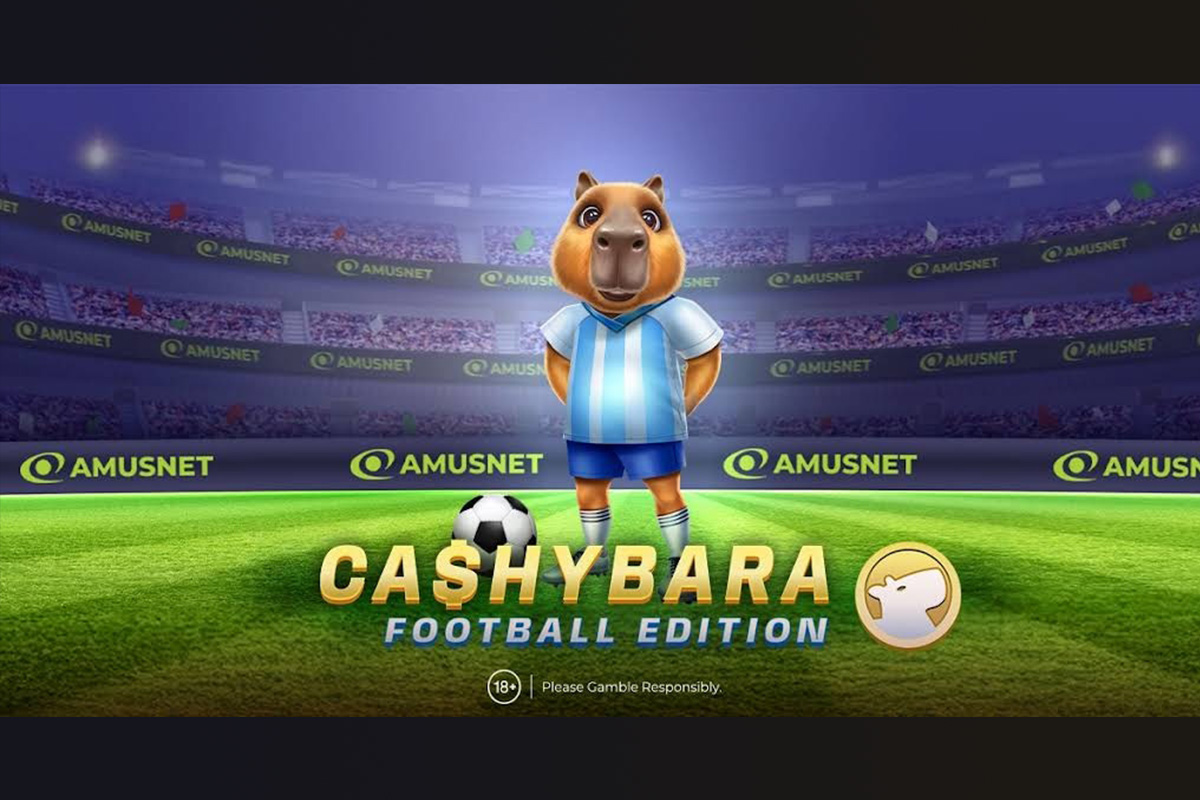
As football fever takes over the world and fans unite around the beautiful game, Amusnet is bringing the excitement from the stadium straight to the casino floor with the launch of Ca$hybara Football Edition – the latest addition to the beloved Ca$hybara series.
This energetic crash game puts players at the center of the action, where every touch of the ball could lead to bigger rewards. Taking the spotlight once again is the unstoppable Ca$hybara, this time stepping onto the football pitch with confidence, skill and plenty of flair.
In Ca$hybara Football Edition, the charismatic sports star keeps the ball airborne through an impressive display of juggling mastery. With every successful touch, the multiplier climbs higher, creating a thrilling balance between risk and reward. The challenge is simple: decide how long to stay in the game before cashing out. The longer Ca$hybara remains in control, the greater the potential winnings – but one missed touch can change everything.
Designed to keep players engaged from kick-off to the final whistle, the game introduces constant decision-making throughout every round. Players can choose to secure part of their winnings with the 50% Cashout option or continue riding the momentum in pursuit of even bigger multipliers. Timing, confidence and a little courage will determine who comes out on top.
Adding another layer of excitement are the popular Jackpot Cards, Amusnet’s signature jackpot feature, offering players additional chances for rewarding surprises and making every session even more dynamic.
With its football-inspired theme, fast-paced gameplay, and familiar Ca$hybara charm, Ca$hybara Football Edition arrives at the perfect moment, capturing the energy and passion of the season when football dominates conversations across the globe.
Whether players are seasoned crash game enthusiasts or discovering the genre for the first time, Ca$hybara Football Edition delivers an entertaining experience where every second counts and every decision matters.
Gamble
Play the game and multiply the winnings through the Gambling feature.
Multipliers
The game starts with a multiplier set at 1x and rises gradually and can go up to a max coefficient of 1,000,000. Multiplier can potentially crash at 1x, ending the game round.
50% Cash Out
Players can cash out 50% of their bet during the game round and continue playing with the remaining 50%.
Jackpot Cards
The Jackpot Cards bonus game is triggered at random during the gameplay to allow players to win impressive jackpots.
The post Amusnet Celebrates Football Season with the Launch of Ca$hybara Football Edition appeared first on EE Gaming | Global iGaming & Tech Intelligence Hub.

-

 América Latina5 days ago
Las diferencias locales de Argentina representan tanto un desafío como una oportunidad para el sector del iGaming
-
Latest News5 days ago
Connect with N1 Partners at G Gate Conf 2026
-
game-launch5 days ago
Million Games launches East West Wild slot with progressive multipliers
-
Africa5 days ago
Booming Games signs content deal with World Sports Betting in South Africa
-
AI5 days ago
Veikkaus rolls out OpenBet’s Neccton responsible gambling platform ahead of 2027 reform
-
eSports6 days ago
G2 partners with PUBG MOBILE Esports to scale Western Europe competition
-
Gmonitor.ai5 days ago
Gmonitor llega a Latinoamérica: la plataforma de inteligencia de mercado para operadores debuta en seis mercados regulados
-
 Latest News5 days ago
Sportradar Report | World Cup 2026: Opportunities for the Latin American Sports Betting Market