Compliance Updates
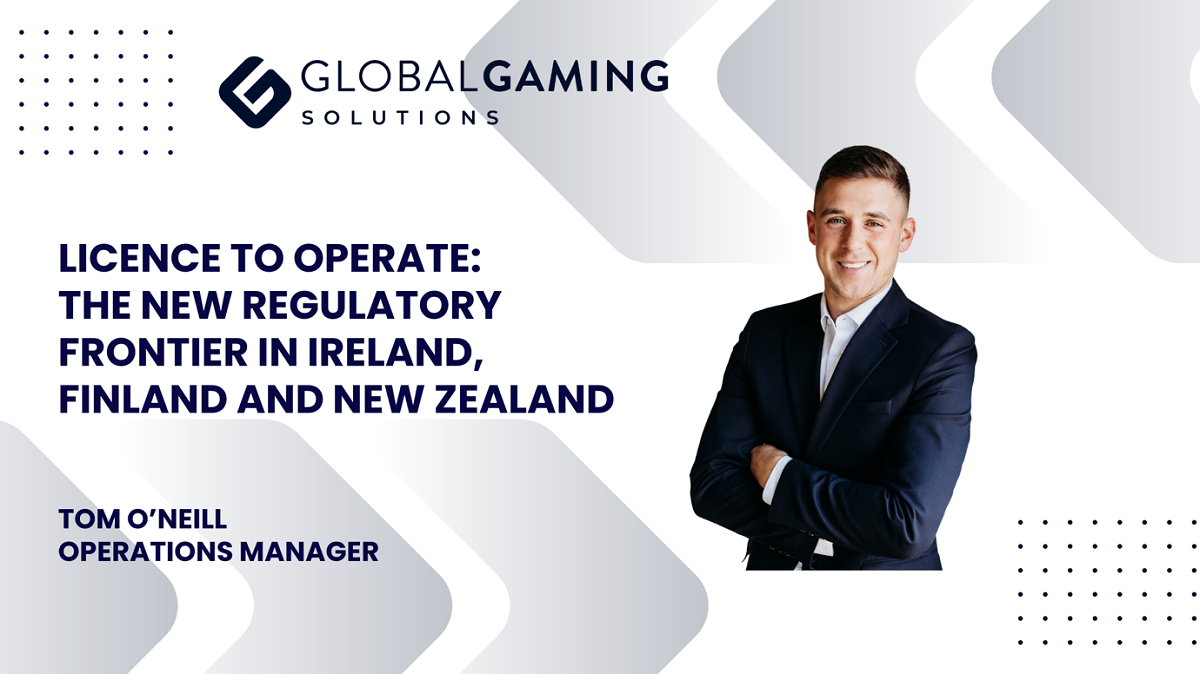
Licence to Operate: The New Regulatory Frontier in Ireland, Finland and New Zealand

Overview
For years, many jurisdictions were content to sit back while offshore operators captured players and revenue. Ireland has created a dedicated, centralised regulator. Finland has dismantled its standing state monopoly. New Zealand is finally trying to pull a largely unregulated grey market into a controlled framework. Each of these markets is at a different stage, but the direction of travel is the same: licensing, enforcement, and a far tougher stance on consumer protection.
For operators, this is a mixed picture. Genuine commercial opportunities are opening, but the compliance bar is rising fast, and the days of entering a market through an offshore licence are numbered.
Ireland: The Gambling Regulatory Authority of Ireland (GRAI)
The main legislation dated back to 1931, enforcement was fragmented, and nobody could quite agree on who was responsible for what. The Gambling Regulation Act 2024 was the overhaul the industry had been waiting for, and it came with real teeth.
The Gambling Regulatory Authority of Ireland (GRAI) was set up in March 2025 and became fully operational in February 2026, when it started accepting licence applications. It now acts as a single national regulator with the power to supervise and issue substantial penalties.
The new licensing fees are tiered rather than flat, which is a significant change. Previously, fees bore almost no relationship to an operator’s size or revenue. Now they scale with turnover and the type of operation. That’s fairer for smaller entrants and means larger operators are paying something closer to their actual market cost.
What the Rules Cover
The new framework touches most areas of the market. A few standout provisions:
- Licences: The GRAI’s digital Operator Portal went live in early 2026. Both remote and land-based products are covered, and the documentation requirements are clearly set out.
- Penalties: Serious breaches can result in fines of up to €20 million or 10% of annual turnover, whichever is higher.
- Consumer protections: Credit card gambling is banned. Gambling advertising is subject to tighter restrictions.
How to Apply
The application process runs in stages:
- Publish a notice of intention at least 28 days before submitting and send proof to the GRAI.
- Pull together the required documentation, financial records, ownership details, and operational plans.
- Submit the online application and pay the non-refundable tiered fee.
- The GRAI reviews the application.
- A written decision is issued. If the licence is granted, operators move into post-licence compliance obligations, including reporting any material changes to ownership, finances or senior personnel.
The GRAI was allocated €9.1 million for its first year to cover licensing, enforcement, recruitment and public awareness. Annual inspections are expected to begin shortly, with dedicated enforcement units in place by Q3 2026. There’s clearly an appetite from both domestic and overseas operators; the market is attracting serious interest.
Finland: After the Monopoly
Veikkaus has run Finland’s gambling market for a long time. Lotteries, sports betting, and online casinos all sat under one state-owned roof. That changed in December 2025, when the Finnish parliament passed landmark gambling legislation. Online casino and sports betting are now open to competition, though Veikkaus will keep its monopoly over lotteries, scratch cards and land-based slots and casinos.
It’s worth noting the transition timeline: Veikkaus retains its monopoly until 30 June 2027. Until that point, no other company may run or market gambling in Finland. The new competitive market, and with it the first licensed private operators, only goes live on 1 July 2027.
Applications opened on 1 March 2026. The regulator is targeting a three-to-six-month processing window, which means operators who move now have plenty of time to be ready for the July 2027 launch.
Structure and Costs
Operators need a Finnish licence to legally serve local players from July 2027. Applications must be submitted in Finnish or Swedish, and the authority reviews them in the language used.
Two licence types cover the market:
- Gambling Licences: Covering betting, online casinos and money bingo. Applications are open now; operations can commence from 1 July 2027. Licences run for up to five years.
- Gambling Software Licences: Required for developers and suppliers. Applications open from 1 July 2027. From 1 July 2028, only software from licensed providers may be used.
The application fee is €29,000, with €1,120 for licence amendments. Annual supervisory fees are linked to gross gaming revenue. Operators will also pay a 22% tax on gross gaming revenue.
For international brands, Finland is a highly attractive opportunity. It’s a high-income, digitally engaged market that has been effectively closed to competition for decades. The reform is also explicitly aimed at drawing players back from offshore platforms; estimates suggest that between €600 million and €900 million a year is currently flowing outside the regulated system. Operators who get licensed early stand to benefit from a genuine shift in where Finns choose to play.
New Zealand: Closing the Grey Market
New Zealand’s online casino market has been a grey market for many years. Offshore operators have been able to take bets from New Zealand players without holding a local licence. That’s about to change. Estimates vary, but local players are spending approximately NZ$700–750 million a year outside any domestic regulatory framework, and the Online Casino Gambling Bill is the government’s attempt to bring that spending onshore and under regulatory control.
How the Licences Will Work
New Zealand is deliberately limiting the number of licences to 15, each tied to a single brand. The allocation process runs in stages: expressions of interest, an auction, then detailed assessments covering financial strength, operational capability and consumer protection. Restrictions on how many licences a single group can hold (a maximum of three) are also built in, which should prevent a few large operators from dominating the market.
Licences run for three years with a right of renewal up to five. Application fees will cover regulatory assessment costs based on operator revenue.
Timeline
- Legislation: The Bill passed its first reading in July 2025 and was at its third reading stage as of late March 2026. Royal Assent is anticipated around May 2026, though the exact timing depends on parliamentary scheduling.
- Regulations: Detailed rules on harm prevention, advertising, consumer protection and compliance are expected to be finalised by mid-2026, ahead of the licensing process.
- Licensing opens: The three-stage licensing process is expected to begin in July 2026. From 1 December 2026, any operator without a licence or a pending application must cease serving New Zealand players entirely.
Penalties and Player Protections
Operating without a licence after the deadline, or breaching key requirements like targeting minors, carries civil penalties of up to NZ$5 million for companies – a clear enforcement signal. All licensed operators will also need to implement age verification, spending controls and integration with national exclusion systems.
The Select Committee recommended increasing that duty from 12% to 16%, which, when combined with GST of approximately 13%, would push the total tax burden for licensed operators to around 29% of gross betting revenue. Note that the 16% duty rate was still subject to final parliamentary approval at the time of writing.
The upside for operators willing to commit is a market that’s been largely uncontested from a regulatory standpoint. The 15-licence cap means the field will be small, and early movers who make it through the process will be operating in a structurally limited competitive environment.
Where This Leaves Operators
Ireland, Finland and New Zealand don’t have a huge amount in common on the surface: different sizes, different regulatory histories and different market structures. But the logic driving each of these changes is the same: governments have decided that letting offshore operators capture their markets unchallenged is no longer an acceptable policy.
For operators, that means more paperwork, higher compliance costs, and in some cases entirely new licencing regimes in markets where none existed before. It also means real, regulated access to markets that have been effectively closed. Finland’s player base has never had a competitive licensed market to choose from. New Zealand’s offshore-dominated status quo is about to be dismantled.
The operators who will do well in these markets are the ones who take the licensing process seriously from the start and don’t assume that doing things right in one jurisdiction automatically translates across borders.
The post Licence to Operate: The New Regulatory Frontier in Ireland, Finland and New Zealand appeared first on Eastern European Gaming | Global iGaming & Tech Intelligence Hub.









The Malta Gaming Authority (MGA) has observed a pattern of websites impersonating MGA-licensed operators and misleading consumers into believing that they are licensed, regulated or otherwise authorised by the Authority in accordance with the Gaming Act (Chapter 583 of the Laws of Malta) and the regulatory instruments issued thereunder.
In light of this, the MGA published a list of three websites impersonating licensed operators. The websites are:
• www.manekicasino.bet
• www.dragonaracasino.uk.com
• www.slot-hunter.at
“The MGA is hereby declaring that it has no connection with the above listed URLs and any other website, platform and/or entity impersonating the Authority and/or MGA-licensed operators. Any reference to the MGA and/or gaming licence/s said to be issued by it, as stated on these domains, are false and misleading,” the MGA noted.
“The MGA would like to remind consumers not to utilise services provided by an entity unless they have ascertained that the entity in question is duly authorised to provide such services by the Authority. Whereas MGA-licensed operators comply with strict legal requirements in the interest of consumers, the activities of unlicensed entities are unregulated, and do not provide the necessary safeguards delineated by virtue of the gaming regulatory framework, making transactions with such entities risky for consumers.”
The post The MGA Publishes Notice on Websites Impersonating Licensed Operators appeared first on EE Gaming | Global iGaming & Tech Intelligence Hub.
Supplier secures AGLC registration and extends its Canadian footprint beyond Ontario, where it has been live since 2022.
Greentube has gone live in Alberta on the day the province opened as a newly regulated iGaming market, marking the supplier’s first launch in the jurisdiction.
The NOVOMATIC Digital Gaming and Entertainment division said it completed regulatory and technical due diligence and secured registration with the Alberta Gaming, Liquor and Cannabis (AGLC) commission to operate in the province. Alberta becomes only the second Canadian province to regulate iGaming after Ontario, with the new framework replacing the monopoly previously held by Play Alberta.
The Alberta launch builds on Greentube’s existing Canadian footprint. The company has been live in Ontario since 2022 and described the Alberta debut as part of its wider North American expansion strategy.
Greentube said Alberta players will initially have access to a curated set of titles including Piggy Prizes Wand of Riches 2, Rumble Riches Haulin’ Gold and Firecracker Frenzy Money Toad, as well as Silver Lux Big Win Spinner, Starlight Jackpots Captain’s Catch and Charming Lady’s Boom.
David Bolas, Commercial Director at Greentube, said: “Going live in Alberta on the day the market opens is an important step for Greentube and reflects the strong momentum we are seeing in Canada.
“We welcome the opportunity a new jurisdiction offers and look forward to working with locally licensed operators to introduce our established offering to players in Alberta. With a balanced line-up of new releases and proven performers, we are well placed to offer a compelling experience in the province and support our long-term ambitions in the region.”
The post Greentube goes live in Alberta as province opens regulated iGaming appeared first on EE Gaming | Global iGaming & Tech Intelligence Hub.

Greentube, the NOVOMATIC Digital Gaming and Entertainment division, has gone live in Alberta as the Canadian province opens as a newly regulated iGaming market, providing a significant new opportunity for the supplier in North America.
The Alberta market opening marks a key moment for the Canadian iGaming industry, becoming only the second province to regulate after Ontario, and the open framework officially replacing the long-held monopoly previously held by Play Alberta.
Greentube’s go-live follows a rigorous regulatory and technical due diligence process, with the company securing registration with the Alberta Gaming, Liquor and Cannabis (AGLC) commission to operate in the province.
The development builds on Greentube’s established presence in Canada, where the company has been live in Ontario since 2022, and represents a significant step forward in its continued North American expansion strategy.
As part of the Alberta launch, players gain access to a curated selection from Greentube’s portfolio. The initial rollout includes Piggy Prizes Wand of Riches 2, Rumble Riches Haulin’ Gold and Firecracker Frenzy Money Toad, alongside established player favourites Silver Lux Big Win Spinner, Starlight Jackpots Captain’s Catch and Charming Lady’s Boom.
The mix has been carefully selected to reflect Greentube’s newest releases and strongest-performing titles, ensuring broad appeal for Alberta audiences from day one.
David Bolas, Commercial Director at Greentube, said: “Going live in Alberta on the day the market opens is an important step for Greentube and reflects the strong momentum we are seeing in Canada.
“We welcome the opportunity a new jurisdiction offers and look forward to working with locally licensed operators to introduce our established offering to players in Alberta. With a balanced line-up of new releases and proven performers, we are well placed to offer a compelling experience in the province and support our long-term ambitions in the region.”
The post Greentube strengthens Canadian presence with Alberta debut as market opens appeared first on Americas iGaming & Sports Betting News.

-

 ESPN Networks4 days ago
THE 57th ANNUAL WORLD SERIES OF POKER® CONCLUDES AN EXTRAORDINARY SUMMER OF GLOBAL ENGAGEMENT AND ELITE COMPETITION
-
Latest News5 days ago
Booming Games launches Tasty Bonanza Max Scatter slot
-
Latest News6 days ago
SCCG Management Launches Dedicated SCCG Brazil Division with Local Partner Thomas Carvalhaes
-
Latest News6 days ago
Esportes Gaming Brasil takes two ClienteSA Awards 2026 wins; exec named Personality of the Year
-
Canada5 days ago
Peter & Sons launches full game portfolio in Alberta
-
Latest News5 days ago
QTech signs EXCO Game Studio slots for emerging markets
-
Latest News5 days ago
Blueprint Gaming releases Wolf Fury Fire Blitz slot
-
Canada6 days ago
ThrillTech secures AGCO supplier licence for Ontario launch