Latest News
SiGMA South America panels focus on key debates to Brazil

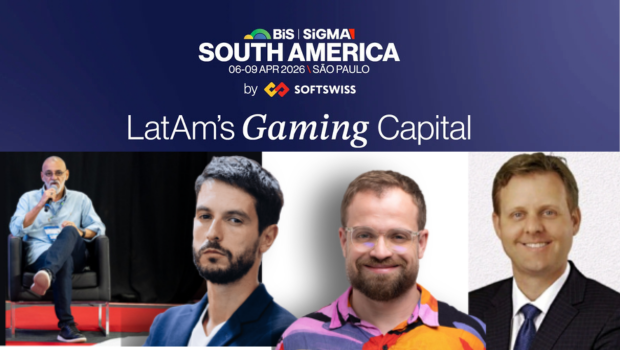
The 2026 edition of SiGMA South America kicked off today in São Paulo, bringing together some of the leading figures in the iGaming industry in Latin America.
The event takes place from April 6 to 9 at the Transamerica Expo Center, with a program spread across the Itaim, Jardins and Paulista stages.
Over three days, experts will address key topics for the current moment of the Brazilian market, such as regulation, sports integrity, responsible gambling and innovation in user experience.
Responsible gambling and mental health in focus
Among the highlights is the panel “Mental Health and Responsible Gambling: The Search for Solutions to the Invisible Challenge of the Gaming and Betting Market”, which proposes an integrated approach between regulation, mental health and public management.
Participants include Leandro Pamplona, partner and lawyer at BKP Advogados; Marcus Vinícius de Almeida, state deputy at the Legislative Assembly of Rio Grande do Sul; Cristiano Costa, CKO of EBAC – Brazilian Company for Support to Compulsivity; Daniel Romanowski, president of Lottopar; and Ana Bárbara Teixeira, Director of Government Relations and founder of ABRAJOGO/AMIG.
Pamplona states that the balance between protection and autonomy lies in “responsible freedom”.
“The operator cannot assume an absolute paternalistic position, but cannot be passive in the face of potentially problematic behaviors either”, he says.
According to him, the operator begins to exercise a delegated regulatory role, based on three pillars: clear information, mandatory preventive tools and effective monitoring.
Regarding Brazilian legislation, he believes there is already a relevant foundation, although still under consolidation.
“The integration of data between operators, regulators and the clinical field will be key to measuring the effectiveness of the rules”, he says.
“Brazil already has a relevant regulatory framework, but it is still in the process of practical consolidation. Until now, these issues were treated in isolation.
There is still no precise data to identify potential regulatory gaps.”
“Going forward, there will be integration of data between operators, regulators and the clinical or medical field. Based on this data, we will be able to verify the effectiveness or not of the current legislation.”
Sports integrity and real-time monitoring
The panel “Integrity on the Field: Preparing the Regulated Market for a World Cup of Safe Betting” brings together Felippe Marchetti, Director of Integrity Partnerships at Sportradar LATAM; André Megale, representative of SIGA Latin America; Michelle Ramalho, executive at the CBF; Carla Dualib, executive at SOFTSWISS; and Caio Porto Ferreira, representative of the Brazilian Federal Police and the STJD.
Marchetti explains that risk monitoring currently combines advanced technology and cooperation with operators.
“Tools based on artificial intelligence identify unusual betting volumes and significant deviations in odds, both in legal and illegal markets”, he says.
According to him, the detection of warning signals is based on a combination of advanced technology and cooperation with operators.
“Today we have tools such as the AI-based FDS, which monitors both legal and illegal markets and generates alerts when there is an unusual volume of bets or significant deviations between expected and actual odds”, he noted.
This type of system makes it possible to identify atypical patterns that may indicate potential manipulation risks.
Marchetti also highlighted the importance of information sharing with operators as a fundamental part of the integrity process.
“Another key indicator is when operators’ own risk teams detect suspicious behavior and share that information with us, allowing us to carry out a double verification of the markets”, he explained.
This is complemented by signals linked to the sports ecosystem itself.
“For example, when there is a concentration of athletes with a history of manipulation within the same team, this generates additional alerts and leads us to monitor the situation more closely”, he added.
Regarding collaboration between operators, sports entities and authorities, Marchetti stressed that the Brazilian scenario has evolved significantly following market regulation.
“Today Brazil is in a much more advanced position than in the pre-regulation period, starting with the legislation, which requires operators to maintain agreements with integrity entities”, he stated.
In this regard, he highlighted that Sportradar already works with dozens of regulated operators in the country, facilitating a constant flow of information on suspicious matches and atypical behavior.
This cooperation model also extends to public bodies and sports entities.
“We have agreements with regulatory authorities and work together with state federations, the CBF, CONMEBOL and other organizations, both in market monitoring and in educational initiatives”, he explained.
He also highlighted progress in building a national policy to combat match-fixing, which includes training for security forces and institutional coordination spaces.
User experience and personalization on the rise
The panel “Beyond the Screen: The Impact of the World Cup Betting Experience” will feature Natalia Nogues, CEO and founder of Control F5; and Dario Leiman, Head of Business Development LATAM at SOFTSWISS.
On the topics of the discussion, Felipe Costa Nadalini, Senior Account Executive at Optimove, points out that there is still limited understanding of the concept of real time in the sector.
“Real-time engagement does not mean responding immediately without relevance. The differentiator lies in personalization based on data and user behavior”, he says.
“Let’s imagine a scenario: you enter an e-commerce site and, as soon as you leave, you receive an email, a push notification or an SMS with an offer that has nothing to do with what you were looking for or your history. That is not effective engagement. Today, operators not only compete among themselves, but also with a huge indirect competition for the user’s attention.”
“Real-time engagement is important, but personalization is equally, or even more, relevant. We need to understand who the player is, their history with the brand and their behavior in order to deliver the right content at the right moment.”
“True real time happens in the background. It is the crossing of historical data that allows the action, when the moment comes, to be truly relevant. It is not just about sending an offer. It can also be a responsible action, such as detecting unusual behavior and offering responsible gambling content.”
“In addition, it is key to understand the channel. Some players interact more via email, others via SMS or push. Choosing the right channel is just as important as the message.”
When asked about underutilized technologies, Nadalini noted: “Data alone does not perform miracles. Many operators in Brazil still use their tools in a limited way, replicating competitors’ strategies instead of building something of their own.”
“There is no point in having a mountain of data if it is not used intelligently. The real differentiator lies in crossing that information to understand what content, in which channel and at what moment makes sense for each player.”
“If I do not personalize the experience, everything becomes white noise. And when that happens, the player simply stops paying attention.”
Convergence between physical and digital
The panel “Physical or Digital? Between Boundaries and Convergences in the Casino Industry” will feature Leonardo Benites, founding director of ANCASSINOS; Luiz Felipe Maia, partner at Maia Yoshiyasu Advogados; and Bryan Ortiz, director of Zitro Digital Brasil, in addition to Marco Pequeno, country manager at Amusnet; and Fernando Mora, Business Development Executive at Sportradar Brasil.
The discussion will address the growing convergence between physical and digital operations, driven by omnichannel strategies and the evolution of consumer behavior.
The role of the media in the regulatory debate
The panel “The Role of the Media in the Debate on the Restriction of Betting Advertising” will feature Magnho José, editor-in-chief of BNLData; Paulo Saad, vice president of Grupo Bandeirantes; and João Gallucci Rodrigues, managing partner at Poder360.
According to Magnho, Brazil is still going through a process of adaptation after decades of gambling prohibition.
“The Brazilian media, like the Judiciary, is still learning to coexist with sports betting and online gaming”, he said.
“A large part of the media that currently covers the sector does not understand it, and in many cases does not even try to understand it, which results in superficial and often biased coverage.”
The journalist and editor also warned about the impact of these narratives on regulation: “There is a real risk that misguided coverage may push for advertising restrictions and end up favoring the illegal market.”
For him, advertising plays a key role: “Bettors often cannot distinguish between what is legal and illegal, and advertising plays a fundamental role in that distinction.”
Finally, he concluded: “It is not about stricter regulation, but about misinformation. It is a lack of knowledge about the sector.”
To view the full agenda: https://sigma.world/summits/south-america/agenda/
BiS SiGMA South America 2026
BiS SiGMA South America is part of the SiGMA Group’s global event portfolio, one of the leading international platforms dedicated to the gaming, betting, and technology industry, with editions held in various regions across the globe.
Held annually in São Paulo, BiS SiGMA South America has consolidated its position as the largest and most traditional business event for the iGaming and betting sector in Latin America.
It gathers operators, technology providers, platforms, investors, government representatives, and specialized media in an environment geared toward business generation, knowledge exchange, and market development.
For the 2026 edition, the event is expected to host 18,500 participants, featuring more than 400 exhibitors and sponsors, and a content program with 250+ speakers—reinforcing the event’s scale, its international relevance, and São Paulo’s role as the region’s primary business hub for the industry.
Beyond the trade exhibition, BiS SiGMA South America offers a robust lineup of content, panels, workshops, and awards, covering topics such as innovation, operations, market trends, and industry best practices, actively contributing to the evolution and professionalization of the ecosystem.
The post SiGMA South America panels focus on key debates to Brazil appeared first on Americas iGaming & Sports Betting News.













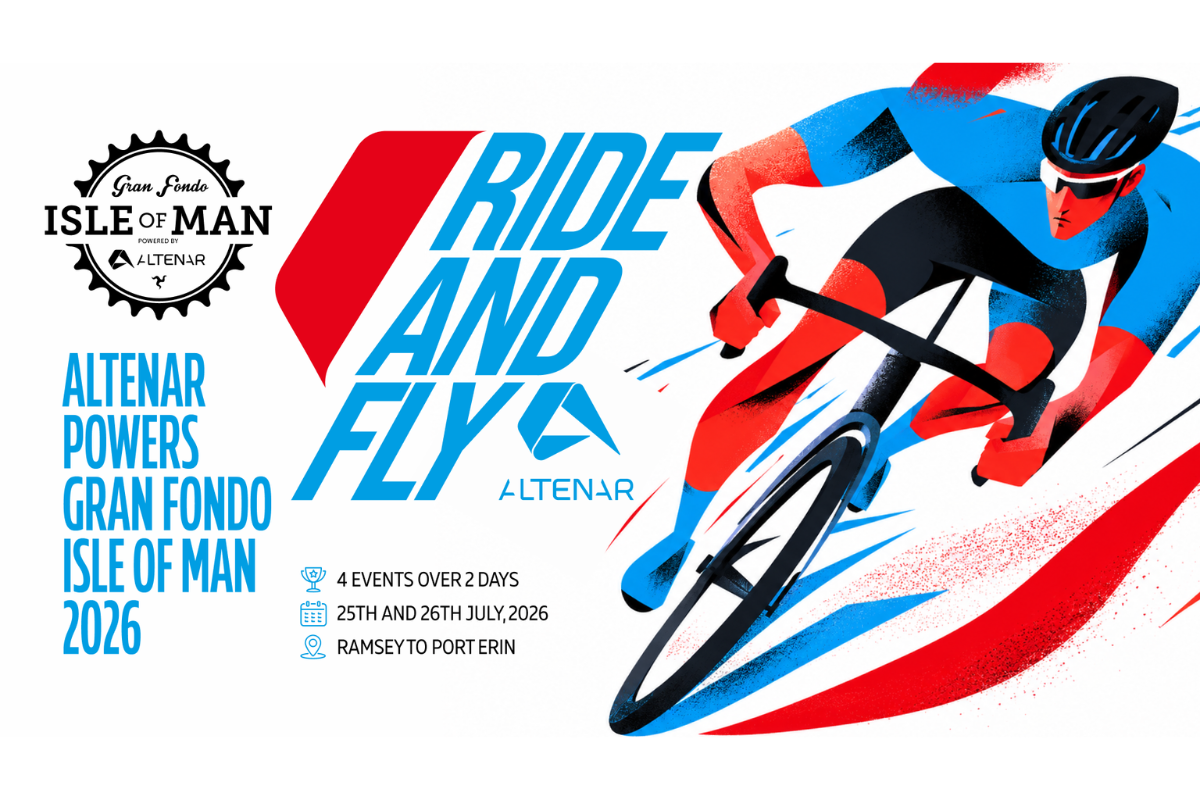
Altenar, a global leader in sportsbook technology is sponsoring Gran Fondo Isle of Man as title sponsor for the 2026 event, which returns with a refreshed format.
Taking place on July 25-26, this year’s festival embraces the growing popularity of off-road cycling, introducing dedicated gravel and cross-country mountain bike events alongside participation rides designed for cyclists of all ages and abilities.
Based in Ramsey, the weekend culminates with the flagship 100 km races, which take riders across some of the Isle of Man’s most spectacular landscapes before finishing in Port Erin.
The partnership reflects Altenar’s commitment to supporting sport and the local community on the Isle of Man, where the company is headquartered.
Alongside its sponsorship of the Isle of Man Marathon and Half Marathon, backing Gran Fondo Isle of Man forms part of Altenar’s wider investment in initiatives that promote healthy lifestyles while showcasing the island to an international audience.
Elena Zhuli, Event’s Director at Altenar, said:
“We’re delighted to support Gran Fondo Isle of Man as it returns with an exciting new format for 2026. The event has built a fantastic reputation over the years by bringing together riders from around the world while celebrating everything that makes the Isle of Man such a unique place to cycle.
“As a company proudly based here, we’re pleased to continue supporting an event that encourages participation, strengthens the local community and showcases the island on the international stage.”
Since its launch, Gran Fondo Isle of Man has welcomed more than 8,000 participants from countries including Japan, Australia, South Africa and the USA, earning recognition as one of the British Isles’ leading participation cycling events.
The refreshed 2026 format builds on that legacy, combining gravel riding, cross-country mountain biking and family-friendly cycling experiences into a weekend that celebrates the island’s outstanding natural landscape.
The post Altenar powers Gran Fondo Isle of Man in 2026 appeared first on EE Gaming | Global iGaming & Tech Intelligence Hub.

Infingame, a leading aggregator in the iGaming industry, has revealed new operational insights into why some casino promotions significantly outperform others, with the strongest campaigns generating up to five times higher player participation compared to standard bonus-led activities.
According to Infingame, the gap between average and high-performing promotions is widening as operators move away from one-size-fits-all bonus campaigns and begin treating engagement as a data-led lifecycle strategy.
Based on aggregated observations across operator activity, Infingame found that campaigns built around segmentation, clear progression, time-sensitive mechanics, and real-time visibility consistently outperform static promotions. In some cases, segmented tournament and challenge-based campaigns delivered participation rates up to 5x higher than broad campaigns launched across an entire player base.
“The biggest difference is no longer the prize pool,” said Kateryna Korniienko, Promo Tool Manager at Infingame. “Operators often assume that a larger reward automatically means stronger participation, but our data shows that structure, timing, relevance, and visibility have a much greater impact on whether players actually join and return.”
Infingame notes that traditional casino promotions often underperform because they are too broad, too passive, or disconnected from player behaviour. A campaign offering the same reward to new, active, VIP, and lapsed players may reach a large audience, but it rarely creates the same level of response as a campaign tailored to specific player groups.
The strongest-performing promotions usually share four key characteristics. First, they are built around clear player segments. Campaigns targeted at specific groups, such as new depositors, high-frequency players, VIPs, or dormant users, tend to generate higher participation because the mechanic matches the player’s stage in the lifecycle. For example, a reactivation campaign designed for lapsed users requires a very different structure from a leaderboard aimed at competitive regular players.
Second, successful promotions create visible progress. Players are more likely to continue participating when they can track their position, progress, or remaining steps. This is one of the reasons tournaments, missions, and challenges often outperform static cashback or free spin offers. They create a reason to return during the campaign period, not just claim a reward once.
Third, high-performing campaigns use urgency carefully. Shorter campaign windows, Happy Hours, limited-time multipliers, and event-based mechanics can create sharper engagement peaks when used with the right audience. Infingame has observed that time-limited campaigns can increase repeat activity by 30-45% compared to open-ended promotions, particularly when paired with personalised communication.
Fourth, reward relevance matters more than reward size. Operators frequently overinvest in prize pools without adjusting the mechanic to the player segment. Infingame’s observations show that smaller but better-targeted rewards can often deliver stronger cost-per-engagement performance than larger generic campaigns.
“Promotions are becoming much more operationally sophisticated,” Kateryna Korniienko added. “The best operators are not simply launching a tournament or giving out free spins. They are asking who the campaign is for, what behaviour they want to influence, how long the campaign should run, and which reward makes sense for that player group.”
Infingame also identified a growing divide between operators that analyse campaign performance after launch and those that still evaluate promotions mainly by total participation or bonus cost. More advanced operators are now tracking repeat participation, session continuity, reactivation rate, cost per engaged player, and post-campaign retention.
This shift is changing how promotional tools are used across the industry. Tournaments are increasingly being applied not only as acquisition tools, but also as instruments for retention, reactivation, VIP engagement, and content discovery. Challenges and missions are also gaining traction because they allow operators to guide players through specific behaviours, such as trying new games, returning during low-activity periods, or engaging with selected content categories.
Infingame believes the next stage of casino promotion will be defined by flexibility and precision rather than volume. Through its aggregation platform and engagement tools, Infingame enables operators to design customised tournaments, challenges, and promotional campaigns across different player segments, markets, and content categories.
About Infingame
Infingame is a leading game aggregator built to help operators move faster and scale smarter. Through a single API integration, the platform gives access to a portfolio of over 16,000 games from more than 150 providers, allowing partners to launch quickly without dealing with multiple integrations.
Delivered via a single API, Infingame offers unparalleled technical excellence, the industry’s fastest spin times, exclusive tournaments and strategic partnerships with top-tier operators in North America, LatAm and beyond. Spanning a portfolio of slots, crash games, sweepstakes and live casino, book a demo via the LinkedIn page, website or at [email protected].
The post Infingame identifies why some casino promotions achieve 5x higher participation than others appeared first on EE Gaming | Global iGaming & Tech Intelligence Hub.

Amusnet enters the world of instant games with Shiny Crystals, a fast-paced experience that blends strategic decision-making, flexible gameplay and rising anticipation into an exciting new format. Designed with a mobile-first approach, this innovative release invites players to uncover sparkling Crystals, avoid hidden Mines and decide exactly how far they are willing to push their luck.
Set on a concealed grid filled with valuable Crystals and dangerous Mines, Shiny Crystals puts every decision in the player’s hands. Each Crystal uncovered increases the current multiplier, creating a constant balance between risk and reward. The longer the journey continues, the greater the potential grows – but one hidden Mine can bring the round to an instant end, making every choice count.
One of the game’s defining features is its flexible risk system. Before each round, players can select how many Mines will be hidden across the grid, tailoring the gameplay to their preferred level of challenge. Whether opting for a cautious approach or embracing higher-risk strategies, every session offers a different path and fresh possibilities.
Adding another layer of excitement is Crystal Rush, a dynamic time-based feature that activates after uncovering three Crystals in quick succession. Once triggered, consecutive Crystal discoveries award additional multiplier boosts, rewarding quick thinking and confident decisions with even greater momentum.
For players who enjoy a more tactical experience, the Defuse Engine introduces a unique strategic mechanic. Before revealing a tile, players can view its Clarity Score, providing valuable insight into the potential risk before making their next move. When circumstances demand it, the grid can also be reshuffled, creating new opportunities and encouraging thoughtful decision-making throughout every round.
Combining intuitive gameplay, customisable risk levels and innovative mechanics, Shiny Crystals marks an exciting milestone as Amusnet’s very first instant game. Fast, engaging and built around meaningful player choice, it delivers a fresh gaming experience where every revealed Crystal brings new possibilities – and every decision could uncover something extraordinary.
The post Shiny Crystals’ Launch Marks Amusnet’s First Step into Instant Games appeared first on EE Gaming | Global iGaming & Tech Intelligence Hub.

-

 ESPN Networks4 days ago
THE 57th ANNUAL WORLD SERIES OF POKER® CONCLUDES AN EXTRAORDINARY SUMMER OF GLOBAL ENGAGEMENT AND ELITE COMPETITION
-
Latest News5 days ago
Booming Games launches Tasty Bonanza Max Scatter slot
-
Latest News6 days ago
SCCG Management Launches Dedicated SCCG Brazil Division with Local Partner Thomas Carvalhaes
-
Latest News6 days ago
Esportes Gaming Brasil takes two ClienteSA Awards 2026 wins; exec named Personality of the Year
-
Canada5 days ago
Peter & Sons launches full game portfolio in Alberta
-
Canada6 days ago
ThrillTech secures AGCO supplier licence for Ontario launch
-
Latest News5 days ago
QTech signs EXCO Game Studio slots for emerging markets
-
Latest News5 days ago
Blueprint Gaming releases Wolf Fury Fire Blitz slot