Curacao
Novatech Unregisters In Curacao Amid European Heat

Curacao-based Novatech has found itself on the receiving end of a one-two punch of regulatory action from Sweden and the Netherlands, but in the face of a massive fine evidence, suggests the operator may be ducking for cover.
On March 10, the Netherlands Gambling Authority (KSA) issued its largest ever fine to Novatech Solutions, reporting that it had been offering illegal gambling to Dutch citizens through a range of websites.
Via the URLs amonbet101.com, supraplay.com, amonbet.com, bilucky.com, gxspins.com, kaasino.com, hiddenjack.com and luckymax7.com, the KSA said that Novatech had allowed Dutch players to deposit and gamble without a local licence.
The regulator also alleged that Novatech’s operations did not have any obvious methods of age verification and allowed anonymous payments using cryptocurrency.
Despite the penalty coming in at a record €25m, regulators say they were pushing for an even more extreme punishment, but were limited by law to fines of no more than 10% of a company’s estimated revenue.
“Novatech earned hundreds of millions from its illegal offering, primarily from Dutch players. A fine of 24 million sounds impressive, but without the 10% maximum, the fine would have exceeded 100 million euros; an amount that would be more appropriate for this offense,” said KSA chairman, Michel Groothuizen.
The ripple effects from this enforcement action may yet impact other parts of the gambling ecosystem.
The KSA said that Novatech websites had been advertised in the Netherlands by a number of influencers, who “can also be sanctioned”.
Information available on the Dutch regulator’s website indicates that Novatech has appealed against the enforcement decision.
And another one
A day later in Sweden, Novatech Solutions once again found itself on the receiving end of European enforcement, as the Swedish Gambling Authority (SGA) banned the company from targeting its home market.
The regulator highlighted websites qbet.com, mangacasino.com, slotexpress.com, 55bet.com and 30bet.com as having offered gambling to the Swedish market without a licence.
Companies targeted for illegal gambling enforcement in Sweden have to clear a fairly high bar.
While it waits for long pending amendments to the country’s gambling to be implemented, the SGA can only take action against companies that are clearly attempting to solicit customers from Sweden, rather than those who simply passively accept players.
As evidence of targeting on the part of Novatech, the SGA said that the operator’s websites pre-selected Sweden’s telephone country code on sign-up forms when they detected a Swedish IP address.
Some of the sanctioned websites were also being advertised via Swedish-language content on video streaming platforms, the regulator added.
The lack of financial penalty in Sweden carries less immediate threat than the Dutch enforcement case, but still adds pressure to the operator.
There are also immediate effects in Sweden, where game suppliers are licensed and cannot sell content to companies that illegally offer gambling in the country.
It was not noted on the SGA’s website or its enforcement notice whether Novatech Solutions has appealed.
Moving target
Dutch authorities may have trouble collecting their record fine, according to data from the Curacao Commercial Register.
An excerpt of the register indicates that Novatech Solutions discontinued its registration on March 11, the same day Sweden issued its ban and one day after receiving a fine from the KSA.
However in the Curacao Gaming Authority’s list of licensed entities, which was last updated on March 10, Novatech is still marked as holding a temporary licence.
According to the register, it applied for a licence on June 24, 2025 and an assessment of its application is still in progress.
June 24 was the date at which licences issued under Curacao’s former gambling act (NOOGH) ceased to be valid, after which operators need to have applied for a licence under the new law (LOK).
Curacao’s new regulatory regime has been billed as an attempt to add credibility to a jurisdiction that has historically attracted the ire of international regulators. Officials have in the past claimed that the island nation acts as a staging post for infringing gambling operations around the world.
At time of publication, Novatech websites include 55bet and Qbet still appear to be active, although indicate that they are regulated in Curacao under the now-expired NOOGH.
Working together?
The consecutive nature of enforcement by the KSA and SGA raises natural questions about potential collaboration between the two authorities.
In recent years European regulators have spoken frequently about an uptick in information sharing, especially when it comes to restricting the offshore sector.
The KSA and SGA also signed a memorandum of understanding in October 2020, which included among its pledges a promise to cooperate in “combatting illegal operators of remote gambling”.
However the SGA told EEGaming that it did not partner with the KSA in any way in its investigation of Novatech.
“There is no cooperation in these cases, nor are there any procedures for coordinating supervision of individual unlicensed companies across different countries,” a spokesperson said.
“Gambling authorities within the EU often act against the same operators, as the companies frequently operate in multiple markets.”
The post Novatech Unregisters In Curacao Amid European Heat appeared first on Eastern European Gaming | Global iGaming & Tech Intelligence Hub.









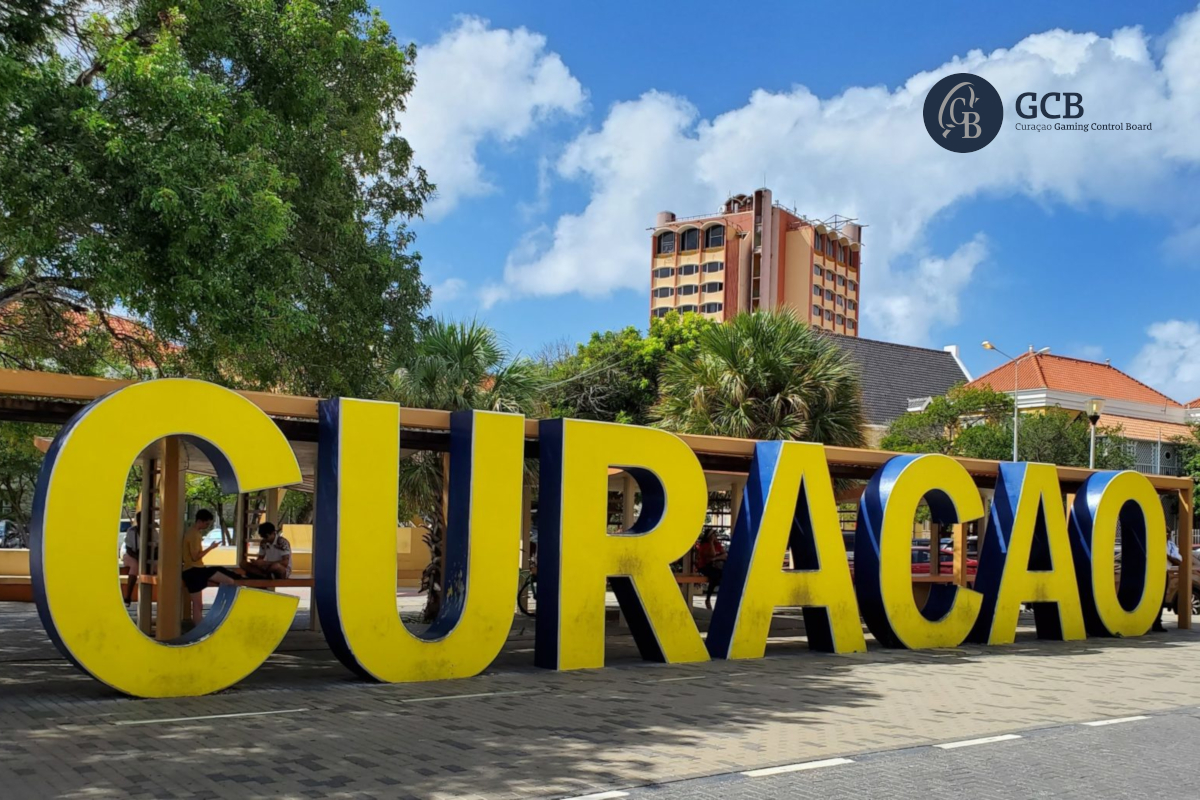
The sprawling tendrils of the player refund drama look to finally have ensnared Curacao, much in the way they have imperilled Malta for the past few years, after a local court ruled that a refund owed to a player in Austria must be paid by an operator based on the Caribbean island.
Experts believe the ruling marks a turning point for Curacao in the long-running player refund saga — the attempts by players to reclaim all of their losses from offshore operators in European grey markets.
Last week, the highest legal authority of the Dutch Caribbean islands — The Joint Court of Justice of Aruba, Curaçao, Sint Maarten, and of Bonaire, St. Eustatius and Saba — found in favour of an Austrian gambler.
The individual had originally won their case back in 2023, when an Austrian court ruled that she was entitled to all of the €25,518.42 lost to Raging Rhino N.V., which operates the brand LuckyDays.
This ruling is just one of thousands that have been issued in Austria and Germany over the past five years, with hundreds of millions of euros in refunds either already paid out via judgements and settlements or, more likely, blocked by gambling-friendly jurisdictions.
For the most part, this wave of pro-player judgements has created issues for Malta, where a larger number of current and former grey market gambling providers are headquartered.
That ultimately led to the infamous Bill 55, a piece of legislation which empowers judges in Malta to block rulings from foreign courts against local gambling companies, on the grounds that permitting the refunds to go ahead would violate the country’s public order.
Bill 55 remains highly controversial and is coming under sustained pressure from a series of cases currently being heard before the Court of Justice of the European Union (CJEU).
Order maintained
Curacao has also traditionally offered a friendly environment for online gambling operators, albeit with a considerably more tarnished reputation than Malta.
So it has come as a surprise to many observers that judges in the Raging Rhino case have ultimately sided with lawyers attempting to transfer a refund judgement from Austria.
According to reports in the Curacao Chronicle, Raging Rhino attempted to match the Maltese defense, arguing that allowing the refund to go through would violate Curacao’s public order
Judges also refused to allow the gambling company to re-litigate the case in any way, asserting that their task was simply establishing whether the foreign judgment could be safely recognised in Curacao.
Raging Rhino were also ordered to pay €2,286.72 in legal costs, the Chronicle said.
A tipping point
Although the volume of cash involved in this case is relatively minor, it represents the tip of a potentially vast iceberg that could cost operators in Curacao huge sums.
Lawyers and litigating funding companies have spent years finding potential clients and buying up claims from anyone who gambled in Austria and Germany with an operator without a local licence.
That includes plenty of gambling companies in Curacao, which has long hosted a bustling offshore gambling community.
Until recently, that sector was almost completely hidden by opaque layers of regulation, however recent reforms on the island have forced operators to apply for new licence and, in so doing, join a public register that displays their status.
According to that register, Raging Rhino’s Curacao licence expired on March 26, but it has an application which is currently being assessed.
Although this new era of transparency remains the target of criticism, last week’s ruling demonstrates that forcing companies out into the open is also opening them up to greater legal risk.
The Raging Rhino judgement is blood in the water for the many legal teams and litigating funding firms that have hundreds, if not thousands, of player refund cases on their books.
With major support from Malta, lawyers representing gambling companies have been fairly successful in protecting their clients, following an initial wave of settlements.
Although the tide may be gradually turning against the industry, thanks to the CJEU, pro-industry lawyers still believe that player lawyers who have spent considerable sums acquiring claims are desperate to find ways to generate income while they remain stymied by Bill 55.
A weak point in the armour of Curacao operators, who have for so long resisted any international enforcement, is likely to spur a flurry of new claims and attempts to have judgments transferred from Germany and Austria.
At least one expert in online gambling law believes that this judgment will effectively end all operations in Germany and Austria for Curacao-based companies.
This would mirror the experience of Malta, which saw its local operators pushed out of Austria by the threat of refund judgments.
Maltese firms that chose not to apply for an online slots or betting licence have also exited Germany.
With judges having established a precedent that European refund judgments can be transferred to Malta, a wave of similar cases is sure to follow, raising serious questions about the status of Curacao as a haven for the offshore online gambling industry.
The post Landmark Player Refund Ruling Threatens Curacao appeared first on Eastern European Gaming | Global iGaming & Tech Intelligence Hub.
In high-risk industries, law is often perceived as a set of constraints. However, at SBSB Lawyers, we operate on the opposite principle: a legal framework is the foundation for safe and rapid growth.
“We have never limited ourselves to the letter of the law,” notes Ivan Nevzorov, Acting CEO of SBSB Lawyers. “Our goal is to create a complete business ecosystem where the client receives a turnkey solution. We believe that our client’s success is the only true metric of our reputation. Therefore, we act not just as lawyers, but as business architects.”
The End of Curacao’s Monopoly: Why the Market is Seeking Alternatives?
The transformation of Curacao and the implementation of the LOK law have become the primary challenge of the current year. The transition from the old Master License system to direct government oversight has created a “bottleneck” in the industry. Increased complexity, mandatory local presence, and rising operational costs have forced many operators to seek more agile havens.
For us at SBSB, this is not a crisis, but an opportunity for strategic diversification. We analyze risks long before they become critical and offer solutions based on the specific goals of the founders.
The New Leaders: A Deep Dive into Anjouan, Nevis and Liberia
Today, we highlight three directions that allow projects to maintain momentum while staying fully compliant:
- Anjouan gaming license: the Sprint to the Market. “If a client’s strategy is the fastest possible time-to-market, Anjouan becomes the ideal bridge,” explains Ivan. Currently, Anjouan (Comoros) has filled the void left by the old Curacao model. It is a “one-size-fits-all” license covering all types of gambling—from slots to sports betting. The main advantage is the speed of processing; you can have your infrastructure ready to process payments within just a few weeks.
- Nevis gaming license: the Crypto Frontier. For tech leaders building blockchain-based businesses, Nevis offers the best environment. It is a jurisdiction that values privacy and provides the legal freedom for crypto operations without slowing down product development. It allows for decentralized models and DeFi-based gaming, which are often difficult to license in traditional European hubs.
- Liberia gaming license: the Gateway to International Banking. We call Liberia the “hidden gem.” While other jurisdictions struggle with bank skepticism, Liberia provides excellent access to international payment gateways (PSPs). It is an ideal middle ground for operators who need a stable base for fiat operations with a minimal tax burden.
“Choosing a jurisdiction is like choosing a foundation for a house,” says Ivan Nevzorov. “You can build something temporary on sand, or you can lay a foundation for the ages. At SBSB, we don’t offer ‘trendy’ licenses; we analyze the client’s business model three steps ahead. If Anjouan is enough for you today, we will ensure that tomorrow this structure will allow you to scale globally without friction.”
The Startup Incubator: From Idea to Global Brand
While many see startups as a risk, SBSB sees them as the future of the industry. We design our founder support strategy so that legal issues do not interfere with creativity and development.
“In the iGaming industry, a startup is not just a ‘small client.’ It is a concentrate of energy and innovation,” Ivan emphasizes. “Our task at SBSB is not to ‘clip the wings’ with legal formalities, but to create a safe corridor for the project where it can accelerate to supersonic speeds without breaking the rules.”
To support this growth, we focus on three core pillars:
- Lowering Entry Barriers: we carefully select jurisdictions that allow for an MVP (Minimum Viable Product) launch without the need for multi-million dollar initial deposits.
- Tech-Savvy Consulting: we speak the same language as developers. Our team helps integrate legal requirements directly into the project’s architecture, ensuring that compliance is “built-in” rather than “bolted-on.”
- Scalability by Design: our goal is to build a structure that is ready for the next level. Whether it’s securing venture capital or entering regulated European markets in the future, we ensure the foundation is solid enough to avoid costly restructuring.
5 Key Trends Reshaping iGaming in 2026
To stay ahead, businesses must look at the broader picture. Ivan Nevzorov identifies five shifts that will define the next year:
- Total Compliance: even “exotic” jurisdictions are aligning with global AML/KYC standards. Transparency is the new currency.
- Crypto-Native Regulation: regulators are finally creating dedicated frameworks for crypto-casinos, moving them from the “gray” zone to the mainstream.
- PSP Dominance: often, the choice of license is dictated by the requirements of the payment provider, not the regulator. We align these two worlds.
- Local Presence Evolution: the demand for local substance is growing, requiring firms to have real operations and local teams.
- Regulatory Sandboxes: the rise of official “testing grounds” where startups can innovate under the watchful but supportive eye of the authorities.
Your Success is Our Only Goal
Ultimately, the iGaming business is not about licenses or taxes – it is about the product, the players, and trust. At SBSB Lawyers, we take on all the operational and legal noise so you can focus on what truly matters: creating the best gaming experience. We don’t just solve “pain points” regarding payments or registration; we create the conditions in which your project becomes sustainable, legal, and attractive to investors across five continents. Let’s build the future of iGaming together.
The post Life After Curacao: A New Licensing Roadmap for iGaming Startups 2026 appeared first on Eastern European Gaming | Global iGaming & Tech Intelligence Hub.


Reading Time: < 1 minute
The Gaming Control Board (GCB) is a foundation established on 19 April 1999 with the specific purpose of becoming the supervisor of the entire gaming industry operating in and from Curaçao. With the entry into force of the National Ordinance on Games of Chance (LOK) on 24 December 2024, the GCB has been designated as the Curaçao Gaming Authority (CGA) and will continue operations under this name.
The CGA is led by a Board of Directors under the supervision of a Supervisory Board. Until recently, the CGA fell under the political-administrative responsibility of the Minister of Finance; since 19 august 2025 this responsibility has been transferred by the government to the Minister of Justice, as announced by the government on 13 october 2025.
In the context of its activities and its commitment to transparency, the CGA confirms that the Supervisory Board resigned in mid-September. The process to appoint new members by the government has already begun. This development has no impact on the performance of the CGA’s supervisory duties, including the continued implementation of the National Ordinance on Games of Chance (LOK). All licensing and supervisory activities continue uninterrupted.
The Curaçao Gaming Authority remains committed to ensuring the integrity and reliability of the gaming sector in Curaçao.
The post Curacao Gaming Authority statement appeared first on European Gaming Industry News.

-

 Australia6 days ago
Former Star Entertainment Executives Mathias Bekier and Paula Martin Disqualified and Ordered to Pay Penalties
-
CFTC7 days ago
Novig Secures CFTC Designation, Bringing the First Prediction Market Built for Sports Fans Nationwide
-
LatAm7 days ago
Innovative payment solutions provider teams up with leading LATAM fintech platform to expand digital wallet access for online betting customers in Mexico
-
Alberta7 days ago
MediaTroopers lines up eight operator partners ahead of Alberta launch
-
Alberta7 days ago
Why Alberta Represents the Next Major Growth Opportunity for Gaming Operators
-
Alina Mihaela Popa Chief Commercial Officer at ICONIC217 days ago
ICONIC21 launches live casino and RNG titles with Maxbet in Romania
-
ATG7 days ago
ATG Casino player in Sweden wins €2m jackpot powered by EveryMatrix
-
game launches7 days ago
Pragmatic Play releases Mahjong Wins Triple Pot with 100,000x bonus prize