affiliate marketing
N1 Partners Made Waves at SBC Summit 2025 with new Award, Surf Trip Giveaway and Partner Highlights


Reading Time: 2 minutes
N1 Partners once again proved its strength in the industry at the SBC Summit 2025 in Lisbon, held from September 16 to 18. With its Surf on the Wave to Success concept, the company brought a surf-inspired atmosphere to the event and returned home with a prestigious recognition.
At the Affiliate Leaders Awards 2025, N1 Partners was named Best Affiliate Program (Silver) — the first standalone ceremony dedicated to the affiliate industry.
“This nomination is a recognition of our focus on more than just numbers – it’s about building a strong community, growing brand awareness, and creating bold campaigns that inspire. At N1 Partners, we believe that trust, transparency, and creativity are what set us apart, and being ranked among the Best Affiliate Programs proves that this approach truly delivers value for our partners and the industry as a whole,” — commented Alexa Bond, Head of Affiliates at N1 Partners.
Riding the Wave of Business Success


Over three days in Lisbon, N1 Partners achieved the following:
- 300+ meetings with current and new affiliates
- Hundreds of Surf on the Wave to Success merch packs delivered to partners
- Strategic discussions on ongoing campaigns, including the year-long N1 Puzzle Promo running until the end of 2025
“Lisbon gave us the chance to meet with our top partners, strengthen relationships, and exchange insights on offers and analytics that drive efficiency. We also focused on strategies for the N1 Puzzle Promo — a campaign that continues until the end of the year and culminates with the grand prize of a Robinson R22 Beta II helicopter. These conversations are exactly what keeps our partnerships growing stronger,” — added Alexa Bond.
Surf Trip Dreams Come True


At the booth, the company organized a raffle for an all-inclusive surf camp trip, which included flights, villa accommodation, professional coaching, and a custom surfboard. More than 100 guests of the N1 Partners booth participated, and one lucky winner received the prize.
“I love winning. And when I saw the giveaway, I knew I had to be there. The idea of ‘Surfing On the Waves to Success’ really resonates with me. I believe that success is not just luck, but alignment — the inner and outer work that underpins true achievement.” — shared the winner.
Making Waves in Media and Community


The N1 Partners booth remained vibrant throughout the summit. The company speakers joined over 10 interviews and live media sessions with leading affiliate outlets and iGaming brands. The N1 Partners team also attended/visited the SBC Legends Charity Game, supporting the initiative that aligns with the brand’s values and sharing in the positive spirit of the event.
Next Stop: Rome — All Roads Lead to SiGMA
SBC Summit 2025 offered three days of networking, achievements, and new opportunities. The next stop for N1 Partners will be SiGMA Central Europe 2025 in Rome, embracing the concept that all roads lead to Rome. This event will also be one of the decisive stages in the ongoing race for the helicopter in the N1 Puzzle Promo.
Join N1 Partners
N1 Partners is a multi-brand affiliate program and direct advertiser, uniting 14+ casino and betting brands. With a strong presence in 10+ Tier-1 GEOs, a portfolio of 12 active brands reaching Reg2Dep rates of up to 70%, and a trusted network of 10,000+ affiliates worldwide, the company delivers competitive deals for top partners — CPA up to €650 and RevShare up to 45% — to ensure partners always ride the wave of success.
Be number one with N1!
The post N1 Partners Made Waves at SBC Summit 2025 with new Award, Surf Trip Giveaway and Partner Highlights appeared first on European Gaming Industry News.










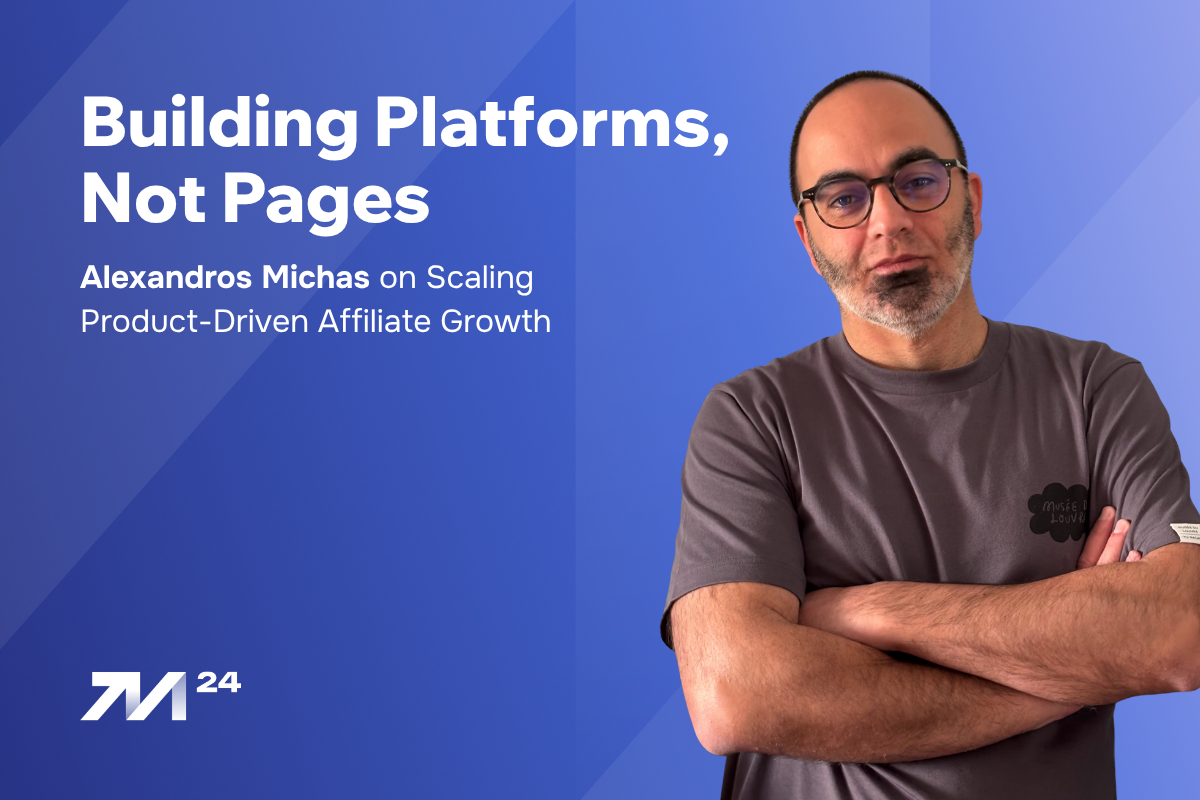
In the world of affiliate marketing, a little chaos is usually the norm. Managing dozens of websites across different regions often means endless firefighting. Enter Alexandros Michas, who was recently appointed as the Head of Website Operations at Media 24. In this interview, we talked with Alexandros about how he is replacing chaotic, site-by-site fixes with a single blueprint to turn standard affiliate sites into true digital platforms.
A few months ago, you were appointed as the Head of Website Operations at Media 24. To give our readers a look behind the scenes, what exactly does this role involve, and what are the main things you focus on in this position?
My job is to take the big-picture goals discussed with our CEO and figure out how we actually build them. I translate high-level business strategy into a concrete technical roadmap and take responsibility for it and everything that goes into our websites.
Day-to-day, I am leading our talented and experienced team of site managers. Together, we look at our portfolio of websites not just as platforms, but as products. We are constantly tweaking site functionality, brainstorming new product features, and upgrading the user experience. The ultimate goal is to move past standard affiliate landing pages and build something stickier. We want our websites to be the definitive, go-to destination where sports bettors in any given region don’t just visit once to find a bookmaker, but actively want to return to for value.
With dozens of websites in the portfolio, how do you prevent operational chaos? What does a scalable architecture look like for a modern affiliate house?
Honestly, if you treat every site like its own special project, you’ll drown in chaos overnight. The secret is standardisation.
Of course, every region has its own local specifics that we have to adapt to, and we do so by having locals as website managers. But underneath it all, we build everything on a single, shared blueprint. When we design a new feature, we don’t just build it for one site. We build it to level up the whole portfolio at once. It also makes expanding into a new market much easier. If a promising new region opens up tomorrow, we don’t have to start from scratch. We just drop in a product that’s already battle-tested and ready to go.
I’ve also set up teams around each GEO and manager, which include SEO specialists, content managers, and others, to ensure a smooth and efficient workflow.
Since you rely on a single blueprint, how do you manage the human element? How much freedom do your site managers have to experiment in their local markets versus sticking to the playbook?
Our site managers are the true experts in their specific regions, so they have total autonomy over their local content plans and figuring out what makes bettors in their area tick. They own that local strategy completely, while the blueprint just ensures they are building on a rock-solid foundation.
Because they are on the ground, I actually encourage them to constantly pitch product improvements. I always listen to their suggestions because a great idea shouldn’t just stay on one site. If a manager finds a feature that works incredibly well for their audience, we don’t just keep it there. We roll it into our core blueprint so the entire portfolio benefits from it.
The company has shifted toward building true digital platforms rather than just simple affiliate sites that rank. In practice, what is the biggest difference between those two approaches?
The biggest difference is value and retention. A simple affiliate site is transactional. It’s built entirely around SEO keywords just to capture a click, send the user to a sportsbook, and hope for a conversion. If Google tweaks its algorithm, that site is incredibly vulnerable because users have no real loyalty to it.
A digital platform, on the other hand, is an actual product. We aren’t just trying to get a click. We are trying to be a helpful place for the sports bettor. That means building features, community, and data hubs. It takes a lot more time and energy to maintain, but it turns a casual visitor into a loyal user. They don’t just find us on Google once. They bookmark the site and keep coming back because the product itself is valuable.
The World Cup is live right now. An event of this scale is a massive test for any affiliate. How did you approach the preparation for this global tournament from a product perspective, and what features did you ship to keep bettors engaged?
We knew the traffic spikes would be insane, so preparation actually started months ago. From a product perspective, the ultimate goal was instant utility. During a massive event like this, users want their information immediately, without any friction.
Feature-wise, we shipped an advanced match centre, a tournament bracket simulator, and worked heavily on upgrading our entire content strategy specifically for the World Cup. Because of the shared framework we talked about earlier, we didn’t have to build these tools site-by-site. Our blueprint allowed us to deploy these advanced features across all of our sports betting properties simultaneously, giving every region a premium product at the same time.
When the final whistle blows on the World Cup and we look back at the rest of 2026, what will have to happen for you to look back and say we absolutely nailed it?
On the data side, I want to look at our metrics and see a clear spike in returning users. That will be the ultimate proof that our platform strategy is actually working.
But our upgrades and feature improvements don’t just stop with the World Cup. We already have plenty of things in the pipeline, and we are planning a massive push right before the main European leagues kick off late this summer.
At the end of the day, I’ll know we nailed it if our site managers are effortlessly launching these new features, seeing the direct results of their work, and feeling like they have the absolute best tools in the industry to win their markets. That would be proof that we didn’t just build websites. We built a highly scalable affiliate product.
The post Alexandros Michas on Building Platforms, Not Pages appeared first on EE Gaming | Global iGaming & Tech Intelligence Hub.

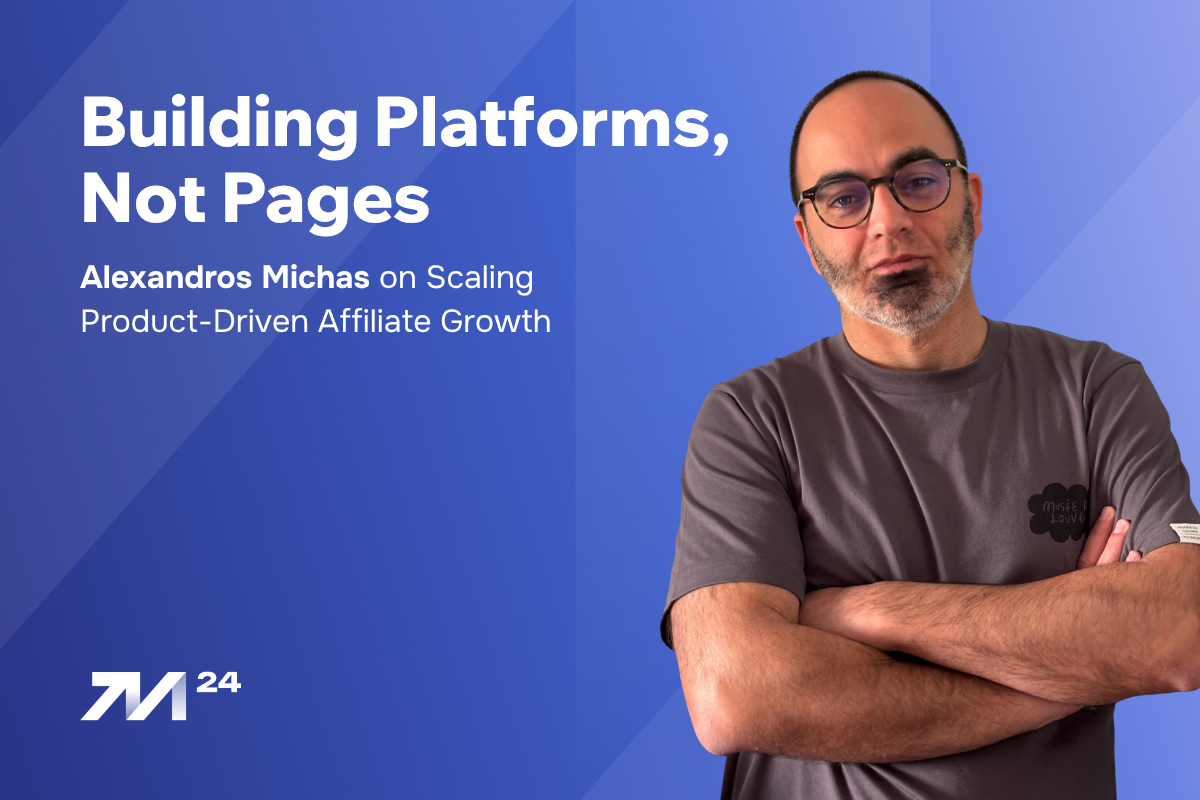
In the world of affiliate marketing, a little chaos is usually the norm. Managing dozens of websites across different regions often means endless firefighting. Enter Alexandros Michas, who was recently appointed as the Head of Website Operations at Media 24. In this interview, we talked with Alexandros about how he is replacing chaotic, site-by-site fixes with a single blueprint to turn standard affiliate sites into true digital platforms.
A few months ago, you were appointed as the Head of Website Operations at Media 24. To give our readers a look behind the scenes, what exactly does this role involve, and what are the main things you focus on in this position?
My job is to take the big-picture goals discussed with our CEO and figure out how we actually build them. I translate high-level business strategy into a concrete technical roadmap and take responsibility for it and everything that goes into our websites.
Day-to-day, I am leading our talented and experienced team of site managers. Together, we look at our portfolio of websites not just as platforms, but as products. We are constantly tweaking site functionality, brainstorming new product features, and upgrading the user experience. The ultimate goal is to move past standard affiliate landing pages and build something stickier. We want our websites to be the definitive, go-to destination where sports bettors in any given region don’t just visit once to find a bookmaker, but actively want to return to for value.
With dozens of websites in the portfolio, how do you prevent operational chaos? What does a scalable architecture look like for a modern affiliate house?
Honestly, if you treat every site like its own special project, you’ll drown in chaos overnight. The secret is standardisation.
Of course, every region has its own local specifics that we have to adapt to, and we do so by having locals as website managers. But underneath it all, we build everything on a single, shared blueprint. When we design a new feature, we don’t just build it for one site. We build it to level up the whole portfolio at once. It also makes expanding into a new market much easier. If a promising new region opens up tomorrow, we don’t have to start from scratch. We just drop in a product that’s already battle-tested and ready to go.
I’ve also set up teams around each GEO and manager, which include SEO specialists, content managers, and others, to ensure a smooth and efficient workflow.
Since you rely on a single blueprint, how do you manage the human element? How much freedom do your site managers have to experiment in their local markets versus sticking to the playbook?
Our site managers are the true experts in their specific regions, so they have total autonomy over their local content plans and figuring out what makes bettors in their area tick. They own that local strategy completely, while the blueprint just ensures they are building on a rock-solid foundation.
Because they are on the ground, I actually encourage them to constantly pitch product improvements. I always listen to their suggestions because a great idea shouldn’t just stay on one site. If a manager finds a feature that works incredibly well for their audience, we don’t just keep it there. We roll it into our core blueprint so the entire portfolio benefits from it.
The company has shifted toward building true digital platforms rather than just simple affiliate sites that rank. In practice, what is the biggest difference between those two approaches?
The biggest difference is value and retention. A simple affiliate site is transactional. It’s built entirely around SEO keywords just to capture a click, send the user to a sportsbook, and hope for a conversion. If Google tweaks its algorithm, that site is incredibly vulnerable because users have no real loyalty to it.
A digital platform, on the other hand, is an actual product. We aren’t just trying to get a click. We are trying to be a helpful place for the sports bettor. That means building features, community, and data hubs. It takes a lot more time and energy to maintain, but it turns a casual visitor into a loyal user. They don’t just find us on Google once. They bookmark the site and keep coming back because the product itself is valuable.
The World Cup is live right now. An event of this scale is a massive test for any affiliate. How did you approach the preparation for this global tournament from a product perspective, and what features did you ship to keep bettors engaged?
We knew the traffic spikes would be insane, so preparation actually started months ago. From a product perspective, the ultimate goal was instant utility. During a massive event like this, users want their information immediately, without any friction.
Feature-wise, we shipped an advanced match centre, a tournament bracket simulator, and worked heavily on upgrading our entire content strategy specifically for the World Cup. Because of the shared framework we talked about earlier, we didn’t have to build these tools site-by-site. Our blueprint allowed us to deploy these advanced features across all of our sports betting properties simultaneously, giving every region a premium product at the same time.
When the final whistle blows on the World Cup and we look back at the rest of 2026, what will have to happen for you to look back and say we absolutely nailed it?
On the data side, I want to look at our metrics and see a clear spike in returning users. That will be the ultimate proof that our platform strategy is actually working.
But our upgrades and feature improvements don’t just stop with the World Cup. We already have plenty of things in the pipeline, and we are planning a massive push right before the main European leagues kick off late this summer.
At the end of the day, I’ll know we nailed it if our site managers are effortlessly launching these new features, seeing the direct results of their work, and feeling like they have the absolute best tools in the industry to win their markets. That would be proof that we didn’t just build websites. We built a highly scalable affiliate product.
The post Alexandros Michas on Building Platforms, Not Pages appeared first on Americas iGaming & Sports Betting News.
affiliate marketing
SEOBROTHERS’ Aleksandra Drigo flags higher barriers for affiliates in regulated Alberta


SEOBROTHERS Chief of Business Development Aleksandra Drigo says Alberta’s move toward a regulated online gambling market is likely to raise the cost and complexity of affiliate acquisition, reshaping competition for SEO-led publishers. Drigo shared the view in an exclusive interview with SiGMA News focused on Canada’s affiliate landscape.
Drigo said regulation can bring more transparency, but also higher compliance demands and tougher economics for smaller players. “Many affiliates, especially independent SEO players, may decide not to enter fully regulated markets and instead focus on regions with more predictable economics and lower regulatory pressure,” she said.
She added that regulated markets typically advantage well-funded affiliate groups with the ability to invest in legal and compliance support and tracking infrastructure. “Regulated markets tend to favour larger players. Big affiliate companies have the resources for legal support, compliance teams, advanced tracking infrastructure, and long-term investment without expecting fast ROI.”
On partner selection, Drigo said affiliates are increasingly weighing operators on operational quality and regulatory readiness, not just commercial terms. “We pay close attention to how consistent an operator is in terms of reporting, responsible gaming policies, speed of communication, and local regulations compliance. Reputation risks affect both sides. If an operator lacks transparency or fails to follow compliance standards, it directly impacts the affiliate business as well.”
Drigo also pointed to communication and access to performance data as major friction points in operator-affiliate relationships. “Financial disagreements can usually be resolved quickly if there is trust and clear communication between both sides. Whereas, when affiliates do not receive timely information, face unclear reporting, or get no explanation for performance changes, tensions escalate very quickly. In regulated markets, communication and transparency become just as important as the financial terms themselves.”
Looking ahead, Drigo said affiliates targeting regulated North American markets will need stronger localisation, trusted brands and more diversified traffic strategies as search behaviour changes. “With AI and online search ecosystem changes already transforming the SEO landscape, affiliates need to become much more flexible and technology-driven than before. And compliance-friendly SEO strategies and diversification beyond traditional search traffic are becoming increasingly important.”
The post SEOBROTHERS’ Aleksandra Drigo flags higher barriers for affiliates in regulated Alberta appeared first on EE Gaming | Global iGaming & Tech Intelligence Hub.

-

 Latest News6 days ago
N1 Partners at iGB L!VE 2026: Bringing Together Affiliates, Art and Innovation
-
Affiliate Industry6 days ago
Hub Affiliations Triumphs at the iGB Affiliate Awards 2026: Winner of Programme/Network Campaign of the Year
-
Austria7 days ago
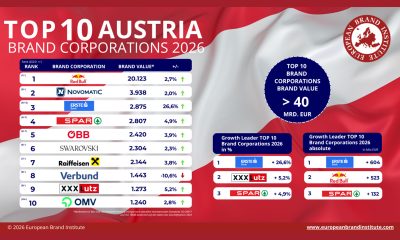
Austrian Brand Value Study: NOVOMATIC Defends Top Ranking
-
Africa7 days ago
PopOK Gaming sponsors Botswana’s TT Cup Challenge horse racing event
-
Amusnet7 days ago
Amusnet Releases its Latest Video Slot “Golden Snake”
-
Betsson CEO Pontus Lindwall7 days ago
Gaming in the Nordics launch event sets annual Copenhagen conference from 2027
-
Azerbaijani Parliament7 days ago
Azerbaijan to Impose Tougher Penalties for Illegal Online Gambling
-
Amusnet7 days ago
Weekend Reels | Week 27: Slot Drops & Trends