Latest News
EAG App is Up Running and Ready to Download


The marketing team driving EAG Expo 2026 has confirmed that the event app is ready for download. Launched four months ahead of the show opening at ExCeL London, the app has been produced following requests from exhibitors eager to fully harness the business potential of what is the UK’s biggest dedicated b2b event for the out of home entertainment market.
Phil Gibbs, who is responsible for Exhibition Support and marketing at EAG, said: “We have been working with events app specialists Sitka since April to create an app which meets the requirements of our growing exhibitor base. Sitka apps have been downloaded by approaching 500,000 exhibition attendees and I am delighted to say that we are working with a Tier 1 tech partner.
“Meeting the needs of the entire EAG community the app or digital companion provides a tool kit of features to elevate the experience for new and existing participants across EAG Expo, SIE Expo and the London Casino & Gaming Show. Exhibitors can schedule appointments, use it as a shop window for their brand and generate interest prior to the show opening.
“For visitors it helps to maximise their productive time at show courtesy of an interactive show floor plan, a personalised events schedule, dynamic information updates as well as exhibitor and product directories.”
He added: “Exhibitions are a key part of the marketing armoury for both suppliers and buyers. Their significance in terms of generating business means that organisations are starting their preparations much earlier in the cycle and are forensic in their approach. The app provides stakeholders with the tools they need to be fully prepared months in advance and able to embrace every opportunity to maximise Return On Opportunity.”
In addition to providing a standard package which is free to all exhibitors and comprises a company profile, logo, stand ID, map listing, unlimited product listings (special year one offer) and appointment scheduling for one user, EAG has created sponsorship packages which deliver enhanced functionality and branding.
The EAG Advanced Package which is available for £249 includes all of the standard features plus an enhanced company profile, an image gallery with video functionality and the opportunity to feature one offer as well as appointment scheduling for three users.
EAG’s Pro Package also provides the facility for unlimited offer listings, appointment scheduling for an unlimited number of users, enhanced branding with the company logo presented on the show map and featured exhibitor and product listing. The cost of the Pro Package is £499.
The EAG app can be downloaded by visiting either the Apple App Store or the Google Play Store and simply search EAG Expo.
The post EAG App is Up Running and Ready to Download appeared first on European Gaming Industry News.












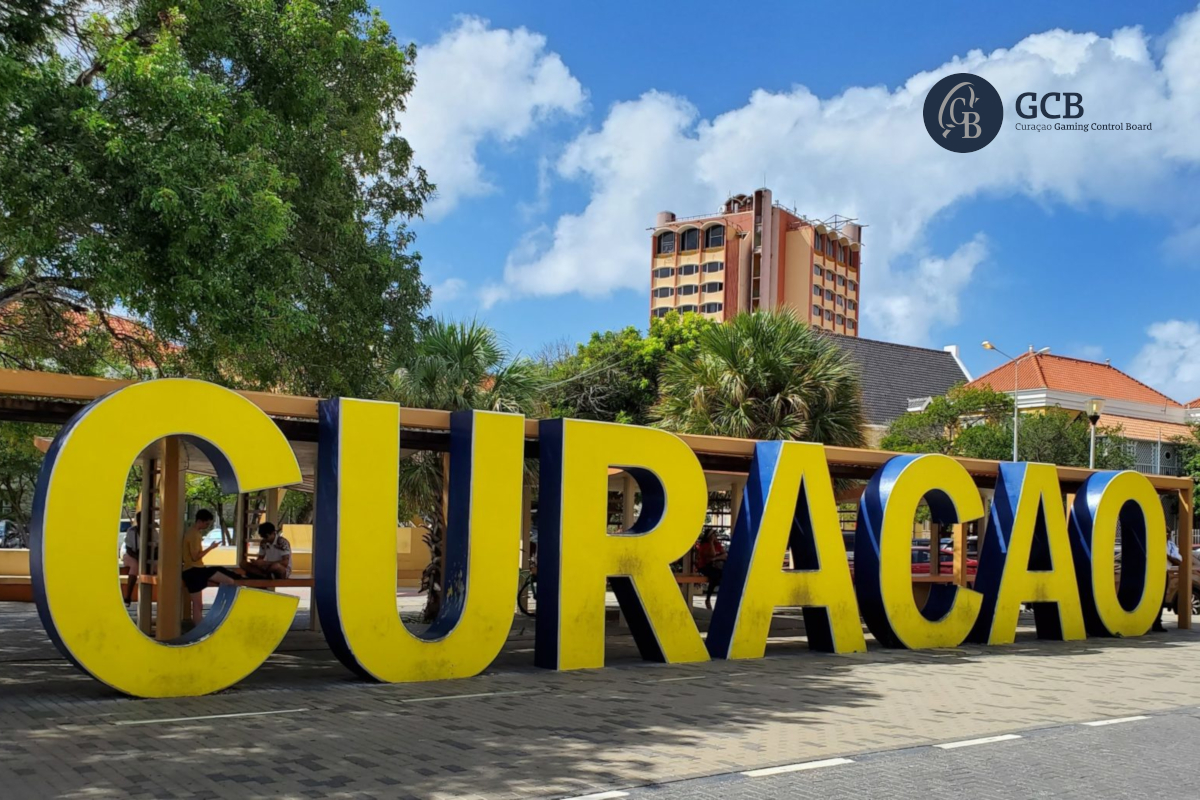
The sprawling tendrils of the player refund drama look to finally have ensnared Curacao, much in the way they have imperilled Malta for the past few years, after a local court ruled that a refund owed to a player in Austria must be paid by an operator based on the Caribbean island.
Experts believe the ruling marks a turning point for Curacao in the long-running player refund saga — the attempts by players to reclaim all of their losses from offshore operators in European grey markets.
Last week, the highest legal authority of the Dutch Caribbean islands — The Joint Court of Justice of Aruba, Curaçao, Sint Maarten, and of Bonaire, St. Eustatius and Saba — found in favour of an Austrian gambler.
The individual had originally won their case back in 2023, when an Austrian court ruled that she was entitled to all of the €25,518.42 lost to Raging Rhino N.V., which operates the brand LuckyDays.
This ruling is just one of thousands that have been issued in Austria and Germany over the past five years, with hundreds of millions of euros in refunds either already paid out via judgements and settlements or, more likely, blocked by gambling-friendly jurisdictions.
For the most part, this wave of pro-player judgements has created issues for Malta, where a larger number of current and former grey market gambling providers are headquartered.
That ultimately led to the infamous Bill 55, a piece of legislation which empowers judges in Malta to block rulings from foreign courts against local gambling companies, on the grounds that permitting the refunds to go ahead would violate the country’s public order.
Bill 55 remains highly controversial and is coming under sustained pressure from a series of cases currently being heard before the Court of Justice of the European Union (CJEU).
Order maintained
Curacao has also traditionally offered a friendly environment for online gambling operators, albeit with a considerably more tarnished reputation than Malta.
So it has come as a surprise to many observers that judges in the Raging Rhino case have ultimately sided with lawyers attempting to transfer a refund judgement from Austria.
According to reports in the Curacao Chronicle, Raging Rhino attempted to match the Maltese defense, arguing that allowing the refund to go through would violate Curacao’s public order
Judges also refused to allow the gambling company to re-litigate the case in any way, asserting that their task was simply establishing whether the foreign judgment could be safely recognised in Curacao.
Raging Rhino were also ordered to pay €2,286.72 in legal costs, the Chronicle said.
A tipping point
Although the volume of cash involved in this case is relatively minor, it represents the tip of a potentially vast iceberg that could cost operators in Curacao huge sums.
Lawyers and litigating funding companies have spent years finding potential clients and buying up claims from anyone who gambled in Austria and Germany with an operator without a local licence.
That includes plenty of gambling companies in Curacao, which has long hosted a bustling offshore gambling community.
Until recently, that sector was almost completely hidden by opaque layers of regulation, however recent reforms on the island have forced operators to apply for new licence and, in so doing, join a public register that displays their status.
According to that register, Raging Rhino’s Curacao licence expired on March 26, but it has an application which is currently being assessed.
Although this new era of transparency remains the target of criticism, last week’s ruling demonstrates that forcing companies out into the open is also opening them up to greater legal risk.
The Raging Rhino judgement is blood in the water for the many legal teams and litigating funding firms that have hundreds, if not thousands, of player refund cases on their books.
With major support from Malta, lawyers representing gambling companies have been fairly successful in protecting their clients, following an initial wave of settlements.
Although the tide may be gradually turning against the industry, thanks to the CJEU, pro-industry lawyers still believe that player lawyers who have spent considerable sums acquiring claims are desperate to find ways to generate income while they remain stymied by Bill 55.
A weak point in the armour of Curacao operators, who have for so long resisted any international enforcement, is likely to spur a flurry of new claims and attempts to have judgments transferred from Germany and Austria.
At least one expert in online gambling law believes that this judgment will effectively end all operations in Germany and Austria for Curacao-based companies.
This would mirror the experience of Malta, which saw its local operators pushed out of Austria by the threat of refund judgments.
Maltese firms that chose not to apply for an online slots or betting licence have also exited Germany.
With judges having established a precedent that European refund judgments can be transferred to Malta, a wave of similar cases is sure to follow, raising serious questions about the status of Curacao as a haven for the offshore online gambling industry.
The post Landmark Player Refund Ruling Threatens Curacao appeared first on Eastern European Gaming | Global iGaming & Tech Intelligence Hub.

London is a city built on institutions that never needed to announce themselves. The law firms on Chancery Lane, the private clubs in St. James’s they endure not through attention, but through trust accumulated over decades. Quietly. Consistently. Without a rebrand every two years. Which makes London an interesting backdrop for the affiliate industry’s annual conversation with itself. Because iGaming, by contrast, has mastered the art of attention.Conference floors are fluent in volume: oversized visuals, stacked merchandise, account managers with pitch decks and a practiced sense of urgency. Every programme is premium. Every stand is exclusive. What it rarely produces is what the spreadsheet actually needs: long-term ROI, partner retention, relationships worth more in year three than month one.
The Market Learned to Perform Premium. It Forgot to Practice It.
When an entire market adopts the same vocabulary premium, VIP, exclusive, top-tier the signal stops carrying information. The gifting mechanics follow the same logic: items chosen for the photograph rather than the relationship. With this approach the partner is the audience, not the counterpart.
The structural problem is this: markets that compete on noise attract partners who respond to noise, and lose them the moment a louder offer comes along. Attention is not loyalty. Activation is not retention.
High-performing affiliate partnerships share a different architecture: predictability over promises, honest communication over promotional language, consistency whether a relationship is new or years old. Strong partners don’t leave for marginal CPA improvements when the relationship itself has value they’d be giving up. That dynamic reduces churn, extends LTV, and compounds over time in ways no single activation can replicate.
Manor as Model: The Economics of Restraint
PlayamoPartners’ presence at iGB London stand H-60, 1–2 July operates on this logic. The Manor concept takes the British manor as its central metaphor: not a venue, but a model of relationships. There is an etiquette, a code, standards that everyone inside understands. Membership implies alignment.
The aesthetic is restraint. The underlying logic is economic. Trust, in this industry, has a measurable ROI that most programmes never stop to calculate because they’re too busy announcing it.
The Code of Honor: Giving the Industry Its Memory Back
At the centre of the Manor experience is a physical book not a lookbook or catalogue, but a Code of Honor: partner feedback, written by partners themselves, accumulated across events and years. A physical record implies that what partners say is worth keeping in a form that persists that the relationship has a history worth preserving.
The iGaming industry has become extremely efficient at forgetting. Campaigns replace campaigns. Account managers cycle through. Programmes pivot quarterly. The Code of Honor is a deliberate counter to that tendency. It treats reputation not as a marketing asset but as something that grows through repeated honest interaction. An archive of trust, built over time.
Recognition Over Raffle
Partners who contribute to the Code of Honor become eligible for recognition items including a MacBook Neo 13, iPhone Air, and iPad Air. Come by on 02.07 at 14 o’clock and collect your prize.
The framing matters. These are not raffle prizes. Recognition is relational: you are who you are, and that is acknowledged. One is a CPA model applied to gifting. The other is how relationships between people who respect each other actually function.
The partners the Manor is designed for are not the ones who show up for a giveaway they’re the ones who show up to engage, to leave something of their own behind, to participate in the ongoing record of what this programme is.
Continuity of Standards
This approach isn’t new for PlayamoPartners. Past recognition has included Samsonite, Hugo Boss, TAG Heuer, Cartier, YSL. At iGB London, partners at H-60 will find Cartier wallets and MacBooks among the acknowledgements.
Premium gifting delivered consistently, to partners aligned with programme standards, across multiple years and conferences, reads differently from a one-time budget line. It signals a stable set of values with no particular need for an audience.
What Remains After the Conference Floor Clears
Rates, tools, tracking platforms are table stakes. Any serious programme can match them within a quarter. What cannot be quickly replicated is culture: honest communication, payments that arrive without chasing, account managers who know your business well enough to have an opinion about it.
Manor of PlayamoPartners arrives at iGB London not as an activation, but as a position. Behind it: a system, a reputation, a code of conduct that predates this event and will outlast it.
Stand H-60 | 1–2 July | iGB London
Contact the team:
- Edgar @Nertevics — CEO, PlayamoPartners
- Slava @AMOSLAVA — Affiliate Manager Team Lead
- Anna @anna20bet — Affiliate Manager
- Andrey @Andrey_playamo — Affiliate Manager
- Barbara @BarbaraPlayamoPartners — Affiliate Manager
The post Loud Launches, Quiet Exits Why Partner Culture Outlasts Partner Acquisition appeared first on Eastern European Gaming | Global iGaming & Tech Intelligence Hub.

PhilWeb Corporation has reinforced its position as a technology-driven company at SiGMA Asia 2026, highlighting its continuing transformation through digital innovation, scalable platform solutions and strategic technology investments aligned with the rapidly evolving digital economy in Asia.
As one of the Philippines’ established technology and platform providers, PhilWeb participated in SiGMA Asia 2026 to showcase its long-term vision centered on digital infrastructure, operational scalability, customer engagement technologies and future-ready platform development. The company’s presence at the international event reflects its broader strategy of strengthening its role within the growing technology, digital entertainment and fintech ecosystem in the region.
With more than 25 years of operational experience, PhilWeb continues to evolve alongside changing market demands and technological advancements. Over the years, the company has steadily expanded its capabilities through investments in platform modernization, integrated digital systems, payment technologies and data-driven operational tools designed to support scalable and efficient business operations.
As industries across Asia continue to undergo digital transformation, PhilWeb sees increasing opportunities in technology-enabled ecosystems where connectivity, automation, customer experience and operational efficiency play increasingly important roles in long-term business growth.
At SiGMA Asia 2026, the company highlighted initiatives focused on strengthening its digital ecosystem through improved platform capabilities, enhanced payment integration infrastructure and technology solutions designed to support seamless experiences across both physical and digital customer environments.
PhilWeb also emphasised the growing importance of integrated platforms and scalable digital operations as consumer behaviour continues to shift toward more connected and technology-driven experiences. The company continues to adapt to these evolving trends by exploring innovations that improve accessibility, operational flexibility and customer engagement.
Participation at SiGMA Asia 2026 also provided PhilWeb with opportunities to engage with international technology firms, fintech companies, digital infrastructure providers, payment solutions companies and regional business partners as it continues to strengthen its long-term growth strategy.
Beyond technology expansion, PhilWeb continues to prioritise governance, compliance-driven systems, operational transparency and sustainable business.
The post PhilWeb Showcases Technology-Driven Growth Vision at SiGMA Asia 2026 appeared first on Eastern European Gaming | Global iGaming & Tech Intelligence Hub.

-

 Africa4 days ago
Greentube partners with World Sports Betting to expand in South Africa
-
Africa4 days ago
Gaming Realms expands into three African markets via SportyBet partnership
-
Asia4 days ago
EGT Brings High-Impact Asian-Themed Portfolio to SiGMA Asia 2026
-
Conference4 days ago
Danish regulator to speak at Gaming in the Nordics launch event
-
affiliate marketing4 days ago
CasinoCanada partners with LolaJack Casino to expand Canadian visibility
-
BETER4 days ago
BETER expands US footprint with Illinois approval
-
Argentina4 days ago
Stake continues Latin American expansion with Argentina launch
-
Evoplay4 days ago
Evoplay launches Crimson Crown slot with Hold & Win jackpots