Latest News
Roundtable: Why Malta remains the ‘hub’ of European iGaming

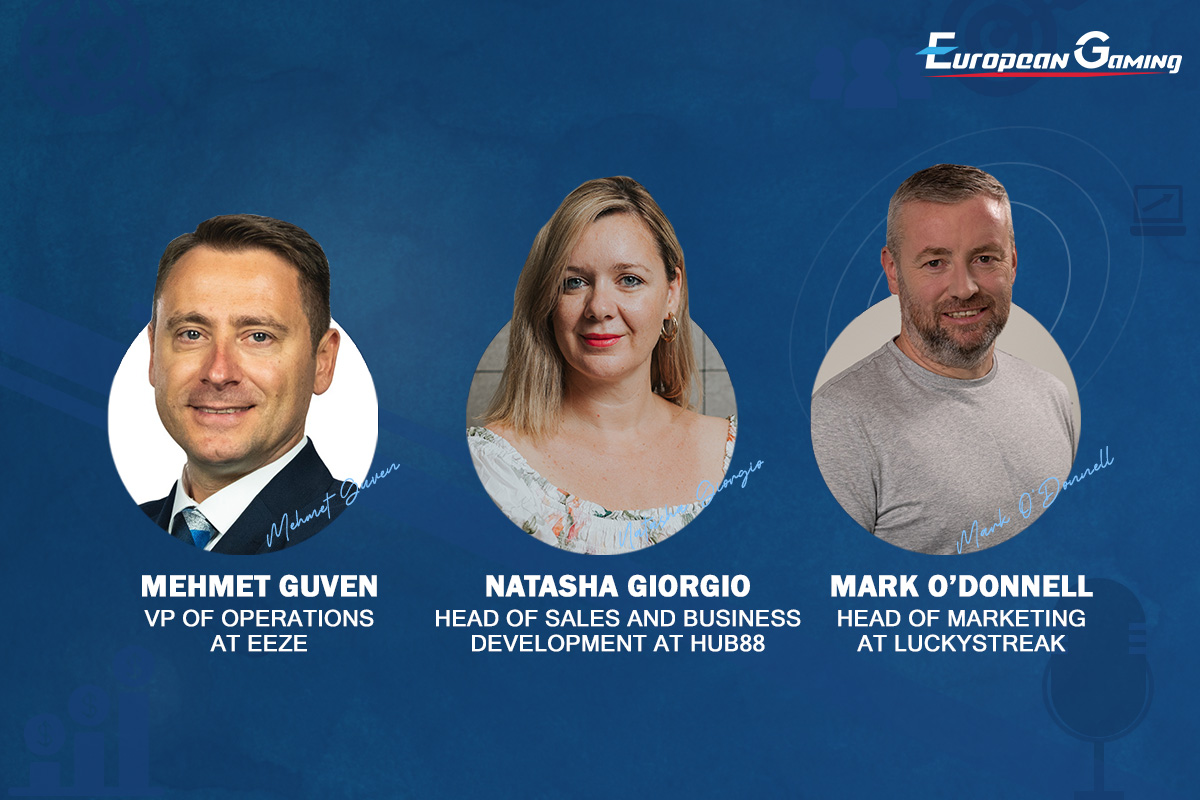
Despite rising competition, Malta remains Europe’s beating heart of iGaming. In this exclusive roundtable, Mehmet Guven, VP of Operations at EEZE, Natasha Giorgio, Head of Sales and Business Development at Hub88, and Mark O’Donnell, Head of Marketing at LuckyStreak, unpack what keeps the island at the industry’s core, from the enduring weight of the MGA licence and renowned tech infrastructure to a collaborative and supportive ecosystem.
The industry continues to invest heavily in Malta by hosting a number of high-profile events year-round. What keeps the country a ‘buzzing hub’ for iGaming despite global competition?
MO: Malta has a thriving gambling industry with loads of resident gambling companies. It’s a big and vibrant iGaming community, and a sunny, welcoming Mediterranean island, so it’s no surprise that the events side is growing, because people love going there.
There is a perception that the MGA licence may be under pressure with the growing number of local and international licences available across the world, but Malta still has big benefits for gaming companies, whether that’s low tax, a skilled workforce, EU membership, great tech and supporting services, or a very supportive government. And the reputation and credibility of the MGA means that a Malta licence is still highly coveted across the globe. It’s why LuckyStreak obtained a B2B Critical Supply Licence last year and can now offer our content to hundreds of licensed businesses and their players. What’s not to love?
MG: Malta’s success is rooted in a reputable regulator, the Malta Gaming Authority (MGA), along with a talented workforce and a cooperative industry climate. The country’s appealing tax policies, strategic position, and continuous industry events contribute to its vibrant scene. These factors foster a supportive atmosphere that attracts operators.
Additionally, Malta’s extensive industry expertise enables local companies to export these valuable skills to emerging markets, further solidifying Malta’s role in the global iGaming industry.
NG: Malta remains a crackling arena for iGaming because it offers basically everything the industry needs to thrive: strong regulation, a highly skilled workforce and, through a variety of conferences and events, an unbeatable industry community.
The MGA is still seen today as one of the gold standards for licensing, giving operators confidence to base their businesses here. But beyond compliance, Malta thrives on its networking culture. Year-round events like Next.io Networking events and Summits and countless other meetups keep the ecosystem connected and collaborative. This is why Hub88 is so intent on collaborating with firms like these so frequently.
Plus, the lifestyle helps – the land of eternal sunshine. A global language hub with English-speaking professionals and a great work-life balance attract talent from all over the world. While other jurisdictions compete on tax or licensing, Malta keeps evolving by fostering collaboration between startups, major operators and service providers. It’s this sense of community, combined with regulatory leadership, that keeps Malta at the heart of global iGaming.
What are the key opportunities to innovate and expand in Malta?
NG: Despite it already being something of a Goldilocks zone, Malta’s iGaming scene still offers plenty of room for improvement and growth. On the tech side, there are big opportunities in data-driven personalisation, gamification and payment solutions. These are some of our key foci in Hub88 innovation, as well as Live88 and Odds88 by extension, especially for emerging markets in Africa, Asia, and LatAm. The common theme on all of these development points is that they all put the customer first.
Responsible gaming tech is another growth area. It’s a deeply fascinating area of growth too as it balances the challenge of working to meet rising compliance standards while keeping players engaged.
Beyond tech, Malta’s diverse talent pool and active startup culture mean there’s room for fresh B2B services for Hub88 to collaborate with. The HubMarket The HubMarket has been a first-mover in collaborating with AI-powered marketing tools, retention platforms, and safer gambling solutions. Furthermore, from an expansion POV, Malta is the ideal launchpad for brands targeting Europe and beyond. Many operators use Malta as a base to explore crypto gaming, esports betting and social gaming verticals. Plus, with its strong support network of legal, financial, and tech service providers, Malta keeps making it easier for companies to test new ideas, partner fast and scale globally from a stable, regulated environment.
MG: There’s a lot of activity happening! Companies are actively exploring AI, blockchain, and mobile-first solutions, particularly in response to the growing demand for live and immersive experiences, such as virtual reality (VR) and augmented reality (AR).
At the same time, we’re seeing strong momentum in expanding into emerging markets, with fintech playing a larger role, particularly in payments and player onboarding. It’s an exciting time to be part of the innovation happening here.
MO: For a business like LuckyStreak, it’s a huge market opportunity. Half of MGA licensees are casino operators and the market is worth $100bn a year, so the upsides are clear. But as we know it’s a super-competitive market, and a live dealer provider like us, in this big industry, has to appeal to and persuade casino decision-makers, while all the others are doing the same. And we’re working hard at that.
It’s a place where innovation thrives; locally they have invested in modern and robust technology, and this nurtures solutions like secure blockchain and AI-powered personalisation, supporting the development of new verticals and formats, and it’s developing a reputation for responsible gaming, environmentally friendly operations, and transparent and compliant data practices. These developments are good for everyone in the industry.
What infrastructure is crucial for Malta to keep fostering a supportive and competitive environment?
MG: In the current landscape, robust internet infrastructure and data security are foundational, yet success hinges on adaptive compliance with evolving regulations, strategic investments in talent development, and the fortification of industry networks through targeted events. Focusing on operational efficiency and process optimisation is paramount, as a well-defined framework significantly accelerates time-to-market and enhances overall agility.
NG: For Malta to stay competitive, both digital and professional infrastructures are essential. We boast across a few of our verticals that maximum uptime with our products comes as standard. Continued investment in high-speed connectivity and cloud services is what enables this to happen; understandably our partners rely on real-time data, secure transactions and seamless experiences for their players.
Equally important as we’ve discussed already is regulation. The MGA must keep modernising its own frameworks to support innovation in areas like blockchain, esports and so on whilst maintaining player protection.
A thriving and robust ecosystem of legal, payments, compliance, support, commercial and marketing services makes both Hub88 and Malta in general’s industry agile. Meanwhile, conferences, meetups and knowledge-sharing forums obviously need to be continued for collaboration and growth. Together, this combination of both tech and human infrastructure ensures Malta stays not only a place to licence an iGaming brand but a place where bold new ideas are built, tested and scaled.
MO: Malta is attractive thanks to the investment in technology, like telecommunications systems and data centers, and has very high-speed internet, as well as new office developments like Ta’ Xbiex. It’s got a strong legal and regulatory framework in the MGA, and also plenty of legal and compliance practices on the island. Talent is obviously crucial and a big iGaming community serves that, and investment in training, and supporting access to the island for new talent is critical.
It’s no surprise that big money is being spent, seeing as 14% of the island’s GDP comes from iGaming. And anyone visiting for the big events will testify to the congestion and difficulty getting about, but the nature of the quaint towns and small streets makes it hard to see how they could or would build big highways for these peaks.
With a shift in the global regulatory landscape, why does a licence from the Malta Gaming Authority (MGA) still hold so much weight?
NG: The MGA persists as one of the world’s most respected regulators because it perfectly balances player protection with business innovation. While many countries have introduced local licences, the MGA’s framework is still seen as a global benchmark for compliance, fairness and responsible gaming. Operators with an MGA licence show partners, payment providers and players that they meet high standards for transparency, anti-money laundering and ethical marketing.
Given its proximity to both Europe and MENA regions, MGA has decades of experience managing cross-border operations, making it a preferred choice for brands targeting multiple international markets from one hub. I think the key thing that sets the MGA apart is its willingness to evolve very quickly, whether it’s adapting to new tech like blockchain or improving responsible gambling tools.
Even as markets like the Netherlands, Germany and Ontario launch local licences, the MGA remains a gateway for startups and global operators looking for a credible, flexible, internationally recognized licensing base.
MO: Because it is recognised globally for its rigorous standards, transparency, integrity, stability and credibility. As one of the first regulators, it set a benchmark for RG, AML, compliance, and player protection. This was a big attraction for LuckyStreak when we applied for our licence.
Being an EU jurisdiction grants operators access to European markets, tax benefits and banking. And investment in technology infrastructure and new technologies keep it at the head of innovation. And of course iGaming is hugely important to Malta’s economy, and the benefits go both ways with attractive tax rates and contributions to GDP. All these are values and benefits that it has, and which it endows licence holders with, in the eyes of the iGaming world, means Malta is still a hugely attractive location and jurisdiction and will remain so.
MG: The MGA licence is globally trusted for being stringent yet fair, signalling operator reliability and player protection. It serves as a benchmark that new regulatory bodies often measure themselves against. The licence opens doors to numerous markets, reassures players, and continuously adapts to stay ahead of industry developments, which is why it remains highly valued worldwide.
The post Roundtable: Why Malta remains the ‘hub’ of European iGaming appeared first on European Gaming Industry News.












DuelBits has published results from its JUSTIN2026 marketing campaign, saying the UFC-focused activation generated more than 122 million verified video views and contributed to one of the company’s strongest MMA betting events “in recent years.”
The crypto sportsbook and casino operator said the campaign launched ahead of UFC event Freedom 250 at the White House and centred on former UFC lightweight champion Justin Gaethje. DuelBits framed the partnership as an early bet on Gaethje, before broader commercial interest.
According to the company, the campaign set a KPI to exceed 100 million impressions across owned, paid and partnered media, and ultimately delivered more than 122 million verified clip views via a network of more than 140 creators. The asset mix included a hero film, six short-form cutdowns, behind-the-scenes content and still imagery, distributed via DuelBits’ social channels, MMA publishers, creator partnerships and clipping pages.
DuelBits said the hero content was also integrated into Gaethje’s “Art of Violence” YouTube series. The operator added that the activation drove promotional code engagement and helped convert attention into sportsbook activity.
Jasper Hoekert, Chief Marketing Officer at Duelbits, said: “We wanted to support Justin before everyone else recognised the opportunity. Instead of following the hype once he has already achieved greatness, we wanted to back a champion before anybody else did.
“The campaign wasn’t measured purely on views. Of course, surpassing 122 million verified views and exceeding our 100 million KPI was a huge achievement, but the real success was seeing that attention convert into one of our strongest UFC betting nights in recent years.
“It also reinforced something that’s key to DuelBits as a brand, which is that we don’t do small campaigns. Whether it’s the production quality, creator network, or distribution strategy, we want every activation to show what’s possible when sportsbook marketing is treated like premium entertainment.”
The post DuelBits says UFC creator campaign delivers 122m verified video views appeared first on EE Gaming | Global iGaming & Tech Intelligence Hub.

Slotegrator’s platform solution now offers progressive web app (PWA) functionality, enabling operators to provide installable casino apps with push notifications, flexible branding, and seamless access across changing domains.
The Casino Builder module in Slotegator’s platform solution has been upgraded with a Progressive Web Application (PWA) feature that allows casinos to deliver an app-like experience without relying on the App Store or Google Play.
Native apps are powerful tools for building customer loyalty and enhancing engagement. However, iGaming brands face serious obstacles, such as strict marketplace policies, long review processes, geographic restrictions, and the constant threat of app removal. Slotegrator’s PWA functionality eliminates these barriers, allowing players to install a casino app directly from their browser and enjoy many of the same benefits as a native app.
After installation, the PWA opens from the user’s home screen, loads fast, and supports push notification integration that enhances player engagement and retention.
“Mobile is still the leading channel for user acquisition and retention; however, it’s difficult to distribute native apps in iGaming,” says Olga Ivanchik, COO at Slotegrator. “Our new PWA feature gives operators an alternative that will be familiar to their players, while eliminating the complications related to conventional app stores. Operators can launch quickly, retain full control over updates, and ensure a perfect mobile gaming experience for any market.”
Within the next 2 months, operators will also have the ability to determine when the PWA install bar will be visible to the player. For example, displaying the install bar immediately after the first deposit, as part of a broader retention strategy, helps drive long-term player LTV. The operator can also set up frequency of the install offer — daily, weekly, just once, etc.
Some operators have to consider UX for multiple frontends. Luckily, the installation widgets are highly flexible, helping them drive maximum conversion without sacrificing user experience. Operators can select a top bar or a top banner installation widget, both of which are fully customizable with branded icons, messaging, and backgrounds.
Operators can limit the visibility of their installation campaigns to specific devices — desktop, mobile, Android, or iOS — thanks to special targeting options. Operators can also design acquisition strategies specific to each platform, driving installs only where they offer the best user experience.
When players install the PWA, operators can connect it to push notification services, so they can re-engage them even when the application isn’t actively open.
Mirror domain compatibility addresses a common operational challenge in restricted markets. If an operator has to change domains due to licensing or regulatory requirements, players who have already installed the PWA will be able to continue using it without reinstallation.
Unlike native applications, PWAs don’t require App Store or Google Play approval, effectively eliminating possible delays and the risk of removal from the market. Instead, operators can deploy updates instantly to every user.
The new PWA functionality is now available in Slotegrator’s Casino Builder module, alongside other tools for improving mobile acquisition, engagement, and player retention.
ABOUT THE COMPANY
Since 2012, Slotegrator has been one of the iGaming industry’s leading software and business solution providers for online casino and sportsbook operators.
The company’s main focus is software development and support for online casino platforms, as well as the integration of game content and payment systems.
The company works with licensed game developers and offers a vast portfolio of casino content: slots, live casino games, poker, virtual sports, table games, lotteries, casual games, and data feeds for betting.
Slotegrator also provides consulting services in gambling license acquisition and business incorporation.
The post Slotegrator now provides native app experience for iGaming platforms with PWA function appeared first on EE Gaming | Global iGaming & Tech Intelligence Hub.


Slotegrator’s platform solution now offers progressive web app (PWA) functionality, enabling operators to provide installable casino apps with push notifications, flexible branding, and seamless access across changing domains.
The Casino Builder module in Slotegator’s platform solution has been upgraded with a Progressive Web Application (PWA) feature that allows casinos to deliver an app-like experience without relying on the App Store or Google Play.
Native apps are powerful tools for building customer loyalty and enhancing engagement. However, iGaming brands face serious obstacles, such as strict marketplace policies, long review processes, geographic restrictions, and the constant threat of app removal. Slotegrator’s PWA functionality eliminates these barriers, allowing players to install a casino app directly from their browser and enjoy many of the same benefits as a native app.
After installation, the PWA opens from the user’s home screen, loads fast, and supports push notification integration that enhances player engagement and retention.
“Mobile is still the leading channel for user acquisition and retention; however, it’s difficult to distribute native apps in iGaming,” says Olga Ivanchik, COO at Slotegrator. “Our new PWA feature gives operators an alternative that will be familiar to their players, while eliminating the complications related to conventional app stores. Operators can launch quickly, retain full control over updates, and ensure a perfect mobile gaming experience for any market.”
Within the next 2 months, operators will also have the ability to determine when the PWA install bar will be visible to the player. For example, displaying the install bar immediately after the first deposit, as part of a broader retention strategy, helps drive long-term player LTV. The operator can also set up frequency of the install offer — daily, weekly, just once, etc.
Some operators have to consider UX for multiple frontends. Luckily, the installation widgets are highly flexible, helping them drive maximum conversion without sacrificing user experience. Operators can select a top bar or a top banner installation widget, both of which are fully customizable with branded icons, messaging, and backgrounds.
Operators can limit the visibility of their installation campaigns to specific devices — desktop, mobile, Android, or iOS — thanks to special targeting options. Operators can also design acquisition strategies specific to each platform, driving installs only where they offer the best user experience.
When players install the PWA, operators can connect it to push notification services, so they can re-engage them even when the application isn’t actively open.
Mirror domain compatibility addresses a common operational challenge in restricted markets. If an operator has to change domains due to licensing or regulatory requirements, players who have already installed the PWA will be able to continue using it without reinstallation.
Unlike native applications, PWAs don’t require App Store or Google Play approval, effectively eliminating possible delays and the risk of removal from the market. Instead, operators can deploy updates instantly to every user.
The new PWA functionality is now available in Slotegrator’s Casino Builder module, alongside other tools for improving mobile acquisition, engagement, and player retention.
ABOUT THE COMPANY
Since 2012, Slotegrator has been one of the iGaming industry’s leading software and business solution providers for online casino and sportsbook operators.
The company’s main focus is software development and support for online casino platforms, as well as the integration of game content and payment systems.
The company works with licensed game developers and offers a vast portfolio of casino content: slots, live casino games, poker, virtual sports, table games, lotteries, casual games, and data feeds for betting.
Slotegrator also provides consulting services in gambling license acquisition and business incorporation.
The post Slotegrator now provides native app experience for iGaming platforms with PWA function appeared first on Americas iGaming & Sports Betting News.

-

 Compliance Updates6 days ago
Arizona Department of Gaming Issues Cease-and-Desist Orders to Multiple Operators Linked to Underage Gambling and Illegal Activity
-
 Compliance Updates6 days ago
KONAMI GROUP’s Konami Gaming Inc. First to Submit Manufacturer License Application in Japan’s Emerging IR Market
-
Latest News6 days ago
Enjoy Gaming Builds on Slot success with Diamond Slam: Xtra Power
-
Latest News6 days ago
Weekend Reels | Week 28: Slot Drops & Trends
-
Compliance Updates6 days ago
Spillemyndigheden Publishes Report on Illegal Gambling
-
Canada6 days ago
High 5 Games Expands Across Alberta’s Open iGaming Market Following AGLC Supplier Approval
-
Compliance Updates6 days ago
Arizona regulator orders five operators to stop alleged illegal gambling activity
-
Compliance Updates6 days ago
TaDa Gaming Accelerates LatAm Growth with Peru Licence Approval