Compliance Updates
A New Analysis by EGBA Reveals Notable Shift Towards Multi-licensing for Online Gambling Across Europe


A new analysis by EGBA concludes that 27 out of 31 European countries employ some form of multi-licensing for online gambling, with an overwhelming majority implementing a full multi-licensing approach.
In recent years, Europe has experienced a remarkable transformation in online gambling regulation. Just fifteen years ago, the landscape was vastly different. Most European countries lacked dedicated regulations for online gambling or operated under exclusive rights models where only state-owned entities had a monopoly to offer online gambling services.
But fast forward to today and the situation has evolved significantly. A new analysis by the European Gaming and Betting Association (EGBA) concludes that the multi-licensing model has become the predominant regulatory approach in Europe. Under this model, multiple companies are permitted to offer online gambling services within a country, provided they comply with strict regulatory obligations.
Key findings of the analysis:
- 27 out of 31 European countries have adopted some form of multi-licensing, indicating a robust trend towards open, competitive markets.
- Four countries currently do not have any form of multi-licensing: Finland, Iceland, and Norway maintain exclusive rights models, granting state-owned entities a monopoly over all online gambling services, while Luxembourg lacks dedicated regulations for online gambling.
- Of the 27 countries with multi-licensing, 23 countries have a full multi-licensing model for all regulated online gambling products in those countries.
- Four countries have a mixed model with partial multi-licensing: Slovenia and Switzerland each have a monopoly for online sports betting, while Austria and Poland each have a monopoly for online casino gaming and poker, with multi-licensing for all other online gambling products.
- Cyprus (casino gaming and poker) and France (casino gaming) each impose product-specific prohibitions but both have multi-licensing for all other regulated online gambling products.
- Finland is currently undergoing legislative reforms, and is expected to establish a multi-licensing framework for online gambling in 2026.
Maarten Haijer, Secretary General of EGBA, said: “The momentum towards full multi-licensing for online gambling in Europe is undeniable. While a few exceptions still exist, governments are concluding that public policy objectives, particularly related to consumer protection and tax generation, are more effectively met through well-regulated online competition. Finland’s current transition towards multi-licensing signals the impending end of the last online gambling monopoly in the EU, marking a significant regulatory milestone.
“Similar deliberations regarding the future of the online monopoly are inevitable in Norway and Iceland. Furthermore, the handful of countries with either partial monopolies or product prohibitions should strive for greater consistency and effectiveness in their policies by phasing these out. With over 15 years of regulatory experience in Europe, it’s clear that full multi-licensing offers the best pathway to enhance consumer protection, increase tax revenues, and ensure stronger regulatory control. The time has come for the last remaining European countries to embrace this optimal form of online regulation.”
The post A New Analysis by EGBA Reveals Notable Shift Towards Multi-licensing for Online Gambling Across Europe appeared first on European Gaming Industry News.












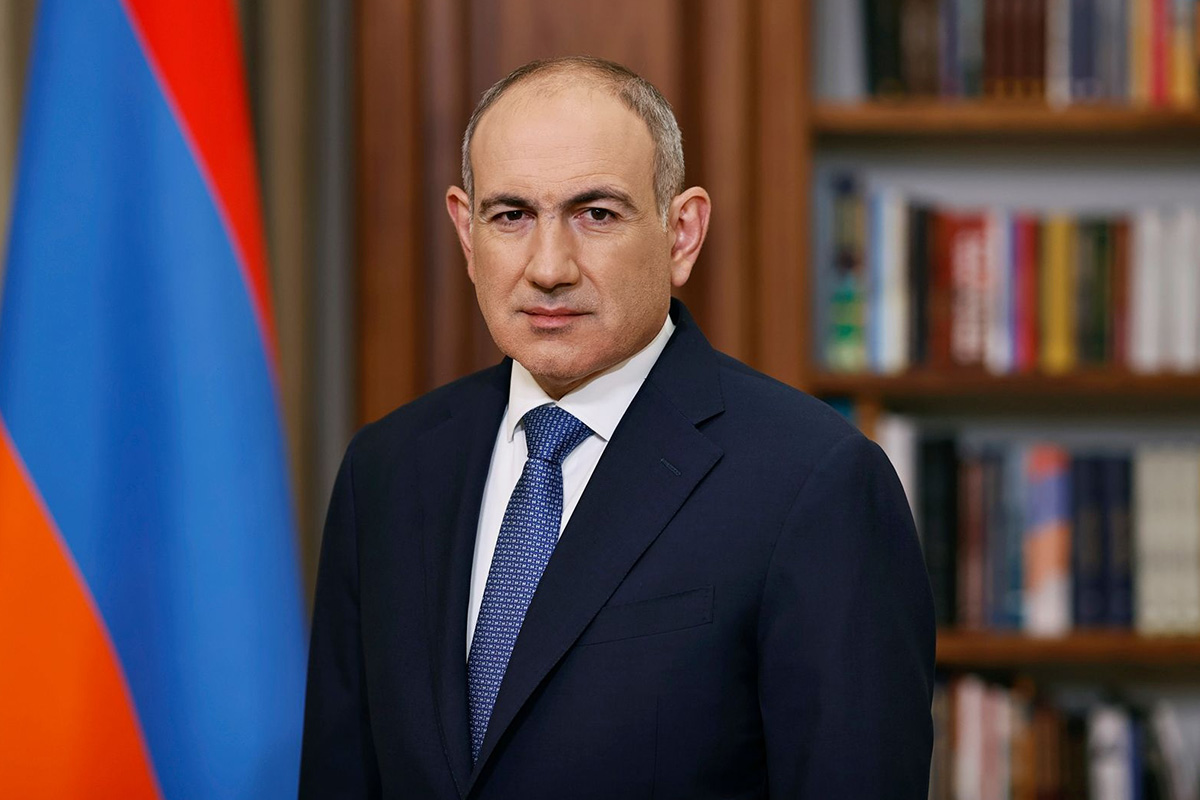
Armenia accelerated one of the most aggressive gambling regulatory reforms in Eurasia after approving new measures to control digital platforms, advertising, payments and financial supervision across the betting sector. The strategy promoted by the government of Prime Minister Nikol Pashinyan aims to strengthen legal gambling operations, increase fiscal oversight and tighten control over offshore operators in a market that has expanded dramatically over the past decade.
The reform is being driven by the Ministry of Finance of Armenia led in 2026 by Vahe Hovhannisyan, together with the State Revenue Committee headed by Rustam Badasyan. The main political architect behind the changes is MP Hayk Sargsyan from the ruling Civil Contract party.
The core of the reform focuses on payments and financial monitoring. Armenia plans to block transfers to unlicensed gambling operators, strengthen AML/KYC requirements and connect licensed platforms directly to state monitoring systems operating in real time. Armenia is advancing the software operator selection for its centralised gaming monitoring center, following the legal framework established in early 2024 to connect platforms directly to state systems in real time.
The 2026 update focuses on accelerating the public tender for the private operator, rather than the initial creation of the monitoring infrastructure, with the State Revenue Committee (SRC) leading the technological implementation. The fiscal framework is also becoming stricter. Since July 1, 2025, Armenia has applied a 10% turnover tax on gambling operations, while online gaming license costs doubled in April 2025 and are scheduled to continue increasing annually through 2028.
According to official figures cited by lawmakers, Armenia’s gambling turnover reached approximately AMD 6.3 trillion in 2023, equivalent to nearly €14 billion, while online casino deposits climbed to AMD 811 billion during 2024.
The government also tightened gambling advertising restrictions, limiting promotions to luxury hotels, border checkpoints and authorised operator channels. Armenian authorities argue that the new regulatory model is designed to protect legal operators, reinforce financial traceability and modernise state supervision over one of Eurasia’s fastest-growing digital industries.
The post Armenia Launches Sweeping Gambling Payment Reform appeared first on Eastern European Gaming | Global iGaming & Tech Intelligence Hub.
The UK Gambling Commission (UKGC) has officially extended the deadline for licensed remote operators to implement Phase 2 of the new deposit limit regulations.
In October 2025 the first phase of improvements to tools that help consumers to manage their gambling were introduced in the Remote Technical Standards (RTS) with the second phase due to be introduced on 30 June 2026.
Following stakeholder feedback, the Commission has extended the implementation period of the second phase to the end of September 2026 to allow for further operator technical development time.
From 30 September 2026 operators must:
• offer gross deposit limits to customers, and in some cases re-introduce gross deposit limits to the options available to customers
• name gross deposit limits as “deposit limits” – only this type of limit can be called a “deposit limit”
• offer gross deposit limits with at least equal prominence as other types of financial limit.
“We have also updated our consultation response document to clarify that to ensure consistency across the industry, from 30 September 2026 only gross deposit limits must be offered over fixed time frames. Rolling and fixed time frames can be used for other limit types,” the UKGC said.
“In preparation for implementation operators are asked to refer to the Remote Gambling and Software Technical Standards: Consultation Response and linked annex for the RTS 12 in full effective from 30 September 2026.
“All operators are advised that an annex initially published alongside the supplementary consultation response on 7 October 2025 contained small errors and was temporarily removed from our website. Any downloaded or offline versions of the Annex saved prior to 22 May 2026 should be disregarded.”
The post UKGC Extends Phase 2 Deposit Limit Regulation Deadline to September 2026 appeared first on Eastern European Gaming | Global iGaming & Tech Intelligence Hub.


Coljuegos has officially authorized MrYoker as Colombia’s newest regulated online sports betting and casino operator.
It is estimated that, over the next 5 years, the new operator will obtain revenues close to $2.83 billion.
Through concession contract C2261 of 2026, Coljuegos authorized the entry into operation of the portal www.mryoker.co, a site where sports betting and online games can be carried out legally and monitored by the entity.
The online gaming sector is experiencing one of its best periods, thanks to the industry revitalization strategy implemented during the current administration. With MrYoker, there are now 15 authorized operators in Colombia.
The new portal belongs to the company Global Vitxo SAS, and will initially be able to offer live casino, virtual slot machines, and sports betting until 2031.
According to the projections presented, it is estimated that, for the next 5 years, this operator will contribute approximately $27.282 billion in monopoly revenues and administrative expenses, resources that will go directly to finance the subsidized health system.
It is worth mentioning that, during 2026, online betting portals have contributed $253.224 billion to Coljuegos in terms of exploitation rights, and it is expected that, by the end of the year, these transfers will exceed $450 billion.
The post Coljuegos Authorizes MrYoker as Colombia’s Newest iGaming Operator appeared first on Americas iGaming & Sports Betting News.

-

 Brasil4 days ago
Para Sportradar, Copa do Mundo 2026 deve redefinir estratégias de aquisição e engajamento nas apostas esportivas
-
Africa7 days ago
MozzartBet is Live on Fast Track’s AI-native CRM Platform
-
content-supplier7 days ago
Pragmatic Play adds football theme to Big Bass series with new slot
-
content distribution7 days ago
Peter & Sons signs slots deal with Tivoli Casino in Denmark
-
Compliance Updates6 days ago
Expanse Studios Secures Colombia Market Certification
-
Asia6 days ago
Playson Secures Approval from PAGCOR for Game Distribution in Philippines
-
Blueprint Gaming5 days ago
Blueprint Gaming announces The Goonies Quest for Treasure 3 slot
-
eSports5 days ago
Esports Foundation sets Esports World Cup 2026 venue at Paris Expo Porte de Versailles