Latest News
Veikkaus’ digital gaming market share increased by 3 percentage points


2023 was a successful year for Veikkaus’ digital channel initiatives, and the company’s overall result was in line with its target. 180,000 new people registered as Veikkaus customers, and Veikkaus’ customer base now totals over 2.5 million registered customers.
Digital gaming grew by 4.5 percentage points and totalled nearly 55% of Veikkaus’ gross gaming revenue. Veikkaus channelled its development investments particularly into its digital channel, where the games created by Veikkaus’ own gaming studio also accounted for a large share of the gross gaming revenue generated by the company’s online casino, eArpa service, and other offerings. In addition, preparations were made during the year to ensure that Veikkaus would be ready for the customer registration requirement that will apply to all of its games from the beginning of 2024. Veikkaus is also the first gaming company in the world to require its customers to register when purchasing or redeeming physical scratch cards and lottery tickets, to ensure a safer gambling environment for all.
Veikkaus in 2023:
- The Veikkaus Group’s actual sales revenue in 2023 totalled EUR 1,033.1 million (-3.5% compared to 2022). The actual sales revenue includes the gross gaming revenue from gambling activities and turnover from other business activities.
- Veikkaus Group’s profit for the fiscal year was EUR 578.5 million (-13.7 %) while operating profit was EUR 573.6 million (-14.5 %). The decline in the result was due to an increase in the lottery tax, one time cost entries made as a result of the cooperation negotiations in the autumn, and significant investments in the Group’s future.
- The financial profit of parent company Veikkaus Oy for 2023 was EUR 585.0 million (-14.0%), and the operating profit was EUR 580.2 million (-14.7%). Veikkaus’ gross gaming revenue totalled EUR 1,032.0 million (-3.6 %). The decline was partly the result of Veikkaus’ responsibility measure, i.e. the identification requirement for physical ticket-based game players that came into force in May 2023.
- The lottery tax paid to the central government on gross gaming revenue increased by 1.6 percentage points from the previous year’s figure of 3.4%, amounting to 5% for the fiscal year. In 2023, Veikkaus Oy paid EUR 51.7 million in lottery tax, which is EUR 15.4 million more than the previous year.
- In 2023, authenticated gambling accounted for 90.6% (+11.1 percentage points) of Veikkaus’ domestic gambling activities. From 1 January 2024, all Veikkaus games can only be played by registered customers, who must identify themselves every time they play.
- At the end of 2023, Veikkaus had approximately 2,520,000 registered customers. The number of registered customers increased by approximately 180,000 (+8.0 %) during the year.
The long-running trend of gambling shifting to the digital channel continued in 2023, and 54.8% of gross gaming revenue from Veikkaus’ consumer-oriented gambling activities was derived from the digital channel (+4.5 percentage points). According to the estimate of H2 Gambling Capital, Veikkaus accounted for around 54% (+3 percentage points) of the Finnish digital gambling market for the year.
– Veikkaus’ profits and performance in 2023 were as expected, and we can be satisfied with these as a whole. The year was particularly successful for our online games, and Veikkaus will continue to deepen its development investments in its digital channel, says Veikkaus CFO Regina Sippel.
In terms of gross gaming revenue, the most successful of Veikkaus’ game groups was its online casino (digital automated games and digital table games), whose gross gaming revenue totalled EUR 184.0 million (+6.1%). This growth was particularly boosted by the company’s successful game releases.
Veikkaus’ most-played games were Eurojackpot and Lotto. The gross gaming revenue for Eurojackpot, which is drawn twice a week, was EUR 151.1 million (+0.0%). During the year under review, Lotto’s gross gaming revenue amounted to EUR 136.5 million (-8.9%).
2023 was the last year when Veikkaus Oy’s profit was settled to any beneficiary ministries. Beginning from 2024, Veikkaus Oy’s revenues will be directed to the state budget without any pre-defined beneficiaries.
All games to be covered by the identification requirement
Veikkaus began mandating the registration of players as Veikkaus customers for ticket-based games in mid-May. The impacts of the identification requirement on gaming have been as expected. Veikkaus also made preparations for the identification requirement for scratch card games, which entered into force on 1 January 2024 and meant that all Veikkaus games now require identification.
– Today, all of our games, including all physical scratch cards, are subject to the identification requirement. This means that we have become a worldwide pioneer in ensuring the responsibility of our gambling operations, says Susanna Saikkonen, Vice President for Sustainability at Veikkaus.
The identification of players enables a safer gambling environment where customers can be offered various services, such as loss and money transfer limits, and the possibility of self-exclusion of all games. The data obtained through identified gaming activities can also be used to prevent and reduce the harms of gambling.
– Using the data, we can analyse our players’ gambling habits and identify the signs of high-risk gambling. In 2023, our gambling harm prediction system helped us make over 3,700 calls to at-risk players, and we also introduced an automation-based care and communication model for high-risk level customers. In particular, we found that advance messages about calls, attempted calls, and the discussions that took place had a clear impact on the number of customers who decided to set a self-exclusion for themselves, Saikkonen explains.
From the perspective of preventing gambling problems, it will be vital to have other gambling companies operating in Finland follow Veikkaus’ example in complying with the same responsibility rules. The Government Programme states that Finland intends to introduce a partial multi-licence system at the beginning of 2026. It will be important to keep to the schedule that has been set. The new system will allow for the necessary tools and measures for preventing gambling problems. Every extra day in an environment without common rules is a day too late.
Veikkaus subsidiary Fennica Gaming expanded rapidly
During the year, the objective of Veikkaus subsidiary Fennica Gaming, which focuses on Veikkaus’ international business-to-business operations, was to expand the eArpa service to new markets, which it performed successfully. In 2023, the company delivered games to three continents and eight state-owned gaming companies. By the end of the year, Finnish online lotteries were available in the Nordic countries, the Baltic States, Central Europe, and America.
– Fennica Gaming’s corporate customers have been very satisfied with the quality of our games as well as Fennica Gaming’s service level, expertise, and the reliability of our deliveries. With these new markets, we have learned a lot about how we can best add value to our corporate customers’ business activities. We believe that our rapid expansion will also continue in 2024, says Timo Kiiskinen, CEO of Fennica Gaming.














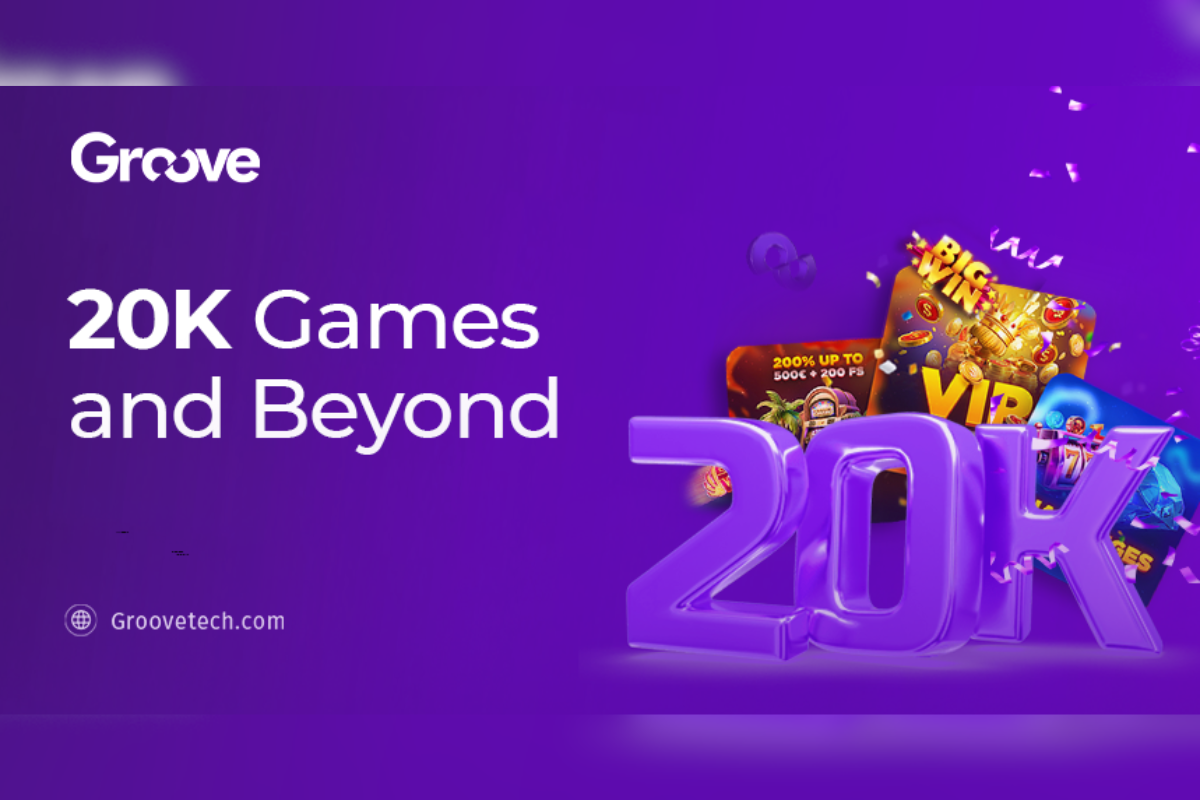
Groove says it has surpassed 20,000 casino titles on its aggregation platform, up from 15,000 games two years ago. The company said the library now includes content from more than 150 providers and is available to partners worldwide through a single API.
According to Groove, the portfolio spans slots, instant wins, table games, crash games, live dealer and arcade-style content, alongside “emerging verticals including sweepstakes and crypto-native content.” The company said the catalogue is delivered through “one API, one back office, one pipeline,” and positioned the milestone as a curated expansion rather than a volume play.
Rachel Tourgeman, Head of Partnerships at Groove, said: “Twenty thousand games is a number. What matters is what sits behind it…” She added: “We don’t add studios for the sake of volume. We add them because they bring something distinctive: a mechanical innovation, a visual language, a player-engagement hook that our operators can’t get elsewhere. Our partners trust us to curate, not just collect. That trust is why we keep growing, and why the quality curve keeps rising alongside the quantity curve.”
Groove pointed to recent integrations including KingMidas Games (150+ mobile-first titles), Urgent Games and Bryogames, which it said offers “proprietary mathematics with real-time RTP customisation.” For operators, Groove said the full library is accessible via Groove Command, its centralised back-office product, with tools including content matching, regional segmentation and automated tournaments.
Yahale Meltzer, Co-Founder and CEO of Groove, said: “The aggregation space is crowded with platforms that offer ‘access’ and little else,” adding: “Twenty thousand games through a single API is not just scale. It is a statement.” Meltzer also claimed Groove’s “technology stack with predictive auto-scaling, atomic transactions, real-time compliance mesh” supports execution “across fragmented regulatory landscapes with precision.”
The post Groove says its aggregator library passes 20,000 casino games appeared first on EE Gaming | Global iGaming & Tech Intelligence Hub.

Mega Casino has launched 10 Hot Diamond Desire, a new online slot developed by Bragg Gaming, as an exclusive title available only to Mega Casino players.
According to the companies, the release is intended to strengthen Mega Casino’s exclusive content line-up in the UK online casino market. Bragg Gaming said the game was created by its in-house development team and combines classic slot features with modern mechanics and a diamond-themed design.
The exclusive launch also extends the commercial relationship between the supplier and operator. Mega Casino already offers Bragg Gaming titles including Down The Chimney and Sevens & Suns.
Dom Aldworth, Head of Brand Marketing at Kinetic Digital said:
“Exclusive content remains a key pillar of our strategy and 10 Hot Diamond Desire is a great example of the kind of launch we want to bring to Mega Casino players. The game delivers a compelling experience while giving customers access to something genuinely unique. We’re pleased to be working with Bragg Gaming on this exclusive release and look forward to expanding our portfolio of exclusive content even further in the future.”
The post Mega Casino launches Bragg Gaming slot 10 Hot Diamond Desire as exclusive appeared first on EE Gaming | Global iGaming & Tech Intelligence Hub.
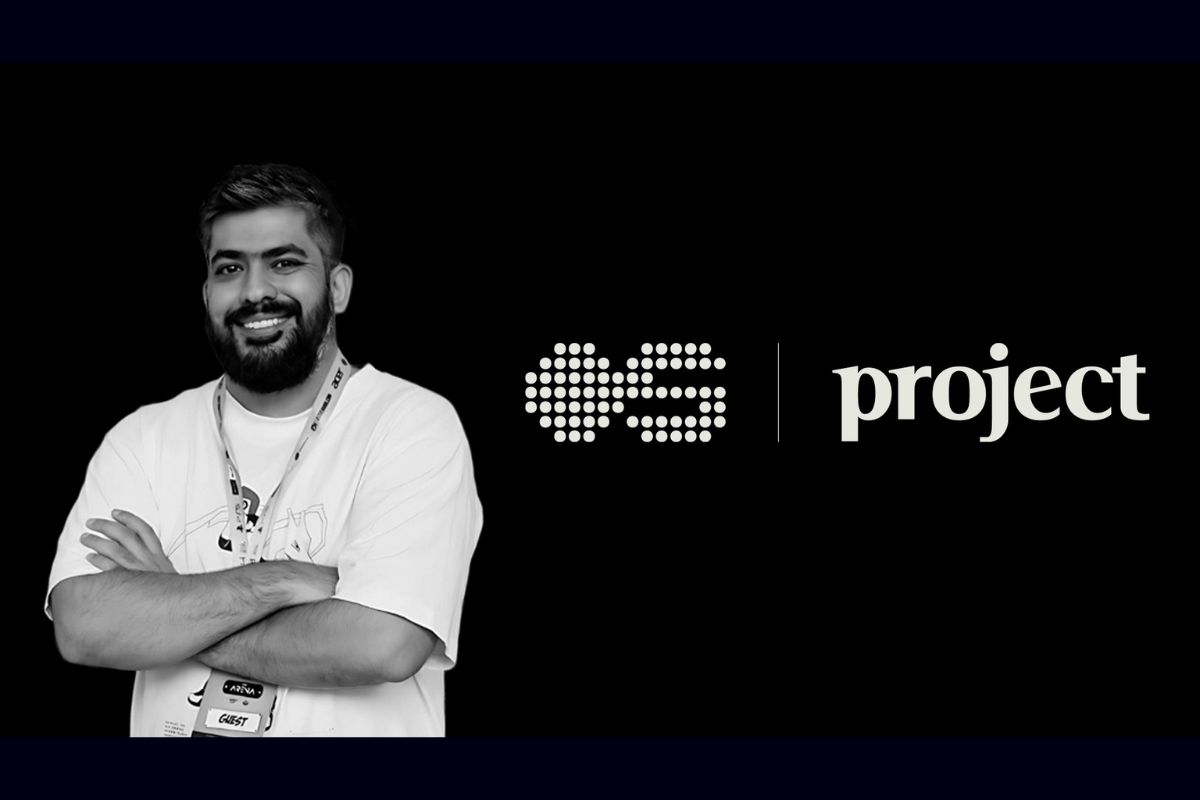
OS Studios has appointed Ishaan Arya as Country Manager for India, tasking him with leading the agency’s expansion across newly established hubs in Bengaluru, New Delhi, and Mumbai. The appointment was announced on 25 June, 2026 in Bengaluru.
OS Studios, a Project Worldwide agency, said it recently entered the Indian market and will deploy its ‘Fan Z’ approach for brands looking to engage with gaming, esports and live events audiences in South Asia. The company said the expansion will leverage the infrastructure and production capabilities of sister agency George P. Johnson (GPJ) India.
“The future of gaming will be shaped by the communities that care about it most, and few markets embody that more than India,” said John Higgins, CEO of OS Studios. “To build something meaningful, you have to be part of the culture, not looking in from the outside. Ishaan understands that better than anyone. He’s exactly the kind of leader we want building the future of OS Studios in India.”
In the role, Arya will oversee operations, drive strategic brand partnerships, and scale local capabilities, according to the company. “Brands are investing heavily in Indian gaming, but true fan experience is too often an afterthought,” said Rasheed Sait, Chief Growth Officer for India and South Asia at Project Worldwide. “Alongside GPJ India’s experiential footprint, OS Studios will set a new standard for fan engagement in the region.”
Arya previously co-founded The Esports Club and most recently served as Vice President of Partnerships at Nodwin Gaming, where he led Comic Con India. “A massive gap remains between brand intent and authentic community engagement in India,” said Arya. “I’m thrilled to leverage Project Worldwide and GPJ India’s operational strength to build culture-defining experiences for brands and fans alike.”
The post OS Studios names Ishaan Arya country manager to lead India expansion appeared first on EE Gaming | Global iGaming & Tech Intelligence Hub.

-

 Bragg Gaming Group4 days ago
Massive Gaming launches Blitzcrown titles on Superbet Brazil via Bragg Hub
-
Compliance4 days ago
HIPTHER Launches HALLO: The Standard in Compliance Expertise
-
7Games4 days ago
7Games, Betão & R7 Launch FIRST.bet Sportsbook in Brazil
-
Compliance Updates4 days ago
HIPTHER Launches HALLO: The Standard in Compliance Expertise
-
Alex Cuoci4 days ago
Wealthsimple and Kalshi Partner to Bring Prediction Markets to Canada
-
30-0 Kongeserien3 days ago
Kongebonus launches 30-0 Kongeserien Eliteserien fantasy draft game
-
Channelisation4 days ago
Swedish Gambling Authority consults tighter duty of care rules as channelisation slips
-
Chris Suggett Senior Commercial Manager at Rank4 days ago
Pragmatic Play builds Mecca Big Bass Double Dab slot exclusive for Rank