Latest News
BGC Members Made Record Contribution to British Horseracing Last Year


Betting and Gaming Council members directly contributed £455m to British horseracing last year in levy, media rights and sponsorship deals, new BGC figures reveal.
In addition, bookmakers spent £125m on marketing to promote racing and betting through advertisements and partnerships, helping secure terrestrial coverage of the sport, support two racing channels and raise revenue for print newspaper titles.
Showing a significant rise on previous estimates, media rights payments alone have increased by around £45m since the previous year, totalling £340m in 2022.
Meanwhile, levy payments are projected to be £99m in 2022/2023 – up from £50m in the year 2016/2017, according to the Horserace Betting Levy Board.
These new figures dwarf previous estimates on the regulated sector’s direct contribution to horseracing, which had placed the figure at around £350m a year.
This record investment also enabled horseracing to use some of these revenues to deliver record prize money of £179.3m in 2022.
Michael Dugher, CEO of the BGC, said: “BGC members in the regulated betting industry are now paying more towards British horseracing than ever before, despite a 10.3 percent reduction in betting turnover on racing in the last five years.
“These huge sums also come at a time when the regulated betting sector is under enormous pressure, not least in the form of recent measures unveiled in the Government’s White Paper.
“As well as being a world-leading great British sport, enjoyed by millions, just like the betting industry, horseracing is a vital pillar of the economy, important to countless communities across the country and supporting tens of thousands of jobs.
“There has always been a symbiotic relationship between betting and racing. Our two industries can only succeed and prosper in the future if we work in unison towards a shared goal of growing the sport as a product – especially in the face of a recent decline in betting on racing.
“These figures show that betting continues to bankroll the sport but it is not a bottomless pit. I know racing, just like any other sport and indeed our own land-based betting and gaming industry, is trying to bounce back post-covid in the face of seriously challenging economic headwinds – a task made even harder for racing and betting because of the decisions the Government deliberately chose to make in its recent White Paper.
“That is why BGC is fully committed to working together with the leadership of the sport, including the BHA and others, to ensure racing not only survives but thrives. Anyone who cares passionately about the sport, as I do, understands that racing must change. Future investment must come with reform.
“It is also important to note this funding to racing only comes from licensed bookmakers. The unsafe, unregulated gambling black market is a growing threat, and it makes no contribution whatsoever to horseracing.”
The figures are estimates covering the 2022 calendar year based on exact data supplied by the BGC’s largest members, which account for around 85% of all GGY on horserace betting.
Horseracing is the second biggest sport in the UK, second only to football, with more than five million people attending around 1400 fixtures annually across 59 racecourses.













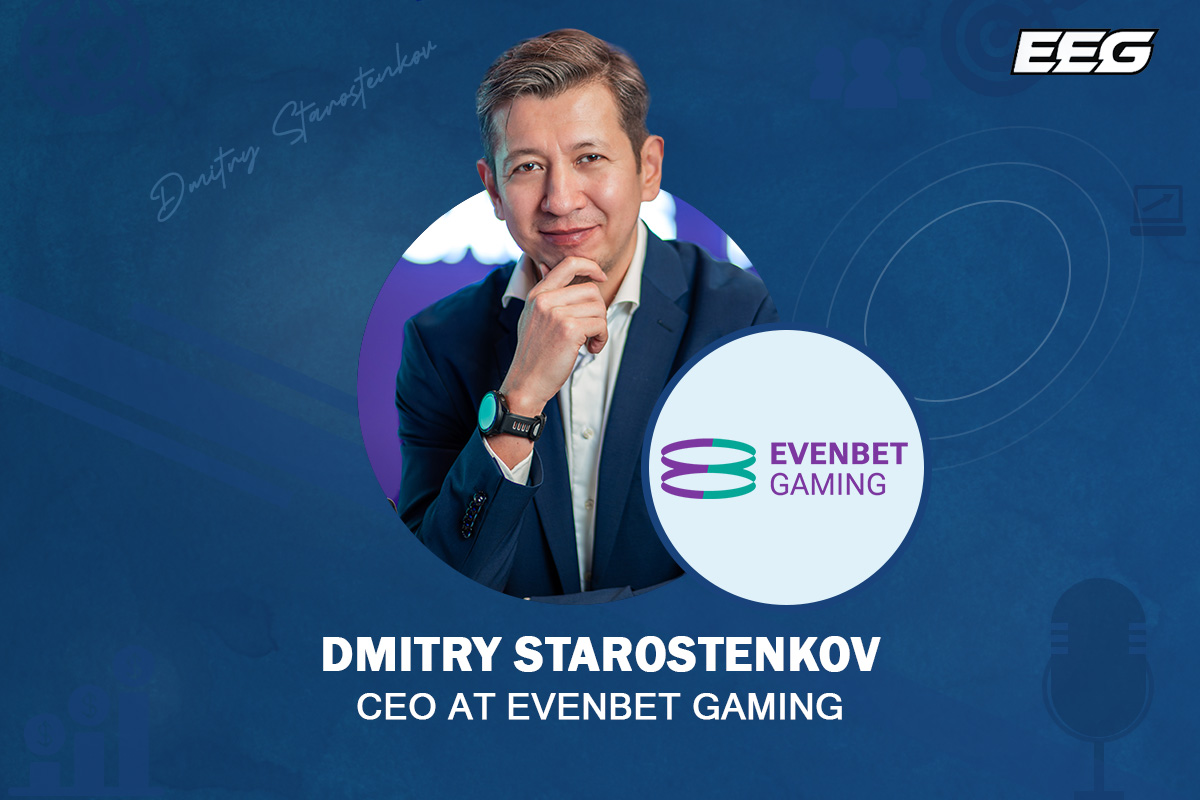
EvenBet Gaming’s CEO, Dmitry Starostenkov, speaks to EEGaming about the company’s expansion into the casino vertical, what drove the decision, what it took to build, and what it means for operators looking to grow beyond a single product.
EvenBet has spent more than two decades building its reputation in poker. What told you the time was right to move into casino?
We kept having the same conversation with partners who trusted our poker infrastructure, asking whether we could support them on the casino side too. For a long time, our answer was to point them elsewhere but, with competition intensifying, that became harder to justify.
But there’s a wider shift happening too. Operators are under real pressure to extract more value from their existing player base. Acquisition costs are rising, regulated markets are tightening, and the days of building a sustainable business on a single vertical are gone. Operators who are growing have found more ways to extend player value across their full product offering, and that requires purpose-built infrastructure.
We have the technical foundation and understand the player behaviour. The question became when to make the move, and how to do it in a way that was genuinely an improvement on what was already out there.
Moving from the single poker vertical into a full casino platform is a significant undertaking. Where did the product challenges actually lie?
The single player account sounds simple until you’re actually building it. Shared balance, unified player profile, seamless movement between poker and casino all create complexity that compounds quickly. The other challenge was scope. A game aggregator covering 15,000 titles across 230-plus providers has the potential to create real infrastructure problems. We had to build something that could handle that scale without becoming unwieldy for operators to use. And we didn’t want to compromise the poker product to get there either – that was non-negotiable. Everything had to work as one system, not two products stapled together.
How does cross-vertical conversion work, and why does that matter so much to operators right now?
The friction in moving a player between verticals has always been the drop-off point. Separate logins, separate wallets and separate experiences are all different reasons for a player to disengage. When that’s removed, the conversion happens more naturally.
What makes the difference is having product mechanics that actively pull players across. One Click Poker removes the traditional lobby entirely, which has historically been the biggest barrier for casino players who find poker intimidating or unfamiliar. Spins Poker goes further by taking player-versus-player gameplay and wrapping it in slot-style mechanics, so the experience feels native to a casino player from the first session.
In the other direction, casino rewards sitting inside the poker environment give poker players a natural reason to explore. It becomes a two-way pipeline rather than a one-way push, and operators can see that working in the data. That’s what cross-vertical conversion looks like when the product architecture supports it properly.
What does EvenBet Gaming now offer an operator that they genuinely can’t get elsewhere?
Most casino platforms don’t come with a serious poker product attached, and most poker providers don’t have a credible casino offering. We’re in a fairly unique position in that we can genuinely deliver both, and the integration between the two is real and not just a partnership held together by an API. In terms of who this is for, it’s operators who want to grow. Whether that’s a new entrant who needs a clean, fast route to market, or an established operator who has a casino product but knows they’re missing a revenue stream without poker. We’re positioned to offer that market entry and scalability, without compromising quality.
The post Behind EvenBet Gaming’s strategic evolution into casino appeared first on EE Gaming | Global iGaming & Tech Intelligence Hub.


Plaza Hotel & Casino will host The Tony Bennett Experience for a one-night performance on Saturday, Aug. 8 at 7 p.m. in its classic Vegas showroom, the downtown Las Vegas operator said in a release.
The show features Las Vegas headliner and tribute artist Tom Stevens and his Jazz Ensemble, and is billed as a celebration of Tony Bennett’s 100th Anniversary. Plaza said Stevens will be backed by a four-piece band and perform songs including “I Left My Heart in San Francisco” and “The Way You Look Tonight.”
Tickets are on sale through the Plaza Hotel & Casino website.
The post Plaza Hotel & Casino books The Tony Bennett Experience for Aug. 8 in Las Vegas appeared first on Americas iGaming & Sports Betting News.
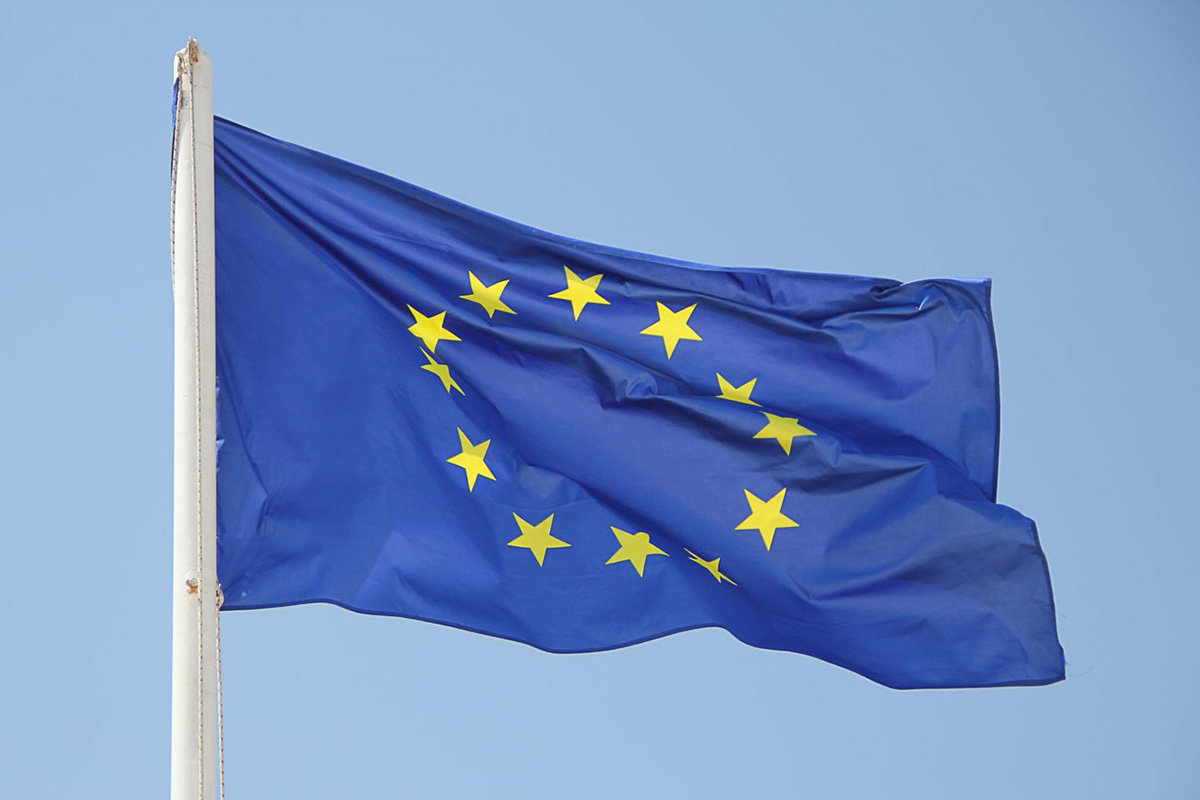
Malta’s Prime Minister has said his nation will veto any attempts by the EU to introduce a bloc-wide online gambling levy, threatening to place the industry at the centre of febrile European politics.
Robert Abela has told Malta’s parliament that he would use his nation’s member state veto to block the passage of the next EU budget, if a proposed gambling levy is included.
The budget, formally known as the Multiannual Financial Framework (MFF), lays out how the EU will spend its €2trn budget from 2028 to 2034.
The prospect of adding a continent-wide tax to the budget remains only a proposal, but the idea has heavyweight backing.
Vice-president of the European Parliament Victor Negrescu is spearheading these efforts, arguing that a fast-growing digital industry that generates billions in revenue should be subject to EU-level taxation.
Negrescu says that the levy could generate between €2-4bn every year.
“This industry fully benefits from the EU’s single market, digital infrastructure and crossborder access, but operates under fragmented rules, unequal taxation and insufficient enforcement,” he said.
The online gambling sector might well quibble with the specifics of these claims.
The idea that it “fully benefits” from the EU single market may have been unassailably true in the point-of-supply era, but the subsequent fragmentation of national rules that Negrescu refers to has significantly complicated that picture.
Nevertheless, backing for the levy from a senior European politician has naturally spooked the industry and its primary champion within the EU, Malta.
The levy would be so damaging to Malta’s economic interests that it is willing to use its most powerful EU instrument by executing a veto in the European Council in order to block the budget from being approved.
That would likely plunge the island nation into the centre of a political firestorm, but recent history suggests that smaller EU nations and their allies can successfully disrupt budget negotiations.
During discussions over the 2020 EU budget, Poland and Hungary successfully secured concessions after they both threatened to veto the MFF over rule-of-law requirements.
Malta will also hope to rely on support from the Friends of Cohesion, an informal alliance of 16 nations concerned with regional development, of which it is a part.
Negrescu’s pledge to pair his levy with a “clear EU directive against illegal and unlicensed platforms” is unlikely to satisfy the online gambling industry, despite growing complaints of a rampant black market from a number of quarters.
Malta strikes again
In simple terms, Malta is seeking to protect an industry which accounts for 10 percent of its gross domestic product.
The nation has shown a clear willingness to ignore the EU’s wishes in order to shield the many gaming firms that host their headquarters within its borders.
Most notably, the creation of Bill 55 has successfully protected local companies from having to repay hundreds of millions of euros in player refund settlements.
Ongoing cases before the Court of Justice of the European Union suggest that Europe’s top judges will soon rule against Bill 55, which is now Article 56A of Malta’s gambling act.
The European Commission also launched infringement proceedings against Malta over the provision
Tax troubles.
There are so far no specifics on how the levy would be calculated or what value it would be set at, but beyond Malta an additional levy would also be extremely challenging for operators in European markets already struggling with high tax burdens.
This includes the Netherlands, where a government report released this week has shown that staggered increases to taxes of 37.8 percent of gross gambling revenue (GGR) have failed to deliver any benefit to the country’s budget.
Even a relatively slight increase to this tax rate could send more operators scurrying out the market and see channelisation dive further than its current rate of 55 percent.
Nations like France, where online betting is taxed at 59.3 percent of GGR, or Portugal, with its 8 percent turnover tax on online sports betting, would also feel an impact.
Negotiations over the contents of the EU budget are set to continue for several months, with the approval process expected to be completed in late 2026 or early 2027.
Leaders in the Council of Europe have agreed to come to a preliminary deal on the MFF by October, according to a coordinated statement issued earlier this month.
Malta’s devout opposition to a possible gambling levy is just one of a range of issues under discussion, including a stark divide between nations such as Germany, which favour spending cuts, and the Friends of Cohesion, who want additional cash for agriculture and regional funding.
The post Malta Prepares For EU Budget Battle To Stave Off Gambling Levy appeared first on EE Gaming | Global iGaming & Tech Intelligence Hub.

-

 Australia7 days ago
Former Star Entertainment Executives Mathias Bekier and Paula Martin Disqualified and Ordered to Pay Penalties
-
Alejandra Burato7 days ago
Record Attendance, Exciting New Releases, and a Resounding Success: This was Zitro Experience Peru
-
Amusnet7 days ago
Weekend Reels | Week 25: Slot Drops & Trends
-
ArenaPlus7 days ago
DigiPlus Wins “Digital Operator of the Year” Award at 2026 Global Gaming Awards Asia-Pacific
-
Anthony Dalla-Giacoma7 days ago
Elysium Studios Releases its Latest Slot Game “Hood and Loot”
-
Greece7 days ago
SYNOT Games Announces New Partnership with Superbet
-
Bragg Gaming Group4 days ago
Massive Gaming launches Blitzcrown titles on Superbet Brazil via Bragg Hub
-
Compliance4 days ago
HIPTHER Launches HALLO: The Standard in Compliance Expertise