Canada
Master sponsor of the BFA League, Rivalo starts offering ODDS for the main American football competition in South America

The 2022 season of the Liga BFA (Liga Brasileira de Futebol Americano) started recently, returning to disputes after the hiatus caused by the COVID-19 pandemic. This time, South America’s premier American football competition is sponsored by Rivalo.
With this support, Rivalo made available ODDS for football lovers. The bookmaker exclusively developed the odds for each game in house, further improving the experience for those who are passionate about the world of the oval ball..
With this action, it is now possible to bet on the winner of the national competition and on the winners of the five regional conferences and the direct bet, on the matches, is being developed by Rivalo and should be available in June.
“The Rivalo team, through its team of ‘odd makers’, exclusively launches betting lines for BFA games, showing how much they believe in BFA and in American football played in Brazil. We are convinced that this movement is a pioneer, and will change the reality of our sport, opening doors for the development of teams from north to south of Brazil”, celebrates Rodrigo Hermida, CEO of BFA.
It should be noted that approximately one hundred Brazilian American Football League games should take place in more than 18 states. The championship will feature matches broadcast on ESPN, as well as compacts and specials, both in the ESPN League and throughout the NFL season.
“Thanks to our partnership and collaboration with Liga BFA, our own trading team can give BFA fans the opportunity to bet on their favorite teams, exclusively on our platform”, says Mateo Gómez, Sportsbook Manager at Rivalo.
BFA TIPS BY RIVALO
The partnership between Rivalo and Liga BFA is also generating a weekly space on the official league’s YouTube channel. In the special attraction, representatives of all teams analyze upcoming appointments and act as ‘Tipsters’, passing on betting tips on the platform itself. The guest (tipster) of the week also participates in the ‘RIVALO BOWL’ campaign of their respective team.
Rivalo’s actions in the 2022 season of the BFA League
With the master sponsorship of the biggest football league in the Southern Hemisphere, the company’s brand in the betting industry is gaining immense visibility due to exposure in physical and digital properties. This is one of the actions that are part of the activation of sponsorship for BFA. The agreement with Liga BFA also includes advertising boards in the six Conference finals and in the BRASIL BOWL, the grand final of the tournament.
The operator also has a prominent place in games broadcast on ESPN, in addition to the brand in both endzones and on the 20-yard line in decisive confrontations. Rivalo also has the right to inserts in broadcasts on official channels of the league and in materials published daily on the social networks of the BFA League.
Guilherme Bucchi, Acquisition Manager Brazil at Rivalo, emphasizes his satisfaction in offering, in an exclusive way, the possibility of providing the bettor with this opportunity: “This is the type of action that reinforces the partnership between Rivalo and BFA. , and now the BFA fan has his exclusive place to bet”.
For BFA’s commercial director, Eduardo Ferreira, the sponsorship agreement with Rivalo represents a turning point for the sport in Brazil. “Having Rivalo as an official partner of the BFA is something really unprecedented in Brazil. Rivalo will provide growth, professionalism and innovation to Brazilian football, becoming a pioneer in this modality. The trust that Rivalo places in BFA will certainly be a link of relevance, gratitude and reciprocity”.
In addition, a study released by the Federal Government showed that American football is on the rise in Brazil, appearing among the 10 most watched and wagered sports in the country. This was one of the points that aroused the interest of the new master sponsor, which is committed to helping to accelerate the growth process of the sport in Brazil.
It is important to note that women’s American football has been part of the BFA League since 2019. In the same year, the decision was shown on ESPN, proving the relevance of the sport in the national territory. In 2022, the women’s championship has the same dispute formula with more participating teams. The final of the women’s league is already broadcast on TV.
Powered by WPeMatico


CasinoCanada.com launches a new social tournament system built around free-to-enter slot competitions, combining daily, weekly, and monthly events with leaderboards, bonus prizes, and exclusive merchandise.
The tournaments are powered entirely by BGaming slots, marking the first industry collaboration between an affiliate brand and BGaming focused specifically on social tournament engagement.
Participation in all tournaments is free for registered users of legal gambling age.
Players compete across rotating tournaments featuring a changing lineup of BGaming titles, including hit titles Aztec Magic Bonanza, Bonanza Billion, and Elvis Frog, among others.
Prizes include various bonuses and free spins from CasinoCanada partner casinos.
Selected special tournaments also feature exclusive BGaming merchandise prizes.
Tournament performance is reflected in public leaderboards, adding a competitive and community-driven layer to the CasinoCanada experience.
While social slot tournaments have become increasingly common in iGaming, many existing formats are built around the same providers and similar tournament structures.
CasinoCanada’s approach focuses on free participation, rotating BGaming content, partner casino bonus rewards, merchandise prizes, and recurring competition.
Eugene Ravdin, Head of PR at CasinoCanada, said: “The affiliate industry is moving beyond static review pages and traditional bonus listings. Community features, recurring engagement formats, and social competition are becoming increasingly important for long-term audience retention.
“Our goal is to create something more interactive and community-driven while also giving more visibility to BGaming’s slot portfolio through a format that players can engage with on a daily basis.”
Kate Puteiko, CMO at BGaming, said: “Players and the community have always been the beating heart of everything we do here at BGaming.
Online play no longer has to be a solitary activity, and tournaments like this are an excellent way to connect players and enhance everyone’s experience.
CasinoCanada shares this vision, and this collaboration is a natural extension of that.
We are excited to see our games front and centre of these tournaments and for players to begin creating memorable moments competing with them.”
CasinoCanada plans to introduce additional community features in the future, including gamification systems and forum functionality designed to expand user interaction around the tournament ecosystem.
The tournaments are now live at: https://casinocanada.com/tournaments/
The post CasinoCanada launches free social slot tournament appeared first on Americas iGaming & Sports Betting News.
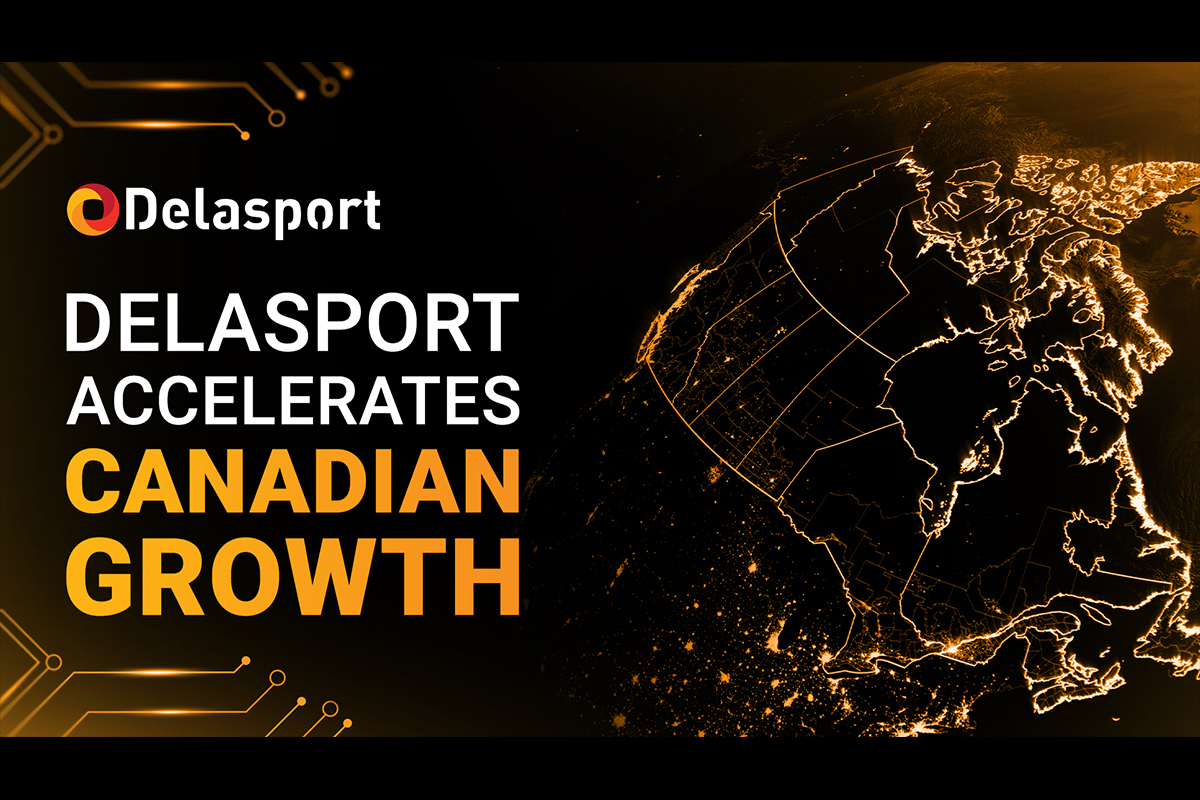
Delasport continues to strengthen its position in the Canadian regulated market, now powering three live brands in Ontario while preparing for further expansion into Alberta as the province moves toward opening its regulated online gaming market.
Delasport’s technology is currently live in Ontario with TitanPlay.ca, Maverick Games, and Betnova.ca. The company provides a combination of full turnkey platform solutions of Casino, Sport, Player Account Management and Managed Services as well as its high-performance Sportsbook iFrame technology. This enables operators to launch quickly while delivering a premium user experience tailored to the Canadian audience.
With Ontario continuing to establish itself as one of North America’s most competitive regulated markets, Delasport’s growing local presence reflects the company’s long-term commitment to Canada and its confidence in the market’s continued evolution.
“Ontario is a strategically important market for us, and it has already proven to be a strong success story. Seeing multiple brands successfully operating on our technology and services demonstrates the strength of our platform in acquiring and retaining players in Ontario. We’re excited to continue this momentum as we prepare for Alberta,” said Oren Cohen Shwartz, CEO of Delasport.
As part of its next phase of Canadian growth, Delasport has officially applied for Alberta’s upcoming B2B licensing framework and is already preparing to go live with a partner operator once the market opens.
The company’s Canadian momentum is further supported by its mobile-first approach. TitanPlay’s iOS application is already available on the Apple App Store for users in Ontario, delivering a seamless casino and sportsbook experience powered by Delasport technology.
Delasport’s platform in Canada includes a wide range of personalization and engagement tools designed to enhance user retention and entertainment value.
The company has continued to position itself as one of the industry’s leading providers in regulated markets worldwide, with a strong focus on scalable technology, localization, compliance, and player-centric innovation.
The post Delasport Accelerates Canadian Growth appeared first on Americas iGaming & Sports Betting News.
Canada
Responsible Gambling Council Urges Financial Institutions to Strengthen Protections Against Gambling Harm
The Responsible Gambling Council (RGC) has urged Canada’s financial sector to take a proactive role in mitigating gambling-related financial harm. A new whitepaper released highlights how banks and credit unions are uniquely positioned to protect the financial well-being of their customers.
The whitepaper, Opportunities for Impact: The Role of Financial Institutions in Mitigating Gambling-Related Harm, argues that financial institutions have a unique duty of care. Financial institutions have direct access to gambling transaction data that reveals early warning signs of financial vulnerability. These indicators include rapidly shrinking savings and an increased reliance on overdrafts or credit.
“The rapid expansion of regulated gambling in Canada requires an evolved response from our financial systems. By adopting tools already proven in other jurisdictions, Canadian banks can become leaders in protecting customer financial health,” said Tracy Parker, SVP, Accreditation, Advisory & Insights at RGC.
Jurisdictions like the UK and Australia have already recognized the powerful role financial institutions play. Banks such as Monzo and Starling in the UK were the first to offer voluntary gambling blocks to their customers. Similarly, the National Australia Bank provides dedicated support pages and links to financial counseling.
RGC recommends that Canadian financial institutions implement several key strategies:
• Improving the accuracy of Merchant Category Codes to better track gambling spend.
• Offering voluntary transaction blocks and self-defined monthly spend limits.
• Providing targeted messaging and support resources within digital banking platforms.
Beyond retail banking, RGC highlights the importance of commercial relationships. Financial institutions can influence industry practices by setting high harm prevention expectations for gambling operators. Integrating these considerations into due diligence processes helps mitigate reputational and regulatory risks.
The post Responsible Gambling Council Urges Financial Institutions to Strengthen Protections Against Gambling Harm appeared first on Americas iGaming & Sports Betting News.

-

 AGCO6 days ago
AGCO Takes Enforcement Action Against Two Companies for Allowing Their Games on Unregulated Gaming Websites
-
 Apple4 days ago
IBJR hails App Store approval as a milestone in the fight against illegal betting in Brazil
-
AB Trav och Galopp6 days ago
Richard Woodbridge Elected to ATG Board of Directors
-
Caleta Gaming6 days ago
Caleta Gaming launches Cluster Cup high-volatility football-themed slot
-
apuestas deportivas5 days ago
¿Por qué Pix es central en la lucha contra el mercado ilegal de apuestas?
-
game release6 days ago
Spinomenal adds Desperado Drifter Hold & Hit 3×3 to slot portfolio
-
Brazil5 days ago
Esportes da Sorte campaign celebrates fans’ resilience in support of Brazil
-
Africa5 days ago
Broadway Platform Partners with Ghanaian Operator Afrinova