Canada
Penn National Gaming to Acquire Score Media and Gaming, Creating North America’s Leading Digital Sports Content, Gaming and Technology Company

Transaction fortifies Penn National’s bespoke digital media and gaming strategy, creating a complete one-stop destination
Addition of theScore’s fully integrated betting and media platform into existing ecosystem will lead to best-in-class engagement and retention
Brings theScore’s cutting-edge technology in-house, providing Penn with full ownership of product roadmap
Establishes strong commitment to Canada; Levy Family will continue to oversee theScore, including workforce expansion and Ontario operations
Provides adjusted EBITDA accretion by Year 2, an incremental $200mm+ medium term adjusted EBITDA, and $500mm+ of incremental long term adjusted EBITDA upside
Penn National Gaming, Inc. and Score Media and Gaming, Inc. (TSX: SCR; Nasdaq: SCR) (“theScore”) announced today that they have entered into a definitive agreement whereby Penn National will acquire theScore, a leading digital media and sports betting and technology company, for approximately US$2.0 billion in cash and stock.
Under the terms of the agreement, theScore shareholders will receive US$17.00 in cash and 0.2398 shares of Penn National common stock for each theScore share, which implies a total purchase consideration of US$34.00 per theScore share based on Penn National’s 5-day volume weighted average trading price as of July 30, 2021. The transaction has been unanimously approved by the boards of directors of both companies and is currently expected to close in the first quarter of 2022. Upon completion of the transaction, current Penn National and theScore shareholders will hold approximately 93% and 7% respectively, of the Company’s outstanding shares. Penn National expects to fund the approximately US$1 billion cash portion of the consideration using existing cash on its balance sheet.
Jay Snowden, President and Chief Executive Officer of Penn National, commented, “We are thrilled to be acquiring theScore, which is the number one sports app in Canada and the third most popular sports app in all of North America. theScore’s unique media platform and modern, state-of-the art technology is a powerful complement to the reach of Barstool Sports and its popular personalities and content.”
Mr. Snowden continued, “We are now uniquely positioned to seamlessly serve our customers with the most powerful ecosystem of sports, gaming and media in North America, ultimately creating a community that doesn’t currently exist. Users will enjoy a unique mobile sports betting and iCasino platform with highly customized bets and enhanced in-gaming wagering opportunities, along with highly engaging, personalized sports and entertainment content, and real time scores and stats. We believe this powerful new flywheel will result in best-in-class engagement and retention.
“Importantly, the transaction provides us with a path to full control of our own tech stack. theScore has developed a state-of-the-art player account management system and is finalizing the development of an in-house managed risk and trading service platform. This should lead to significant savings in third party platform costs and allow us to broaden our product offerings – providing the missing piece for operating at what we expect to be industry leading margins. In addition to the synergies, we’ll be gaining access to theScore’s deep pool of product and engineering talent and data-driven user analytics which will help drive our customer acquisition, engagement, retention strategies and cash flows,” said Mr. Snowden.
“Operators that have achieved early online market share have done so primarily through first mover advantage, leveraging existing customer databases and significant marketing spend. We believe the long-term winners will be defined by best-in-class products, bespoke content, efficient customer acquisition, multi-platform reach and broad market access,” concluded Mr. Snowden.
John Levy, Chairman and Chief Executive Officer of theScore, commented, “This deal brings together two companies that share a vision for how media and gaming intersect, and we could not be more excited to join the Penn National family. I’m proud of theScore team and all of our accomplishments, and believe the time is right to take the next step and align with a company in Penn National with the resources and scale to accelerate our business. We are excited to join forces with Penn to form the most powerful media and gaming company in North America.
“We’ve built an innovative, technology-led integrated media and gaming business that has us poised for success across North America, including the highly anticipated upcoming rollout of commercial sports betting in Canada,” continued Mr. Levy. “With Penn’s support, we will continue to invest in building our Canadian operations, growing our footprint and expanding our workforce. On a personal note, Benjie and I are very much looking forward to continuing to head up theScore as part of the new combined company.
“We have been strategic partners with Penn National since 2019 and have come to realize that they have the same strong culture and appreciation for how to grow a business. Jay and his team have done a tremendous job building an exceptional retail business and online gaming platform in partnership with Barstool Sports and we are confident that by combining our leading sports media brand and proprietary technology, we will solidify Penn National as a market leader,” concluded Mr. Levy.
Jon Kaplowitz, Head of Penn Interactive, commented, “This is a significant milestone for Penn Interactive and Penn National. With the acquisition of theScore, we will have greater ability to innovate and offer a best-in-class product to our customers. Personally, I am excited to join forces with John, Benjie, and the rest of theScore team who have proven to be great partners and amazing thought leaders in our industry.”
Benjie Levy, President and Chief Operating Officer of theScore, commented, “The combination of theScore and Penn National creates a first-of-its-kind vertically integrated media and omni-channel gaming business, which brings together world-class technology, highly engaging sports content and unparalleled reach. With our accomplished team in place, this deal bolsters our ability to grow our already strong North American presence from our base in Canada and primes us even further to capitalize on the huge upcoming betting opportunity in our home country. Over time, we’ve built our loyal user base and relationship with fans by authentically delivering deeply personalized products. That is an approach that seamlessly fits with Penn’s current strategy and digital offerings and will provide for material long-term benefits as we collaborate to even more deeply integrate across our platforms.
“The transaction will provide theScore with immediate scale and resources, the benefits of which will enable employees to better execute on the combined companies’ business plan and deliver enhanced integrated product offerings to our customers,” continued Mr. Levy. “The transaction also provides theScore shareholders immediate liquidity at a substantial premium and an opportunity to participate in any future upside of the combined company.”
Compelling Strategic and Financial Benefits:
Penn National anticipates that the acquisition of theScore will provide adjusted EBITDA accretion by Year 2, an incremental $200mm+ medium term adjusted EBITDA, and $500mm+ of incremental long term adjusted EBITDA upside.
Bringing Technology In-House:
The acquisition of theScore will allow Penn National to better manage all critical aspects of its technology stack, leading to greater control over its product development roadmap, reduced costs, and an enhanced customer experience. It will also allow Penn National to drive margin expansion by eliminating fees and expenses currently being paid to third party technology and service providers.
Strong Commitment to Canada:
Penn National believes the Canadian gaming market represents a compelling opportunity for growth. Penn National intends to operate theScore as a stand-alone business, headquartered in an expanded Toronto office, that will continue to be led by the Levy family with the same operating philosophy that has driven the company’s success to date. The business will continue to utilize ‘theScore’ app and brand that consumers have come to trust.
Penn National was attracted to theScore, in part, for its ready access to a deep pool of Canadian engineering and technology expertise. Penn National expects to leverage Canada’s world class technology talent pool to expand theScore’s engineering and production workforce based in Ontario as the business scales.
Volumetric Cost Savings:
The transaction will create a further scaled North American sports, online gaming and media business. This broader reach will provide volumetric savings for content fees, payment expenses, and other services, including the elimination of public company costs.
Enhanced Customer Acquisition and Retention:
theScore is the third largest sports app in North America and number one in Canada, with highly engaged users spending 113 minutes per month in-app*. Early results show the power of theScore’s integrated media and betting ecosystem to better engage and retain users; theScore Bet users with theScore media app compared to theScore Bet users who do not have theScore media app produce 88% higher handle/user, place 3x the number of bets/user, and generate a 91% increase in day 30 retention**. This increased cross-promotion ecosystem between theScore and Barstool is expected to lead to higher revenue.
Expansion Into New Verticals:
This acquisition underscores Penn National’s focused, disciplined investment strategy which positions us at the epicenter of sports, media, gaming and technology and provides us with multiple channels for future growth. In addition, this transaction accelerates Penn National’s strategy to enter into other adjacencies that leverage the Barstool and theScore brands and consumer appeal, such as the highly coveted esports media vertical.
Financing:
Penn National will fund the acquisition through a mix of cash on hand and common stock. We expect the transaction, at the time of close, to be leverage neutral to our lease-adjusted net leverage of 4.0x as of June 30, 2021.
theScore Shareholder Support
Penn National has entered into voting support agreement with the directors of theScore, John Levy and Benjamin Levy, and Relay Ventures, a significant shareholder of theScore, under which they have agreed, subject to certain termination rights, to vote all of the theScore shares held by them in favor of the transaction, which represents in total approximately 30 percent of the existing voting shares of theScore.
Advisors
Goldman, Sachs & Co. LLC and Code Advisors LLC are acting as financial advisors and Wachtell, Lipton, Rosen & Katz and Blake, Cassels & Graydon LLP are acting as legal advisors to Penn National in connection with the transaction. Morgan Stanley & Co. LLC and Canaccord Genuity Group are acting as financial advisors and Paul, Weiss, Rifkind, Wharton & Garrison LLP and McCarthy Tétrault LLP are acting as legal advisors to theScore in connection with the transaction. Greenhill & Co. Canada, Ltd. is acting as independent financial advisor to theScore’s board of directors.
Powered by WPeMatico

By CasinoCanada.com
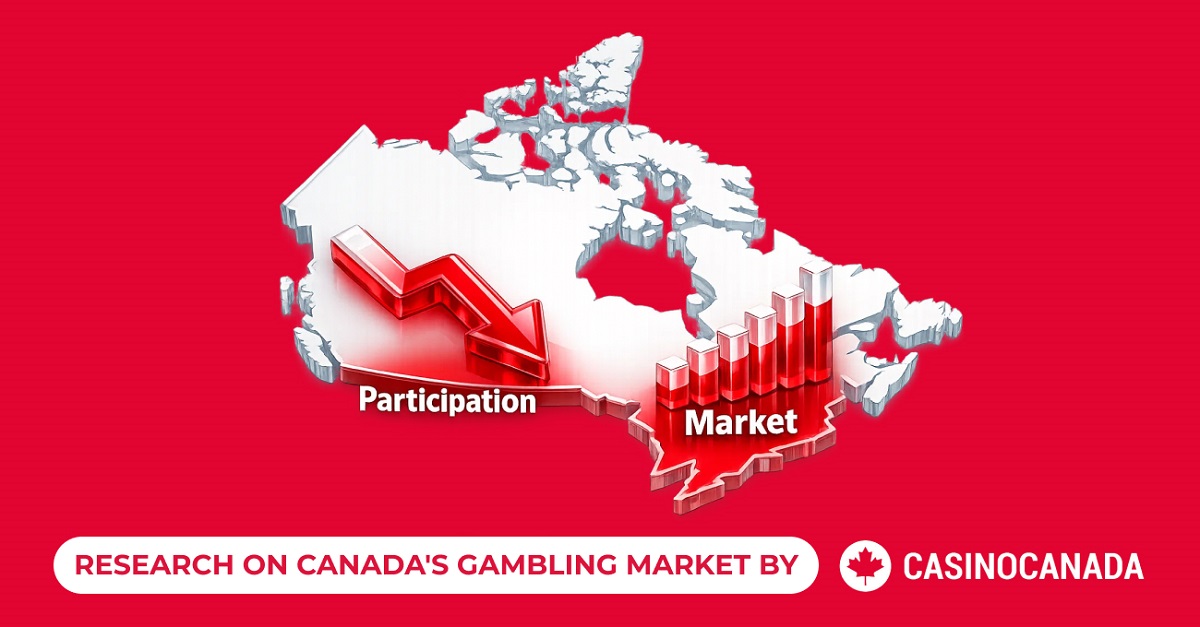
In 2002, 76 percent of Canadians aged 15 and over reported gambling in the previous year, according to Statistics Canada’s report Fighting the Odds. By 2018, that figure had fallen to 64.5 percent, based on the agency’s Gambling Rapid Response module.
At first glance, that suggests gambling participation in Canada has declined over the past two decades.
Yet over the same period, gambling has become more visible, more digital and more embedded in sport and everyday life. Sports betting brands sponsor professional teams, betting segments are embedded in live broadcasts, and provincial regulators report billions of dollars in annual online wagering.
How can participation fall while the industry expands? The answer lies in how Canada’s gambling market has changed, and in who is driving its growth.
This analysis draws on national participation surveys and provincial financial reporting to compare long-term participation trends with recent regulated market performance.
Research highlights of this article
- National gambling participation declined from 76% in 2002 to 64.5% in 2018.
- Ontario’s regulated online market generated approximately CAD 1.3 billion in revenue in 2022–23, rising to CAD 2.9 billion in 2024–25.
- Total wagers in Ontario increased from approximately CAD 63.2 billion in 2023–24 to CAD 82.7 billion in 2024–25.
- Online casino accounted for roughly three quarters of Ontario’s regulated online revenue in 2024–25.
- Approximately 2.6 million active player accounts were recorded in Ontario in 2024–25.
Growth without more players
If fewer Canadians report gambling today than in the early 2000s, market growth cannot simply be explained by expanding participation. Since its launch in April 2022, Ontario’s regulated online gambling market has grown year over year. According to iGaming Ontario’s Annual Reports, in its first full fiscal year, the market generated approximately CAD 1.3 billion in gaming revenue. That rose to CAD 2.2 billion in 2023–24, before reaching CAD 2.9 billion in 2024–25. Total wagers also significantly increased from approximately CAD 63.2 billion in 2023–24 to CAD 82.7 billion in 2024-25.
The latest annual report also recorded approximately 2.6 million active player accounts in a province of roughly 15 million residents. Even allowing for multiple accounts per individual, the figures suggest a highly active digital environment concentrated among a defined segment of players.
The implication is clear: recent market growth appears to be driven less by an expanding audience and more by increased activity per active player.
Operators active in the market say the same shift is visible in player behaviour since Ontario introduced its regulated online framework. Dmitry Arabuli, CEO at Tonybet, said: “Since regulation launched in Ontario, the player landscape has changed significantly as many of the largest North American operators entered the market. Competition increased, with the focus shifting from chasing large volumes of casual participants to building stronger relationships with more informed and engaged players. These players tend to interact more frequently with betting products and show stronger loyalty to the platforms they trust.”
“Regulation also drew a clearer line between grey-market operators and licensed platforms. Many players who were previously using offshore sites have migrated towards regulated products. This did not necessarily expand the total number of gamblers, but it redirected an existing player base into the licensed ecosystem.”
Despite sports betting dominating headlines since the passage of Bill C-218 in 2021, online casino remains the commercial engine of Ontario’s regulated market. iGaming Ontario’s 2024–2025 annual report shows that online casino generated approximately CAD 2.2 billion of the CAD 2.9 billion in total gaming revenue.
In other words, casino accounts for roughly three quarters of the province’s regulated online revenue.
Sports betting reshaped visibility, but casino sustains the economics.
Modern growth appears to be driven less by player acquisition and more by retention and increased engagement within the existing customer base.
A provincial and digital transformation
One reason the national picture can appear contradictory is that Canada does not operate a single gambling model.
Ontario runs a competitive regulated online market with dozens of licensed operators. Other provinces continue to rely primarily on government-operated platforms. Alberta has signalled plans to introduce its own regulated framework.
Since 2018, most of the meaningful growth data has been provincial and digital, not national and survey-based. While participation surveys provide a broad snapshot, provincial market reports reveal how play is evolving in practice.
The shift from retail-based lottery and venue gambling to app-based multi-vertical platforms represents a structural transformation. Gambling is increasingly platform-based, integrated into smartphones and digital ecosystems rather than tied to specific locations.
That structural change helps explain how the industry can grow even without broader participation.
Visibility versus participation
Following the legalisation of single-event sports betting, sportsbook partnerships and advertising have expanded across professional sport. Major leagues, including the National Hockey League, have entered into official betting partnerships at the league level, while Canadian competitions such as the Canadian Football League and Canadian Premier League have also announced sponsorship agreements with licensed operators.
Betting brands now feature prominently in arena signage, broadcast integrations and digital content, embedding gambling directly into the commercial presentation of professional sport.
Dmitry Arabuli, CEO at Tonybet, said: “Ontario regulation made gambling become much more visible in sports broadcasts, live events and daily sports culture. It opened significant opportunities for operators such as Tonybet to do business in Canada legally and build brand awareness through marketing and PR campaigns. For example, Tonybet has previously partnered with the Canadian Premier League and currently works with the Canadian Elite Basketball League.”
Arabuli added that these partnerships help operators connect with highly engaged sports audiences. “These partnerships help strengthen brand awareness, target high-value players, and improve customer retention by building trusted and long-term relationships in the Canadian market.”
Yet fewer Canadians report gambling than two decades ago.
This disconnect between rising visibility and declining participation creates a cultural tension. Gambling is increasingly framed as a routine extension of sport rather than a distinct commercial activity.
For younger audiences in particular, repeated exposure through live broadcasts and social media feeds helps position betting as part of the sporting experience itself, regardless of whether participation is expanding.
Visibility, in other words, is reshaping how gambling is perceived, even if it is not expanding its audience.
Selected examples of publicly announced partnerships, as of 13 March 2026, are outlined below.
Selected Professional Sports Betting and iGaming Partnerships in Canadian Sport
| League / Organisation | Betting Partner | Nature of Partnership | Scope |
| National Hockey League (NHL) | ESPN BET; theScore Bet | Official league betting partner | North America / Canada |
| Canadian Football League (CFL) | ToonieBet | Official sports betting and casino partner | Canada |
| Canadian Elite Basketball League (CEBL) | TonyBet | Official online sportsbook partner | Canada |
| Maple Leafs Sports & Entertainment (MLSE) | Betty | Official online casino partner | Ontario |
Sources: Various league and operator press releases; compiled by CasinoCanada.com.
Risk concentration and policy relevance
If growth is increasingly driven by more intensive digital play among a defined group of participants, the social and regulatory implications become more complex.
Market expansion rooted in activity rather than recruitment raises questions about how gambling risk is distributed. A smaller base of highly active players may account for a disproportionate share of wagering volume.
At the same time, regulators are increasingly focused on channelisation, responsible gambling tools and sustainable market design. If the future of Canada’s gambling market depends more on engagement intensity than expanding participation, policy debates may shift accordingly.
The conversation may move away from how many Canadians gamble and towards how gambling is structured, monitored and integrated into daily digital life.
The next phase
Alberta’s regulatory plans suggest Canada’s gambling evolution is not over. But the next stage may not be about expanding participation. It may be about managing a digital market driven by deeper engagement among a smaller group of players.
Canada’s gambling market is no longer expanding simply because more people are playing. It is expanding because the way people play has fundamentally changed.
The paradox remains: fewer players, larger market.
Methodological note: National participation figures are drawn from Statistics Canada surveys conducted in 2002 and 2018. More recent insights are based on publicly available provincial regulator reporting, which measures wagering, revenue and account activity rather than survey participation. As such, national participation trends and provincial activity data are not directly equivalent but are analysed comparatively to assess structural change.
The post Fewer Canadians gamble than 20 years ago. So why is Canada’s market still growing? appeared first on Americas iGaming & Sports Betting News.

Betsson has announced that it has entered into an agreement to acquire Rhino Entertainment Group’s B2C business in Canada. The acquisition scope includes several Rhino Group entities that collectively hold assets, licenses, personnel, and operational capabilities related to Rhino’s B2C activities in Ontario and the rest of Canada. The target business currently serves Canadian customers and is well-positioned to expand into additional Canadian provinces as local regulatory frameworks continue to evolve.
In addition to the B2C assets, Betsson will acquire Rhino’s proprietary front-end and middleware technology. This technology will strengthen Betsson’s B2B offering and is expected to drive incremental licensing revenue within Betsson’s B2B business.
The transaction is consistent with Betsson’s strategy to generate shareholder value by investing in existing and new B2C markets and growing its B2B business. The acquisition is expected to add economies of scale, strengthen profitability and expand Betsson’s growth opportunities in its B2C and B2B businesses. In 2025, the acquired assets generated a combined estimated EUR 13.7 million of earnings before interest, taxes, depreciation and amortisation (EBITDA) on a proforma basis.
The total purchase price amounts to approximately EUR 64.5 million with an upfront payment of EUR 51.25 million at closing and a deferred payment of the remaining amount six months after closing. Betsson will finance the acquisition with existing cash resources.
Completion of the deal is expected to take place after applicable regulatory clearances in the second or third quarter of 2026. Gernandt & Danielsson Advokatbyrå acts as lead legal advisor to Betsson in connection with the transaction.
The post Betsson to Acquire Rhino Entertainment Group’s B2C Business in Canada appeared first on Americas iGaming & Sports Betting News.
AGCO
Canada’s Ontario iGaming Market in 2026: Advertising Rules, Self-Exclusion and the Next Phase of Regulation

Ontario’s regulated iGaming market has moved beyond its launch phase. In 2026, the bigger story is no longer market entry. The focus has shifted to advertising oversight, player protection, and long-term regulatory credibility.
Ontario launched its competitive iGaming framework in April 2022. Since then, it has become one of North America’s most important regulated online gambling markets. Today, the province stands out not only for its size, but also for the way it is refining rules around compliance and responsible gambling.
Ontario’s iGaming market is entering a more mature phase
The market has already reached a significant scale. According to iGaming Ontario’s 2024–25 annual report, Ontario recorded C$82.7 billion in wagers and C$2.9 billion in gaming revenue during the fiscal year. The market also counted 50 operators and more than 2.6 million active player accounts by year-end.
These figures show that Ontario is no longer an early-stage regulatory experiment. It is now a large and established online gambling market. That matters because mature markets face different questions. At this stage, success depends not only on growth but also on visibility, public trust, and consumer safeguards.
Advertising rules are becoming more important in 2026
Advertising has become one of Ontario’s most important regulatory themes. Operators must still follow AGCO’s Registrar’s Standards for Internet Gaming, which set rules on marketing, inducements, and protections for vulnerable groups.
A new layer of scrutiny now adds to that framework. From January 1, 2026, Ad Standards began accepting complaints under the Canadian Code for Advertising of Gambling. This change gives the market a more visible complaint and review structure for gambling ads.
This development matters for several reasons. It strengthens accountability. It also shows that gambling regulation in Ontario is expanding beyond licensing and market launch. Regulators and industry bodies are now paying closer attention to how operators communicate with players and the wider public.
Ontario is entering a new stage of public scrutiny
As regulated gambling grows, public attention tends to shift. Early debate usually focuses on whether the market should exist. Later, it focuses on how the market behaves. Ontario now appears to be in that second phase.
Ad Standards’ review of gambling advertising complaints from April 2022 to April 2025 reflects that shift. In the early period, many complaints challenged the overall presence of gambling ads. Later, more complaints focused on the content of specific ads. Ontario also generated the largest share of gambling advertising complaints in the most recent period covered by the report.
That change suggests a more mature public conversation. People are no longer reacting only to the existence of the market. They are paying closer attention to how the market presents itself.
Centralized self-exclusion marks a major regulatory step
Ontario is also moving forward on player protection. In December 2025, the AGCO announced standards for a centralized self-exclusion program for iGaming. iGaming Ontario has also identified this initiative as a major strategic priority.
This step matters because it moves the system beyond operator-by-operator self-exclusion. A centralized model can create a more consistent approach across the regulated market. It also shows that Ontario is trying to strengthen responsible gambling tools in practical ways, not only through policy language.
For the industry, this signals a broader shift. Ontario is no longer focused only on market growth. It is also building the infrastructure needed for long-term oversight and safer play.
Strong channelization does not end the policy debate
Ontario has performed well on channelization. According to an AGCO-commissioned Ipsos study, 86.4% of Ontario online gamblers used regulated sites in early 2024. iGaming Ontario later reported an 83.7% channelization rate for 2024–25, noting that the change remained within the survey’s margin of error.
These numbers matter because they show that the legal market is attracting users away from unregulated alternatives. That is one of the main goals of a regulated online gambling model.
Still, strong channelization does not settle every issue. Once a regulated market captures most of the activity, expectations rise. Policymakers, media, and the public begin asking harder questions about advertising pressure, player safety, and the overall tone of the market. Ontario is now entering that stage.
Why Ontario matters for the wider Gaming Americas market
Ontario remains one of the clearest case studies in North America. It shows what happens after a successful market launch. Many jurisdictions still focus on legalization, licensing, and tax structure. Ontario shows that the next challenge is maintaining legitimacy once a market becomes large, visible, and commercially successful.
That is why Ontario deserves attention in 2026. The province is no longer trying to prove that regulated iGaming can work. It is showing how a mature market handles advertising oversight, public scrutiny, and stronger player protection measures.
The next phase is about credibility
Ontario’s next chapter will likely depend on balance. The market must remain competitive and attractive to operators. At the same time, it must show that regulation can support player protection and public confidence.
That makes Ontario one of the most important gambling regulation stories in North America this year. The biggest question is no longer whether the model works. The real question is whether the model can keep its credibility as the market grows and public scrutiny increases.
The post Canada’s Ontario iGaming Market in 2026: Advertising Rules, Self-Exclusion and the Next Phase of Regulation appeared first on Americas iGaming & Sports Betting News.

-

 Inferno Mayhem7 days ago
PG Soft cranks up the volume with electrifying Inferno Mayhem slot
-
AI7 days ago
New Videoslots app stars in AI-assisted “Stone Age” ad
-
Agilysys Inc6 days ago
Winford Resort & Casino Manila Philippines Deploys Agilysys Hospitality Technology to Elevate Operations and Service
-
Animal Wellness Action7 days ago
GREY2K USA Worldwide and Animal Wellness Action Celebrate House Agriculture Committee Passage of a Ban on Greyhound Racing in America
-
Caesars Entertainment Windsor Limited7 days ago
OLG and Caesars Sign Long-term Operating Agreement for Windsor Casino
-
BHA7 days ago
BHA Appoints Brant Dunshea as its Chief Executive Officer
-
Central Europe7 days ago
Endorphina Club Returns to Host the GamingTECH CEE Awards Ceremony & Party at HIPTHER Prague Summit 2026
-
Africa7 days ago
Blueprint Gaming Expands into South Africa Through Strategic Partnership with Hollywoodbets