Conferences
Pronet Gaming Elevates Brand at ICE Barcelona

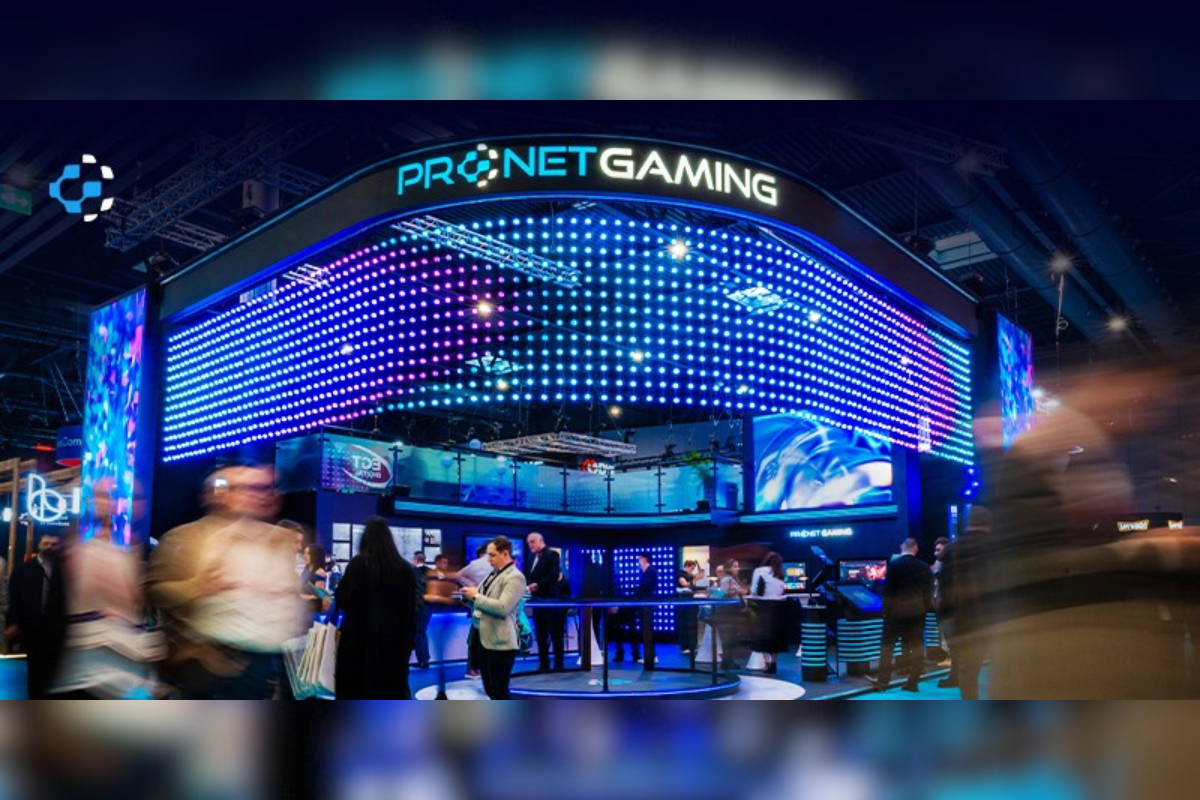
Pronet Gaming concluded a highly successful presence at ICE Barcelona 2026, marking three dynamic days of brand storytelling and industry connection as the company unveiled its refreshed corporate identity to the global iGaming community.
ICE provided an ideal platform to reinforce Pronet Gaming’s position as a performance-driven B2B partner focused on growth, localisation, and solutions built through a real B2C operator lens. This was reflected in strong foot traffic and sustained engagement at the Pronet Gaming stand, which became a central hub for conversations with long-standing partners and new contacts from across regulated markets.
Unveiled in the weeks leading up to ICE, the refreshed brand is not a visual reset for its own sake, but a reflection of how Pronet Gaming has evolved as a business. As the company continues to support operators across increasingly competitive and regulated markets, the new identity brings greater clarity to its role as a performance-led partner.
The brand reinforces a simple principle: platforms perform best when they are built, optimised, and supported with the end player firmly in mind. This player-first thinking informs everything from product design and localisation to commercial decision-making and long-term growth strategy.
Pronet Gaming’s core product suite, including Casino, Sportsbook, and BetX Pro, was showcased as part of a fully integrated ecosystem designed to help operators launch efficiently and scale with confidence. BetX Pro, in particular, generated strong interest among attendees, with operators drawn to its peer-to-peer betting model, flexible configuration, and ability to support differentiated betting experiences in competitive markets. The refreshed brand helps articulate this holistic approach more clearly – aligning product, technology, and service under a single performance narrative.
A standout feature of the stand was the ProSaber VR activation. Beyond attracting crowds, the activation served as a conversation starter around immersion, user experience, and engagement – the same principles that underpin Pronet Gaming’s platform development and optimisation. Complementing the on-stand activity, signature cocktails, and premium giveaways helped create a welcoming and memorable environment that encouraged high-quality discussions beyond the usual show-floor pace.
ICE Barcelona also provided a timely platform to reinforce Pronet Gaming’s ongoing expansion across Asia. Since entering the region in 2024, the company has focused on deep localisation, regulatory alignment, and adapting platform functionality to local player behaviour. The refreshed brand provides a flexible, modern framework that scales across diverse markets while maintaining a clear performance focus.
Commenting on the event, Alex Leese, CEO of Pronet Gaming, said: “Our refreshed brand is a clearer expression of how we already work with operators. It’s rooted in performance, shaped by real B2C experience, and designed to support platforms that need to grow in complex, localised markets. Launching our new website and brand just before ICE gave us the perfect stage to show that story, and the conversations we had over the three days confirmed it’s resonating.”
As ICE Barcelona 2026 comes to a close, Pronet Gaming thanks everyone who visited the stand, joined the conversations, and helped make the event such a success. The team now looks ahead with strong momentum, continuing to build on its foundations across established and emerging markets, and preparing for the next chapter of growth alongside its partners.
The post Pronet Gaming Elevates Brand at ICE Barcelona appeared first on Eastern European Gaming | Global iGaming & Tech Intelligence Hub.











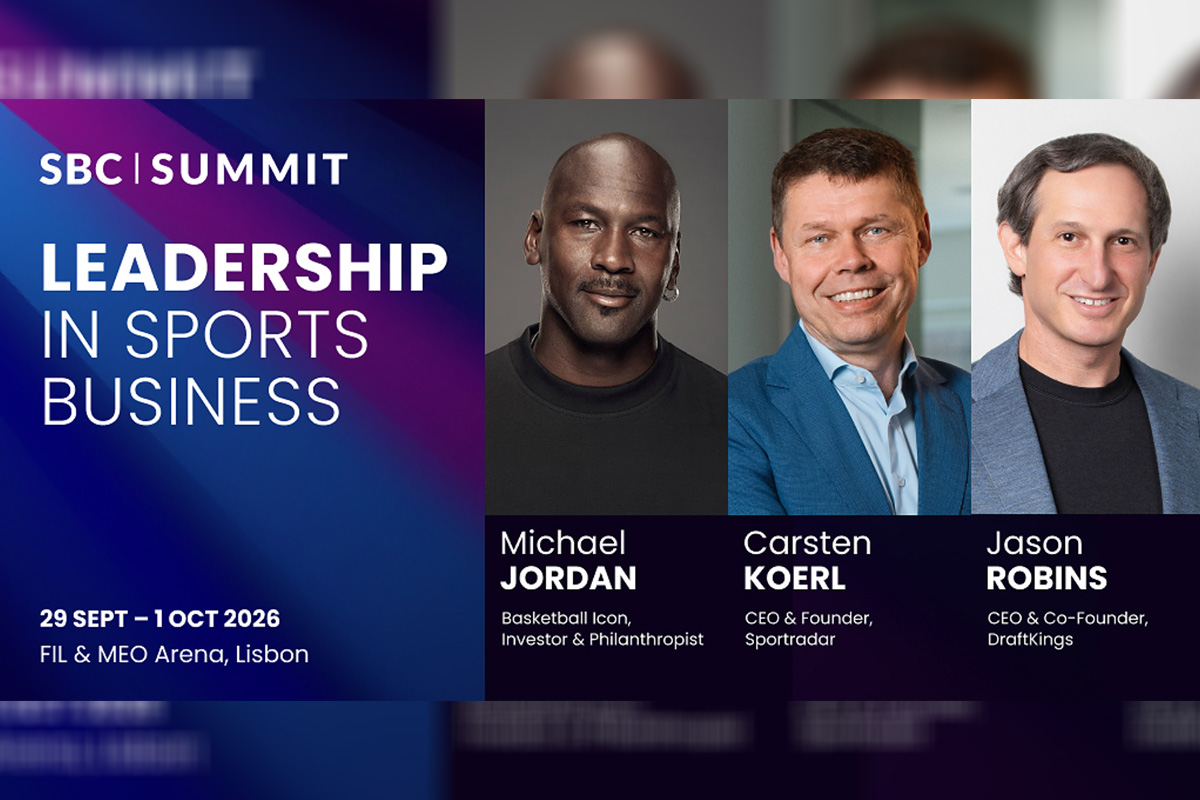
SBC Summit 2026 will host one of the most high-profile keynote sessions ever staged in Europe by bringing together three of the most influential figures in global sports business: Basketball icon, investor, and philanthropist Michael Jordan, Sportradar founder and CEO Carsten Koerl, and DraftKings co-founder, CEO, and chairman of the board Jason Robins, hosted by former Sky Sports News presenter, broadcaster, and journalist, Kirsty Gallacher.
The headline keynote, titled “Leadership in Sports Business,” will take place on Tuesday 29 September on the first day of SBC Summit 2026 in Lisbon and will explore the evolution of sports, technology, media, data, and fan engagement through the perspective of three leaders who have helped shape the modern sports ecosystem.
As part of the discussion, the connection between sports betting and iGaming will be examined, highlighting how the two sectors are increasingly operating in parallel and in collaboration. Broader leadership themes will also be explored including building global businesses at scale, decision‑making under pressure, and how leaders navigate change across fast‑moving sports and technology markets.
SBC CEO and Founder Rasmus Sojmark described the session as a defining moment for the event.
“This is the kind of conversation that transcends our industry. To have Michael Jordan, Carsten Koerl, and Jason Robins on stage together is something truly special. These are individuals who have each changed the way people engage with sports and business in completely different ways — through performance, technology, innovation, and vision. Bringing them together at SBC Summit reflects both the scale of where this industry is today and where it is heading,” said Sojmark.
SBC Summit 2026 will take place in Lisbon and is expected to welcome over 40,000 industry professionals from across sports, betting, gaming, payments, marketing, affiliation, technology, and media.
Additional details regarding the keynote session, including timing and attendee access, will be announced in the coming months.
The post Michael Jordan, Carsten Koerl and Jason Robins to Open SBC Summit 2026 appeared first on EE Gaming | Global iGaming & Tech Intelligence Hub.
Groove has confirmed it will attend SBC Summit Tbilisi 2026, scheduled for 15–16 July at the Sheraton Grand Tbilisi Metechi Palace, as it targets growth across Eastern European and Central Asian iGaming markets.
The conference is expected to draw more than 2,500 industry professionals, according to the company, following 2025’s record attendance with delegates from 44 countries. Groove said it will bring a full commercial delegation to pursue partnerships with regional operators.
Yahale Meltzer, Co-Founder and CEO of Groove, said: “Eastern Europe and Central Asia represent some of the most dynamic growth opportunities in iGaming today. SBC Summit Tbilisi is where the region’s decision-makers converge, and we are arriving with a platform built for scale, speed, and regulatory precision.” He added: “Our Unseen Architecture of predictive auto-scaling, atomic transactions, and a real-time compliance mesh ensures operators can launch fast and adapt locally, whether they are entering Georgia, the Balkans, the Baltics, or Central Asia.”
Meltzer also pointed to the SBC Regulators Summit as a factor in the company’s focus on the event, saying: “With regulation front and centre as a business-critical priority, and direct access to regulators through the SBC Regulators Summit, this event is where commercial realities are forged. Groove delivers the toolbox, the content, and the expertise to turn ambition into measurable growth.”
Ana Sokhadze, Operations Manager at Groove, who will lead the company’s presence in Tbilisi, said: “SBC Summit Tbilisi is the meeting point for the region’s most ambitious operators, affiliates, and technology suppliers. This is where high-value networking translates into real commercial opportunity.” She added: “We are not here to hand out brochures. We are here to have conversations that become partnerships.”
The post Groove confirms attendance at SBC Summit Tbilisi 2026 appeared first on EE Gaming | Global iGaming & Tech Intelligence Hub.
Andrew Cardno
QCI to Showcase Unified Resort Intelligence Platform at Raving’s Casino Marketing & Technology Conference and Host & Player Development Conference

Quick Custom Intelligence (QCI), the leading provider of a unified real-time intelligence platform for casino resorts, announced its participation in Raving’s Casino Marketing & Technology Conference (CMTC) and Host & Player Development Conference, taking place July 14–16 at Pechanga Resort Casino in Temecula, California.
As casino resorts continue to unify gaming, hospitality, marketing, food and beverage, loyalty, and operations into seamless guest experiences, operators are seeking technologies that eliminate fragmented systems and enable faster, more informed decisions. At this year’s conference, QCI will demonstrate how its unified resort intelligence platform and agentic AI are helping organizations transform data into real-time operational intelligence across the entire resort.
At the Booths #20-22, visitors can experience QCI’s latest innovations, including QCI Resorts, the unified intelligence platform built for casino resorts.
“The conversations happening at Raving’s conferences are exactly the conversations our industry needs to be having. Today’s operators are focused on creating exceptional guest experiences while running increasingly complex resort businesses. We’re excited to demonstrate how a unified intelligence platform and agentic AI help bring together every part of the resort—from marketing and player development to hospitality and operations—so teams can make smarter decisions in real time,” said Ralph Thomas, Co-Founder and CEO of Quick Custom Intelligence.
In addition to exhibiting, QCI Co-Founder and CTO Andrew Cardno will present the featured session, “From Campaigns to Conversations: The AI Future of Casino Marketing,” on Wednesday, July 15, from 2:45–3:45 p.m. during the joint CMTC and Host & Player Development Summit Mainstage program. The session will explore how AI is evolving beyond traditional reporting to become an intelligent operational partner for marketers, hosts, and resort leaders.
The post QCI to Showcase Unified Resort Intelligence Platform at Raving’s Casino Marketing & Technology Conference and Host & Player Development Conference appeared first on Americas iGaming & Sports Betting News.

-

 AGCO7 days ago
AGCO Fines Great Canadian Entertainment $120,000 for Using Unauthorised Gaming System Software at Four Casinos
-
Affiliate Industry5 days ago
Hub Affiliations Triumphs at the iGB Affiliate Awards 2026: Winner of Programme/Network Campaign of the Year
-
Latest News5 days ago
N1 Partners at iGB L!VE 2026: Bringing Together Affiliates, Art and Innovation
-
Asia6 days ago
The UAE Lottery joins SAGIP outreach with Philippine Consulate and Infinite Communities
-
Canada6 days ago
St8 extends Octoplay partnership into Ontario and the UK
-
0007 days ago
Booming Games launches Booming Buffalo Hold and Win Extreme 25,000
-
Canada6 days ago
St8 expands Octoplay aggregation deal to Ontario and the UK
-
Latest News6 days ago
LEON announces LEON.bet Masters, a new CS2 tournament in Portugal