Colombia
Spintec Strengthens its Partnership with Merkur in Colombia and Peru


At the Peru Gaming Show in June, strategic partners Merkur Gaming and Spintec entered a new chapter in their partnership in Latin America. The two companies signed a distribution agreement for Colombia and Peru, marking an important milestone in their collaboration. Their united presence at the show highlighted the strength of this alliance, which continues to deliver considerable advantages to their already winning cooperation across the region.
Spintec’s debut appearance this year was a highlight of Merkur Gaming stand at Jockey Plaza in Lima. The Slovenian specialist in Electronic Table Games (ETGs) featured an impressive range of products that combined innovation, reliability, and performance. Their Karma and Charisma product lines were the big showstoppers with their unbeatable combination of innovation and reliability. These products are gaining traction and popularity all over the world for a very good reason: they are fully engaging and attractive to look at, while also being extremely dependable.
And the quality of Spintec’s portfolio is already delivering measurable results in the region. The renowned research company Eilers & Krejcik recognized Spintec as the top-performing ETG supplier in South America in their April 2025 Latin America Game Performance Report. This achievement propels the partnership in Peru and Colombia even further. It not only underlines the seamless integration of Merkur’s powerful regional presence with Spintec’s technological leadership in ETGs but also serves as a testament to the importance of companies’ growing strategic alliance.
“ETGs are a valuable and strategic addition to Merkur’s already robust product portfolio,” said Dominik Raasch, Management Board Member, Merkur Games. “Our partnership with Spintec is built on a shared vision of delivering excellence, innovation, and value to our customers. The joint market presence we are creating in Latin America is only the beginning.”
Goran Sovilj, Global Sales Director at Spintec, echoed the sentiment: “Our collaboration with Merkur Gaming continues to deepen, and we’re proud of what we’ve achieved together. With their strong local teams, infrastructure, and sales support, we are perfectly positioned to take the leading role in the ETG market in Latin America, and beyond.”
As the companies continue to strengthen and widen their strategic alliances in the region, their commitment to joint innovation, market leadership and next-level gaming experiences grows even further. The optimism is based on past achievements, but also on a very positive outlook towards future growth.
The post Spintec Strengthens its Partnership with Merkur in Colombia and Peru appeared first on Gaming and Gambling Industry in the Americas.











Kaizen Gaming’s Betano adds Play’n GO’s full slots portfolio, including Book of Dead and Reactoonz, for the first time in Colombia.
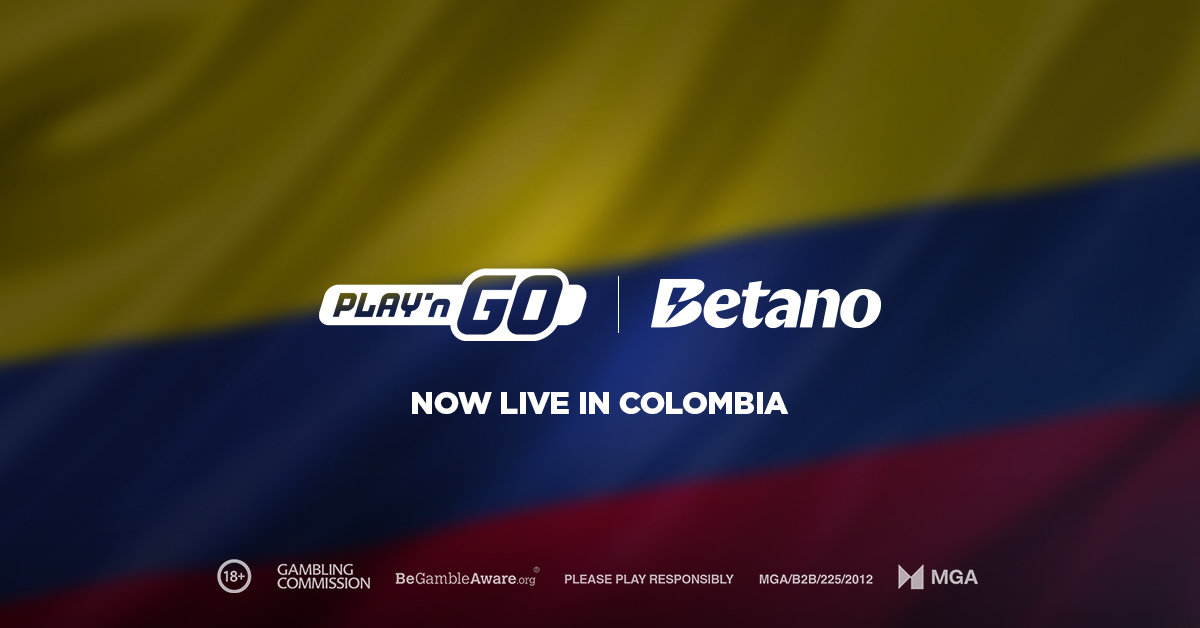
Play’n GO has launched with Betano Colombia, making the Swedish supplier’s casino games available on Kaizen Gaming’s brand in the country for the first time.
The agreement covers Colombia, one of Latin America’s regulated iGaming markets. Betano Colombia is rolling out Play’n GO’s full content portfolio, including titles such as Book of Dead and Reactoonz.
Play’n GO positioned the launch as part of its broader push across regulated markets in Latin America, with Colombia highlighted as a priority jurisdiction due to its established regulatory framework.
Magnus Olsson, Chief Commercial Officer of Play’n GO, said: “Colombia is an incredibly important market for Play’n GO. It stands out as one of the most stable regulated markets in Latin America, making it a key focus for our long-term growth strategy globally.
“Betano is one of the biggest names in global gaming, and they share our commitment to quality, compliance, and delivering exceptional entertainment. Bringing our full portfolio live on their platform in Colombia is an exciting step, and we’re confident this partnership will be a strong success for both parties.”
The post Play’n GO goes live with Betano Colombia in LatAm expansion appeared first on EE Gaming | Global iGaming & Tech Intelligence Hub.
The Swedish gaming giant confirms its industry leading portfolio of games now available in Colombia with Betano for the first time
Play’n GO, the world’s leading casino entertainment provider, has further expanded its presence in Latin America after going live with Betano, the premium online sports betting and gaming brand owned by Kaizen Gaming, one of the world’s leading GameTech companies.
The partnership covers Colombia, one of the region’s most established and trusted regulated markets.
The launch sees Betano Colombia roll out the full Play’n GO portfolio to its players. This includes some of the studio’s most iconic and popular titles, such as Book of Dead and Reactoonz, alongside a wide range of premium content designed to deliver world-class entertainment in regulated environments.
The launch reinforces Play’n GO’s strategic focus on regulated markets and is another significant milestone in its ongoing growth across Latin America.
Colombia continues to be a key market for Play’n GO, widely regarded as one of the most stable and mature regulated jurisdictions in the region. The launch with Betano ensures that more players than ever before in the country will have access to the company’s diverse and high-performing content portfolio.
Magnus Olsson, Chief Commercial Officer of Play’n GO, said: “Colombia is an incredibly important market for Play’n GO. It stands out as one of the most stable regulated markets in Latin America, making it a key focus for our long-term growth strategy globally.
“Betano is one of the biggest names in global gaming, and they share our commitment to quality, compliance, and delivering exceptional entertainment. Bringing our full portfolio live on their platform in Colombia is an exciting step, and we’re confident this partnership will be a strong success for both parties.”
The post Play’n GO strengthens Latin American presence with Betano Colombia launch appeared first on Americas iGaming & Sports Betting News.

From App Store access to police budget disputes, four developments this week reshaped the regulatory and commercial landscape for licensed operators in Brazil
One in ten Brazilian teenagers bet on licensed platforms in 2025
A study commissioned by identity verification platform Unico and conducted by Ipsos with 1,200 young Brazilians between the ages of 10 and 17 revealed that 11% of that population placed bets on betting platforms during 2025.
The highest concentration occurred in the final four months of the year, when 9% of respondents reported having wagered. The data was first reported by Estadão.
The numbers are concentrated in the older age groups and among male respondents. Among boys aged 16 and 17, 20% said they had placed bets online at some point.
Among girls aged 14 and 15, the figure was 14%, more than three times the rate recorded among girls aged 10 to 13, where 4% reported accessing betting platforms or games such as “tigrinho.”
The findings are significant not because they point to failures in the regulated market, but because they highlight what lies beyond it.
Brazil’s licensed operators have been required since January 2025 to implement real-time facial recognition as part of their Know Your Customer procedures, making it virtually impossible for anyone under 18 to register on an authorised platform.
Pix transactions are restricted to accounts matching the platform registration, closing off the use of parents’ credentials.
Operators found in breach face fines of up to R$2 billion and licence revocation.
Luis Felipe Monteiro, CEO for Latin America at Unico, identified the core vulnerability.
“The main challenge today is that much of the internet still operates under fragile age verification mechanisms, based only on self-declaration.
In practice, clicking a button saying ‘I am over 18’ is enough to access different types of content or services,” he says.
Curiosity was the primary reason cited by young respondents for placing bets, mentioned by 41%.
The prospect of easy money was cited by 34%, while the influence of content creators registered at just 9% , a figure that complicates the prevailing narrative around influencer-driven gambling among minors.
The regulatory framework is tightening further.
Brazil’s Digital Child and Adolescent Statute, in force since March 17, requires digital platforms to implement mechanisms to prevent excessive or compulsive use among young people, a provision that explicitly covers betting and digital gaming.

Apple opens the App Store to licensed betting operators in Brazil
In a development the industry had been pushing for since the regulated market launched, Apple updated its App Store policies on May 8 to allow the distribution of fixed-odds betting applications in Brazil.
The change applies exclusively to operators holding a valid licence issued by the Secretariat of Prizes and Betting of the Ministry of Finance.
The move ends a period in which the iOS ecosystem maintained stricter restrictions for betting apps in the Brazilian market than in comparable regulated markets in Europe.
Those limitations had pushed licensed operators to prioritise mobile web versions and Progressive Web Apps over native applications, a structural disadvantage in a market where smartphones are the primary access point for bettors.
For operators seeking to list their applications, Apple has established a specific review process. Submitting updated app information in App Store Connect without uploading a new version will not trigger a review.
Developers must include Brazilian licence details in the App Review Information section, insert the information in the Notes field and attach supporting documentation confirming operational authorisation.
Applications classified as gambling content must carry an 18+ age rating in Brazil, applied automatically when developers confirm gambling content in the age rating questionnaire.
Apple’s guidelines state that applications must comply with all disclosure and notice requirements under Brazilian law, including age restrictions and gambling risk warnings.
Developers are directed to consult legal counsel on their specific obligations.
The industry’s reading of the update is clear: it represents international recognition of Brazil’s regulatory framework by one of the world’s largest technology companies.
The practical implications extend across commercial strategy.
Mobile already accounts for the dominant share of user access in Brazil, and the availability of native iOS applications opens new possibilities for conversion optimisation, user retention, CRM strategies and push notification campaigns, tools that web-based solutions cannot fully replicate.
The update brings Brazil closer to the operating conditions of established regulated markets in Europe, where licensed operators have long distributed native applications through official mobile ecosystems without restriction.
The full update is available on the Apple Developer News portal.
Brazil’s betting regulator takes the national experience to Bogotá
Daniele Cardoso, Secretary of Prizes and Betting at Brazil’s Ministry of Finance, represented the country at the 10th Ibero-American Gaming Summit, which concluded on May 6 in Bogotá, Colombia.
The event, held under the theme “Latin America: a regulated market driving opportunities,” brought together authorities and representatives from 15 Ibero-American countries alongside global companies and industry associations.
The host institution was Coljuegos, the Colombian gaming regulator linked to the Ministry of Finance and Public Credit.
Cardoso participated in the panel “Regulation and Licensing in Latin America: the stability framework,” where she outlined the trajectory of Brazil’s regulatory process and the challenges of building a framework for a market already in full operation at the time the rules were being written.
She traced the legal foundation from Law 13.756/2018 through to Law 14.790/2023, which established the fixed-odds betting regulatory regime, defining the rules for market entry and permanence, the sanctions process, consumer protection measures and mechanisms to address the negative externalities of the activity.
“Participating in international meetings allows us to learn from the experiences of other countries, exchange good practices and improve legal and technological regulatory tools,” Cardoso said.
“This contributes to a safer, more transparent and better protected environment for the bettor.”
The panel also included:
- Luis Filipe Coelho, director of the Gaming Regulation and Inspection Service of Portugal;
- José Luis Pérez, director of Regulation and Registration at Peru’s General Directorate of Casino Games and Slot Machines;
- Juan Carlos Santaella Marchán, director of Puerto Rico’s Gaming Commission;
- Maria de Lourdes Ramírez, General Director of Games and Lotteries of Mexico;
- Marco Emilio Hincapié, president of Coljuegos.
A second panel, focused on responsible gambling as a long-term business sustainability driver, addressed consumer protection as a central pillar of industry operations, with emphasis on the implementation of policies and tools capable of ensuring the viability of the business model while prioritising client protection.
Brazil’s presence in Bogotá reflects the growing weight the country carries in regional regulatory conversations.
With one of the most comprehensive licensing frameworks in Latin America now in its second year of operation, Brazilian regulators are increasingly sought as reference points by counterparts across the region.
Police forces dispute control of betting tax revenues as provisional measure creates internal friction
A provisional measure signed by President Luiz Inácio Lula da Silva in early April has generated significant tension within Brazil’s federal security forces over the distribution of revenues derived from fixed-odds betting taxation.
The measure directs up to R$200 million to the Fund for Equipment and Operationalisation of the Federal Police’s Core Activities, known by its Portuguese acronym Funapol, with the stated objective of covering health benefits for officers across three federal police forces: the Federal Police, the Federal Highway Police and the Federal Penitentiary Police.
The political framing presented the measure as a shared victory for all three forces.
The legal reality is more complicated. Funapol is structurally and exclusively linked to the Federal Police.
The provisional measure contains no legal guarantee that the funds will be distributed proportionally among the three institutions, a gap that has generated sustained concern within the Federal Highway Police and Federal Penitentiary Police, according to CNN Brasil.
The background to the measure matters.
The government had originally pursued a Constitutional Public Security Fund as the vehicle for this funding, but that project stalled in Congress with insufficient time for approval before electoral legislation restrictions came into force.
The provisional measure , which carries immediate legal force, was the alternative solution. It resolved the bureaucratic obstacle without resolving the underlying dispute over distribution.
The model established by the measure provides for the government to transfer, progressively through 2028, up to 3% of total fixed-odds betting tax revenues to Funapol.
With Brazil’s regulated market recording a GGR of R$37 billion in 2025, the potential scale of those transfers is substantial.
Congressional allies of the Federal Highway Police and Federal Penitentiary Police have responded by introducing amendments seeking to broaden the scope of distribution and prevent the Federal Police from being the sole beneficiary.
The dispute has transformed the measure’s passage through Congress into a legislative battleground, with both forces maintaining active lobbying operations in Brasília to secure equal treatment.
For the betting industry, the episode illustrates a dynamic that has become increasingly visible since the market launched: tax revenues from licensed operators are now large enough to attract political competition over their allocation, a development that underlines both the scale the regulated market has reached and the institutional complexity of managing it.
The post Brazil’s regulated betting market faces its most turbulent week since launch appeared first on Americas iGaming & Sports Betting News.

-

 AGCO7 days ago
AGCO Fines Great Canadian Entertainment $120,000 for Using Unauthorised Gaming System Software at Four Casinos
-
Affiliate Industry5 days ago
Hub Affiliations Triumphs at the iGB Affiliate Awards 2026: Winner of Programme/Network Campaign of the Year
-
Asia7 days ago
The UAE Lottery joins SAGIP outreach with Philippine Consulate and Infinite Communities
-
Canada7 days ago
St8 extends Octoplay partnership into Ontario and the UK
-
Latest News6 days ago
N1 Partners at iGB L!VE 2026: Bringing Together Affiliates, Art and Innovation
-
0007 days ago
Booming Games launches Booming Buffalo Hold and Win Extreme 25,000
-
Latest News7 days ago
LEON announces LEON.bet Masters, a new CS2 tournament in Portugal
-
Austria6 days ago
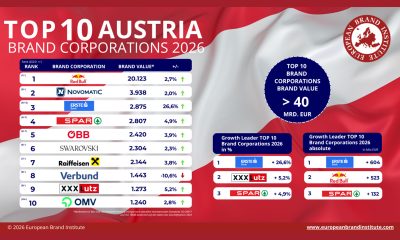
Austrian Brand Value Study: NOVOMATIC Defends Top Ranking