Latest News
SOFTSWISS Releases 2025 Edition of iGaming in Brazil Market Research

SOFTSWISS, a leading global provider of iGaming software, has released a new edition of the iGaming in Brazil Market Research, offering a detailed overview of the newly regulated Brazilian market in 2025. This guide provides operators with insights into licensing, regulatory compliance, and market trends as Brazil enters a new era of online gaming.
Brazil, the largest country in South America, has solidified its position as a high-potential iGaming market. With a population of over 218 million and a GDP of USD 2.33 trillion, the country is one of the fastest-growing economies globally. Digital adoption is also soaring, with over 86% of Brazilians actively using the internet and mobile penetration exceeding 97%.
Following the official launch of full iGaming regulation in January 2025, the market is expected to grow significantly, with projections estimating its value at USD 10 billion by 2029. To ensure sustainable industry development, the regulating body implemented strict compliance measures, player protection policies, and structured licensing frameworks.
The regulatory landscape in Brazil has undergone a substantial transformation, culminating in the enforcement of Law No. 14.790 in 2023, which formalised the market, and the establishment of the Secretariat of Prizes and Bets (SPA/MF) in 2024. From 1 January 2025, only licensed operators can legally provide online gaming and betting services.
Dario Leiman, Head of Business Development in Latin America at SOFTSWISS, commented on the early months following the regulatory changes: “The regulation of Brazil’s iGaming market has been one of the most significant industry milestones in recent years. While the new framework provides stability and legal clarity, operators must navigate a highly regulated environment with rigorous compliance requirements. The first months of 2025 have already highlighted key challenges, such as taxation structures and licensing complexities. However, such strict regulation also provides opportunities for well-prepared businesses to establish a strong presence in this market.”
The iGaming in Brazil Market Research is a vital resource for businesses looking to enter or expand in the regulated market. The report provides an explicit breakdown of the following critical aspects:
- Regulatory Compliance: Local ownership requirements, licensing processes and tax structures, including specific сosts and rates.
- Security and Data Protection: Mandatory measures like ISO 27001 certification, “bet.br” domain registration, and storing data within Brazil.
- Player Behaviour Trends: Preferences in online casino and sports betting, including game types and betting habits.
- Localisation Strategies: The importance of Brazilian Portuguese interfaces, mobile-first gaming, and local payment solutions such as PIX.
- Advertising and Payment Regulations: Compliance requirements, marketing restrictions, and the latest financial transaction rules.
As Brazil’s regulated iGaming market matures, operators must remain agile in adapting to legal developments and consumer expectations. With its extensive market knowledge and robust solutions, SOFTSWISS continues to help industry players achieve sustainable growth in the region.
Notably, Rubens Barrichello, Non-Executive Director for Latin America at SOFTSWISS, was actively involved in the research re-launch process. Leveraging his deep understanding of Brazilian consumer behaviour and his experience in fostering local partnerships, Rubens provided valuable insights into market localisation strategies and player engagement approaches, helping to ensure the report reflects the unique cultural and technological landscape of Brazil.
About SOFTSWISS
SOFTSWISS is an international technology company with over 15 years of experience developing innovative solutions for the iGaming industry. SOFTSWISS holds a number of gaming licences and provides comprehensive software for managing iGaming projects. The company’s product portfolio includes the Online Casino Platform, the Game Aggregator with over 27,800 casino games, the Affilka Affiliate Platform, the Sportsbook Software and the Jackpot Aggregator. In 2013, SOFTSWISS revolutionised the industry by introducing the world’s first Bitcoin-optimised online casino solution. The expert team counts over 2,000 employees.
The post SOFTSWISS Releases 2025 Edition of iGaming in Brazil Market Research appeared first on Gaming and Gambling Industry in the Americas.













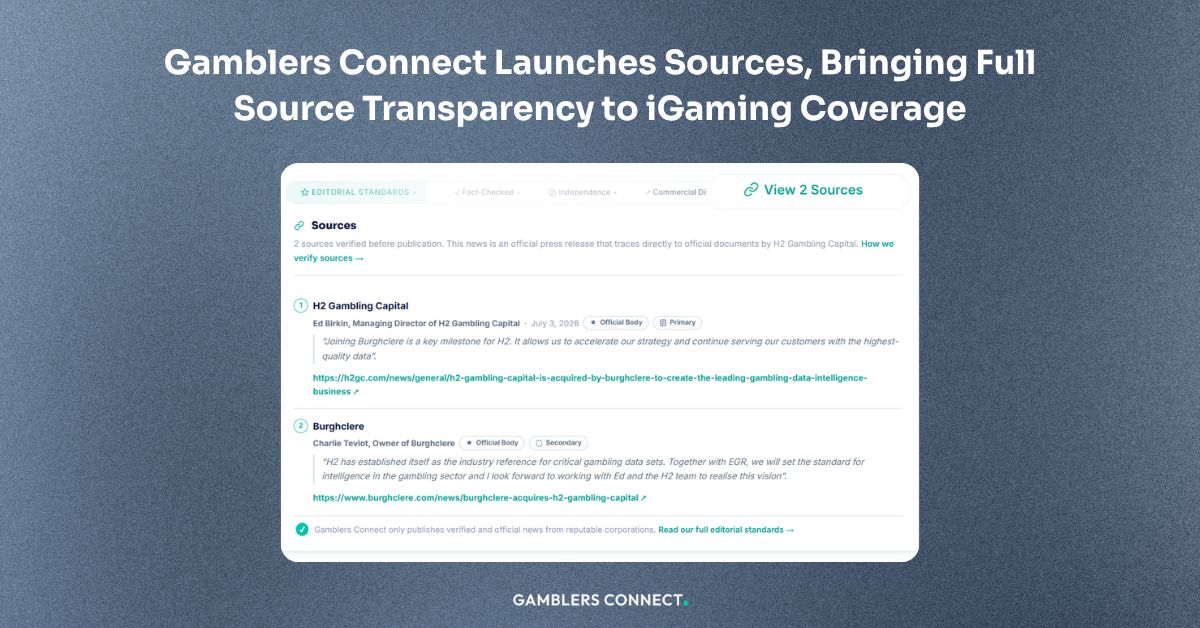
Gamblers Connect, the independent B2B iGaming media platform, has introduced a Verified Sources panel that appears at the bottom of every article, linking each factual claim directly to named primary documents hosted on the original source’s own domain.
The panel lists the specific sources consulted, identifies the issuing authority, and includes editorial notes explaining what has been verified and where the limits of the available evidence exist. Positioned immediately beneath the article body, each source is presented in the order it was consulted and includes the responsible individual or office where applicable.
Each entry also includes relevant disclosure tags drawn from the newsroom’s editorial taxonomy, and a direct hyperlink to the original document on the source’s own domain, allowing readers to verify the reporting in a single click.
The initiative responds to widespread practices in online publishing where sources are hidden, paraphrased or omitted altogether, leaving readers to rely on trust rather than independently verifiable evidence.
Luka Dimitrijevic, Partnerships & Operations Lead at Gamblers Connect, said: “Trust is not something a media outlet can declare. It is something the reader gives, and only once they can see the documents the story was built from. The Verified Sources panel exists so that verification is never more than one click away. If a claim in a story is worth making, the source behind it is worth linking to.”
The post Gamblers Connect Strengthens Trust with Launch of Verified Sources Panel appeared first on EE Gaming | Global iGaming & Tech Intelligence Hub.
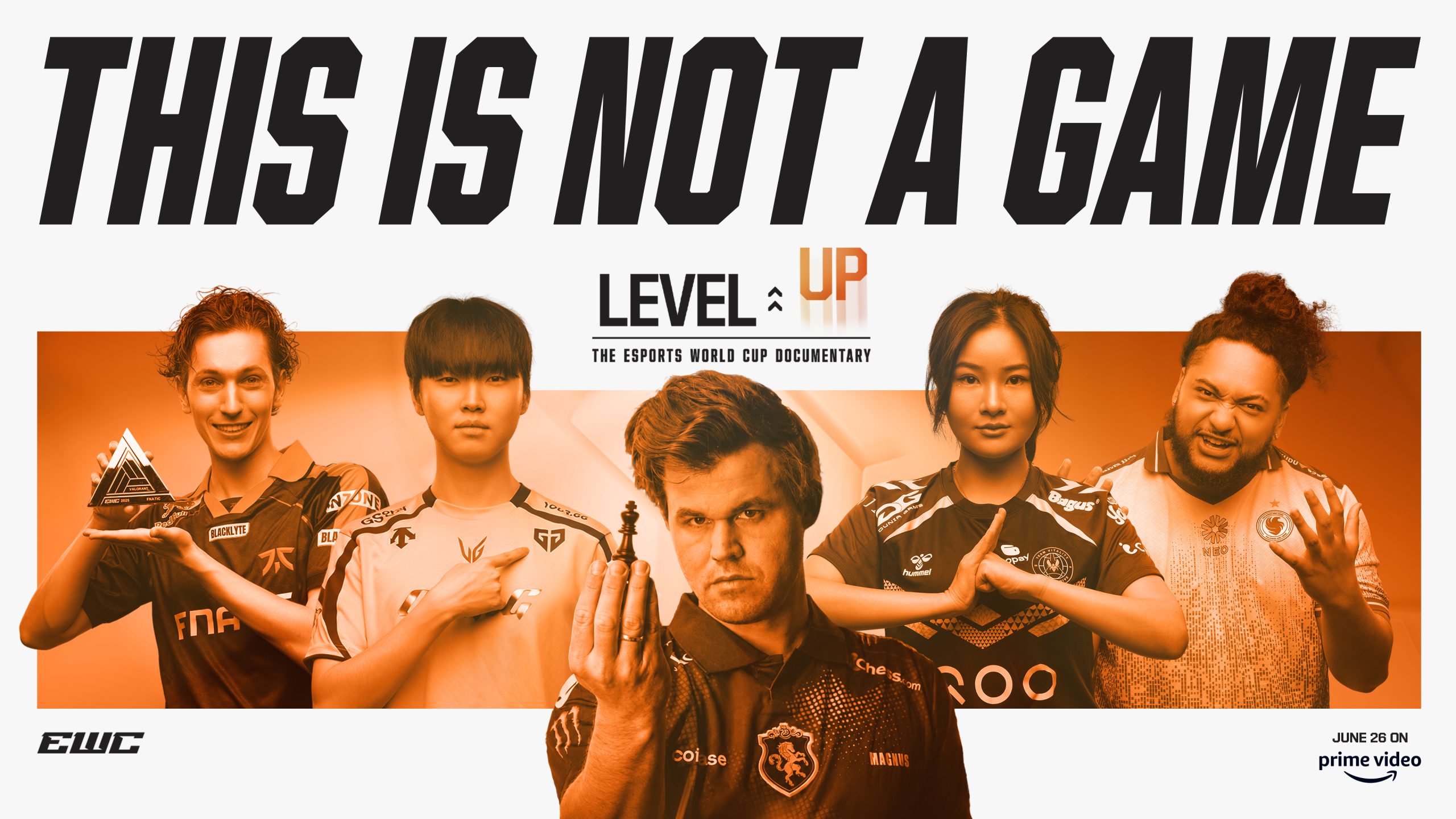
Esports World Cup: Level Upreturns for its second season on June 26, with all five episodes dropping that day exclusively on Prime Video. Directed by Emmy-winning filmmaker R.J. Cutler (Martha (Netflix), Billie Eilish: The World’s A Little Blurry (Apple TV)), the five-part docuseries goes inside the human stories behind the world’s largest esports competition, following players, Clubs and families through the pressure and ambition of the 2025 Esports World Cup.
Set in Riyadh, Saudi Arabia, during the seven-week event, the new season follows the chase for the $70 million prize pool and the EWC Club Championship, while showing the personal journeys at the heart of the competition. The series captures what it takes to compete on a global stage where one match can change a career, a season can define a Club, and a single moment can turn a player into a star.
Produced by This Machine (a part of Sony Pictures Television), with director R.J. Cutler, showrunner John Dorsey and executive producers Jane Cha Cutler, Trevor Smith, Elise Pearlstein and Mark Blatty all returning for the second season, Esports World Cup: Level Up takes a vérité-style approach to esports, capturing the sacrifice, stakes, and rising fame of the world’s top competitive gamers.
Featured players include Jake “Boaster” Howlett (Fnatic; VALORANT), Vivi “Vivian” Indrawaty (Team Vitality; MLBB), Kasimili “Soka” Tongamoa (Team Falcons; Call of Duty: Warzone), Xiao Hai (KuaiShou Gaming; Fatal Fury: City of the Wolves) and Garidmagnai “bLitz” Byambasuren (Mongolz; Counter-Strike). To bring the players’ personal stories to the forefront, the film’s crew was on set in Riyadh for seven weeks and also traveled to locations across the U.K., U.S. and Indonesia for rare at-home visits.
Standout storylines woven throughout the series include:
-
Magnus Carlsen (Team Liquid, Chess) – Widely considered the greatest chess player ever, Carlsen faces the isolation of dominance, with no traditional peaks left to conquer. His story follows his shift into esports, where a new generation of challengers awaits.
-
Boaster (Fnatic, Valorant) – As Valorant debuts at the event, the British competitor’s journey from aspiring actor to title contender shows there’s no single path to success, shaped by resilience through personal and professional setbacks.
-
Xiao Hai (KSG, Street Fighter) – A reigning champion shaped by strict discipline, Xiao Hai was competing against adults by age six. Now a father, he balances global competition with family life.
-
Vivian (Team Vitality, Mobile Legends: Bang Bang) – Competing for a life-changing prize, Vivian’s story centers on overcoming recent setbacks and confronting childhood trauma.
-
The Mongolz & bLitz (Counter-Strike 2) – Led by their star player bLitz, this grassroots Mongolian team has risen from obscurity to national prominence, becoming symbols of pride and perseverance.
-
Soka (Team Falcons, Call of Duty: Warzone) – The reigning champion faces pressure on multiple fronts, dealing with rivalries from former teammates while navigating a turbulent home life.
- Coach ArSy (Team Liquid, Mobile Legends: Bang Bang) – Offering a rare coaching perspective, ArSy draws on a difficult upbringing to lead and inspire his team’s pursuit of redemption.
“Level Up captures the human side of what we are building with the Esports World Cup,” said Ralf Reichert, CEO, Esports Foundation. “EWC creates the stage: the best games, the best Clubs, the best players, life-changing stakes and moments that bring together a global gaming community of billions. The documentary takes you closer to the people inside those moments: their pressure, their ambition, their families and the stories that make esports meaningful to a new generation.”
“This next chapter deepens our exploration of a global phenomenon that is as much about human ambition and identity as it is about competition,” said Cutler. “Esports is one of the most dynamic cultural movements of our time. In season two, we continue to chronicle not just the competition, but the lives, dreams, and sacrifices of the players at the center of it, revealing a world that is both intensely personal and globally resonant.”
Around those player journeys, the series also captures the wider cultural energy of the Esports World Cup, where sport, music, entertainment and gaming meet. In addition to elite competition, Level Up showcases moments from a star-studded lineup of musical artists and athletes, including opening headliner Post Malone, who shows off his gaming skills backstage; grandmaster Magnus Carlsen, who triumphs in his first chess esports event; and football icon Cristiano Ronaldo, who ushers the Club Championship trophy to the stage in a dramatic closing ceremony.
The magnitude of the Esports World Cup is also seen through the reactions of some of the world’s biggest sports and entertainment figures, including reigning F1 champion Lando Norris; Brazilian football legends Ronaldo Nazario and Kaká, who go one-on-one in an EA FC showmatch; professional footballer Alisha Lehmann; skateboarder Tony Hawk; and tennis star Nick Kyrgios, who stated: “The crowd, the atmosphere, is literally better than Wimbledon or any Grand Slam.”
The Esports World Cup 2025 marked a defining moment in competitive gaming. In its second year, EWC reached 750 million viewers worldwide and generated 350 million hours watched, with peak concurrent viewership of nearly 8 million during the League of Legends at EWC ’25 tournament. Coverage was delivered across 28 platforms through 97 broadcast partners and more than 800 channels in 35 languages. Twenty-five tournaments spanning 24 games featured more than 2,000 players representing approximately 200 Clubs from over 100 countries.
The 2026 edition of the Esports World Cup will be held in Paris, France from July 6 through August 23, as the top Clubs in the world compete for $75 million and the 2026 EWC Club Championship trophy.
The post Esports World Cup: Level Up Returns to Prime Video June 26 with Season Two appeared first on EE Gaming | Global iGaming & Tech Intelligence Hub.
Tonybet, an international iGaming operator already licensed in Ontario and Kahnawake, today announced that it has received an iGaming license from the Alberta Gaming, Liquor and Cannabis Commission (AGLC), clearing the company to operate in Alberta’s regulated online gaming market.
The license allows Tonybet to enter Alberta, Canada’s second province to introduce a competitive, multi-operator iGaming market following Ontario’s launch in 2022. It also extends Tonybet’s Canadian footprint, reinforcing the company’s position as one of the most broadly licensed operators in the country.
Alberta’s regulated market represents a significant opportunity. The province has an estimated population of nearly 5 million, a strong sports culture, and a regulatory framework designed to channel existing online gaming activity into a licensed, player-protected environment. Tonybet intends to bring the same localized approach that has driven its growth in Ontario – combining regionally relevant sports betting markets, responsible gaming tools, and dedicated customer support – to Alberta from day one.
“Alberta is taking the right approach – building a regulated market that puts player protection and operational standards at the center from the start. That’s exactly the kind of environment we want to operate in. We’ve spent years proving in Ontario that you can grow a business and maintain the highest compliance standards at the same time – registrations and gross gaming revenue in the province both grew by 52% in 2025, with responsible gaming embedded in that success rather than working against it. Securing this license means we can bring the same commitment to Alberta, and we plan to be fully operational in the market,” said Dmitry Arabuli, CEO of Tonybet.
Tonybet has already begun preparations for its Alberta launch, including platform localization, integration with the province’s centralized self-exclusion system, and commercial onboarding with the Alberta iGaming Corporation (AiGC).
The post Tonybet Secures Alberta iGaming License as Regulated Market Opens appeared first on EE Gaming | Global iGaming & Tech Intelligence Hub.

-

 Latest News6 days ago
Eeze opens 1,200 sqm Bucharest hub for technical teams
-
Latest News6 days ago
Play’n GO strengthens Latin American presence with Betano Colombia launch
-
Latest News5 days ago
BetMakers Technology Group Selected to Distribute ATG Horse Racing Content Across Australia and New Zealand
-
Latest News6 days ago
Belatra signs cooperation deal to distribute slots via VeliGames
-
Compliance Updates6 days ago
Kasinohai Audit: Most Slots Could Be Affected by Finland’s Draft Gambling Rules
-
Compliance Updates6 days ago
Pernambuco court revokes Spribe’s interim relief in Aviator trademark dispute
-
Latest News6 days ago
R. Franco Digital releases fighting game-themed slot Spin Fighters
-
Compliance Updates5 days ago
ACMA Warns MMA Fighter Jamie Mullarkey for Breaches of Online Gambling Laws