Latest News
Rivalry to Report Second Quarter 2024 Results on August 29, Announces Management Change


Rivalry Corp. (the “Company” or “Rivalry”) (TSXV: RVLY) (OTCQX: RVLCF) (FSE: 9VK), the leading sportsbook and iGaming operator for Gen Z, today announced details of its planned release of second quarter 2024 financial results.
The Company expects to file its Q2 2024 results the morning of Thursday, August 29, 2024 prior to the commencement of trading on the TSX Venture Exchange. Management plans to host an investor conference call that same day at 10:00 am EDT to discuss the results.
Conference Call Details
Timing: Thursday, August 29, 2024 at 10:00 am EDT
Dial-in: 1-800-717-1738 (toll free) or (+1) 289-514-5100 (local or international calls)
Webcast: A live webcast can be accessed from the Events section of the Company’s website at www.rivalrycorp.com or at this link.
A replay of the webcast will be archived on the Company’s website for one year.
Company Announces CFO Change
Rivalry has also announced that Demi Abidogun-Benson will assume the role of Interim Chief Financial Officer effective August 16, 2024, replacing Kejda Qorri in the role.
Demi is a financial leader with over a decade of experience in corporate reporting, auditing, and strategic planning. Prior to joining Rivalry in February 2022, Demi was the Director of Finance at Swash Digital and spent more than ten years with Deloitte Canada working across the UK, Southeast Europe, and Canada.
“Kejda has been an integral member of our team since day one, leading the charge on our financial management strategy, public listing, and many other key initiatives across the Company,” said Steven Salz, Rivalry Co-founder and CEO. “We deeply respect her decision to transition out of her role in order to spend time with family, and on behalf of the entire team, we wish Kejda all the best in her future endeavors. I’m also very excited to have Demi, a long-standing and key member of our finance team, step in as Interim CFO where I’m confident she will succeed.”
“It has been a pleasure to serve as Rivalry’s CFO and work alongside one of the most talented teams in the gambling industry,” said Kejda Qorri. “I have a tremendous amount of confidence in the brand, its leadership team, and look forward to watching them grow. I also want to congratulate Demi who will be stepping in as Interim CFO. Demi is a natural leader with a deep understanding of Rivalry’s business, and I’m positive she will continue her track record of achievement in this new role.”












Chelsea Pinho Head of Casino at Midnite
Octoplay builds lifetime-exclusive slot for Midnite in the UK


Midnite Express is the first bespoke title under the pair’s July 2025 partnership and adapts mechanics from Fire Rail Express: Hold And Win.
Octoplay has launched Midnite Express, a lifetime-exclusive branded slot built for UK operator Midnite. The title is the first custom product released under the companies’ partnership, which went live in July 2025.
Midnite Express is based on the game mechanics behind Fire Rail Express: Hold And Win, which Octoplay says is among its strongest-performing titles in the US. The supplier points to the EILERS-FANTINI Online Game Performance report, where it says the game has held a top-three position in the “New Top Game Ranks – Slots” category for three consecutive months.
“Midnite Express is the first custom product we’ve built for Midnite, and it’s a meaningful step in how this partnership is developing,” says Ralitsa Georgieva, CEO at Octoplay. “A year on from our initial launch, we’re moving from portfolio integration to co-developed content built specifically for their players. Adapting the mechanics behind one of our top-performing US titles for the UK with Midnite reflects how we work with operators who want more than off-the-shelf content.”
Chelsea Pinho, Head of Casino at Midnite adds: “Octoplay has been a strong content partner since we went live together last year, and Midnite Express is the result of a collaboration grounded in shared ambition. Having a lifetime exclusive title based on proven mechanics gives us a product we can put behind with confidence.”
The launch follows a run of UK integrations for Octoplay, including a recent go-live with Bally’s Intralot, and earlier integrations with Evoke’s 888 and Mr Green brands, Virgin Bet, and LiveScore Bet. Octoplay says it is now live in 18 regulated markets, including the UK, Malta, Romania, Croatia, Sweden, Slovakia, Italy, Belgium, Denmark, the Netherlands, Greece, Spain, Finland, Georgia, Brazil, New Jersey, Michigan, and Ontario.
The post Octoplay builds lifetime-exclusive slot for Midnite in the UK appeared first on EE Gaming | Global iGaming & Tech Intelligence Hub.
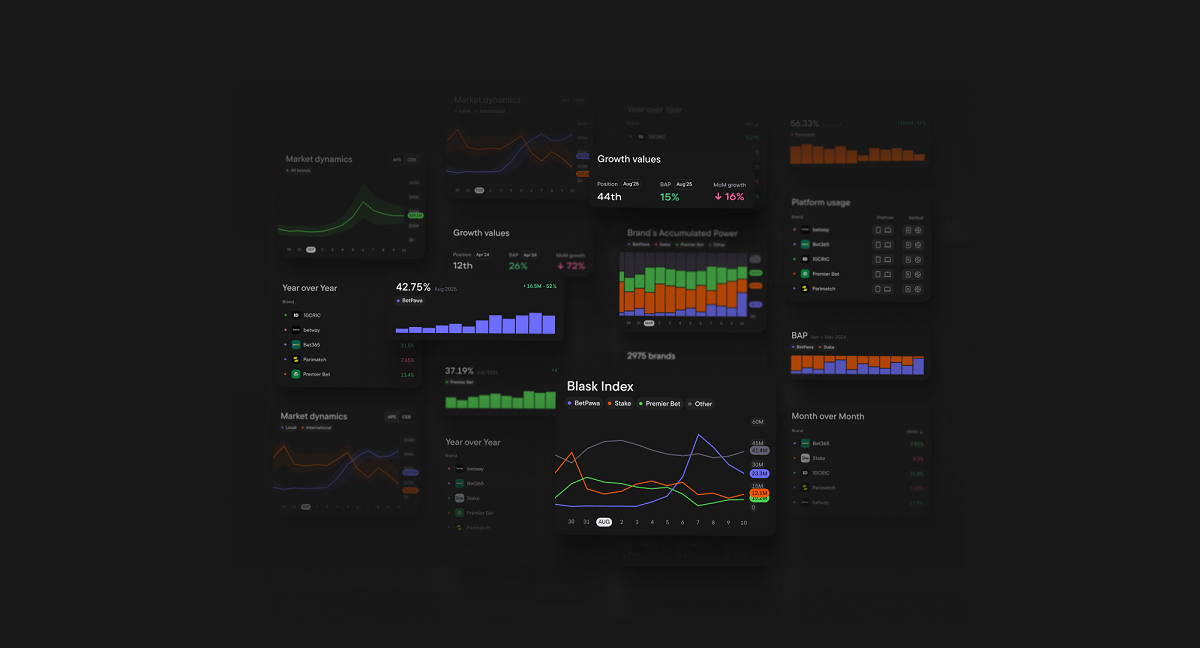
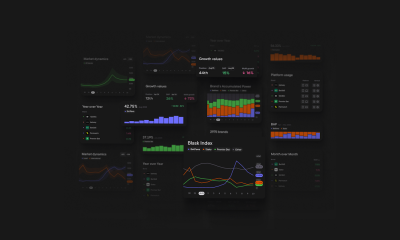
Blask has rolled out a modular subscription model for its AI-powered iGaming analytics platform, replacing its Early Adopters pricing plans. The company said customers can now build subscriptions by selecting countries, analytics modules, add-on features and the access period.
Under the new structure, the minimum configuration starts at €247 per month, or approximately €160 per month on an annual contract, according to the company. Blask said subscriptions can cover as little as a single country.
Blask said pricing is made up of base access to the platform plus selected products and markets. Market analytics covers 135 countries across three pricing tiers, ranging from €7 to €28 per country per month. Game analytics is available in 25 countries at €5 to €20 per country per month. State and province-level data is priced at €56 per month for the United States, and €28 per month each for Canada and Australia.
The company has also opened access to its data via an API, allowing customers to integrate metrics into their own analytics systems, CRM platforms and AI tools through MCP, without working inside the Blask interface. For companies looking for one-off work, Blask said it also offers customized reports combining its data with analysis from its research team.
“Analytics is now a basic condition for survival in this market,” said Max Tesla, chief executive and co-founder of Blask. “That is why we are making it more accessible: build a plan around your specific task, start with one country and scale when you are ready. Making analytics affordable has been part of Blask’s DNA from the very beginning.”
Blask added that the pricing update follows a week of industry recognition, after it received two awards at the 2026 iGB Affiliate Awards, winning Rising Star and Innovator of the Year.
The post Blask replaces fixed plans with modular pricing for iGaming analytics appeared first on EE Gaming | Global iGaming & Tech Intelligence Hub.

The award was announced live at iGB LIVE, with the company pointing to product updates including its Refie UX layer.
ReferOn has won “Best Affiliate Management Platform” at the iGB Affiliate Awards 2026. The company said the award was announced live at iGB LIVE.
ReferOn positioned the recognition as a result of product development and customer growth over the past year, with a focus on simplifying affiliate operations through automation, real-time insights, and streamlined workflows.
The company also pointed to the introduction of Refie, described as an integrated UX layer designed to translate operational data into “clear, actionable insights” for affiliate teams across onboarding and daily performance tracking.
Alex Bukin, CEO of ReferOn, commented: “Winning the iGB Affiliate Award is a remarkable achievement for our entire team. As affiliate programs grow, so does the complexity behind them. From day one, our ambition has been to remove that complexity, so operators can focus on growth instead of operational friction. This recognition reinforces our belief that great B2B technology should be simpler, more intuitive, easier to work with, and built around the people who use it”.
ReferOn added that it has won other industry awards in the past 18 months, including ‘Affiliate System of the Year’ at AffPapa and ‘Best Affiliate Software’ at SiGMA, and said its roadmap includes expanding AI-powered assistance and increasing visibility into affiliate operations.
The post ReferOn wins Best Affiliate Management Platform at iGB Affiliate Awards 2026 appeared first on EE Gaming | Global iGaming & Tech Intelligence Hub.

-

 AGCO7 days ago
AGCO Fines Great Canadian Entertainment $120,000 for Using Unauthorised Gaming System Software at Four Casinos
-
Affiliate Industry6 days ago
Hub Affiliations Triumphs at the iGB Affiliate Awards 2026: Winner of Programme/Network Campaign of the Year
-
Asia7 days ago
The UAE Lottery joins SAGIP outreach with Philippine Consulate and Infinite Communities
-
Canada7 days ago
St8 extends Octoplay partnership into Ontario and the UK
-
Latest News6 days ago
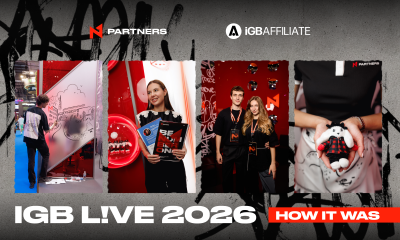
N1 Partners at iGB L!VE 2026: Bringing Together Affiliates, Art and Innovation
-
0007 days ago
Booming Games launches Booming Buffalo Hold and Win Extreme 25,000
-
Austria6 days ago
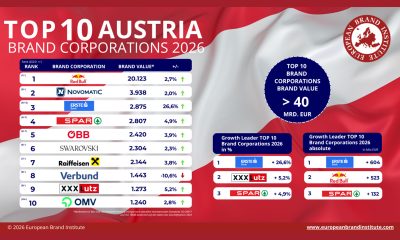
Austrian Brand Value Study: NOVOMATIC Defends Top Ranking
-
Latest News7 days ago
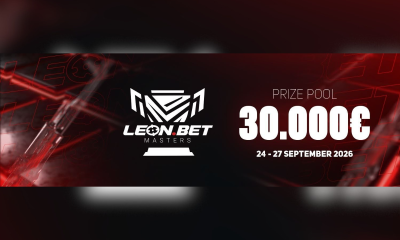
LEON announces LEON.bet Masters, a new CS2 tournament in Portugal