Latest News
How to promote and advertise your gambling business in highly regulated markets

According to data from Statista, the global online gambling market is expected to be worth $107.3 billion by the end of this year, and $138.1 billion by 2028. As the industry continues to grow, so do its responsibilities — and the general trend is more advertising regulations, not fewer. Slotegrator shares key findings on this issue for those seeking to operate responsibly.
Online gambling sometimes faces severe limitations or complete bans, even in nations where land-based casinos are legal. Even outside historically conservative nations, there is a general trend toward more stringent regulation; liberal nations like Georgia and Lithuania have made substantial adjustments to tighten oversight of gaming operators and advertising strategies.
Countries throughout the EU are slowly harmonizing their gambling regulations, and CIS countries are also actively improving the regulation of the iGaming market, with special attention paid to strict regulation in the field of advertising. Governments argue that stricter advertising restrictions are not intended to stifle the growth of the industry, but rather are necessary measures for effective industry oversight.
Advertising regulations can vary dramatically from country to country depending on its legal status and cultural attitudes toward the practice. However, in most countries with a regulated gambling industry, there are some common general principles of advertising regulation:
- Prohibition of advertising to minors.
- Advertising content requirements.
- Licensing and regulation of advertising.
- Prohibition of deceptive or aggressive advertising.
You can read more about these points in a new article from Slotegrator Academy.
What are the consequences for illegal gambling advertising?
From fines and criminal charges to license revocation and asset seizure, authorities employ a range of measures to enforce compliance with advertising regulations and uphold the integrity of the gambling industry.
- Fines are one of the most common penalties for illegal gambling advertising in gambling regulated countries.
- Harsh measures like license revocation or suspension are possible.
- Criminal charges may even be brought against the individuals or organizations responsible for the illegal advertising.
- In cases of illegal gambling advertising activities, authorities can seize assets, profits, or proceeds obtained unlawfully.
Experts from CasinoRIX, Slotegrator’s media partner, comments: “When launching projects in such markets, the main task is to thoroughly study all the requirements from local regulators – whether licenses for affiliates are required and what restrictions or rules exist for operations and advertising. Then, it’s essential to constantly monitor possible changes and amendments to comply with all provisions.
It’s not enough to know which tools and traffic channels to use; for example, to promote on social networks, one needs to delve deeper into prohibitions at the legislative level and understand the social responsibility of all your actions.
Additionally, it is necessary to maintain constant communication and exchange experiences with your partners to reduce the chances of mistakes.”
Here are a few examples of how gambling advertising is regulated in different European and countries and in the Baltic region:
- In Lithuania in 2021, the government implemented a comprehensive prohibition on the promotion and advertising of gambling activities through any means, including television, banners, and external advertising channels. Additionally, the government prohibited operators from offering players incentives such as free spins or bonuses.
- In Latvia, the promotion of gambling activities is strictly regulated, with allowances limited exclusively to land-based casinos. Operators are permitted to advertise solely by displaying the name of the casino, the organizer, and the official trademark. It is also prohibited to offer participation in gambling for free, as a gift or prize.
- In Estonia operators enjoy significant freedom in advertising their gambling services, with television and free streaming platforms being particularly favored channels for promotions, often utilized during nighttime hours. This leniency extends to casinos, which have the liberty to advertise bonus offers, promotions, and their own brand without significant restrictions.
- Finland maintains a stringent stance on gambling advertising, with legislation prohibiting promotions across various mediums including radio, television, online platforms, and public spaces. The authorities maintain strict surveillance over advertising activities, particularly targeting operators lacking a local license.
- In Italy, in 2019, the government implemented a sweeping ban on all forms of gambling advertising in the country. This legislation prohibits both direct and indirect promotion of gambling services through all available information channels, including television, radio, print media, the internet, and any other public platform. Additionally, the initiative extends to banning sponsorship in soccer, prohibiting the placement of logos, merchandise, or the use of other marketing tools associated with gambling.
- In Spain, stringent regulations have been implemented to restrict almost all forms of gambling advertising, including sponsorships. The only exception is during late-night hours, from 1:00 to 5:00, where live broadcasts are permitted to feature gambling advertisements. Furthermore, welcome bonuses were prohibited starting from 2020.
- In Belgium the government took a decisive step to combat addiction and debt associated with gambling by instituting a comprehensive ban on gambling advertising across multiple platforms starting from July 1, 2023. This prohibition extends to television, radio, cinemas, magazines, newspapers, public spaces, and even online advertising on websites and social media.
- In Denmark, gambling advertising is permissible within the country’s borders, provided it does not target minors. Operators are required to highlight that gambling is primarily intended for entertainment purposes, rather than as a means of making money. Moreover, when featuring prominent individuals in their advertising campaigns, operators must refrain from conveying the notion that gambling played a significant role in their success.
- In Sweden, all forms of gambling and betting are permitted, along with advertising for them. However, under the Marketing Act, only games and lotteries licensed in Sweden are eligible for advertisement.
“One of the first items that should be on your to-do list if you want to develop working strategies for a highly regulated market is to conduct thorough market research — and your first stop is your target market’s regulatory framework. You should also analyze competitors’ marketing approaches and monitor how they navigate regulatory compliance. Seeing how other companies are innovating to market effectively while maintaining compliance could help inspire your team to develop new strategies, and in some cases provide an example of what not to do.”, comments Svetlana Kirichenko, Head of Marketing at Slotegrator.
Slotegrator is always interested in partners’ opinions on advertising in regulated markets.
Martin Calvert, Marketing Director at ICS-digital, actively followed the changes and shared his answers in a blitz interview:
Slotegrator: What do you think the tightening of the market for advertising in the iGaming industry will bring?
Martin Calvert: Hopefully a renewed focus on product and competing responsibly for the attention of players.
For some markets, operators already have a dependence on paid media and the affiliate channel – but they haven’t always worked as true partners with their affiliates.
Perhaps given their need for high quality traffic, there will be more incentive to work more collaboratively with partners in the affiliate channel.
Of course, given what we do at ICS-digital and ICS-translate, I’m always enthusiastic about the potential for organic SEO and targeted content to bring players directly in an efficient and scalable way – but not every operator is well-equipped to capitalize on this potential.
Slotegrator: Do universal rules for marketing activities in the industry exist today?
Martin Calvert: It feels like if we’re being totally honest, the range of marketing activities in the industry is enormous – some brands are at the leading edge of innovation, while others are deeply traditional.
I think the main thing is to focus on strategies that a.) fit well with your brand and b.) still deliver the results needed.
You don’t need to do everything, or mirror exactly what competitors are doing – finding your own path can bring you closer to your ideal customers.
That said, I think there are some themes that will always make marketing easier – commitment to understanding multiple audiences, using data responsibly and being both creative and practical can help keep things interesting but efficient.
Slotegrator: Is the tightening of regulation of the advertising market in the iGaming industry able to influence the formation of a responsible gaming culture?
Martin Calvert: Yes, I think sometimes having real restrictions on activities is needed to make marketing practices evolve more quickly and responsibly.
A true culture though is based around how companies decide to conduct themselves, and how they structure their activities in line with some kind of values.
For more and more iGaming companies, this is something that they’re willing to commit to, seeing themselves more like entertainment and tech brands than conventional betting brands.
Committing to responsible gaming has other advantages too – in the world of SEO, Google closely scrutinises YMYL sites i.e. ‘Your Money, Your Life’ sites with the potential to effect someone’s finances or health.
Betting brands who take a responsible approach have a better chance of staying on the right side of Google with responsible content. This is another reason why betting brands who focus on Experience, Expertise, Authority and Trust (E-E-A-T) in their content have the potential to increase rankings and traffic over time.
Slotegrator: How not to get lost in the market with all these changes?
Martin Calvert: I think the most important thing is to analyse competitors, but don’t be tempted to try and do everything they do.
More than ever there is useful and practical advice from Google and other important gateways and platforms.
Making good judgements about marketing depends on understanding your target audiences and, where possible, responding to their wants, needs and queries in an efficient and clear way.
In this respect, responsible gambling fits well with online marketing, content and SEO best practice.
ABOUT SLOTEGRATOR
Since 2012, Slotegrator has been one of the iGaming industry’s leading software and business solution providers for online casino and sportsbook operators.
The company’s main focus is software development and support for online casino platforms, as well as the integration of game content and payment systems.
The company works with licensed game developers and offers a vast portfolio of casino content: slots, live casino games, poker, virtual sports, table games, lotteries, casual games, and data feeds for betting.
Slotegrator also provides consulting services in gambling license acquisition and business incorporation.
More information: https://slotegrator.pro/
The post How to promote and advertise your gambling business in highly regulated markets appeared first on European Gaming Industry News.











Alea is set to take a leading role in São Paulo as the Headline Partner for NEXT.io Focus Brazil, returning for a second straight year to one of the most important gatherings in the country’s regulated iGaming calendar.
The invite-only event takes place on Monday, 6 April at Palacio Tangará and brings together around 100 senior industry decision-makers to examine how Brazil’s market is evolving beyond its launch phase.
The agenda will center on the market’s new reality, including changing player behavior, regulatory maturity, and the long-term sustainability of Brazil’s iGaming sector. Alea CEO Jordi Sendra will open the afternoon by joining the panel “Brazil 2026: The New Reality of Regulated Gambling,” where leaders from TQJ Bet, Esportes, and Stake Brazil will discuss how operators can stay competitive in a more structured environment.
Alea says its renewed partnership reflects the company’s growing commitment to Brazil and its deeper local presence. Over the past year, the company has invested in building a stronger on-the-ground structure to support partners across the market, with Sendra describing Brazil as a fast-changing but increasingly organized industry where open dialogue remains valuable.
The São Paulo appearance also connects directly to Alea’s wider South American push. After NEXT.io Focus Brazil, the team is shortlisted for Best Aggregator at the SiGMA South America Awards, before continuing discussions at SiGMA South America from 7–10 April at Booth N145, where the company will showcase its localized portfolio and technical support for operators navigating Brazil’s evolving market.
The post Alea Leads Brazil iGaming Talks in São Paulo appeared first on Eastern European Gaming | Global iGaming & Tech Intelligence Hub.
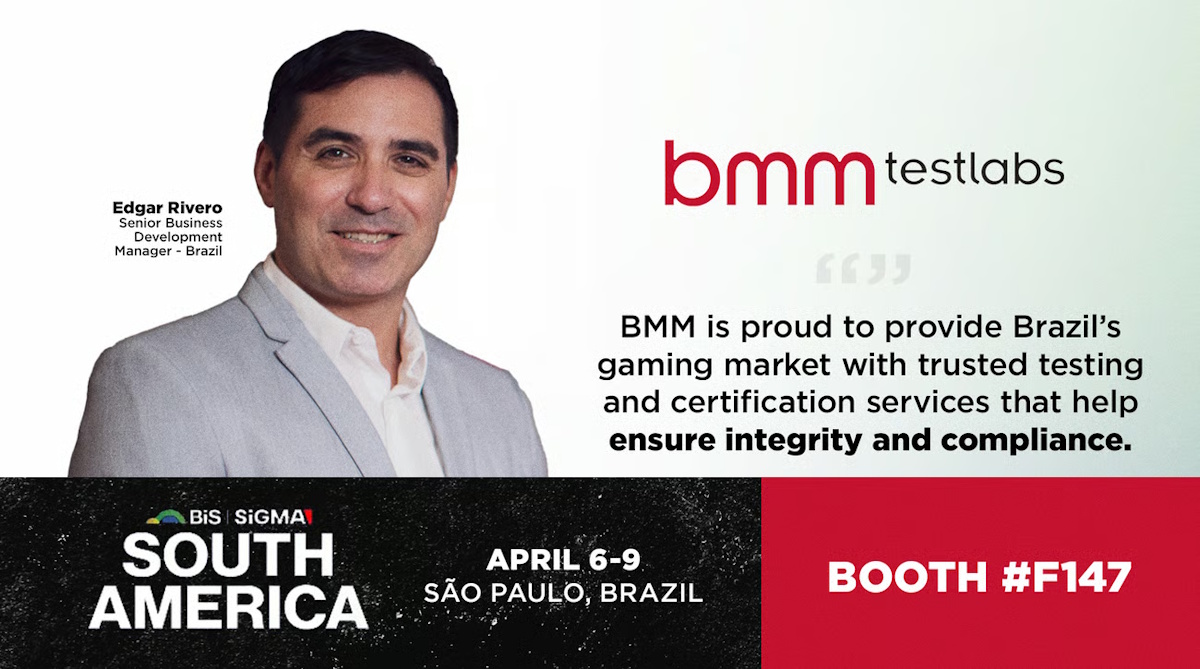
BMM Innovation Group is set to reinforce its leadership in compliance testing, cybersecurity, and professional training at the BiS SiGMA Americas, taking place from April 6–9 in São Paulo. Exhibiting at Stand F147, the company is doubling down on its long-term commitment to Brazil’s rapidly evolving regulated gaming ecosystem.
As one of the most dynamic gaming markets globally, Brazil presents both opportunity and complexity. BMM Innovation Group, through its specialized brands, is positioning itself as a critical enabler for operators, suppliers, and regulators navigating this fast-changing environment.
A Three-Pillar Approach to Gaming Compliance
Operating through its globally recognized divisions—BMM Testlabs, BIG Cyber, and RG24seven Virtual Training—the group delivers a comprehensive suite of services tailored to regulated gaming markets.
- Testing & Certification: BMM Testlabs ensures that gaming products meet stringent regulatory standards, enabling smoother market entry.
- Cybersecurity Solutions: BIG Cyber strengthens digital resilience, a growing necessity as gaming platforms become increasingly interconnected.
- Compliance Training: RG24seven Virtual Training provides certification programs designed to equip employees with the knowledge required to meet regulatory obligations.
Strategic Focus on Brazil’s Gaming Boom
With more than 40 years of industry experience, BMM Testlabs continues to play a pivotal role in supporting Brazil’s regulatory framework. Its investment in local infrastructure, including a dedicated test lab in São Paulo, signals a strong, long-term commitment to the region.
According to Marzia Turrini, Global President of iGaming & Cybersecurity, Brazil stands out as one of the most promising regulated markets worldwide. She emphasized that ensuring integrity, compliance, and cybersecurity readiness is essential for sustainable growth in the sector.
This localized approach allows BMM to help stakeholders confidently launch products while adhering to evolving regulatory requirements—an increasingly important factor as Brazil formalizes its gaming laws.
Driving the Future of Regulated Gaming in Latin America
Attendees at BiS SiGMA Americas will have the opportunity to engage directly with BMM’s experts and explore how the company’s integrated solutions support the future of regulated gaming not only in Brazil but across Latin America.
From certification to cybersecurity and workforce training, BMM Innovation Group is positioning itself at the intersection of trust, technology, and regulation—three pillars that will define the next phase of growth in the global gaming industry.
Industry professionals interested in learning more or scheduling meetings with BMM representatives are encouraged to connect during the event to explore tailored solutions for their operational and compliance needs.
The post BMM Showcases Gaming Tech at BiS SiGMA appeared first on Eastern European Gaming | Global iGaming & Tech Intelligence Hub.

New approvals in U.S. states and applications in Canadian provinces drive Catalist Sports’ latest expansion across regulated North American markets
Catalist Sports, a leading licensed supplier of sports betting content to the regulated U.S. marketplace, has continued to expand its regulated market footprint with new supplier licenses secured in Arkansas and Nebraska, alongside recently submitted Canadian applications in Ontario and Alberta.
Arkansas’ regulated sports betting market is set for significant growth, with major operators including DraftKings and FanDuel entering the state in March 2026. In addition to Arkansas, Catalist Sports has successfully obtained a supplier license in Nebraska.
Following the approval of its supplier license in Missouri, the latest state to regulate online gambling, in December, Catalist Sports is now licensed in 30 U.S. jurisdictions, with two Canadian provinces expected to follow.
These license updates reinforce Catalist Sports’ commitment to serving both U.S. and Canadian regulated betting markets with compliant, high-quality content and services.
“Securing licenses in new jurisdictions and strengthening our regulatory standing is fundamental to serving as a trusted, key supplier to our operator partners,” said James Monk, Vice President & General Manager of Catalist Sports.
“Arkansas represents an exciting next step for us, particularly as major brands prepare to enter the market. At the same time, our licenses in Nebraska, along with applications in Ontario and Alberta, and ongoing license upgrades, position Catalist to continue delivering scalable, compliant, and differentiated services to our partners.”
Catalist Sports’ expanding North American footprint supports the company’s broader strategy to provide licensed operators with premium data, live streaming, and advanced trading capabilities, helping partners maximize in-play engagement, product innovation, and long-term growth in regulated markets.
Catalist Sports distributes official data and live streaming rights from a vast portfolio of events to licensed U.S. sportsbooks. This includes top-tier tennis properties such as the Australian Open, ITF World Tour, Davis Cup, and Billie Jean King Cup, as well as events across soccer, basketball, and ice hockey, which power year-round engagement for sportsbooks seeking continuous, high-frequency, high-quality live betting content.
The post CATALIST SPORTS SECURES NEW SUPPLIER LICENSES IN ARKANSAS AND NEBRASKA appeared first on Americas iGaming & Sports Betting News.

-

 Betnacional6 days ago
Operational Leadership and the Driving Force Behind LatAm’s Largest Event
-
Australia6 days ago
NSW: More Than 650 Gaming Machine Exemptions Revoked to Address Gambling Harm
-
2026 SPiCE South Asia Awards6 days ago
QTech Games wins Innovation of the Year at the 2026 SPiCE South Asia Awards
-
Compliance Updates6 days ago
UK Government proposals to undermine the ‘aim to permit’ of the Gambling Act 2005?
-
Canada6 days ago
Peter & Sons Goes Live in Ontario with Ellipse Entertainment
-
BIS SIGMA SOUTH AMERICA 20266 days ago
VeliTech makes its Brazil debut at BiS SiGMA South America 2026
-
AMUSEBOX6 days ago
Casino Iveria Tbilisi Installs Amusnet’s Type S 50 F Slot Cabinets at its Gaming Floor
-
Austria6 days ago
Wazdan strengthens European foothold with Austrian market entry via win2day