Latest News
FDJ launches a recommended all-cash tender offer for Kindred to create a European gaming champion

- In order to implement its ambition to become an international gaming operator, FDJ is announcing the filing of a tender offer to acquire the entire share capital of Kindred
- Kindred is one of Europe’s leading online betting and gaming companies, operating the Unibet brand
- The offer is being made at a price of SEK 130 per share in Kindred, which is listed on Nasdaq Stockholm
- This price represents a premium of 24% over the closing price on 19 January 2024 and 35% over the weighted average price for the last 30 trading days, and corresponds to an enterprise value of €2.6 billion
- This acquisition will create a European gaming champion with an enhanced financial profile
- Second-largest operator in Europe’s gaming sector
- Stronger revenue and earnings growth
- FDJ and Kindred share high standards for responsible gaming and a business model that combines performance and responsibility
- The combined Group will only operate on markets that are locally regulated or on the path of becoming regulated
- This transaction will create value for FDJ shareholders. In particular, it is expected to lead to a more than 10% accretion in dividend per share, starting from the 2025 financial year to be paid in 2026
- This offer is unanimously recommended by Kindred’s Board of Directors
- Five key shareholders, holding a combined 27.9%[1] of the capital, have irrevocably undertaken to support the transaction and tender their shares
- The transaction will take the form of an all-cash tender offer, which will be launched on 19 February 2024 for a maximum period of nine months. The completion of the tender offer remains subject to regulatory authorisations and to FDJ’s acquisition of at least 90% of Kindred’s capital
Stéphane Pallez, Chairwoman and CEO of FDJ Group, said: “I am pleased to announce today the proposed acquisition of Kindred. Fully aligned with our strategy, it will give the Group a diversified and balanced profile, based on several pillars: the monopoly activities, mainly the lottery, on our French historical market and, since November, in Ireland, with the acquisition of the Irish lottery operator PLI; and online sports betting and gaming activities open to competition in Europe. In this market, Kindred is one of the leading operators, combining strong brands, best-in-class technology platforms, an attractive growth profile and a committed approach to responsible gaming. Given their respective histories, strategic strengths and core values, FDJ and Kindred are highly complementary, and I will be delighted to welcome Kindred’s management team and many talented individuals into the combined Group following this transaction. The combination will result in a stronger strategic positioning and significant value creation for the benefit of our shareholders and broader stakeholders.”
Nils Andén, CEO of Kindred, said: “I’m delighted with today’s transaction announcement between FDJ and Kindred, creating a leading European gaming operator with the financial and strategic capabilities to further expand its global footprint. I believe that combining with FDJ, Kindred can accelerate the delivery of long-term strategic projects, continue to grow in core markets, and provide a trusted source of entertainment to customers. It will also speed up our path towards 100% locally regulated revenue. I’m excited to bring Kindred’s extensive experience and know-how into FDJ’s organisation, contributing to the development of a leading online gaming business. I’m also very proud that FDJ acknowledges and values the skilled employees and strong assets within Kindred.”
In order to implement its ambition to become an international gaming operator, FDJ is announcing the filing of an all-cash tender offer to acquire the entire share capital of Kindred, a company listed on Nasdaq Stockholm. This offer is unanimously recommended by Kindred’s Board of Directors.
Kindred, a leading operator in the European online betting and gaming sector
Kindred is one of Europe’s leading online betting and gaming operators:
- Kindred provides a diversified online offering (sports and horse-race betting, poker and casinos), including brands such as Unibet and 32Red.
- With revenue (after betting duties) of £893 million in 2023, Kindred is one of the top five operators in Western Europe, present in seven of the top ten European markets, including the Netherlands, the United Kingdom, France, Sweden and Belgium.
- Kindred has been an online betting and gaming operator for over 25 years and has extensive digital expertise and proven technology platforms.
The combination between FDJ and Kindred will create a diversified European champion
This transaction will create a highly digitalised European champion that is diversified both in terms of its offering and its geographic footprint:
- The FDJ Group’s international presence will expand to account for approximately 20% of its gross gaming revenue (GGR)[2], compared to 6% currently.
- Online share of GGR will rise from 14% for FDJ to 29% for the combined Group.
- Kindred’s cutting-edge digital expertise and technology platforms will accelerate FDJ’s digitalisation for online markets.
- The combined Group will offer a wide gaming range on markets open to competition (online sports and horse-race betting, online poker and online casinos).
-
- Online betting and gaming markets open to competition will account for 19% of the new Group’s GGR, versus 2% at present.
- In France, thanks to the acquisition of Unibet, the FDJ group will become the third largest operator in the online sports betting and gaming open to competition sector.
- Online betting and gaming markets open to competition will account for 19% of the new Group’s GGR, versus 2% at present.
-
FDJ and Kindred share high standards of responsible gaming and a business model that combines performance and responsibility. The combined Group will only operate on locally regulated – or on the path of becoming regulated – markets
FDJ and Kindred deploy the best practices in responsible gaming and sustainable development in their respective activities. This will enable the new Group to pursue a growth model that combines performance and responsibility.
The combined Group will only operate on markets that are locally regulated or on the path of becoming regulated and plans in particular to exit the Norwegian market.
FDJ’s acquisition of Kindred strengthens the FDJ Group’s financial profile
In 2023, Kindred generated revenue (after betting duties) of £893 million and recorded EBITDA of £205 million, with an EBITDA margin on revenue of 23%. Kindred is targeting EBITDA for 2024 to exceed £250 million.
The combination of Kindred and FDJ will create a Group that is significantly more attractive financially, including:
- Accelerated growth in revenues and in free cash flow; accretion in recurring EBITDA margin – beyond FDJ’s standalone target of at least 25% by 2025;
- A significant increase in the Group’s earnings per share and earnings growth.
FDJ will finance this acquisition using a large part of its available cash and through a bridge loan with leading French banks.
The FDJ Group:
- Reiterates aiming a mid-term net debt to recurring EBITDA ratio of ≤2x;
- Will aim to refinance the bridge loan on attractive market terms and will target an investment grade rating.
FDJ’s acquisition of Kindred will create value for FDJ shareholders
- The combined Group will benefit from scale, iconic brands and proven technology platforms.
- The consolidation of Kindred into the FDJ Group will create tangible value for the Group’s shareholders with a more than 10% accretion in dividend per share starting from the 2025 financial year to be paid in 2026, based on a distribution rate of 75% of the Group’s combined adjusted net income, post completion of the transaction.
An offer unanimously supported by both Boards of Directors
The tender offer has been supported by both Groups’ Boards of Directors. Kindred’s Board of Directors recommends that Kindred’s shareholders tender their shares to FDJ’s tender offer.
- FDJ has obtained an irrevocable agreement from five Kindred shareholders, representing 27.9% of the capital, to tender their shares.
- The offer price is SEK 130 per share, representing an enterprise value of €2.6 billion based on Kindred’s financial position at the end of 2023.
- The proposed price represents a premium of 24% over the closing price on 19 January 2024, of 35% over the weighted average price over the last 30 trading days and of 36% over the last 90 trading days.
The tender offer will be launched on 19 February 2024 for a maximum period of nine months, subject to: the usual conditions precedent for a tender offer on the Swedish market; obtaining regulatory approvals, in particular from the Swedish Financial Markets Authority and the French Competition Authority; the amendment of Kindred’s articles of association to allow the implementation of a squeeze-out procedure in the event of FDJ acquiring at least 90% of Kindred’s share capital; and the acquisition by FDJ of at least 90% of Kindred’s share capital.












El mercado regulado de apuestas en Brasil continúa ganando estructura y dinamismo, a medida que el país equilibra la consolidación regulatoria, las salvaguardas de integridad y el crecimiento comercial.
Durante la última semana, desarrollos clave, desde la implementación de políticas federales hasta asociaciones estratégicas e innovación de productos, ponen de relieve cómo el ecosistema está madurando de cara a grandes eventos deportivos globales.
El Gobierno lanza una política nacional para combatir la manipulación de partidos
Un hito regulatorio importante se alcanzó con la creación de la Política Nacional para la Prevención y el Combate de la Manipulación Deportiva (PNPEMR). Establecida mediante una ordenanza conjunta de los Ministerios de Deportes, Hacienda y Justicia, la política introduce un marco nacional integral diseñado para abordar los riesgos de integridad en el deporte.
La iniciativa se estructura en torno a cuatro pilares centrales: regulación, prevención, monitoreo y fiscalización, con el objetivo de proteger la credibilidad y la imprevisibilidad de las competiciones deportivas en Brasil.
La política enfatiza la cooperación interinstitucional, reuniendo a autoridades públicas, organizaciones deportivas, operadores de apuestas y organismos internacionales. Entre sus principales medidas se incluyen:
- Estandarización de los flujos de reporte de actividades de apuestas sospechosas
• Programas de educación continua para atletas, árbitros y oficiales deportivos
• Mecanismos de protección para denunciantes
• Refuerzo de las investigaciones penales dirigidas a redes organizadas de manipulación de partidos
En el marco de esta política, el Ministerio de Deportes coordinará la implementación, mientras que el Ministerio de Hacienda supervisará la regulación de las apuestas y el cumplimiento por parte de los operadores.
El Ministerio de Justicia y Seguridad Pública, junto con la Policía Federal, liderará los esfuerzos de intercambio de inteligencia y aplicación de la ley, especialmente en casos con alcance interestatal o internacional. Vea-se DOU.
Un comité de gobernanza con múltiples actores será responsable de monitorear los avances y proponer ajustes, garantizando que la política evolucione junto con el mercado.
Este movimiento refuerza la intención de Brasil de alinear su supervisión regulatoria con los estándares globales de integridad, especialmente relevante a medida que el país se prepara para escenarios de alto volumen de apuestas durante competiciones internacionales de gran escala.
Sportradar amplía su estrategia de iGaming con el lanzamiento de Playradar
En el frente corporativo, Sportradar anunció el lanzamiento de Playradar, una nueva marca dedicada a su vertical de iGaming, lo que señala un cambio estratégico hacia experiencias de apuestas más integradas e inmersivas.
La nueva oferta se basa en conceptos de juego híbridos, combinando datos deportivos en tiempo real e históricos con streaming en vivo y contenido de casino.
Entre sus principales características se encuentra un hub de experiencia en vivo 24/7, donde los usuarios pueden interactuar simultáneamente con eventos deportivos y formatos de juego interactivos.
La iniciativa estará liderada por Edo Haitin, un ejecutivo con más de dos décadas de experiencia en gaming en vivo y desarrollo de productos.
La compañía planea lanzar Playradar a partir de 2026, inicialmente en mercados regulados del Reino Unido, América del Norte y América Latina.
Según el CEO Carsten Koerl, este movimiento representa una evolución natural de las capacidades de la empresa, aprovechando su infraestructura existente en datos, streaming y análisis del comportamiento de los usuarios para mejorar el engagement y la monetización a lo largo del ciclo de vida del jugador.
Haitin también destacó la visión estratégica detrás del lanzamiento, subrayando la capacidad de combinar tecnología y contenido en línea con las demandas cambiantes del mercado, especialmente a medida que los operadores buscan experiencias de usuario diferenciadas e inmersivas.
Es importante destacar que Playradar operará exclusivamente en entornos regulados, manteniendo un fuerte enfoque en el juego responsable y la integridad, en línea con las tendencias más amplias del sector y la regulación.
Playson refuerza su presencia en Brasil mediante una asociación con Betnacional
Reforzando aún más la posición de Brasil como un mercado de alto crecimiento, Playson amplió su presencia regional a través de una nueva asociación con Betnacional, un operador local líder propiedad de Flutter Entertainment.
El acuerdo permitirá la integración de un portafolio de títulos destacados de Playson en la plataforma de Betnacional, incluyendo 4 Pots Riches, Diamonds Power y Sugar Teddy x1000, todos reconocidos por su sólido rendimiento en mercados regulados y mecánicas de juego atractivas como Hold and Win.
La asociación refleja una tendencia más amplia de la industria hacia la localización y estrategias mobile-first, a medida que los operadores buscan alinear mejor su contenido con las preferencias de los jugadores regionales.
Cristhian Zito, Head de LatAm en Playson, destacó la importancia estratégica del acuerdo:
“Associarnos con Betnacional es un hito importante para nosotros en Brasil. Es una marca local muy respetada con un profundo conocimiento de su audiencia, y estamos seguros de que nuestro contenido resonará fuertemente con sus jugadores.
“ Este lanzamiento refuerza aún más nuestra posición en el mercado y refleja nuestro compromiso de ofrecer juegos atractivos y de alto rendimiento a operadores en toda América Latina”.
Desde la perspectiva del operador, Frederico Cunha, Head Comercial de Betnacional, también subrayó el valor de la colaboración:
“Estamos encantados de dar la bienvenida al portafolio de Playson en Betnacional. Sus juegos son reconocidos por su calidad, mecánicas sólidas y rendimiento consistente, lo que los convierte en una valiosa incorporación a nuestra oferta. Esperamos trabajar estrechamente y ofrecer una experiencia de entretenimiento mejorada a nuestros jugadores”.
Un mercado que equilibra integridad y crecimiento
En conjunto, los desarrollos de esta semana ilustran una clara doble trayectoria en el sector de apuestas en Brasil: el fortalecimiento de los marcos institucionales y de integridad, al mismo tiempo que se atraen inversión, innovación y asociaciones internacionales.
A medida que las estructuras regulatorias se vuelven más sofisticadas y se profundiza la colaboración entre los actores del ecosistema, Brasil se posiciona no solo como un mercado conforme y seguro, sino también como un hub central de crecimiento para la industria del gaming en América Latina.
SportyBet nombra a DJ Khaled como embajador global para reforzar la conexión entre deporte, cultura y entretenimiento
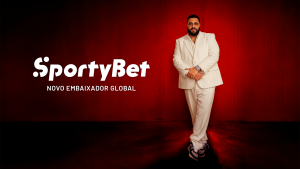
SportyBet anunció a DJ Khaled como su nuevo embajador global, reforzando su posicionamiento en la intersección entre deporte, música y cultura contemporánea.
Se une a un roster global que incluye a José Mourinho y Éder Militão, fortaleciendo la estrategia de la compañía de conectar con audiencias a través del entretenimiento.
La asociación se desplegará en mercados clave como Brasil, Estados Unidos, México y partes de África, apoyando la expansión de SportyBet como una plataforma centrada en la experiencia.
Según Elias Gallego, vicepresidente de Sporty Group, la colaboración refleja el enfoque de la empresa en asociarse con figuras culturalmente relevantes para conectar con audiencias diversas, especialmente en mercados como Brasil, donde el deporte y el estilo de vida están estrechamente vinculados.
Mayor apuesta por la música y el entretenimiento
El movimiento también señala un esfuerzo más amplio de Sporty Group por integrar la música en su ecosistema de entretenimiento.
A principios de este año, la compañía se asoció con Burna Boy en el proyecto “For Everybody”, combinando música, fútbol y cultura global.
En este contexto, la incorporación de DJ Khaled refuerza una estrategia centrada en el storytelling y el engagement de los fans, especialmente en regiones donde el deporte y la música están profundamente conectados.
Mentalidad global y evolución de marca
DJ Khaled destacó la visión compartida detrás de la asociación, enfatizando la mentalidad, la autenticidad y la conexión global con los fans.
El acuerdo refuerza la evolución de SportyBet más allá de las apuestas deportivas, posicionando la marca dentro de un ecosistema de entretenimiento más amplio.
En Brasil, se alinea con el crecimiento continuo de la compañía y su enfoque en ofrecer experiencias integradas que combinan contenido, cultura y engagement del usuario.
The post Brasil impulsa su agenda de integridad en un contexto de fuerte crecimiento del mercado appeared first on Americas iGaming & Sports Betting News.
Brazil’s regulated betting market continues to gain structure and momentum, as the country balances regulatory consolidation, integrity safeguards, and commercial growth.
Over the past week, key developments, from federal policy implementation to strategic partnerships and product innovation, highlight how the ecosystem is maturing ahead of major global sporting events.
Government launches national policy to combat match-fixing
A major regulatory milestone was reached with the creation of the National Policy for the Prevention and Combating of Sports Manipulation (PNPEMR). Established through a joint ordinance by the Ministries of Sports, Finance, and Justice, the policy introduces a comprehensive national framework designed to address integrity risks in sports.
The initiative is structured around four central pillars: regulation, prevention, monitoring and enforcement, aiming to protect the credibility and unpredictability of sporting competitions in Brazil.
The policy emphasizes interinstitutional cooperation, bringing together public authorities, sports organizations, betting operators and international bodies.
Among its key measures are:
- Standardization of reporting flows for suspicious betting activity
- Continuous education programs for athletes, referees and sports officials
- Protection mechanisms for whistleblowers
- Strengthening of criminal investigations targeting organized match-fixing networks
Under the framework, the Ministry of Sports will coordinate implementation, while the Ministry of Finance will oversee betting regulation and operator compliance. The Ministry of Justice and Public Security, alongside the Federal Police, will lead intelligence-sharing and enforcement efforts, particularly in cases with interstate or international scope. See DOU
A multi-stakeholder governance committee will be responsible for monitoring progress and proposing adjustments, ensuring that the policy evolves alongside the market.
This move reinforces Brazil’s intention to align regulatory oversight with global integrity standards, particularly relevant as the country prepares for high-volume betting scenarios during major international competitions.
Sportradar expands iGaming strategy with Playradar launch
On the corporate front, Sportradar announced the launch of Playradar, a new brand dedicated to its iGaming vertical, signaling a strategic shift toward more integrated and immersive betting experiences.
The new offering is built around hybrid gaming concepts, combining real-time and historical sports data with live streaming and casino content.
Among the key features is a 24/7 live experience hub, where users can engage simultaneously with sports events and interactive gaming formats.
The initiative will be led by Edo Haitin, a seasoned executive with over two decades of experience in live gaming and product development.
The company plans to roll out Playradar starting in 2026, initially targeting regulated markets in the UK, North America and Latin America.
According to CEO Carsten Koerl, the move represents a natural evolution of the company’s capabilities, leveraging its existing infrastructure in data, streaming and user behavior analytics to enhance engagement and monetization across the player lifecycle.
Haitin also emphasized the strategic vision behind the launch, highlighting the ability to combine technology and content in line with evolving market demands, particularly as operators look for differentiated and immersive user experiences.
Importantly, Playradar will operate exclusively in regulated environments, maintaining a strong focus on responsible gaming and integrity, aligning with broader industry and regulatory trends.
Playson strengthens Brazilian footprint through Betnacional partnership
Further reinforcing Brazil’s position as a high-growth market, Playson expanded its regional presence through a new partnership with Betnacional, a leading local operator owned by Flutter Entertainment.
The agreement will see a portfolio of Playson’s top-performing titles integrated into Betnacional’s platform, including 4 Pots Riches, Diamonds Power, and Sugar Teddy x1000, all recognized for their strong performance in regulated markets and engaging gameplay mechanics such as Hold and Win.
The partnership reflects a broader industry trend toward localization and mobile-first strategies, as operators seek to better align content with regional player preferences.
Cristhian Zito, Head of LatAm at Playson, highlighted the strategic importance of the deal:
“Partnering with Betnacional is an important milestone for us in Brazil. It is a highly respected local brand with a deep understanding of its audience, and we are confident our content will resonate strongly with its players.
This launch further strengthens our position in the market and reflects our commitment to delivering engaging, high-performing games to operators across Latin America.”
From the operator’s perspective, Frederico Cunha, Head of Commercial at Betnacional, also emphasized the value of the collaboration:
“We are delighted to welcome Playson’s portfolio to Betnacional. Their games are recognised for their quality, strong mechanics, and consistent performance, making them a valuable addition to our offering.
We look forward to working closely together and bringing an enhanced entertainment experience to our players.”
A market balancing integrity and growth
Taken together, this week’s developments illustrate a clear dual trajectory in Brazil’s betting sector: strengthening institutional and integrity frameworks while simultaneously attracting investment, innovation and international partnerships.
As regulatory structures become more sophisticated and collaboration between stakeholders deepens, Brazil is positioning itself not only as a compliant and secure market, but also as a central hub for growth in Latin America’s gaming industry.
SportyBet appoints DJ Khaled as global ambassador to expand connection between sports, culture and entertainment
SportyBet has announced DJ Khaled as its new global ambassador, strengthening its positioning at the intersection of sports, music, and contemporary culture.
He joins a global roster that includes José Mourinho and Éder Militão, reinforcing the company’s strategy of connecting with audiences through entertainment. The partnership will roll out across key markets such as Brazil, the United States, Mexico, and parts of Africa, supporting SportyBet’s expansion as an experience-driven platform.
According to Elias Gallego, Vice President of Sporty Group, the collaboration reflects the company’s focus on partnering with culturally relevant figures to engage diverse audiences, particularly in markets like Brazil where sports and lifestyle are closely linked.
Deeper push into music and entertainment
The move also signals a broader effort by Sporty Group to integrate music into its entertainment ecosystem. Earlier this year, the company partnered with Burna Boy on the “For Everybody” project, blending music, football, and global culture.
In this context, DJ Khaled’s appointment further strengthens a strategy centered on storytelling and fan engagement, especially in regions where sports and music are deeply connected.
Global mindset and brand evolution
DJ Khaled highlighted the shared vision behind the partnership, emphasizing mindset, authenticity, and global connection with fans.
The agreement reinforces SportyBet’s evolution beyond sports betting, positioning the brand within a broader entertainment ecosystem. In Brazil, it aligns with the company’s ongoing growth and its focus on delivering integrated experiences that combine content, culture, and user engagement.
The post Brazil advances integrity agenda amid strong market growth appeared first on Americas iGaming & Sports Betting News.


Soft2Bet, a leading iGaming turnkey solutions provider, recently brought together industry connections for an exclusive two-day golf and padel experience at the Gleneagles Hotel in Scotland. The event brought Soft2Bet’s friends and connections together to enjoy a relaxed day of golf and padel, meaningful conversations, and shared moments in an inspiring setting, celebrating the spirit of connection and community that defines the company’s approach.
Set against the backdrop of one of Scotland’s best-known sporting estates, the day paired competitive play with the camaraderie and shared spirit that are such a valued part of the game. Attendees enjoyed access to Gleneagles’ most exclusive Ryder Cup & Solheim courses, where the relaxed setting encouraged genuine connection and reflected the supportive atmosphere that made the gathering especially memorable.
Gleneagles was a fitting venue for the occasion. With more than a century of golfing history, three championship courses and a reputation built on world-class hospitality, it remains one of Scotland’s standout golf destinations. Its PGA Centenary Course hosted the 2014 Ryder Cup and the 2019 Solheim Cup, making Gleneagles the only golfing destination in Europe to have staged both events.
The event reflects Soft2Bet’s belief that strong connections are built through shared goals, trust and collaboration. Creating space for in-person connection allows the company to deepen those relationships and support long-term success.
Harrison Barrett, VP of Business Development at Soft2Bet, commented: “Bringing the industry together in a setting like Gleneagles allows us to go beyond day-to-day operations and focus on what truly drives success, while playing golf and padel. Events like this are an opportunity to align on vision, exchange ideas and celebrate the momentum.”
Stuart Trigwell, Director of Business Development at Play’n GO said: “The time spent at Gleneagles, enjoying the incredible courses and engaging in genuine, strategic conversations, was an absolute highlight. It is events like these that reinforce the trust and collaborative spirit at the core of our relations.”
The gathering reflects Soft2Bet’s wider approach to the iGaming community engagement, creating opportunities for stronger collaboration and supporting growth across key markets.
The post Soft2Bet Gathering: An Elite Golf & Padel Experience appeared first on Eastern European Gaming | Global iGaming & Tech Intelligence Hub.

-

 BIS SIGMA SOUTH AMERICA 20267 days ago
VeliTech makes its Brazil debut at BiS SiGMA South America 2026
-
Canada7 days ago
Peter & Sons Goes Live in Ontario with Ellipse Entertainment
-
Austria7 days ago
Wazdan strengthens European foothold with Austrian market entry via win2day
-
AMUSEBOX7 days ago
Casino Iveria Tbilisi Installs Amusnet’s Type S 50 F Slot Cabinets at its Gaming Floor
-
Canada7 days ago
Peter & Sons Goes Live in Ontario with Ellipse Entertainment
-
ELA Games7 days ago
Endless Super Free Spins in ELA’s Spring Release, Golden Bunny
-
eSports7 days ago
Esports Nations Cup 2026 Awards Official Partner Status Across 100+ Nations to Build the Future of Nation-Based Esports
-
Africa4 days ago
Virgin Bet goes live in South Africa