Betsson
Betsson named as Exclusive Sportsbook Partner of CONMEBOL Copa América Femenina 2022

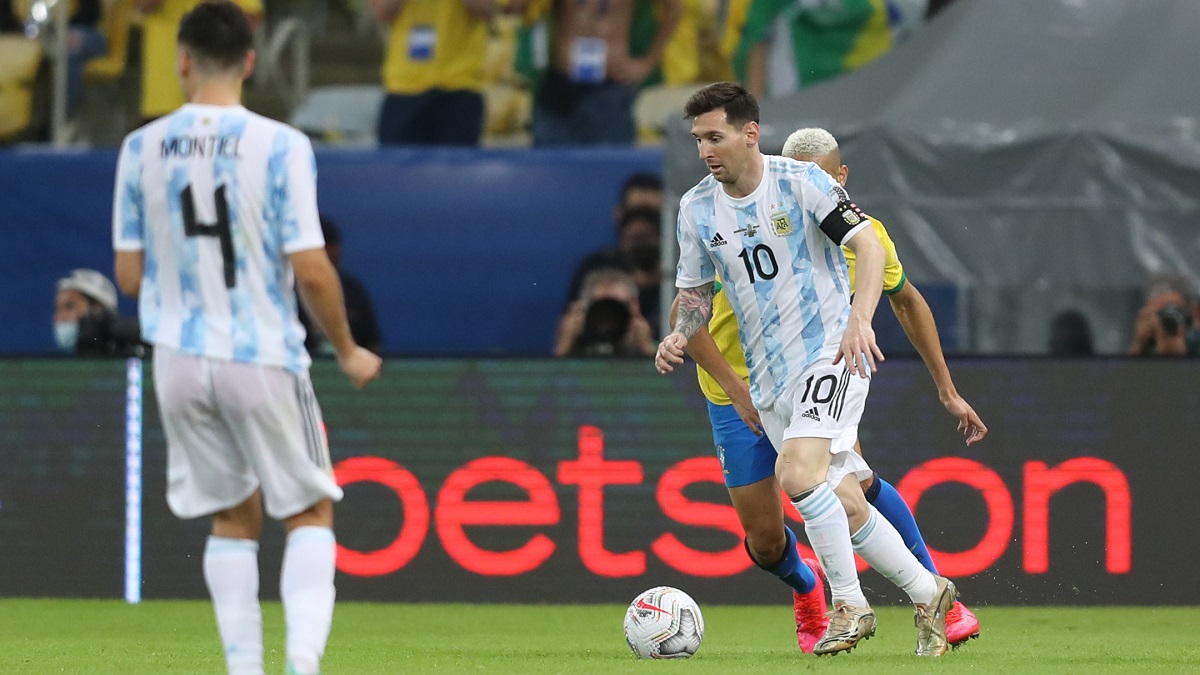
Betsson, the leading online sportsbook and casino, has entered into a partnership agreement with CONMEBOL to become the Exclusive Sportsbook Partner of CONMEBOL Copa América Femenina 2022.
Hosted by Colombia, the women’s CONMEBOL Copa América will be held between the 8th and 30th July 2022 and will see a total of 25 matches played in the Colombian cities of Cali, Armenia, and Bucaramanga.
Betsson’s presence in Latin America has grown exponentially over the past years, driven by its market-leading customer offerings in the region. Betsson has also invested in its sportsbook infrastructure to cater for Latin America and continue to optimize its supply to further improve player experience. Commenting about this partnership, Betsson Group’s CEO, Jesper Svensson said, “The rationale behind sponsoring one of the biggest moments of the world’s sports calendar in 2022 is very simple – Betsson’s commitment to sport and its support for gender equality.”
Betsson, which just last year was the Official Regional Sponsor for the men’s CONMEBOL Copa América 2021, will activate branding and promotional activities in stadiums, gets several media exposure opportunities, is able to use the championship’s assets and footage in its marketing and content, be visible on media backdrops, and get activations across CONMEBOL’s online and mobile channels. Betsson will also be the “Official Lineups” content sponsor.
“Besides the exciting potential of further raising Betsson’s brand awareness in the region, we are extremely proud to be partnering with CONMEBOL as they are exceptionally committed with improving women’s football in South America. They are members of the UN’s Global Pact Target Gender Equality program and are the only confederation that requires men’s clubs participating in its tournaments to have two women’s football teams, at both youth and senior levels. Moreover, CONMEBOL’s women representation is inspiring with some 42% of its officials, 55% of its managers and 18% of its directors being female. At Betsson we have similar representation with approx. 40% of our workforce identifying as female,” concluded Jesper Svensson.
“CONMEBOL values the support of Betsson for one of its most important tournaments, the CONMEBOL Copa America Femenina 2022. This partnership comes from a shared vision between CONMEBOL and this prestigious company of boosting women’s football across South America with a strong participation of girls, young adults and women” – Juan Emilio Roa, Commercial and Marketing Director from CONMEBOL said.
LatAm’s passion for women’s football is constantly growing. Besides being the best performing continent in the 2019 World Cup, LatAm saw the highest growth in TV audience (+560% from 2015 to 2019) and CONMEBOL Copa América Femenina 2018 in Chile reached a record audience of more than 20 million viewers.
By being the Exclusive Sportsbook Partner of CONMEBOL Copa América Femenina 2022, Betsson guarantees a fun, entertaining and safe betting experience for all its customers. The ten participating South American countries in CONMEBOL Copa América Femenina 2022 are Argentina, Bolivia, Brazil, Colombia, Chile, Ecuador, Paraguay, Peru, Uruguay and Venezuela. From the championship, the top three teams will qualify for the 2023 FIFA Women’s World Cup in Australia and New Zealand. The fourth and the fifth teams will dispute qualifying matches to World Cup against national teams from other continental confederations. The winner of 2002 Copa America will also be qualified to 2024 Paris Olympics and the runner-up will dispute a qualifying play-off to the Olympic competition in France.
Powered by WPeMatico

REEVO has announced that its games are now live with Betsson in the Paraguay market, marking another exciting milestone in the companies’ growing global partnership. This launch continues REEVO’s rollout across Betsson’s international network and further strengthens REEVO’s presence in Latin America.
Through this launch, REEVO’s in-house games are now available to Betsson players in Paraguay, bringing fresh, engaging, and high-quality entertainment experiences to one of the region’s growing markets.
This rollout represents another successful step in REEVO’s expansion strategy, as the company continues to bring its original content to more players through trusted operator partnerships. By going live with Betsson Paraguay, REEVO reinforces its commitment to delivering games that combine strong mechanics, engaging themes, and reliable performance.
For REEVO, the Paraguay launch is another important achievement in its international growth journey. The company continues to expand its footprint by working with leading operators that share its focus on quality, innovation, and player engagement.
Karl Grech, Head of Business Development at REEVO, said: “Going live with Betsson in Paraguay is another exciting milestone in our growing partnership and a strong reflection of REEVO’s continued international expansion. Paraguay represents an important opportunity for us as we bring our in-house games to new audiences across Latin America. We are proud to continue this journey with Betsson and to deliver content that is built to engage players and support operator growth.”
Maximiliano Bellio, Managing Director Argentina & Paraguay at Betsson, said: “We are pleased to extend our successful partnership with REEVO into Paraguay. Following strong collaborations across multiple Betsson markets, this expansion reflects our confidence in REEVO’s content portfolio and integration capabilities. As Paraguay continues to be a strategic market for Betsson in Latin America, this partnership further strengthens our ability to deliver a premium entertainment experience to our customers.”
The Paraguay rollout further reinforces REEVO’s momentum across Latin America and highlights the company’s continued focus on expanding through strong operator partnerships.
The post REEVO Goes Live with Betsson in Paraguay appeared first on Americas iGaming & Sports Betting News.
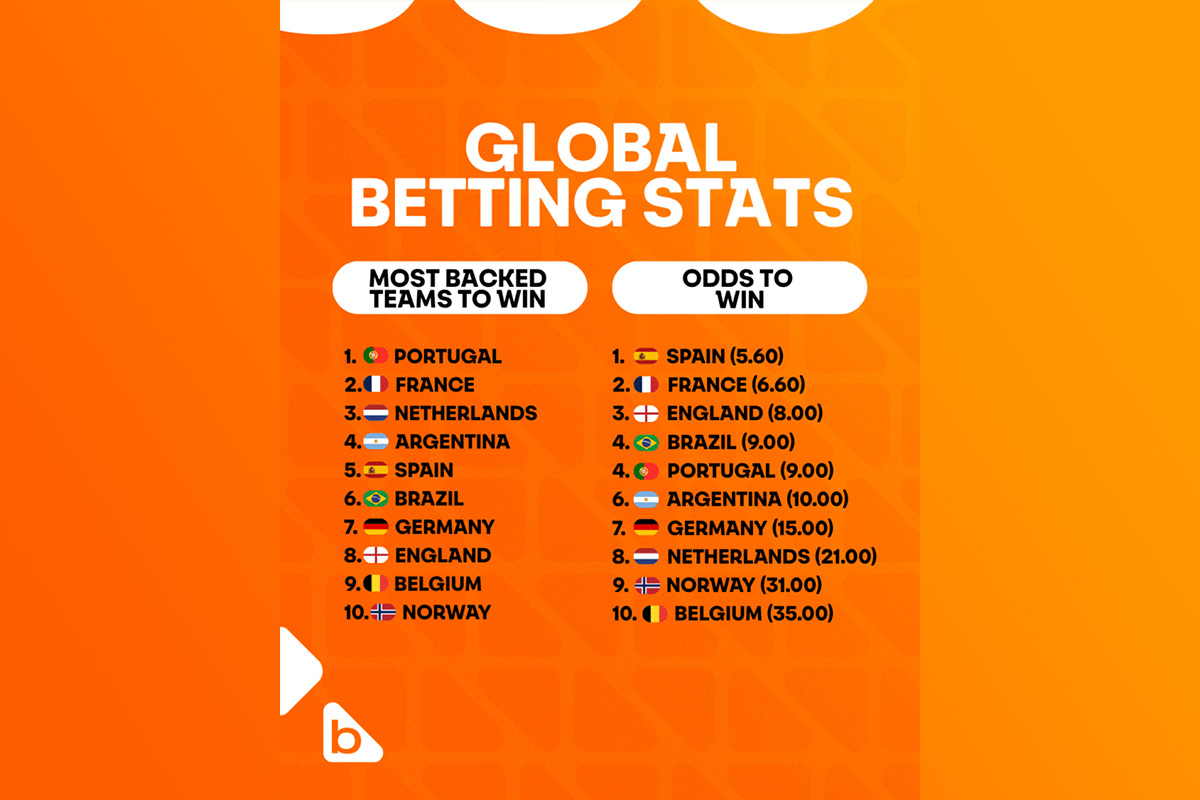
As the World Cup has begun, Betsson’s international betting data reveals a clear divergence between odds favourites and bettor behaviour. While the odds position Spain as the most likely winner, global betting activity tells a different story: Portugal is the most backed nation across Betsson’s 25 markets. Spain, despite having the lowest odds, ranks only fifth among bettors.
As the tournament kicks off, the familiar question resurfaces: who predicts tournaments most accurately — octopuses, banks, or betting companies? Regardless of where you stand, betting odds are ultimately less about predicting the winner and more about aggregating probability and market sentiment.
This year’s tournament will be the largest World Cup ever, featuring 48 teams, a halftime show and a return to a summer schedule for much of the world.
Ahead of the kickoff, Betsson has analysed odds movements and betting patterns from Europe to Latin America. According to current odds, Spain enters the competition as the favourite, followed by France and England. However, betting behaviour paints a different picture. Based on Betsson’s global betting volume, Portugal is the most backed team to win the tournament, ahead of France, the Netherlands and Argentina. Spain, despite being the odds favourite, ranks fifth among bettors.
“With a few days still to go, Portugal is currently the team we’ve received the most bets on. Higher odds can naturally draw attention, and our players clearly see Portugal as having a strong chance — and consider it a very attractive bet,” said Robin Olenius, Head of PR Betsson.
In the top scorer market, the alignment between odds and betting activity is stronger. Kylian Mbappé is both the favourite and the most backed player, followed by Harry Kane.
Both Mbappé and Lionel Messi also have the chance to challenge the all‑time World Cup scoring record, currently held by Germany’s Miroslav Klose with 16 goals in 24 matches (2002–2014). While Mbappé tops the odds at 7.00 and Messi has the third‑lowest odds to win the Golden Boot, betting patterns tell a different story — Messi is only the tenth most backed player.
Odds to Win Word cup 2026 (Betsson)
Spain: 5.60
France: 6.60
England: 8.00
Brazil: 9.00
Portugal: 9.00
Argentina: 10.00
Germany: 15.00
Netherlands: 21.00
Norway: 31.00
Belgium: 35.00
Most Backed Teams (Global Betting Stats, Betsson)
Portugal
France
Netherlands
Argentina
Spain
Brazil
Germany
England
Belgium
Norway
Most Backed Top Scorers
Kylian Mbappé
Harry Kane
Mikel Oyarzabal
Erling Haaland
Cristiano Ronaldo
Vinícius Júnior
Raphinha
Lamine Yamal
Ousmane Dembélé
Lionel Messi
The post Betsson Data: Portugal is Most Backed Team for World Cup appeared first on EE Gaming | Global iGaming & Tech Intelligence Hub.
Betsson
What the Betsson/Inter Milan case reveals about cross-border gambling branding when two restrictive regimes collide

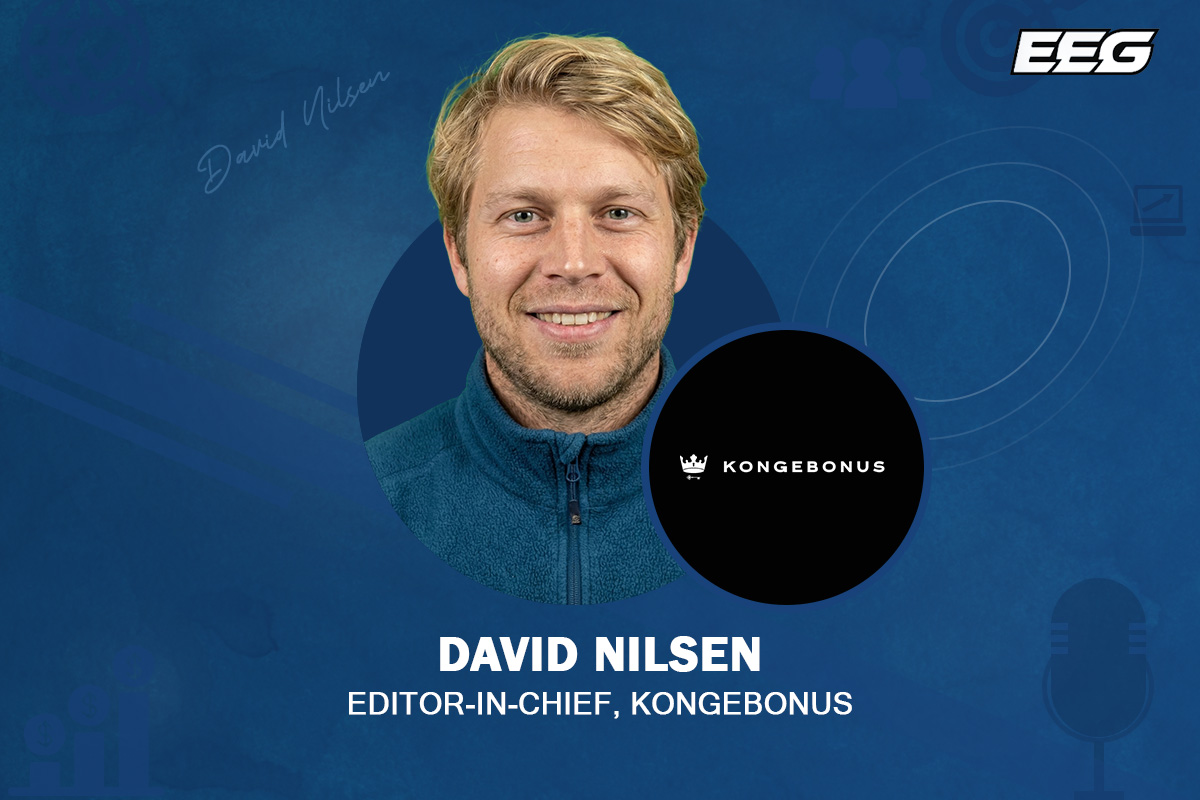
By David Nilsen, Editor-in-Chief, Kongebonus
European football rarely stays confined within national borders. Teams compete internationally, brands operate globally and sponsorship deals are designed for audiences far beyond a single market. Yet gambling regulation remains firmly national. When these two realities meet, tensions are almost inevitable.
That tension was visible during the UEFA Champions League fixture between Inter Milan and Bodø/Glimt at the Aspmyra Stadion in February, when the Italian club took to the pitch wearing Betsson.sport on its shirts. The Norwegian Gambling Authority later confirmed it had opened a case following the match, after concerns were raised that the branding could violate Norway’s strict marketing rules.
At first glance, the situation appears straightforward. Norway prohibits gambling marketing from any operator other than the state-owned Norsk Tipping and Norsk Rikstoto. Under this framework, foreign operators are not allowed to advertise or actively target Norwegian players. However, the details of this particular case are more complex.
The logo that appeared on Inter’s shirt was not a betting website, but Betsson.sport, a sports-focused platform linked to the company’s sponsorship activity in Italy. The site itself does not offer deposits or betting functionality. Instead, it operates as a sports content and partnership platform connected to the club’s commercial agreements.
This distinction matters because the regulatory context in Italy is very different from Norway’s. In 2018, Italy introduced the Decreto Dignità, one of Europe’s strictest gambling advertising bans. The legislation effectively eliminated traditional betting sponsorships across media and sport, even for licensed operators.
As a result, many brands have had to rethink how they maintain visibility in sports environments. Alternative branding, content platforms and sports-focused domains have become one of the few remaining routes available in a market where direct betting advertising is largely prohibited.
Seen through that lens, Betsson.sport is less an attempt to bypass regulation and more an example of how companies adapt to it.
When Inter Milan travelled to northern Norway, however, that Italian solution entered a completely different regulatory environment. Norway’s restrictions are not based on a broad ban on gambling advertising. Instead, they are built around the protection of a state monopoly. Only two operators are permitted to market gambling services domestically, and enforcement tools such as payment blocking and website restrictions are used to limit access to foreign operators.
The key question raised by the Inter match therefore becomes one of interpretation rather than simple legality. Does the presence of a brand associated with gambling, even when it links to a non-betting platform, constitute marketing towards Norwegian consumers?
It is a question regulators across Europe are likely to face more often as global sport continues to expand and sponsorship models become more complex.
Another factor worth noting is accessibility. Betsson does not currently operate in Norway, and access to its gambling platforms has been blocked for Norwegian users. This raises the issue of whether brand visibility alone, without a functional gambling product available to local players, should be considered the same as active marketing.
From a regulatory perspective, authorities may still decide that the brand association itself falls under advertising restrictions. That interpretation would be consistent with Norway’s broader efforts to protect the monopoly model and prevent indirect promotion of unlicensed operators.
At the same time, cases like this highlight the practical challenges regulators face when global sports competitions cross with national advertising rules. European tournaments bring together teams, sponsors and audiences from multiple jurisdictions, each operating under different regulatory philosophies.
Italy, for example, has taken a sweeping approach by banning gambling advertising across the board. Norway, meanwhile, has focused on maintaining exclusive rights for state operators while limiting the presence of international competitors.
Both systems are strict in their own way, but they are built on different principles.
When a club like Inter Milan competes internationally, the sponsorship arrangements negotiated within one regulatory system inevitably travel into another. This creates situations where branding designed to comply with one set of rules may still raise questions under another.
For players and fans, these nuances are rarely visible. What they see is simply a football shirt and a brand name. But for regulators, operators and industry observers, the case illustrates how complex the global gambling landscape has become.
None of this changes the underlying reality that gambling advertising remains one of the most tightly controlled areas of the digital economy. Governments are increasingly focused on consumer protection, and enforcement tools are becoming more sophisticated each year.
But as the Inter–Betsson example demonstrates, the real challenge lies not only in writing regulations but in applying them consistently in a world where sport, media and digital platforms operate across borders.
For the industry, it is another reminder that regulatory debates are rarely black and white. In many cases, they sit somewhere in between legal interpretation, practical enforcement and the global nature of modern sport.
The case opened by the Norwegian Gambling Authority and its conclusions may help clarify how situations like this should be interpreted going forward.
But as long as football continues to be played across borders, questions like these are unlikely to disappear any time soon.
The post What the Betsson/Inter Milan case reveals about cross-border gambling branding when two restrictive regimes collide appeared first on Eastern European Gaming | Global iGaming & Tech Intelligence Hub.

-

 10bet5 days ago
Ellis Park Stadium signs five-year naming rights deal with 10bet
-
central asia5 days ago
Groove confirms attendance at SBC Summit Tbilisi 2026
-
Bucharest4 days ago
Eeze opens 1,200 sqm Bucharest hub for technical teams
-
API integration4 days ago
Belatra signs cooperation deal to distribute slots via VeliGames
-
AB Trav och Galopp3 days ago
BetMakers Technology Group Selected to Distribute ATG Horse Racing Content Across Australia and New Zealand
-
affiliate marketing5 days ago
SEOBROTHERS’ Aleksandra Drigo flags higher barriers for affiliates in regulated Alberta
-
Big Bass Blast5 days ago
Pragmatic Play adds Big Bass Blast to Big Bass slot series
-
BETANO4 days ago
Play’n GO strengthens Latin American presence with Betano Colombia launch