BCLC
New Approaches to Mitigating High-Risk Play: Responsible Marketing


Guardrails are often put in place to keep people within safe boundaries and to prevent harm. Can the notion of player-health ‘guardrails’ help evolve how gambling products are marketed to mitigate high-risk play and improve player-health outcomes?
Three panellists recently joined Dr. Jamie Wiebe, BCLC’s Director of Player Health, to examine this question during BCLC’s New Horizons in Responsible Gambling pre-conference session, Responsible Marketing: Establishing “Guardrails” for Safer Play.
Panellist Floris van Driel, Nederlandse Loterij Responsible Gaming Specialist for Sports Betting and Casino, shared Nederlandse Loterij’s approach to integrating responsible marketing into online gambling, which became legal in the Netherlands on October 1, 2021.
The Nederlandse Loterij team scores and advertises each game by risk level. Games rated with a very high-risk score are not promoted at all in television or social media advertising and similarly, high-risk players are excluded from receiving any marketing materials. Additionally, van Driel’s team looks at player behaviour and classifies players into different risk categories to better understand how to market games to each segmented group.
“We are looking at high-risk players, and the types of games they prefer, to understand if we should be more restrained when promoting these types of games,” van Driel explained during the New Horizons session. “It’s really about using specific customer data to customize the campaigns to mitigate risk along with utilizing marketing tools to stimulate people to moderate their gameplay.”
Part of Nederlandse Loterij’s new marketing strategy entails reframing the tone of their player health advertising, reflecting a more fun, light-hearted approach. Its recent TOTO campaign promoting responsible participation in online sports betting was recognized as the Safer Gambling Campaign of the Year at the 2021 Global Regulatory Awards.
“We are finding that keeping it lighter and more fun ties in better with the tone of the other communication that we give to the player. The intention is to make it easier for players to accept the message and to get player health behaviour normalized.” The campaign resulted in a very positive behavioural change: 82 per cent of players thought that the tips were very useful, and 44 per cent considered changing their behaviour.
Ryan Persaud, Director of Insights and Player Experience at BCLC outlined the organization’s integration of marketing guardrails operationally. In 2021, BCLC completed a study whereby it included Problem Gambling Severity Index (PGSI) scores with online customers, connecting survey results with actual behaviour.
“It allowed us to understand: How do [players’] personal stated risks relate to their behaviour? We used that information to help us craft what we are calling…high-risk indicators,” said Persaud.
BCLC is building on these findings to develop high-risk indicators centred around variables such as deviation, deposits, wagering, time and player-health risk alerts.
“At BCLC we are focusing on the player side of assessing risk and using high-risk indicators to dig into the behavioural components as opposed to just the product risks,” Persaud explained. “This player-health data is being used to better inform the conversations we’re having around marketing.”
Finally, Richard Wood, President, GamRes Limited, outlined during the discussion that in order to responsibly market a product, it’s important to identify and understand the impacts and unintended potential risks for each player. Wood and the GamRes team created Gamgard, a game risk-assessment product used to help prevent high-risk play, while also supporting operators in their end game: to deliver a fun, interesting product.
“With Gamgard, jurisdictions are able to identify high-risk elements and then choose to either not advertise the game at all to high-risk players or to use the data to integrate player health guardrails into their marketing approaches,” Wood explained.
Wiebe concluded the session by asking each panellist to look forward 10 years and share their perspective on gambling marketing:
“Focusing on integrating more fun and entertaining player-health messaging into the marketing experience will help to mitigate risk,” Wood said. “We’ve found that the most responsible players are the most satisfied players… so player health and marketing aren’t polar opposites; at the end of the day, they have a similar goal of ensuring that players have a good healthy experience.”
Hosted by BCLC, the full New Horizons in Responsible Gambling Conference is celebrating 10 years of industry leadership and bringing together hundreds of industry-leading researchers, policymakers and representatives from around the world to tackle some of the most challenging topics related to gambling and player health. The conference will occur virtually in early March 2022.
Powered by WPeMatico

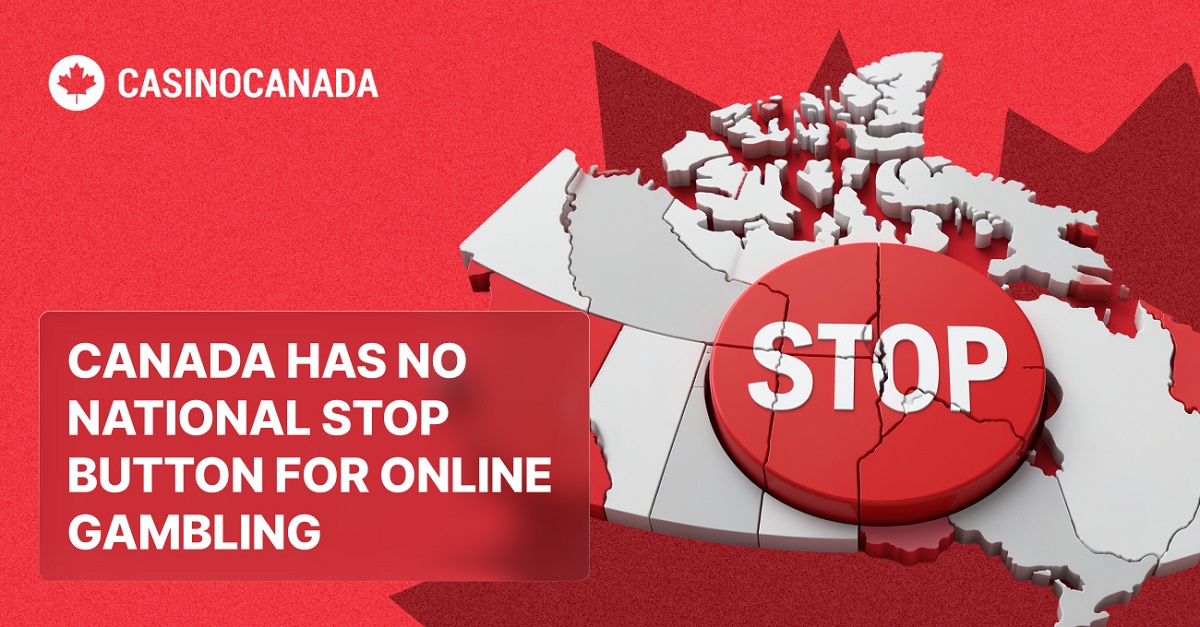
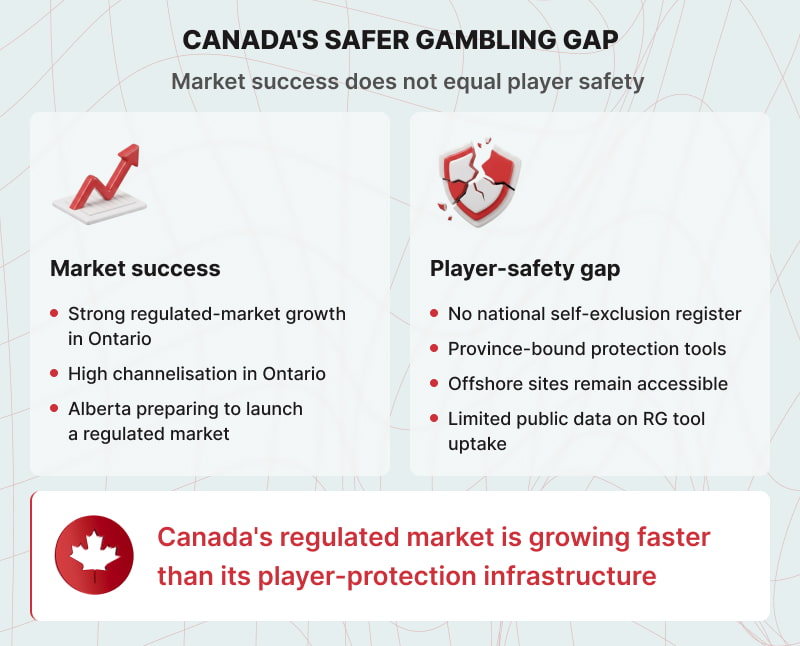
Canada’s online gambling market is the third-largest in the world. It generated approximately CAD 13.15 billion in 2025, growing faster than virtually any other country. By the metrics the industry tends to reach for, it is a success story.
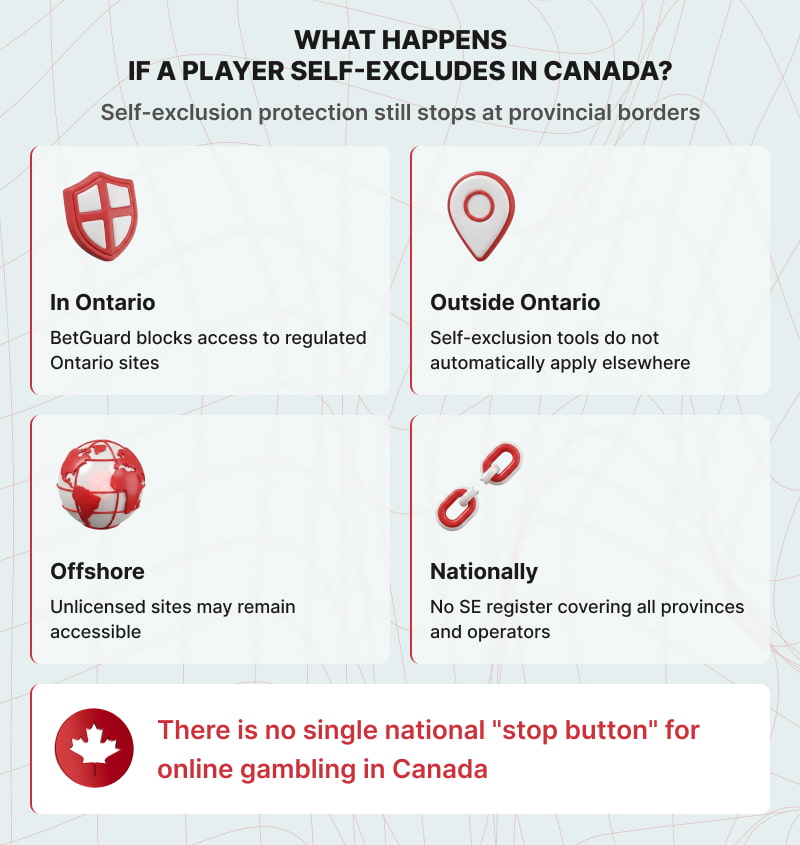
Unfortunately, where many of the metrics that matter for player protection are concerned, the story is different. Unlike several other countries, Canada has no national self-exclusion register and no national licensing framework.
While Ontario is regulated, and there is a lot of excitement around Alberta opening its regulated market this summer, the overwhelming majority of online gambling in the country still happens on unlicensed platforms.
An Ontario or Alberta player who self-excludes still can gamble through offshore sites or outside the province. Canada has no single stop button.
Key Findings
- Canada has no national self-exclusion register, no national licensing framework, and the last national survey predates the legalisation of single-event sports betting.
- Offshore leakage outside Ontario ranges from 49% to 93% by province. The offshore market grew at 40% year-on-year in 2025.
- Ontario has a 91.1% channelisation rate, but 20.2% of players also play on unregulated sites.
- Player awareness of RG tools in Ontario stands at 65.4%, according to iGO’s own Leger survey baseline. No province publishes data on actual tool uptake rates.
- A CMAJ study found gambling helpline contacts in Ontario rose 198% after market privatisation, concentrated almost entirely in men aged 15 to 44.
A Fragmented System
Canada’s gambling framework is a product of its constitution. Sections 91 and 92 of the Constitution Act distribute authority to the provinces, and Section 207 of the Criminal Code permits them to conduct and manage lottery schemes within their own borders. A 1985 federal-provincial agreement completed the transfer, leaving Ottawa without a gambling regulator and the country without national standards of any kind.
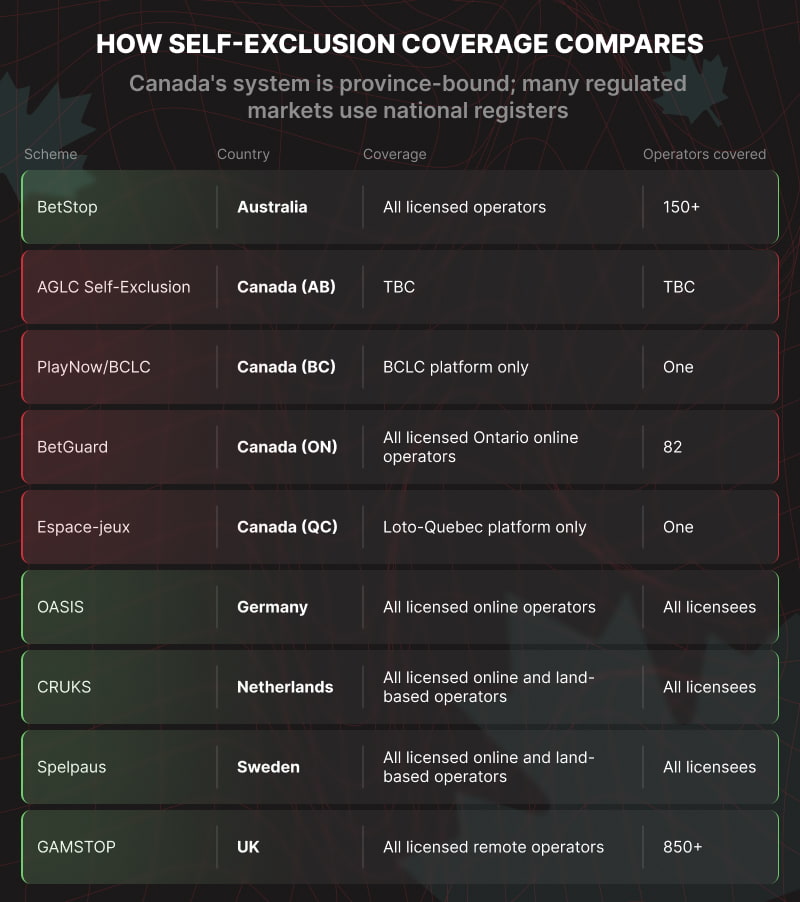
The result is ten parallel regimes, all operating at different standards. Ontario operates an open market, and Alberta is building a similar structure. Every other province runs a government monopoly: BCLC’s PlayNow, Loto-Quebec’s Espace-jeux, and the Atlantic Lottery Corporation.
The issue is that there is no connection between these. A responsible gambling tool in one province has no power in another. A self-exclusion registered in Ontario does not block a player from gambling elsewhere.
Changes do not appear to be on the horizon, with no federal legislation on those issues currently before Parliament.
The Offshore Risks
The Blask 2025 USA and Canada iGaming Landscape Report highlights the scale of this problem. Saskatchewan carries an estimated 93% offshore leakage rate. Alberta and Manitoba sit at 88%. Quebec, where Loto-Quebec has operated since 2010, holds only around 17% of a market estimated at CAD 2.3 billion.
Even British Columbia, with years of PlayNow operations behind it, retains approximately 49-51% of its online market, according to Blask’s reports. Offshore platforms grew at 40% year-on-year in 2025, nearly double the 23% growth of domestic licensed operators.
Ontario’s Success and Limits
Ontario deserves genuine credit for its current position, and it is often hailed as an example of a strong regulatory market.
The regulated market generated CAD 82.7 billion in wagers and CAD 2.9 billion in gross gaming revenue in FY2024/25. Channelisation, measured by the share of online gamblers using regulated platforms, reached 83.7% in early 2025 and 91.1% on the most recent IPSOS survey.
However, the Ontario story is often viewed as the national story, and this is not the case. Even within the province, 20.2% of players using regulated platforms also gamble on unregulated sites.
BetGuard, launched in May 2026, finally delivered the centralised self-exclusion system that the market should have had from day one, allowing a player to exclude from all regulated platforms at once.
The early take-up numbers show more than 500 people registered for BetGuard in its first two weeks. That is not a negligible start, and iGaming Ontario has stated it will measure the platform’s success by renewal rates, term lengths selected, and connections to addiction support services.
However, Ontario’s market has 1.235 million active player accounts. The gap between the scale of the regulated market and the early uptake of the tool is wide.
The deeper problem is that BetGuard is province-bound. A player who is excluded in Ontario is not blocked elsewhere.
Many other countries have solved this problem. GAMSTOP in the UK covers all licensed remote operators under a single registration. Spelpaus in Sweden does the same across online and land-based channels. BetStop in Australia covers approximately 150 licensed wagering providers with a five-minute sign-up.
Canada has no equivalent, and there is currently no route to making one.
What the Evidence Says
The academic case for nationally coordinated self-exclusion is strong. A comparative review of self-exclusion programmes across multiple jurisdictions found that the reach and enforcement of any scheme vary directly with how completely it covers the market.
A review of BCLC’s voluntary self-exclusion programme found that 97% of participants who gambled while excluded did so at venues not covered by their agreement. The exclusion worked where it applied, but not beyond that.
The tool-uptake literature is equally sobering. Studies analysing voluntary deposit-limit setting across large player populations find uptake rates in the low single digits over three-month periods. Ontario does not publish equivalent figures, but iGO’s own Leger survey in 2024 found that only 65.4% of regulated players were aware of available RG tools.
The gap between knowing a tool exists and using it is consistently wide, and no regulator publishes data on actual tool engagement rates. That absence is itself a significant accountability problem.
Where public health data does exist, it is alarming. British Columbia’s 2025/26 prevalence study found that 35% of past-year online gamblers showed moderate or high-risk behaviour.
The most striking recent evidence comes from a January 2026 CMAJ study analysing contacts with Ontario’s ConnexOntario helpline over thirteen years.
The study found that gambling-related contacts increased from a monthly rate of 13.4 per million before online gambling launched, to 17.0 after PlayOLG’s introduction, to 26.2 following the market opening in April 2022.
The increases occurred almost exclusively in adolescent boys and men aged 15 to 44, with the 15-to-24 age group estimated to have seen contacts rise by 337.8%.
A regulated market that generates record-breaking wagers and a near-200% increase in gambling-related helpline contacts simultaneously is simply demonstrating that market growth and player protection are not the same thing.
The Future
Alberta’s launch will introduce centralised self-exclusion from day one, requiring all registered operators to integrate with AGLC’s self-exclusion programme as a condition of registration.
This is a huge step in the right direction, but, like BetGuard, it will still be province-bound.
The case for a shared register is strong. Licensed operators are also competing with offshore threats. A functioning national self-exclusion infrastructure, combined with the channelisation benefits that a well-regulated market delivers, serves their commercial interests as directly as it serves players’ welfare.
If Canada is going to solve its responsible gambling issues, it needs to admit that the fragmented framework has shortcomings in customer care and stop using Ontario’s success as a stand-in for the country as a whole.
The post Canada’s Safer Gambling Gap: Why Market Success Doesn’t Always Equal Player Safety appeared first on Americas iGaming & Sports Betting News.
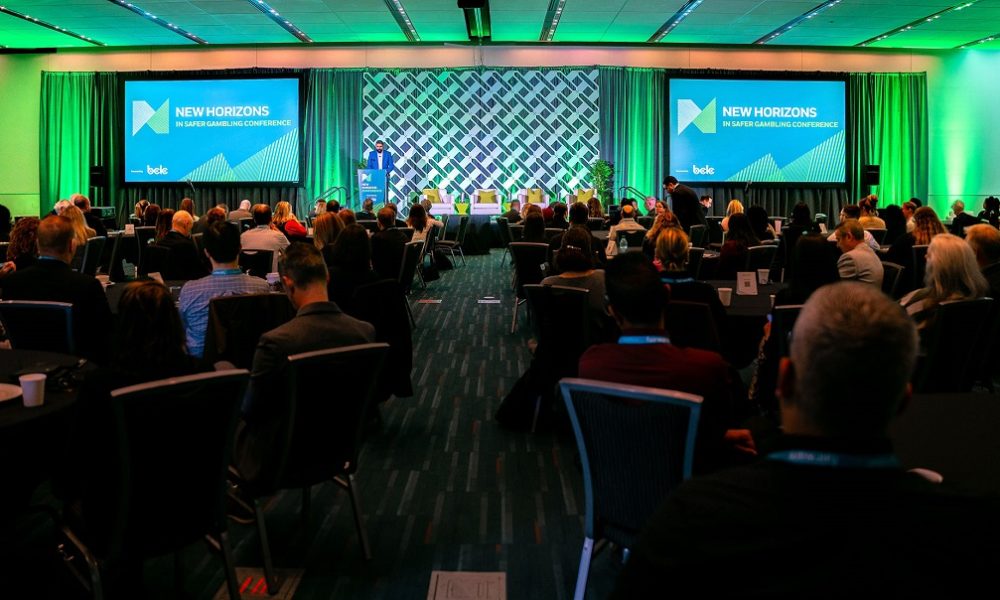
BCLC is pleased to announce the return of the New Horizons in Safer Gambling Conference, taking place November 2–4, 2026, at the JW Marriott Parq Vancouver.
This global event brings leading voices in research, policy and industry together to explore innovative approaches to safer gambling. Attendees can expect two days of forward-thinking dialogue, evidence-based insights and collaborative solutions to help shape the future of player health.
Sponsorship Opportunities Now Available
New to the 2026 conference, BCLC is excited to offer sponsorship opportunities to organizations that share BCLC’s passion for safer gambling. Benefits of sponsoring New Horizons 2026 include industry visibility, leadership recognition and meaningful engagement with a global audience. To learn more about sponsorship, please e-mail [email protected].
Registration and program details will be released later this fall.
The post Save the Date: BCLC’s New Horizons in Safer Gambling Conference Returns November 2026 appeared first on Gaming and Gambling Industry in the Americas.
BCLC
Vancouver Resident Purchased Winning $40 Million Lotto Max Ticket While Quenching Sparkling Water Craving

Phuc Duc (Daniel) Chau loves the Bubly brand of sparkling water and stopped in a convenience store to purchase a can. Chau likes to buy lottery tickets based on a gut feeling, and due to the employee’s bubbly nature while he purchased his Bubly, Chau also purchased a Lotto Max ticket for the May 23, 2025 draw.
It was this ticket that ended up scoring Chau a whopping $40-million jackpot.
“I was at work when I found out,” recalled Chau of the moment he realized he won. “I was going through my bag to find a cough drop, but I saw that I had two lottery tickets in my bag and decided to scan the tickets, but I needed to update the [BCLC Lotto!] app first. The first ticket I didn’t win anything, but the second said $40 million. I have never seen that many zeroes in my life, ever. I dropped my phone and then called BCLC right away!”
At the time of the prize claim, the Vancouver resident hadn’t yet shared the news of his win.
“My partner doesn’t know yet! I want to share the news with them in a special way.”
Chau shared that his dream has always been to travel the world. “There are so many places I want to go to, so I haven’t fully decided!”
When asked if he will quit his job, he said, “I haven’t decided, but I want to continue to support my community in a different way.”
On how it feels to be a multimillionaire?
“It means a lot to me. It opens up an opportunity for me to give back to my family, community and the world all around me. It’s not meaningful unless you can share this with those who need it.”
Chau purchased the winning ticket at the 7-Eleven on Imperial Street and Boundary Road in Burnaby.
So far in 2025, B.C. lottery players have redeemed more than $146 million from Lotto Max. Lotto Max is a nationwide lottery game drawn on Tuesdays and Fridays after 7:30 p.m. (PST).
Players can purchase tickets at lottery retailers or at PlayNow.com. Winning numbers and group release forms can be found online at www.bclc.com. Players can check their lottery tickets anytime, anywhere on iOS and Android devices.
BCLC offers socially responsible gambling entertainment while generating income to benefit all British Columbians. Players can visit PlayNow.com to learn how to set time and money limits.
The post Vancouver Resident Purchased Winning $40 Million Lotto Max Ticket While Quenching Sparkling Water Craving appeared first on Gaming and Gambling Industry in the Americas.

-

 Latest News7 days ago
N1 Partners at iGB L!VE 2026: Bringing Together Affiliates, Art and Innovation
-
Affiliate Industry7 days ago
Hub Affiliations Triumphs at the iGB Affiliate Awards 2026: Winner of Programme/Network Campaign of the Year
-
Austria7 days ago
Austrian Brand Value Study: NOVOMATIC Defends Top Ranking
-
Betsson CEO Pontus Lindwall7 days ago
Gaming in the Nordics launch event sets annual Copenhagen conference from 2027
-
Amusnet7 days ago
Amusnet Releases its Latest Video Slot “Golden Snake”
-
Africa7 days ago
PopOK Gaming sponsors Botswana’s TT Cup Challenge horse racing event
-
Azerbaijani Parliament7 days ago
Azerbaijan to Impose Tougher Penalties for Illegal Online Gambling
-
Amusnet7 days ago
Weekend Reels | Week 27: Slot Drops & Trends