Canada
Sports Betting Set For Explosive Growth in 2021: CEO’s of MGM Resorts, FansUnite, fuboTV, and DraftKings Share Outlook

Wall Street Reporter, the trusted name in financial news since 1843, has published reports on the latest comments and insights from leaders at: MGM Resorts International, FansUnite, fuboTV, and DraftKings.
Wall Street Reporter highlights the latest comments from industry thought leaders:
MGM Resorts International (NYSE: MGM) CEO, Bill Hornbuckle: “BetMGM emerging as long-term leader sports betting and iGaming”
“…The sports betting and iGaming market is one of the largest and most exciting growth opportunities in the U.S.A. today, and BetMGM is emerging as a long-term leader. BetMGM began 2020 in just 3 markets and has ended the year with 10. It is now currently live in 12 states, and we expect to be in 20 states by the end of 2021 with access to approximately 40% of the U.S. adult population. As each state rolls out, MGM is securing a leading market share position. In the fourth quarter, BetMGM’s market share was 17% in its retail and online markets and 19% if you exclude Pennsylvania, which were only open for part of December. This is a testament to BetMGM’s successful execution and strong management teams as it continues to enter new states on day one….BetMGM’s key competitive advantage is its ability to lever MGM’s destinations our broad-based experiential offerings and our M life loyalty program as efficient and effective customer acquisition tools. Once engaged, we know that omnichannel customers have vastly greater value to our company than single-channel customers. And again, while we’re still in this in the early days in Michigan, we are already proving this out. We are currently seeing customer acquisition costs below the $200 range.”
FansUnite “Positioned for Exponential Revenue Growth in iGaming, E-Sports, Online Sports Betting”
In their latest presentation at Wall Street Reporter’s NEXT SUPER STOCK livestream, FansUnite (OTC: FUNFF) (CSE: FANS) CEO Scott Burton, and President Darius Eghdami explained how FUNFF’s latest distribution deal with an online casino games aggregator, sets the stage for exponential revenue growth opportunities. In the next 12 months, FUNFF plans to expand its current line from three games to twelve – while adding multiple aggregators for each game – reaching millions of new online casino customers worldwide. With each game generating as much as $500,000 in revenue per month for FUNFF – per online casino – and the potential to be in hundreds of online casinos – these numbers can quickly add up.
May 5 – FUNN engages SeventySix Capital Sports Advisory (“SSCSA”), a preeminent sports and entertainment consulting group, to assist the Company in advancing its sportsbook platform expansion in the United States. SSCSA and its affiliated companies have an extensive network spanning some of the biggest brands within the sports and entertainment industry. By leveraging SSCSA’s extensive network of key partners, FUNFF will be able to identify U.S. sports, esports media and other companies and brands that are looking for a betting platform partner to provide wagering services to its followers. A partnership with these brands will enable FUNFF to capitalize on their fanbase, which will further solidify the Company’s footprint in the U.S. sports betting market, and generate significant income through a revenue share model when it licenses its B2B online gambling solutions to these companies.
April 14 – FUNNF reports record $28.3M in betting volume and a 136% increase in revenue for its McBookie subsidiary in Q1 2021, compared to same period last year.
March 17 – FUNFF enters into a strategic partnership with TGS Esports Inc. (TGS), a leading esports solutions provider, to launch live esports tournament prediction games.
TGS partners with organizations and brands to build and grow their esports communities via tournaments, broadcast production and events.
March 4 – FUNFF applies for UK Gambling licenses, which will unlock its suite of betting products to operators in the U.K. online gambling market and deploy its B2C wagering platforms in the United Kingdom. These applications represent a critical step for FansUnite to expand its operations to the U.K., a jurisdiction that is considered to be one of the largest gambling markets in the world.
DraftKings Inc. CEO, Jason Robins “New Sports Betting Markets Openings Are Fueling Growth”
“…We are raising our revenue outlook for 2021 due to our expectation for continued growth, the outperformance of our core business and newly launched states that were not included in the guidance we shared in November…Looking ahead, I remain very confident in the continued growth of the online sports betting and iGaming markets in the U.S. Even in a market like New Jersey where we’ve been live for 2.5 years, substantial growth continues. Our handle in New Jersey grew over 100% in 2020 and we are profitable in the state despite the impact of the COVID pandemic…. In the fourth quarter, we launched sports betting in Tennessee. In January, Iowans were able to register via our mobile app rather than in person at a retail casino. We also launched mobile sports betting and iGaming in Michigan and we launched mobile sports betting in Virginia…”
“…We continue to be live with mobile sports betting in more states than any other operator. Our launch in Michigan is going very well. Early results are consistent with our goal to always maximize overall user engagement and monetization across our product offerings…DraftKings achieved 25% share of mobile sports betting handle and GGR and 20% share of iGaming GGR in the first 10 days of a highly competitive market. Our iGaming handle per capita in Michigan on Super Bowl Sunday with 1.9 times the average of our iGaming handle per capita in New Jersey, Pennsylvania and West Virginia on their first Super Bowl…We’re excited for the future. DraftKings is well positioned with over $1.8 billion in cash to enter new states as soon as practicable, to drive our continued product innovation, acquire customers and explore opportunistic M&A…”
fuboTV CEO David Gandler: ”At Intersection of Sports Streaming and Wagering”
“…From an execution standpoint, Q3 was by far the strongest quarter in the company’s history. Our results have exceeded previously raised guidance with solid growth across every KPI we track. Revenues were up 47% to $61 million. That’s well ahead of the guidance range we provided of $52 million to $55 million. …Paid subscribers at quarter end totaled 455,000, and that’s 58% above the 288,000 last year. Net additions came in at 167,000. That’s up almost 100% year-over-year…FUBO sits firmly at the intersection of 3 megatrends: The first is the secular decline of traditional television viewership; the second is the shift of TV ad dollars to connected devices; and the third is online sports wagering, a market we absolutely intend to enter. Our growth opportunities are numerous, and there are great many reasons for us to be optimistic given the optionality in the business…”
“We’re super excited about wagering. I would say that we’ve already started executing on our strategy. And at the appropriate time, we’ll provide more details. But the way we think about wagering is we look at it from a 3-bucket perspective: we have an acquisitions advantage, we have an engagement advantage and we have a monetization advantage. For acquisitions, you should think of it that we’re starting with 500,000 paying subscribers. And what you’ve heard from our ability to sell attachments this quarter, we think that we’re going to be able to also sell in a lot of wagering opportunities. Number two was on the engagement front. We have over 50,000 sporting events on the platform, and we’re getting people to watch over 120 hours per month. So there are going to be ample opportunities for us to really sort of drive that forward…”
Powered by WPeMatico


CasinoCanada.com, an online casino information portal operated by SEOBROTHERS, has partnered with the IntellectBet online casino. The collaboration focuses on content development, traffic acquisition, and informational coverage of the IntellectBet platform for users in Canada.
Eugene Ravdin, Head of PR at SEOBROTHERS, said: “The partnership with IntellectBet implies the creation of content describing the platform’s offering, its game portfolio, provider network, and payment systems. The collaboration includes traffic acquisition focused on directing users from Canada to the platform.”
The platform provides access to a library of 16,000 games aggregated from more than 85 studios. The portfolio includes slots, live dealer games, and RNG table games, as well as additional categories such as crash and penny games from the likes of Booming Games, InOut, Playson, and BGaming.
The platform supports more than 15 payment methods, including Interac, Bitcoin, and MiFinity. IntellectBet Casino operates in Canada under the Curacao licence and reports around 94,000 active players monthly.
IntellectBet is operated by Casiworx, which also unites other casino brands such as RockstarWin, StakeBro, FreakyBillion, PokerbetCasino, VipCasino, SlotyStake, Slotobit, StakeMania, SlotoRush, Norsewin.
The post CasinoCanada Partners with IntellectBet appeared first on Americas iGaming & Sports Betting News.
Adam Pentecost Chief Revenue Officer at Gaming Corps
Gaming Corps Taps Betty to Boost Content Options for Ontario Players

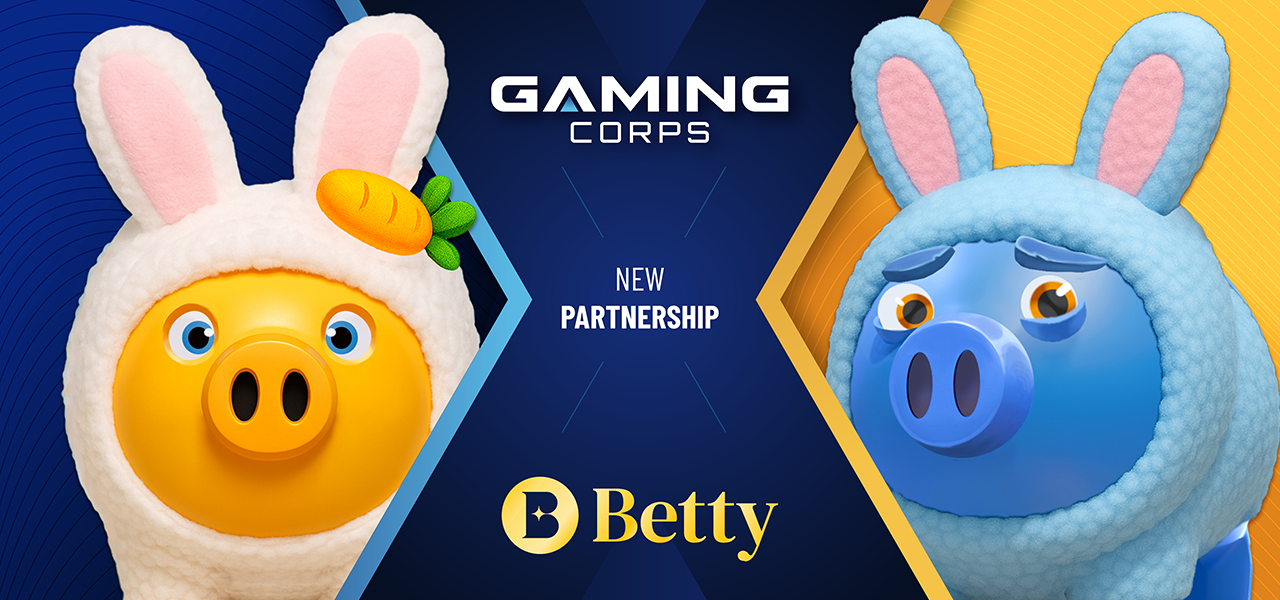
Gaming Corps, a publicly traded game development firm located in Sweden, has entered into a new distribution deal with Betty, one of the rapidly expanding iGaming operators in Ontario. The agreement enhances Betty’s platform with Gaming Corps’ growing collection of content, increasing options for players in a market where the brand currently provides over 2,800 slot titles.
Thanks to the collaboration, Betty customers will soon enjoy the latest slot releases from Gaming Corps, featuring 3 Easter Pigs, the latest chapter in the well-known 3 Pigs series, which adds a new seasonal element to one of the studio’s most iconic franchises. Players will also gain access to the latest release, Vendetta Fury, from DEGEN Studios, Gaming Corps’ newest RGS partner.
This launch leverages the solid success of the broader 3 Pigs franchise, featuring games like 3 Pigs of Olympus and 3 Pigs of the Caribbean that are already part of Gaming Corps’ collection. These are included with the studio’s wider range of Slots, Plinko, Mine, Crash, and Table games.
Adam Pentecost, Chief Revenue Officer at Gaming Corps, said: “Ontario has become one of the most exciting regulated markets in North America, and Betty has built an impressive reputation by offering players both quality and variety. We’re delighted to partner with such a progressive operator and look forward to showcasing how our latest content can bring something genuinely different to their already rich portfolio.”
Paraskeva Smirnova, Senior Casino Operations Manager at Betty, added: “Betty has built its identity on being a homegrown Ontario brand with a clear focus on what local players want. Working with Gaming Corps allows us to continue that mission, adding content that stands out and gives our players something new to discover alongside the thousands of titles we already host.”
The post Gaming Corps Taps Betty to Boost Content Options for Ontario Players appeared first on Eastern European Gaming | Global iGaming & Tech Intelligence Hub.
Adam Pentecost Chief Revenue Officer at Gaming Corps
Gaming Corps partners with Betty to expand content choice in Ontario
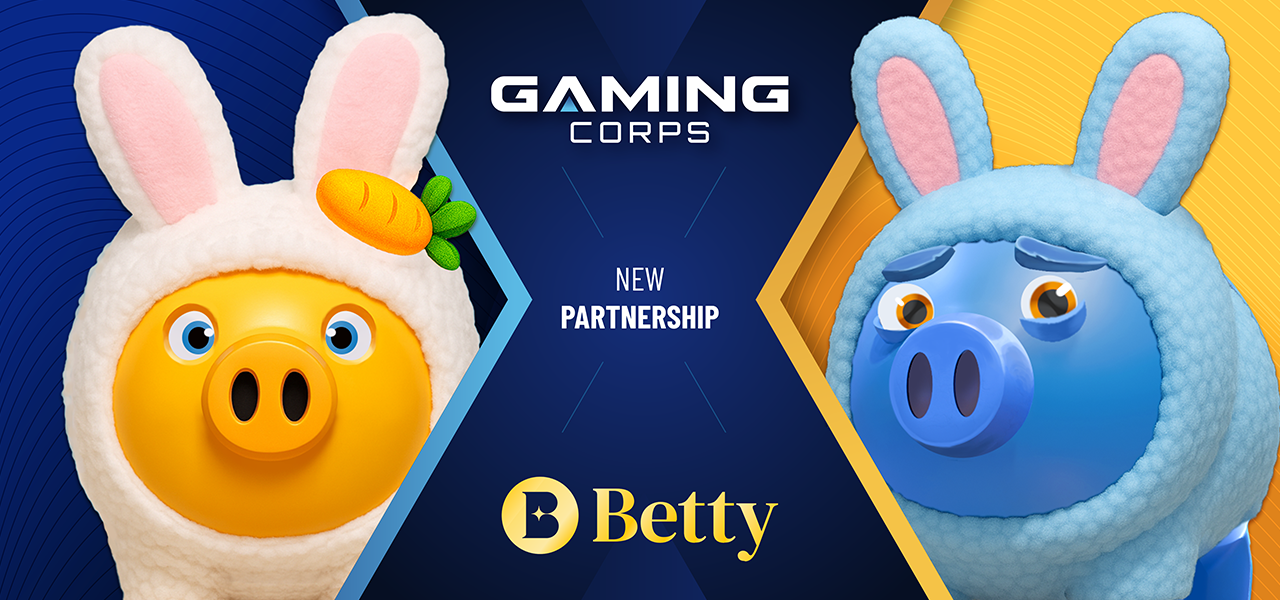
Gaming Corps has signed a new distribution agreement with Betty, one of Ontario’s fastest-growing iGaming operators. The deal adds Gaming Corps’ expanding suite of content to Betty’s platform, strengthening the choice for players in a market where the brand already offers more than 2,800 slot titles.
Through the partnership, Betty customers will soon have access to the latest Gaming Corps slot releases, including 3 Easter Pigs, the newest instalment in the popular 3 Pigs series, which introduces a fresh seasonal twist on one of the studio’s most recognisable franchises. Players will also have access to Gaming Corps’ newest RGS partner, DEGEN Studios’, latest release, Vendetta Fury.
This launch builds on the strong performance of the wider 3 Pigs franchise, with titles such as 3 Pigs of Olympus and 3 Pigs of the Caribbean already established within Gaming Corps’ portfolio. These sit alongside the studio’s broader offering of Slots, Plinko, Mine, Crash and Table games.
Adam Pentecost, Chief Revenue Officer at Gaming Corps, said: “Ontario has become one of the most exciting regulated markets in North America, and Betty has built an impressive reputation by offering players both quality and variety. We’re delighted to partner with such a progressive operator and look forward to showcasing how our latest content can bring something genuinely different to their already rich portfolio.”
Paraskeva Smirnova, Senior Casino Operations Manager at Betty, added: “Betty has built its identity on being a homegrown Ontario brand with a clear focus on what local players want. Working with Gaming Corps allows us to continue that mission, adding content that stands out and gives our players something new to discover alongside the thousands of titles we already host.”
The post Gaming Corps partners with Betty to expand content choice in Ontario appeared first on Americas iGaming & Sports Betting News.

-

 bingo4 days ago
 -
Africa5 days ago
Virgin Bet goes live in South Africa
-
Charity Space Scotland5 days ago
Scottish Government Announces £7.9M Investment to Tackle Gambling Harms
-
BetMGM5 days ago
PA Gaming Control Board Imposes $100,000 Fine on BetMGM
-
ELA Games5 days ago
2026 SiGMA Americas Awards Features ELA Games in Two Major Categories
-
apuestas4 days ago
Brasil 2026: Bets presionan el presupuesto de los hogares y redefinen la competencia por el consumo
-
Betnacional4 days ago
Brazil: Betting pressures household budgets and reshapes the competition for consumer spending
-
Compliance Updates5 days ago
Peter Knutsson Becomes New Director General of Swedish Gambling Authority