Latest News
SAZKA Group teams up with Sir Keith Mills in bid for Fourth UK National Lottery Licence

SAZKA Group, Europe’s largest lottery operator, today announced it has appointed Sir Keith Mills as Bid Chair of the UK team for the Fourth National Lottery Licence Competition. Sir Keith, a successful entrepreneur whose creative talent conceived the loyalty programmes so ubiquitous today, brings a wealth of experience from his roles across sport, charities, and business. He played a pivotal role in London’s successful bid to host the 2012 Olympic and Paralympic Games and subsequently, their successful staging. For the past six years he has chaired the Royal Foundation of the Duke and Duchess of Cambridge, a role he hands over to Lord William Hague next month. He is also Chairman of the Invictus Games, the international adaptive multi-sport event created by Prince Harry, Duke of Sussex.
Commenting on the announcement, Sir Keith said, “I am driven by organisations that make a real contribution to society. I chose to team up with Sazka for the Fourth National Lottery Licence Competition because I believe the UK National Lottery needs to grow and be engaging if it is to continue to fund the thousands of good causes every year. Our lottery is a national treasure with nearly 26 years of history; however, the landscape has changed immeasurably since it was first launched back in 1994. The challenge now is to ensure the lottery connects with people right across the country, making it fresh and exciting as it once was, bringing new ways that are relevant for today and tomorrow’s generation. I feel passionately that it needs to be restored to the nation’s hearts, especially in these difficult times. I teamed up with Sazka because they have a proven record of taking established lotteries, growing them and evolving them to be relevant for the future. I am cognisant that much has to be done for us to make a winning case in this competition, but I believe that over the course of this process we will be able to demonstrate how Sazka’s expertise coupled with the experienced British team that we are building in the UK will offer the right stewardship for the UKNL for 2023 and beyond.”
As Bid Chairman, Sir Keith will lead a team with world-class bidding and delivery experience, including for the London 2012 Olympic and Paralympic Games and Comic Relief. Sazka has appointed former London 2012 employee, Alastair Ruxton, as the Bid Director, together with British experts in key areas such as Player Protection, Good Causes, Innovation, Digital, Retail and Customer Experience.
Commenting on the agreement, SAZKA Group CEO Robert Chvátal said, “We are thrilled to be partnering with Sir Keith Mills and have him lead our entry in the Fourth National Lottery Licence Competition. We are hugely excited to be participating in this competition and for the chance to take stewardship of the National Lottery, helping the UK to fall back in love with this vital institution. Operating in five different national markets (Czech Republic, Austria, Italy, Greece, and Cyprus) has given us an unprecedented level of insight and experience in running lotteries. In addition, we have consistently increased participation and revenues for the lotteries we operate. We want to bring this deep knowledge and customer insight to revitalise the UK National Lottery increasing sales and money raised for good causes, thereby providing a much-needed long-term boost to community, arts, sports and heritage institutions across the UK.”
After submitting the Selection Questionnaire earlier this month, SAZKA Group has been accepted into the competition by the Gambling Commission, the body running the Competition. The team will now review the final bid application documents and continue to assemble a strong consortium capable of submitting a winning bid in 2021.
About Sir Keith Mills
Sir Keith Mills GBE DL is a British business entrepreneur who founded the Air Miles and Nectar customer loyalty programmes and has established numerous businesses, both in the UK and internationally. In September 2003, Sir Keith was appointed International President and CEO of London 2012 established to bid for the 2012 Olympic and Paralympic Games. Having won the bid, he established LOCOG to organise the Games, where he was Deputy Chairman alongside Lord Sebastian Coe. In 2007 Sir Keith established an Olympic related charity, International Inspiration, which he chaired, and in 2008 he established a UK charity, Sported, which he funded and chaired for 10 years. In 2014 Sir Keith established, and was Chairman of, the Invictus Games, working with Prince Harry to deliver a new major international sport event for wounded servicemen and women. Sir Keith Chairs the Royal Foundation of The Duke and Duchess of Cambridge, and the Invictus Games Foundation. Sir Keith is also a Director and an investor in a number of private companies.
Sir Keith has received numerous awards including: Master Entrepreneur of the Year, Chief Executive of the Year, and the Sports Industry Businessman of the Year, and was knighted by The Queen in 2006 and again in 2013 when he received the Grand Knight Cross for his services to sport.
About SAZKA Group
The SAZKA Group is a national lottery, instant lottery and digital gaming operator, with our trusted brands and industry-leading technology delivering over €17bn in annual sales. Established in 2012, SAZKA Group is already one of Europe’s largest and fastest growing lottery companies and our strong performance across our markets is helping to fund good causes in the Czech Republic, Greece, Cyprus, Austria, and Italy.
Since entering the lottery market in 2012, SAZKA Group has quickly expanded from the Czech Republic into four other European markets. SAZKA Group has consistently taken on established lotteries and made them better, while also expanding into new market segments through market-leading technology platforms. The Group’s unique experience of operating in different jurisdictions enables it to adopt a tailored approach to customer experience in each market, helping to increase sales and returns to good causes.
Responsible gaming and funding good causes are at the heart of SAZKA Group’s business and culture. it promotes responsible gaming in all of its markets and is committed to having a positive impact where it operates. From building children’s hospitals in Greece to support for the Czech Olympic Foundation, SAZKA Group has put its business skills to the benefit of the local community.
Powered by WPeMatico

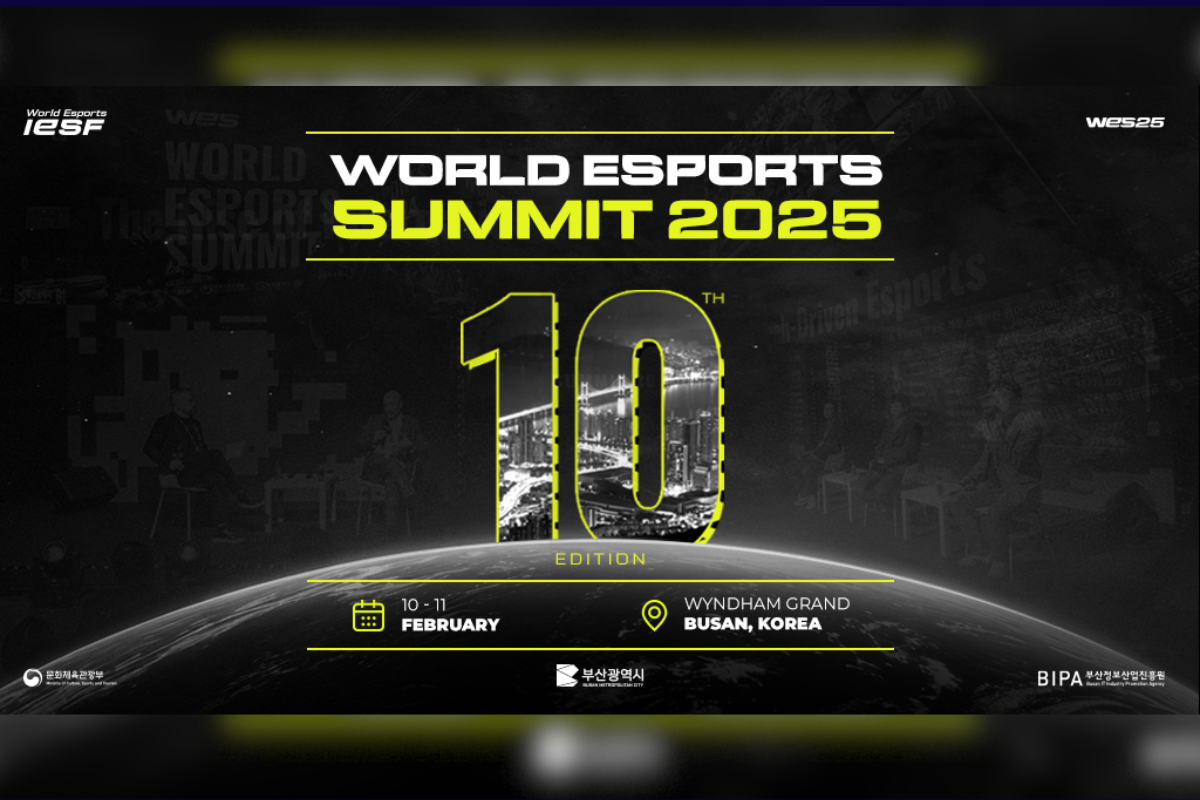
The World Esports Summit returns to Busan, South Korea, for its 10th edition, taking place on 10–11 February 2025.
Hosted at the Wyndham Grand Busan, the Summit will bring together 40+ speakers from the international esports ecosystem, including representatives from federations, publishers, global brands, sports organizations, technology companies, and public institutions.
Over the past decade, the World Esports Summit has provided a platform for dialogue and cooperation among stakeholders shaping the world of esports. The 2025 edition will continue this role, offering space for discussion on current developments, industry challenges, and future directions.
The Summit will feature contributions from a wide range of organizations, including Alibaba, FIBA, FIFAe, Tencent, Moonton, NetEase, FIA, Sportradar, EFG, Good Game, Telekom, among others.
Across two days, participants will take part in keynote sessions and panel discussions addressing topics such as esports governance, international collaboration, industry development, integrity, and the continued convergence of esports and traditional sports.
Further information on the program, speakers, and registration is available on the official World Esports Summit website.
The post World Esports Summit Celebrates Its 10th Edition in Busan appeared first on Eastern European Gaming | Global iGaming & Tech Intelligence Hub.
ad formats 2026
PropellerAds Unveils Multi-Format Advertising Suite for Scalable User Acquisition (January 2026)

PropellerAds, a leading multi-source performance advertising platform, today launched a deeply integrated multi-format traffic strategy designed to deliver predictable conversions and scalable growth as acquisition costs climb and user attention fragments across devices and platforms.
Since 2011 PropellerAds has expanded beyond its Popunder roots into a full-service adtech platform that now includes Push, In-Page Push (IPP), Native/Display, Survey Traffic, and Telegram Mini Apps (TMA). This move positions the company as one of the few global providers offering integrated reach across traditional web placements and growing social/in-app ecosystems.
Why this matters for advertisers
Rising acquisition costs and cross-device fragmentation make single-format campaigns unreliable. PropellerAds’ multi-format suite lets brands, agencies and affiliates:
- Mix high-volume formats for rapid testing (Popunder) with high-intent formats (Survey Traffic).
- Reach audiences across Android, iOS and desktop with native-style creatives (IPP and Push).
- Tap emerging social channels via in-app experiences (Telegram Mini Apps) for engaged, low-disruption traffic.
The result: more stable scaling, flexible reach, and higher conversion predictability.
Key formats powering the platform
- Popunder Ads — volume and scale
Popunder remains a workhorse for large-scale acquisition, offering massive coverage, direct-click placements and cost control. It’s ideal for fast market tests and high-volume conversion funnels. - Telegram Mini Apps (TMA) — social traffic growth
TMA brings in-app interstitials, banners and task-based units inside Telegram’s Mini Apps. Advertisers gain access to highly engaged social users with performance optimization that preserves user experience. - In-Page Push (IPP) — native, cross-device reach
IPP delivers notification-style creatives embedded within webpages without opt-in, covering Android, iOS and macOS. Its native look and wide device support increase engagement and CTR while filling gaps left by traditional push. - Push Format — persistent outreach
PropellerAds’ Push ads reach users outside browsing sessions via browser notifications. As an early mover in push ads, PropellerAds now delivers billions of daily impressions to support remarketing and time-sensitive campaigns. - Survey Traffic — high-intent audiences
Survey Traffic funnels users who actively participate in surveys to advertiser landing pages, producing audiences with elevated intent—especially effective for finance, subscriptions, rewards, and lead generation verticals.
PropellerAds’ strategic edge
By combining multiple traffic types and automated optimization, PropellerAds aims to protect campaigns from volatility in any single channel. The platform’s cross-format approach helps advertisers adapt to shifting traffic patterns while maintaining ROI targets.
“With user behavior shifting across screens and contexts, PropellerAds’ multi-format synergy is now essential for scalable growth,” says Julia Larionova, Head of Marketing at PropellerAds. “Platforms with integrated formats and automated optimization will gain a competitive advantage as traffic continues to diversify.”
Bottom line
PropellerAds’ multi-format expansion reflects the adtech industry’s shift toward integrated, cross-device acquisition. For marketers facing rising traffic costs and fragmented attention, the platform offers diversified ad formats and performance tools to scale more reliably in 2026 and beyond.
The post PropellerAds Unveils Multi-Format Advertising Suite for Scalable User Acquisition (January 2026) appeared first on Eastern European Gaming | Global iGaming & Tech Intelligence Hub.
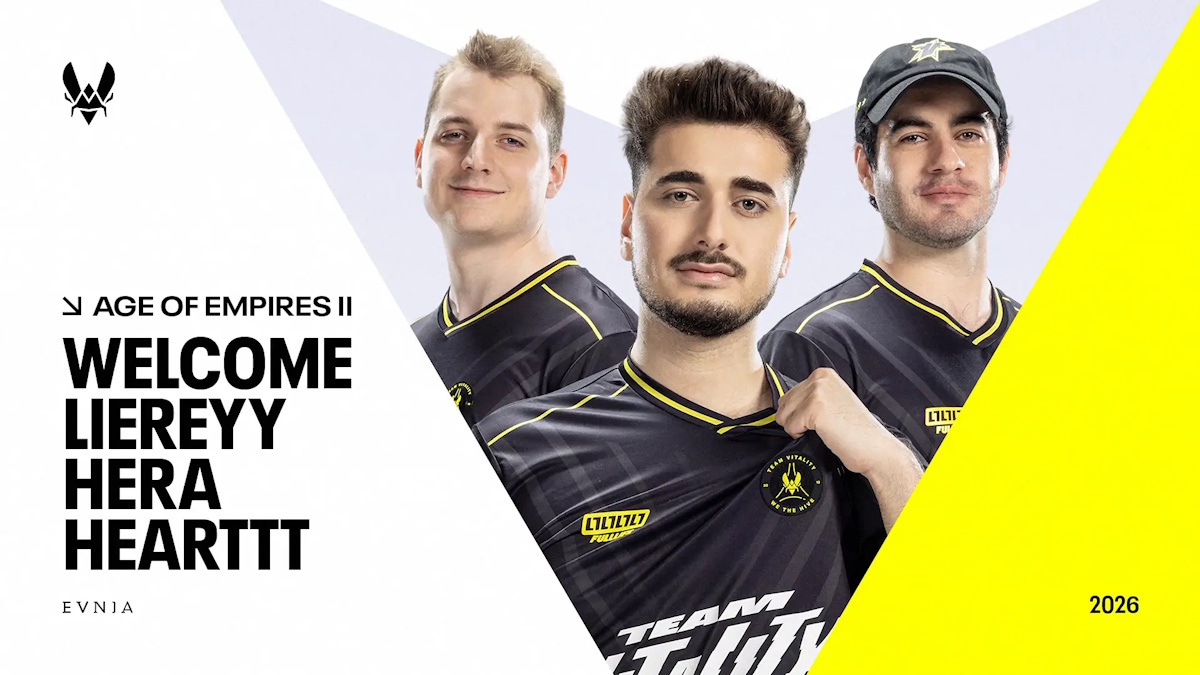
Team Vitality, one of the most influential names in modern esports, has officially announced its entry into the Age of Empires II competitive scene. This marks a major milestone: the merging of a contemporary esports powerhouse with one of the most iconic real-time strategy franchises in history.
Aiming for the Throne: Star-Studded Roster
Team Vitality isn’t just entering for exposure — they are targeting dominance. The team has assembled a roster featuring three of the most decorated players in Age of Empires II history:
- Hamzah “Hera” El-Baher – The Golden Boy
Known for his unmatched consistency and strategic mastery, Hera defines the modern AoE era. In 2023, he achieved a historic 14-tournament winning streak in S-Tier events. Fresh off his Red Bull Wololo: El Reinado 2024 victory, the current Player of the Year is set to continue his reign under the Vitality banner. - Kai “Liereyy” Kallinger – The Archer God
Renowned for exceptional micro-management and aggressive play, Liereyy brings mechanical perfection and explosive strategies to the squad. A multi-time Red Bull Wololo Champion (II & IV), the Austrian star is widely regarded as one of the most spectacular talents in the game’s history. - Hernán “Hearttt” Pizarro – The Veteran Strategist
With a professional career dating back to 2012 and 80+ tournament appearances, Hearttt is the rock of the team. Named Comeback Player of the Year 2023, the Peruvian strategist provides depth, resilience, and unparalleled tactical insight.
First Major Appearance: Red Bull Wololo 2026
Team Vitality’s AoE II roster will make its competitive debut at Red Bull Wololo 2026: Londinium, one of the most prestigious events on the global RTS calendar. Fans can expect high-level strategic gameplay and the start of Vitality’s quest for world championship titles in the genre.
“At Team Vitality, our expansion is always driven by a certain ambition: to compete for and win World Championships in the world’s most iconic games. Age of Empires and our new superstar lineup align perfectly with that vision… We are honored to be part of this history and can’t wait to welcome AoE fans into the Vitality Hive.” — Danny Engels, Corporate Director, Global Operations, Team Vitality
Why This Matters
Team Vitality’s entry into Age of Empires II is a significant moment for the RTS esports ecosystem:
- It bridges legacy RTS titles and modern esports organizations.
- Brings global visibility to Age of Empires II tournaments.
- Sets the stage for strategic showdowns at major international events.
With Hera, Liereyy, and Hearttt, Team Vitality is positioned to challenge for the top spots in competitive AoE II and potentially reshape the RTS landscape for years to come.
The post Team Vitality Enters Age of Empires II Esports with Star-Studded Roster appeared first on Eastern European Gaming | Global iGaming & Tech Intelligence Hub.

-

 Austria7 days ago
EU Court Ruling on Online Gambling Liability: Players Can Sue Foreign Operators’ Directors Under Their Home Country Law (Case C-77/24 Wunner)
-
Latest News7 days ago
SKIP THE QUEUE WITH THE MIDNITE SHUTTLE: MIDNITE TEAMS UP WITH SNOOKER LEGEND TO OFFER FANS A FREE SHUTTLE SERVICE FROM ALLY PALLY STATION
-
Continent 8 Technologies7 days ago
Continent 8 and CEO Michael Tobin claim number one spot in GamblingIQ’s global ‘Security 10’ rankings
-
CGCC7 days ago
ADVISORY: ILLEGAL GAMBLING OPERATION USING FORGED COMMISSION CREDENTIALS
-
BetCity.nl7 days ago
Bragg Gaming Group Signs Deal with SuomiVeto
-
10 Alebrijes Eternal7 days ago
Amusnet Releases “10 Alebrijes Eternal” Slot
-
Africa7 days ago
Playtech Partners with LottoStar to Boost Operations Across South Africa
-
Balkans7 days ago
CT Interactive Appoints Martin Dimitrov as its New Commercial Manager