Latest News
Cyprus: 3rd Safer Gambling Conference – Online edition

The National Betting Authority in Cyprus organizes the 3rd Safer Gambling Conference (SGC) on Monday 5th of October 2020, from 09:00-13:00 CET, online.
The conference, which is being held for the 3rd consecutive year, is part of the Safer Gambling Week. This year, the conference has a new name, introducing a new philosophy regarding the meaning of safe participation in gambling. The focus on safer gambling promotes a new understanding that emphasizes on the responsibility of gambling operators to protect their players by introducing relevant practices and policies beyond state regulations.
The conference aims to inform and inspire participants through presentations by distinguished professionals and various stakeholders, who will discuss and exchange opinions regarding safer gambling practices. It will cover topics such as “The impact of COVID-19 pandemic on gambling behaviour and players’ protection”, “The use of artificial intelligence and new technologies”, “Gambling disorder and youth”, “Behavioural insights and safer gambling” and more.
Leading experts and distinguished speakers will share their knowledge and thoughts. The list of speakers includes Professor Marc N. Potenza, Dr. Michael Auer, Mr. Simo Dragicevic, as well as operators and regulators and other experts in the gambling industry.
The Safer Gambling Conference is addressed to gambling industry professionals, academics, mental health professionals, business consultants, the media, youth workers, law and advertising agencies, sports federations, and civil society.
Participation is free, but registration is essential. You can register here.
Powered by WPeMatico



Company plans to roll out SOCCERBET with LALIGA archive footage on its own platform in Italian retail after the World Cup.
Highlight Games Limited said its proprietary platform has passed Italy’s ADM collaudo process, the technical certification required for gaming platforms. The company announced the approval on 14 July 2026 from London.
Following the conclusion of the World Cup, Highlight said it will launch its Spanish SOCCERBET product featuring archive LALIGA footage on its own platform across Italian retail channels. The company added that operators will transfer to Highlight’s platform over the months that follow.
The supplier said the certification allows it to deliver its content via its own “zero-cost streaming technology” in Italy and gives it control over its product roadmap in what it called its most important market.
Steven Holmes, CEO, Highlight Games said: ‘This is a huge moment for Highlight as we bring our video-based technology stack to the Italian market and join a select few who are able to offer an officially ADM certified platform. Italy is where SOCCERBET has proven itself time and again and passing the ADM collaudo means we can now deliver that content on our own platform, with our zero-cost streaming solution, exactly as it was designed to be experienced.
‘Owning the technology end to end means we control our own roadmap, resulting in faster launches, smoother integrations for our operator partners and a richer experience for players. Our products consistently perform at the top of the market wherever they are live, and with our platform now officially certified in Italy, we have everything in place to build on that momentum.’
The post Highlight Games’ platform clears Italy’s ADM collaudo certification appeared first on EE Gaming | Global iGaming & Tech Intelligence Hub.
The 10-week phased event runs Daily Heats through September 6, with raffles awarding more than $100,000 in $109 tickets each week.
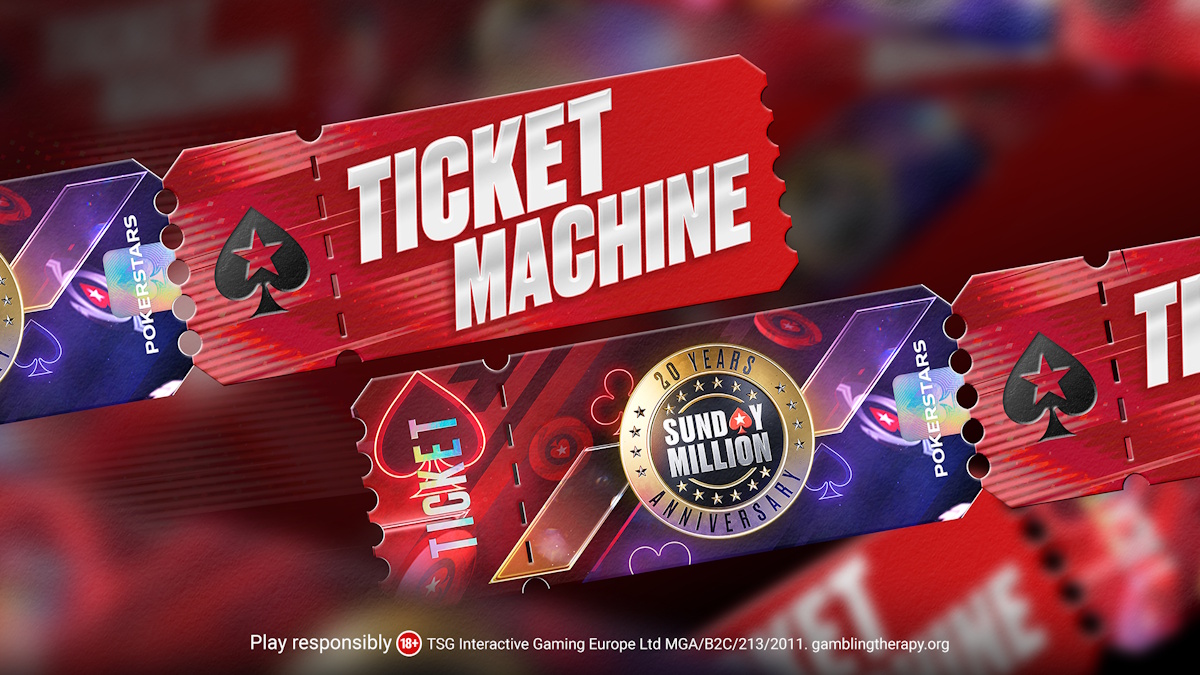
PokerStars is allocating more than $800,000 worth of $109 Daily Heat (Phase 1) tickets through its “Ticket Machine” promotion ahead of the Sunday Million 20th Anniversary Finals (Phase 2) on Sunday, September 6.
The Sunday Million 20th Anniversary is being run as a 10-week phased tournament, with Daily Heats running now through September 6. Players who advance from a $109 Daily Heat carry their stack into the Finals, with PokerStars noting that only one stack may be carried through to Phase 2.
To enter the Ticket Machine, players must opt in to the “Ticket Machine” ICE Challenge and complete weekly poker challenges. Each completed challenge adds entries to a Saturday raffle, with PokerStars saying more than $100,000 in $109 Daily Heat tickets will be awarded each week. Players can complete each challenge up to four times, for a maximum of 24 raffle entries per week.
PokerStars said that, after the first two weeks of Daily Heats, 270 players from more than 40 countries have already qualified for the Finals, including 50 who qualified into Phase 1 via satellites. Brazil and Ukraine lead the qualifiers list with 33 players each, according to the operator.
The operator has set a $5 million guarantee for the Sunday Million 20th Anniversary. Additional qualification routes include satellites starting at $0.55, special edition Spin & Go’s from $0.75, and “Wildcard Wins”, described by PokerStars as a new leaderboard promotion running until July 19. PokerStars also said players redeeming a $530 Bronze Pass will receive “25% extra value in the bundle” for a limited time, including an additional $109 Sunday Million 20th Anniversary ticket and $23.50 in tournament tickets.
The post PokerStars puts $800,000 in Sunday Million Anniversary tickets into Ticket Machine appeared first on EE Gaming | Global iGaming & Tech Intelligence Hub.
Kickoff Roulette Ronaldinho launches with a Gold Number mechanic and English/Portuguese language support.
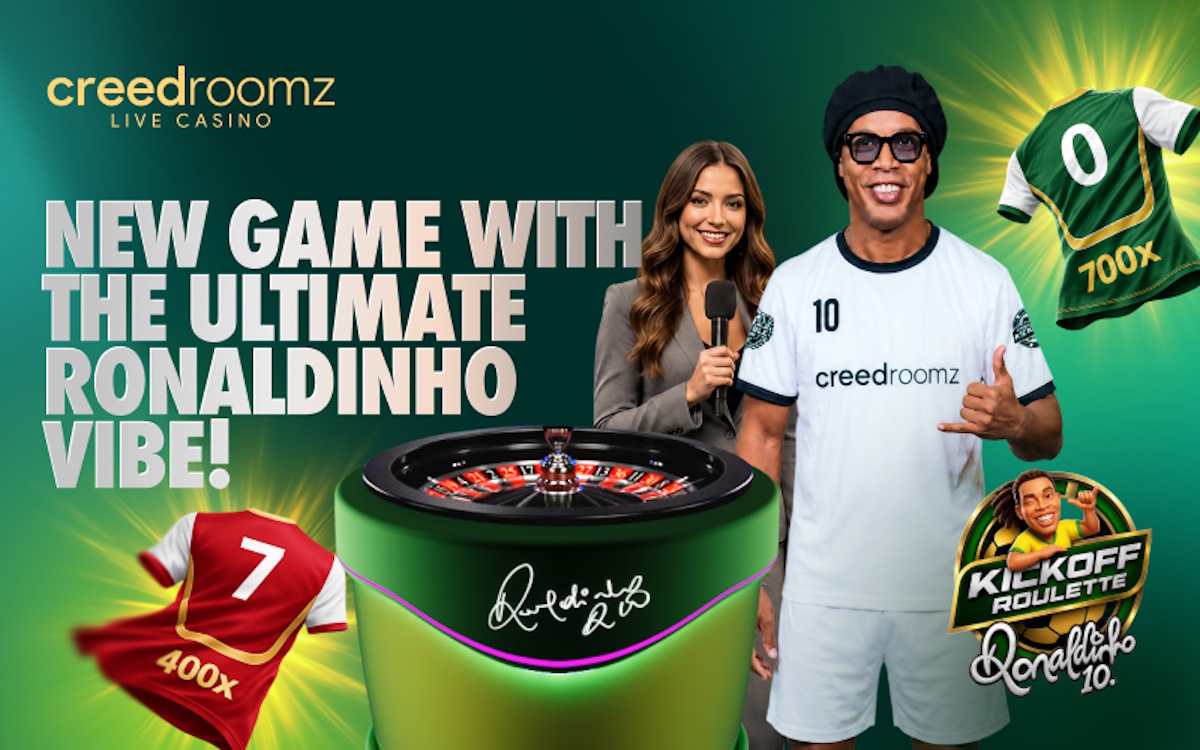
CreedRoomz has named former football star Ronaldinho as brand ambassador for its new live casino game show, Kickoff Roulette Ronaldinho. The supplier said the title is now available for integration by B2B partners.
The company positions the product as a roulette-led live game show built around a football theme, running from a virtual studio. According to CreedRoomz, the game includes a “Gold Number Mechanic” where randomized lucky numbers can add multipliers from x50 to x700.
When asked about the crossover between football and casino entertainment, Ronaldinho said: “The fact that football is a global passion also helps, so I believe everyone will like “Kickoff Roulette Ronaldinho” for that reason.. and for the innovation of everything that is happening.”
CreedRoomz said the game is available in English and Portuguese, framing Portuguese language support as relevant for operators targeting Brazil and other Portuguese-speaking audiences. Armen Mnaskanian, Head of Sales Department at Creedroomz, said: “Bringing Ronaldinho into the CreedRoomz family represents a massive leap forward for live casino entertainment. Football and iGaming both thrive on passion and excitement. By fusing Ronaldinho’s legendary star power with powerhouse monetization mechanics, we are giving our partners the ultimate competitive edge and a next-generation casino offering.”
The post CreedRoomz signs Ronaldinho to front new Kickoff Roulette live game show appeared first on EE Gaming | Global iGaming & Tech Intelligence Hub.

-

 Latest News7 days ago
Eeze opens 1,200 sqm Bucharest hub for technical teams
-
Latest News7 days ago
Play’n GO strengthens Latin American presence with Betano Colombia launch
-
Latest News6 days ago
BetMakers Technology Group Selected to Distribute ATG Horse Racing Content Across Australia and New Zealand
-
Latest News7 days ago
Belatra signs cooperation deal to distribute slots via VeliGames
-
Compliance Updates7 days ago
Kasinohai Audit: Most Slots Could Be Affected by Finland’s Draft Gambling Rules
-
Compliance Updates7 days ago
Pernambuco court revokes Spribe’s interim relief in Aviator trademark dispute
-
Latest News7 days ago
R. Franco Digital releases fighting game-themed slot Spin Fighters
-
Compliance Updates6 days ago
ACMA Warns MMA Fighter Jamie Mullarkey for Breaches of Online Gambling Laws