Latest News
GambleAware launches second phase of major public health campaign: Bet Regret telling sports bettors to ‘tap out’ to avoid Bet Regret

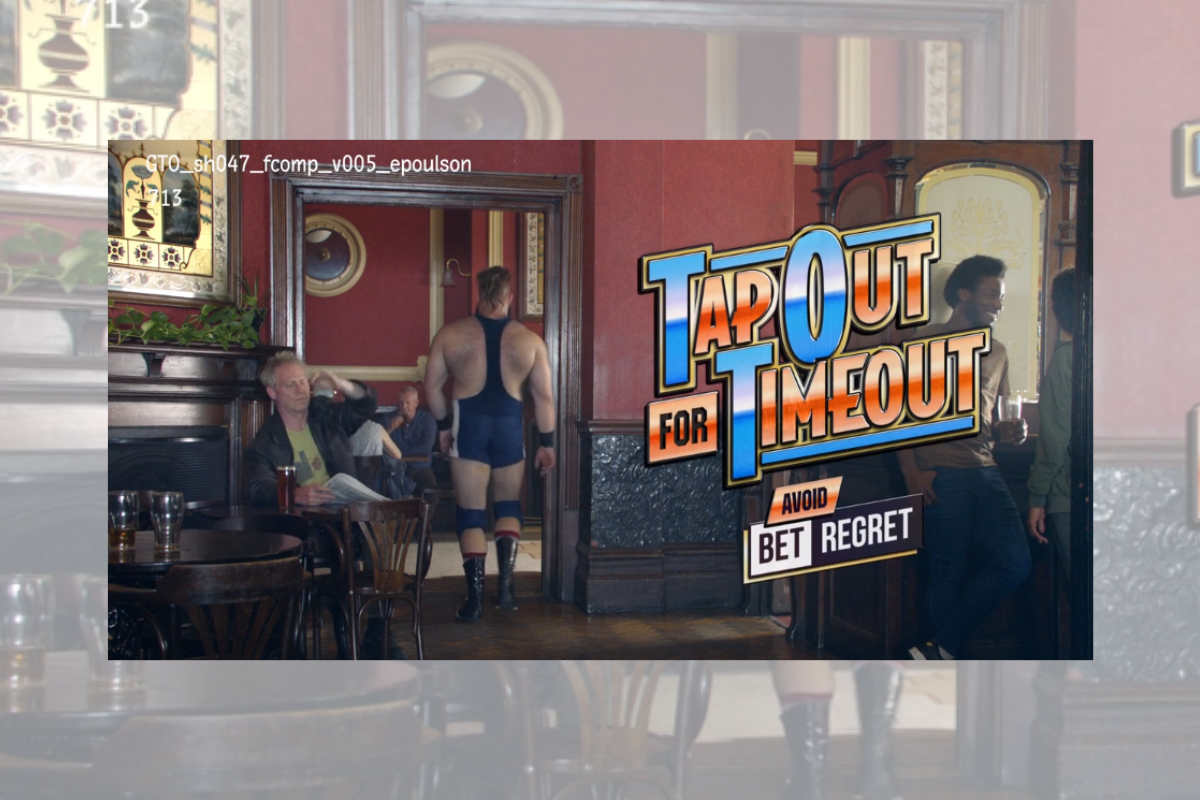
- The latest Bet Regret campaign introduces a new behaviour change technique which encourages people to pause and reconsider before they place a bet they may regret.
- Campaign evaluation to-date shows self-awareness amongst the campaign target audience is increasing, but there is still a need for more specific advice.
- The new advertisements feature a wrestler intercepting two unsuspecting gamblers who are about to place an ill-considered bet; he pins them down until they agree to ‘tap out’ of their apps for some time out and avoid Bet Regret.
- New Football Supporters Association (FSA) survey results, released alongside the latest campaign, found that almost three quarters (73%) of those fans who are likely to bet more this season will do so because they find it easier to bet at home rather than at a match.
GambleAware has launched the second phase of Great Britain’s largest national safer gambling campaign, Bet Regret, which is targeted at an estimated audience of 2.4m men aged 18-34 who gamble frequently on sport. To coincide with the launch, the Football Supporters Association has also conducted a survey of football fans on behalf of GambleAware, to provide a snapshot of the current attitudes and behaviours of male sports bettors.
The first advert of the 2020 campaign premieres on Saturday 12th September during the kick-off match of the Premier League – Fulham v Arsenal at 12.30pm. The campaign will consist of two TV adverts alongside a radio and digital campaign. Drawing on the nostalgia and popularity of wrestling, the TV adverts look to dramatize the concept of ‘tapping-out for time out’ to encourage sports bettors to pause before making an impulsive bet.
The public health campaign, which originally launched in February 2019 to raise awareness of impulsive betting in order to encourage moderation and reduce gambling harms, will see the introduction of behaviour change techniques. These are designed to help frequent sports bettors, who want to avoid the feeling of Bet Regret, by encouraging them to ‘tap out’ of their phones before placing an online bet. The advice for bettors to ‘tap out’ is part of a strategy to encourage adoption of a new specific and easy to follow behaviour of pausing before placing a bet, to reconsider the bet.
When evaluating the first year of the campaign, researchers at Ipsos MORI1 found that self-awareness amongst 18-34-year-old men who gamble frequently on sport is increasing, and that behaviour is starting to change but there is still a need for more specific advice. Subsequent findings from the researchers show that after a drop in football betting due to the absence of live sport, by August it was back to normal levels, with over a quarter (27%) of the campaign audience saying they are betting more than three months ago, and the proportion who have bet on football online in the past month increasing by 62%.
In addition to these campaign evaluation findings, the FSA survey indicates that watching more matches at home rather than at the stadium is likely to increase in-play betting levels, with 83% of fans who bet in-play on football matches saying they bet in-play more when watching a match at home rather than in a stadium. Of those who say they will probably bet more this season, almost three quarters (73%) gave the reason that it is easier to bet at home than at a match.
Professor Sian Griffiths, Chair of the Safer Gambling Campaign Board and GambleAware Trustee, said: “The first year of the Bet Regret campaign had a positive impact on our target audience. We are looking to build on that success by influencing behaviour change through encouraging sports bettors to ‘tap out’ of their gambling app and take a moment to reflect before placing a risky, impulsive bet. This new campaign is designed to help fans steer clear of Bet Regret and reduce potential gambling harms.”
Jo Churchill MP, Minister for Prevention, Public Health and Primary Care, said: “The impacts of a gambling problem can be devastating for an individual and those around them.
“It is excellent news that the Bet Regret campaign is entering its second year and encouraging those who may be placing a bet to pause and reconsider. It also helps ensure that anyone who needs it can get advice and support to protect them from gambling-related harm.”
Nigel Huddleston MP, Minister for Sport, Tourism and Heritage, said: “Safer gambling messaging has a vital role to play in protecting people from gambling-related harm. This new GambleAware campaign is a creative and engaging way to urge people to pause and reflect on the implications of their actions.”
Bet Regret is being funded through additional donations to the independent Safer Gambling Board in line with a commitment given to the government by the broadcasting and gambling industries. Sky, BT Sport, ITV and Channel 4 are amongst those who are supporting the campaign.
The campaign is one part of GambleAware’s wide-ranging actions to reduce gambling harms by considering individuals, the products and the environment in which they are found.
Powered by WPeMatico


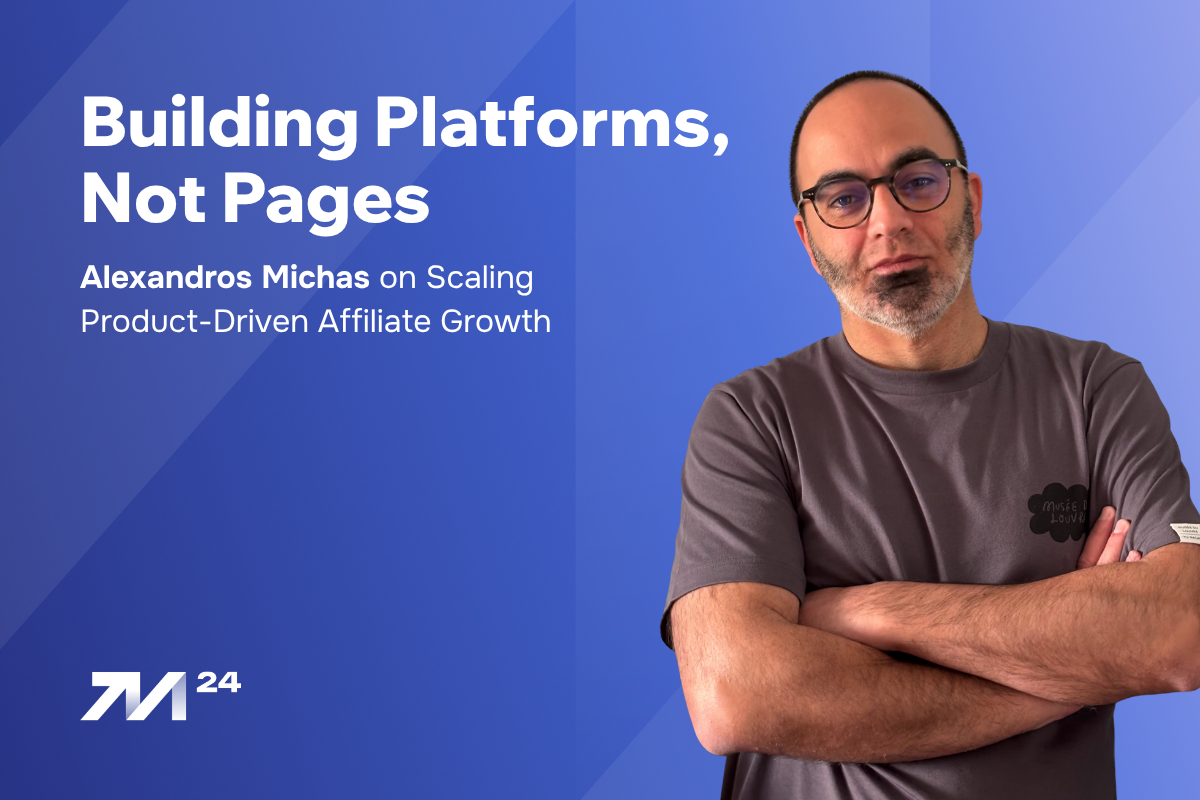
In the world of affiliate marketing, a little chaos is usually the norm. Managing dozens of websites across different regions often means endless firefighting. Enter Alexandros Michas, who was recently appointed as the Head of Website Operations at Media 24. In this interview, we talked with Alexandros about how he is replacing chaotic, site-by-site fixes with a single blueprint to turn standard affiliate sites into true digital platforms.
A few months ago, you were appointed as the Head of Website Operations at Media 24. To give our readers a look behind the scenes, what exactly does this role involve, and what are the main things you focus on in this position?
My job is to take the big-picture goals discussed with our CEO and figure out how we actually build them. I translate high-level business strategy into a concrete technical roadmap and take responsibility for it and everything that goes into our websites.
Day-to-day, I am leading our talented and experienced team of site managers. Together, we look at our portfolio of websites not just as platforms, but as products. We are constantly tweaking site functionality, brainstorming new product features, and upgrading the user experience. The ultimate goal is to move past standard affiliate landing pages and build something stickier. We want our websites to be the definitive, go-to destination where sports bettors in any given region don’t just visit once to find a bookmaker, but actively want to return to for value.
With dozens of websites in the portfolio, how do you prevent operational chaos? What does a scalable architecture look like for a modern affiliate house?
Honestly, if you treat every site like its own special project, you’ll drown in chaos overnight. The secret is standardisation.
Of course, every region has its own local specifics that we have to adapt to, and we do so by having locals as website managers. But underneath it all, we build everything on a single, shared blueprint. When we design a new feature, we don’t just build it for one site. We build it to level up the whole portfolio at once. It also makes expanding into a new market much easier. If a promising new region opens up tomorrow, we don’t have to start from scratch. We just drop in a product that’s already battle-tested and ready to go.
I’ve also set up teams around each GEO and manager, which include SEO specialists, content managers, and others, to ensure a smooth and efficient workflow.
Since you rely on a single blueprint, how do you manage the human element? How much freedom do your site managers have to experiment in their local markets versus sticking to the playbook?
Our site managers are the true experts in their specific regions, so they have total autonomy over their local content plans and figuring out what makes bettors in their area tick. They own that local strategy completely, while the blueprint just ensures they are building on a rock-solid foundation.
Because they are on the ground, I actually encourage them to constantly pitch product improvements. I always listen to their suggestions because a great idea shouldn’t just stay on one site. If a manager finds a feature that works incredibly well for their audience, we don’t just keep it there. We roll it into our core blueprint so the entire portfolio benefits from it.
The company has shifted toward building true digital platforms rather than just simple affiliate sites that rank. In practice, what is the biggest difference between those two approaches?
The biggest difference is value and retention. A simple affiliate site is transactional. It’s built entirely around SEO keywords just to capture a click, send the user to a sportsbook, and hope for a conversion. If Google tweaks its algorithm, that site is incredibly vulnerable because users have no real loyalty to it.
A digital platform, on the other hand, is an actual product. We aren’t just trying to get a click. We are trying to be a helpful place for the sports bettor. That means building features, community, and data hubs. It takes a lot more time and energy to maintain, but it turns a casual visitor into a loyal user. They don’t just find us on Google once. They bookmark the site and keep coming back because the product itself is valuable.
The World Cup is live right now. An event of this scale is a massive test for any affiliate. How did you approach the preparation for this global tournament from a product perspective, and what features did you ship to keep bettors engaged?
We knew the traffic spikes would be insane, so preparation actually started months ago. From a product perspective, the ultimate goal was instant utility. During a massive event like this, users want their information immediately, without any friction.
Feature-wise, we shipped an advanced match centre, a tournament bracket simulator, and worked heavily on upgrading our entire content strategy specifically for the World Cup. Because of the shared framework we talked about earlier, we didn’t have to build these tools site-by-site. Our blueprint allowed us to deploy these advanced features across all of our sports betting properties simultaneously, giving every region a premium product at the same time.
When the final whistle blows on the World Cup and we look back at the rest of 2026, what will have to happen for you to look back and say we absolutely nailed it?
On the data side, I want to look at our metrics and see a clear spike in returning users. That will be the ultimate proof that our platform strategy is actually working.
But our upgrades and feature improvements don’t just stop with the World Cup. We already have plenty of things in the pipeline, and we are planning a massive push right before the main European leagues kick off late this summer.
At the end of the day, I’ll know we nailed it if our site managers are effortlessly launching these new features, seeing the direct results of their work, and feeling like they have the absolute best tools in the industry to win their markets. That would be proof that we didn’t just build websites. We built a highly scalable affiliate product.
The post Alexandros Michas on Building Platforms, Not Pages appeared first on EE Gaming | Global iGaming & Tech Intelligence Hub.

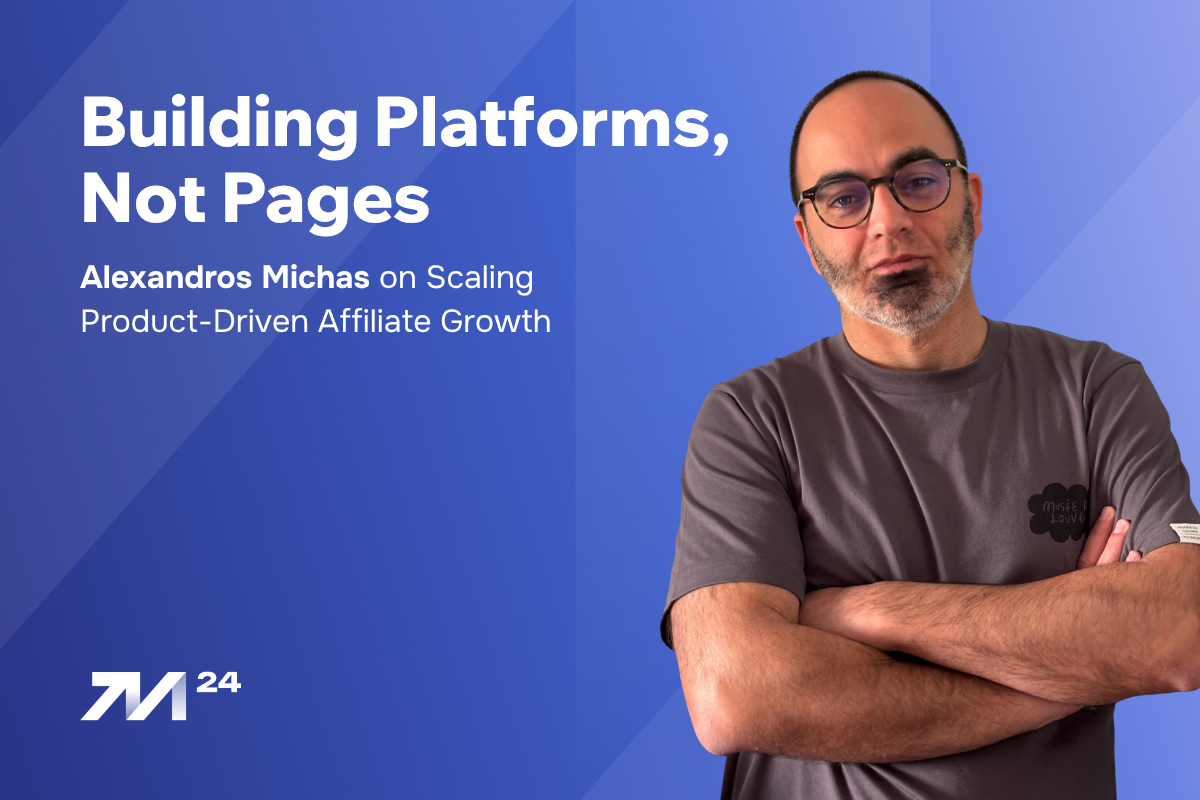
In the world of affiliate marketing, a little chaos is usually the norm. Managing dozens of websites across different regions often means endless firefighting. Enter Alexandros Michas, who was recently appointed as the Head of Website Operations at Media 24. In this interview, we talked with Alexandros about how he is replacing chaotic, site-by-site fixes with a single blueprint to turn standard affiliate sites into true digital platforms.
A few months ago, you were appointed as the Head of Website Operations at Media 24. To give our readers a look behind the scenes, what exactly does this role involve, and what are the main things you focus on in this position?
My job is to take the big-picture goals discussed with our CEO and figure out how we actually build them. I translate high-level business strategy into a concrete technical roadmap and take responsibility for it and everything that goes into our websites.
Day-to-day, I am leading our talented and experienced team of site managers. Together, we look at our portfolio of websites not just as platforms, but as products. We are constantly tweaking site functionality, brainstorming new product features, and upgrading the user experience. The ultimate goal is to move past standard affiliate landing pages and build something stickier. We want our websites to be the definitive, go-to destination where sports bettors in any given region don’t just visit once to find a bookmaker, but actively want to return to for value.
With dozens of websites in the portfolio, how do you prevent operational chaos? What does a scalable architecture look like for a modern affiliate house?
Honestly, if you treat every site like its own special project, you’ll drown in chaos overnight. The secret is standardisation.
Of course, every region has its own local specifics that we have to adapt to, and we do so by having locals as website managers. But underneath it all, we build everything on a single, shared blueprint. When we design a new feature, we don’t just build it for one site. We build it to level up the whole portfolio at once. It also makes expanding into a new market much easier. If a promising new region opens up tomorrow, we don’t have to start from scratch. We just drop in a product that’s already battle-tested and ready to go.
I’ve also set up teams around each GEO and manager, which include SEO specialists, content managers, and others, to ensure a smooth and efficient workflow.
Since you rely on a single blueprint, how do you manage the human element? How much freedom do your site managers have to experiment in their local markets versus sticking to the playbook?
Our site managers are the true experts in their specific regions, so they have total autonomy over their local content plans and figuring out what makes bettors in their area tick. They own that local strategy completely, while the blueprint just ensures they are building on a rock-solid foundation.
Because they are on the ground, I actually encourage them to constantly pitch product improvements. I always listen to their suggestions because a great idea shouldn’t just stay on one site. If a manager finds a feature that works incredibly well for their audience, we don’t just keep it there. We roll it into our core blueprint so the entire portfolio benefits from it.
The company has shifted toward building true digital platforms rather than just simple affiliate sites that rank. In practice, what is the biggest difference between those two approaches?
The biggest difference is value and retention. A simple affiliate site is transactional. It’s built entirely around SEO keywords just to capture a click, send the user to a sportsbook, and hope for a conversion. If Google tweaks its algorithm, that site is incredibly vulnerable because users have no real loyalty to it.
A digital platform, on the other hand, is an actual product. We aren’t just trying to get a click. We are trying to be a helpful place for the sports bettor. That means building features, community, and data hubs. It takes a lot more time and energy to maintain, but it turns a casual visitor into a loyal user. They don’t just find us on Google once. They bookmark the site and keep coming back because the product itself is valuable.
The World Cup is live right now. An event of this scale is a massive test for any affiliate. How did you approach the preparation for this global tournament from a product perspective, and what features did you ship to keep bettors engaged?
We knew the traffic spikes would be insane, so preparation actually started months ago. From a product perspective, the ultimate goal was instant utility. During a massive event like this, users want their information immediately, without any friction.
Feature-wise, we shipped an advanced match centre, a tournament bracket simulator, and worked heavily on upgrading our entire content strategy specifically for the World Cup. Because of the shared framework we talked about earlier, we didn’t have to build these tools site-by-site. Our blueprint allowed us to deploy these advanced features across all of our sports betting properties simultaneously, giving every region a premium product at the same time.
When the final whistle blows on the World Cup and we look back at the rest of 2026, what will have to happen for you to look back and say we absolutely nailed it?
On the data side, I want to look at our metrics and see a clear spike in returning users. That will be the ultimate proof that our platform strategy is actually working.
But our upgrades and feature improvements don’t just stop with the World Cup. We already have plenty of things in the pipeline, and we are planning a massive push right before the main European leagues kick off late this summer.
At the end of the day, I’ll know we nailed it if our site managers are effortlessly launching these new features, seeing the direct results of their work, and feeling like they have the absolute best tools in the industry to win their markets. That would be proof that we didn’t just build websites. We built a highly scalable affiliate product.
The post Alexandros Michas on Building Platforms, Not Pages appeared first on Americas iGaming & Sports Betting News.

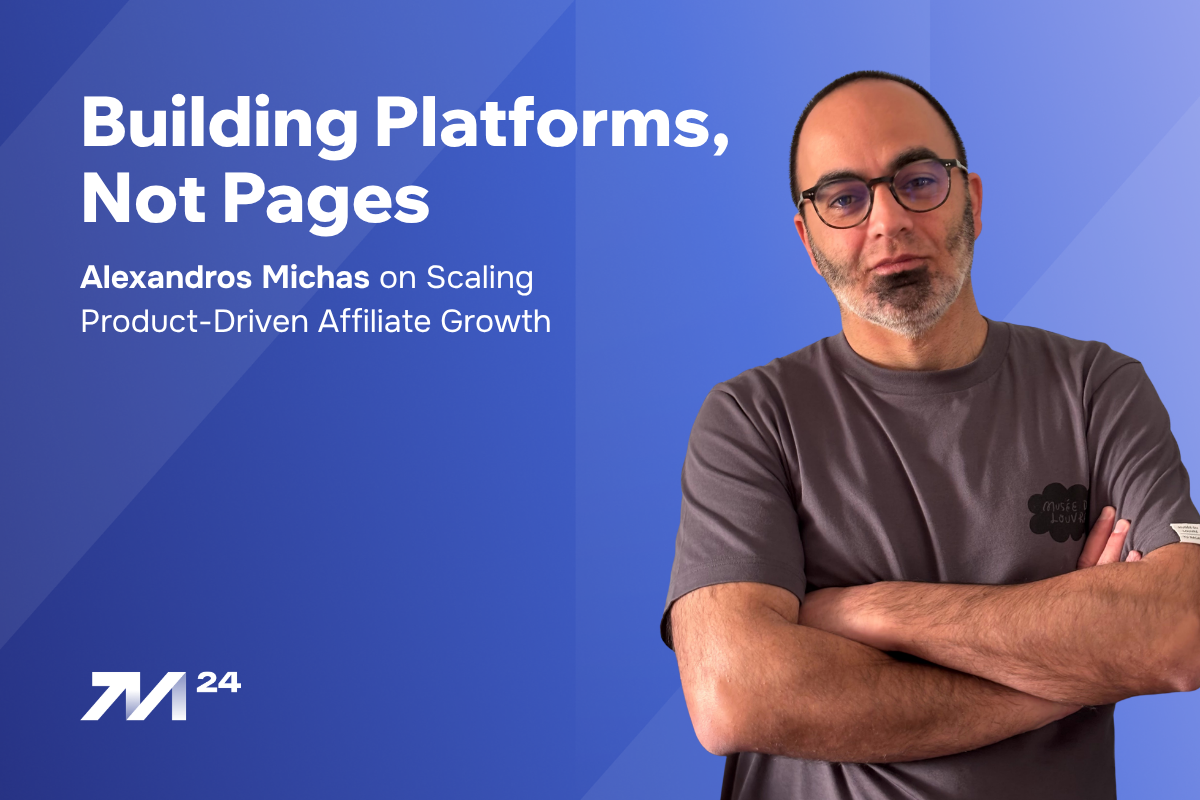
In the world of affiliate marketing, a little chaos is usually the norm. Managing dozens of websites across different regions often means endless firefighting. Enter Alexandros Michas, who was recently appointed as the Head of Website Operations at Media 24. In this interview, we talked with Alexandros about how he is replacing chaotic, site-by-site fixes with a single blueprint to turn standard affiliate sites into true digital platforms.
A few months ago, you were appointed as the Head of Website Operations at Media 24. To give our readers a look behind the scenes, what exactly does this role involve, and what are the main things you focus on in this position?
My job is to take the big-picture goals discussed with our CEO and figure out how we actually build them. I translate high-level business strategy into a concrete technical roadmap and take responsibility for it and everything that goes into our websites.
Day-to-day, I am leading our talented and experienced team of site managers. Together, we look at our portfolio of websites not just as platforms, but as products. We are constantly tweaking site functionality, brainstorming new product features, and upgrading the user experience. The ultimate goal is to move past standard affiliate landing pages and build something stickier. We want our websites to be the definitive, go-to destination where sports bettors in any given region don’t just visit once to find a bookmaker, but actively want to return to for value.
With dozens of websites in the portfolio, how do you prevent operational chaos? What does a scalable architecture look like for a modern affiliate house?
Honestly, if you treat every site like its own special project, you’ll drown in chaos overnight. The secret is standardisation.
Of course, every region has its own local specifics that we have to adapt to, and we do so by having locals as website managers. But underneath it all, we build everything on a single, shared blueprint. When we design a new feature, we don’t just build it for one site. We build it to level up the whole portfolio at once. It also makes expanding into a new market much easier. If a promising new region opens up tomorrow, we don’t have to start from scratch. We just drop in a product that’s already battle-tested and ready to go.
I’ve also set up teams around each GEO and manager, which include SEO specialists, content managers, and others, to ensure a smooth and efficient workflow.
Since you rely on a single blueprint, how do you manage the human element? How much freedom do your site managers have to experiment in their local markets versus sticking to the playbook?
Our site managers are the true experts in their specific regions, so they have total autonomy over their local content plans and figuring out what makes bettors in their area tick. They own that local strategy completely, while the blueprint just ensures they are building on a rock-solid foundation.
Because they are on the ground, I actually encourage them to constantly pitch product improvements. I always listen to their suggestions because a great idea shouldn’t just stay on one site. If a manager finds a feature that works incredibly well for their audience, we don’t just keep it there. We roll it into our core blueprint so the entire portfolio benefits from it.
The company has shifted toward building true digital platforms rather than just simple affiliate sites that rank. In practice, what is the biggest difference between those two approaches?
The biggest difference is value and retention. A simple affiliate site is transactional. It’s built entirely around SEO keywords just to capture a click, send the user to a sportsbook, and hope for a conversion. If Google tweaks its algorithm, that site is incredibly vulnerable because users have no real loyalty to it.
A digital platform, on the other hand, is an actual product. We aren’t just trying to get a click. We are trying to be a helpful place for the sports bettor. That means building features, community, and data hubs. It takes a lot more time and energy to maintain, but it turns a casual visitor into a loyal user. They don’t just find us on Google once. They bookmark the site and keep coming back because the product itself is valuable.
The World Cup is live right now. An event of this scale is a massive test for any affiliate. How did you approach the preparation for this global tournament from a product perspective, and what features did you ship to keep bettors engaged?
We knew the traffic spikes would be insane, so preparation actually started months ago. From a product perspective, the ultimate goal was instant utility. During a massive event like this, users want their information immediately, without any friction.
Feature-wise, we shipped an advanced match centre, a tournament bracket simulator, and worked heavily on upgrading our entire content strategy specifically for the World Cup. Because of the shared framework we talked about earlier, we didn’t have to build these tools site-by-site. Our blueprint allowed us to deploy these advanced features across all of our sports betting properties simultaneously, giving every region a premium product at the same time.
When the final whistle blows on the World Cup and we look back at the rest of 2026, what will have to happen for you to look back and say we absolutely nailed it?
On the data side, I want to look at our metrics and see a clear spike in returning users. That will be the ultimate proof that our platform strategy is actually working.
But our upgrades and feature improvements don’t just stop with the World Cup. We already have plenty of things in the pipeline, and we are planning a massive push right before the main European leagues kick off late this summer.
At the end of the day, I’ll know we nailed it if our site managers are effortlessly launching these new features, seeing the direct results of their work, and feeling like they have the absolute best tools in the industry to win their markets. That would be proof that we didn’t just build websites. We built a highly scalable affiliate product.

-

 AGCO6 days ago
AGCO Fines Great Canadian Entertainment $120,000 for Using Unauthorised Gaming System Software at Four Casinos
-
Affiliate Industry5 days ago
Hub Affiliations Triumphs at the iGB Affiliate Awards 2026: Winner of Programme/Network Campaign of the Year
-
Latest News5 days ago
N1 Partners at iGB L!VE 2026: Bringing Together Affiliates, Art and Innovation
-
Asia6 days ago
The UAE Lottery joins SAGIP outreach with Philippine Consulate and Infinite Communities
-
Canada6 days ago
St8 expands Octoplay aggregation deal to Ontario and the UK
-
Latest News6 days ago
LEON announces LEON.bet Masters, a new CS2 tournament in Portugal
-
Canada6 days ago
St8 extends Octoplay partnership into Ontario and the UK
-
0006 days ago
Booming Games launches Booming Buffalo Hold and Win Extreme 25,000