European Gaming News
Hero Gaming integrates (Re)activation Cloud™ from Enteractive


CRM activity will be across Hero Gaming’s global multi-brand portfolio
Enteractive, the leader in player reactivation and retention, has announced a partnership with Hero Gaming where Enteractive’s (Re)Activation Cloud platform will be deployed across Hero Gaming’s global portfolio of Casino and Sports brands. The focus will be on both activating NRCs to NDCs and reactivating dormant player accounts.
The integration of (Re)activation Cloud will allow Enteractive’s agents to engage in one-on-one conversations with players over the phone, providing local expertise and unmatched customer engagement. By implementing Enteractive’s solution, Hero Gaming expects to drive more customer deposits and see a material boost to its P&L through re-activation of stalled registrations and lapsed player accounts.
Core to the activity will be Enteractive’s unmatched capability to engage with customers on a personal level, ensuring they are playing responsibly and adding value to their experience of the Hero Gaming brand.
In addition, Enteractive will offer its Retention-as-a-Service platform in both Finnish and German markets, where Hero Gaming has been a leading operator since 2013. Enteractive’s tool will bolster Hero Gaming’s player retention rates while further strengthening the focus on responsible gambling already central to the existing player care activity.
Sam Brown, CCO of Hero Gaming, said, “We are excited about our new partnership with Enteractive and their (Re)Activation Cloud platform. We have already seen fantastic results in our core markets, and this is just the beginning of the journey. As well as the obvious value of increased player activity, their highly skilled agents are also providing our business with vital qualitative feedback, to enhance the products and services we offer to our increasingly loyal customers.”
Delivering a personalised, responsible approach, ease of integration and a solid ROI for clients has set Enteractive apart from other conversion or reactivation offerings, adding value to the players brand experience with each and every call. Gaming groups across Europe are attracted to Enteractive’s ability to re-engage with inactive players in a scalable and personal way.
Mikael Hansson, Enteractive founder and CEO, said: “Hero Gaming is a massive operator, and we’re really excited to bring our customer engagement expertise to their multi-brand portfolio in various markets around the world.”
Pioneers in player (Re)Activation, Enteractive partners with operators to increase retention and player loyalty, by engaging with players in a one-to-one conversation. All (Re)Activation methods used are GDPR and G4 compliant, and all data processed is highly secured.
Powered by WPeMatico


The UK Gambling Commission has tentatively introduced its much-feared Financial Risk Assessments (FRA), but despite the regulator tip-toeing across the start line, the industry remains convinced that the highly controversial policy will lead to disaster.
The commission announced on Tuesday (July 7) that it will roll out its FRA project in three stages, with only the most high spending players and the largest operators required to comply during its initial phase.
In this first introductory period, any customer of the market’s largest operators depositing over £5,000 in 24 hours will need to be subject to an FRA, which in most cases will see a check conducted by a credit reference agency in the background without the gambler’s knowledge.
Eventually, that threshold will drop to £1,000 in 24 hours or £3,000 in a rolling 90-day period. Individuals aged under-25 will trigger checks if they deposit more than £750 in 24 hours or £2,000 in a 90-day period.
In some cases, customers will need to submit additional personal documents to allow operators to assess whether they need additional support.
It is these instances to which the industry has responded overwhelmingly negatively, with gambling firms warning of further consumer leakage to a black market that they say is already gaining ground.
The Gambling Commission argues that only 3 percent of customers that trigger these checks will require additional documents or open banking checks to complete their assessments, and that only 1 in 1000 gamblers will even trigger an FRA in the first place.
In fact, the regulator argues that the new system will actually reduce the existing reliance on document checks, by shifting some of that compliance burden onto a “frictionless” background system.
“People who place an occasional bet, are a recent winning customer or even regularly spend hundreds of pounds would be unlikely to need a check,” the regulator said.
Why now?
The commission said that its key motivation for pushing forward with FRAs is that some high spending customers are not being adequately protected.
Where FRAs reveal that a gambler may be spending beyond their needs, operators will be expected to take “proportionate” action, which may include reducing marketing or setting deposit limits, the commission said.
“We are confident that our approach, using high-quality data, will enable support for high-spending customers in financial difficulties, while reducing friction for customers who are not in financial difficulties by removing the need for unnecessary and unpopular document checks to understand financial risk,” said acting Gambling Commission CEO, Sarah Gardner.
During an initial risk assessment phase set to kick off this Summer, licensees will not be penalised if they take no action as a result of an FRA, but the implication is very much that the regulator will take enforcement action in this area in the future.
There is currently no timeline for when the UK industry will move into the second implementation stage or what requirements will be added at that point.
The commission has said only that it will engage with industry implementation groups and other stakeholders beforehand.
Similarly, there is no estimate of when the third and final implementation stage will begin.
“We have listened to feedback throughout the pilot process which has led to us deciding to carefully proceed,” said Gardner.
“We will work with key partners to make sure that they are implemented in the most effective way for consumers and operators.”
Industry aghast
Trade group the Betting and Gaming Council has reacted with dismay to the news, with chief executive Grainne Hurst saying it was “deeply disappointed and frustrated” that the commission had not abandoned the project completely.
Hurst said that the phased implementation was a clear indication that the channelisation risks posed by FRAs, which it has consistently warned of, are real.
“These checks cannot be described as genuinely frictionless if they produce unreliable outcomes, lead to unnecessary account restrictions or ultimately result in customers being asked to provide documents or open banking information,” said Hurst.
The industry, in particular the horseracing sector, remains very concerned that revenues will shrink in the days and months following the introduction of FRAs, much as they did in the aftermath of the affordability regime introduced in the Netherlands in 2024.
“The commission’s announcement does nothing to assuage that concern,” said Chris Elliott, a partner at London law firm Wiggin.
He added that it remains unclear what action operators should take once an FRA is complete and called for more guidance from the Gambling Commission.
“The staged approach risks being a staggered imposition of uncertainty rather than a measured roll-out of clear requirements,” said Elliott.
The UK gambling minister said the government supports FRAs, but appeared to back a tentative approach.
“The right balance must be struck so that assessments protect those in financial difficulties from the risk of gambling-related harm but do not create unnecessary burdens for the industry or consumers,” said Baroness Twycross.
The post Industry Roiled As UK Regulator Steps Gingerly Into ‘Affordability’ appeared first on EE Gaming | Global iGaming & Tech Intelligence Hub.
Malta’s Prime Minister has said his nation will veto any attempts by the EU to introduce a bloc-wide online gambling levy, threatening to place the industry at the centre of febrile European politics.
Robert Abela has told Malta’s parliament that he would use his nation’s member state veto to block the passage of the next EU budget, if a proposed gambling levy is included.
The budget, formally known as the Multiannual Financial Framework (MFF), lays out how the EU will spend its €2trn budget from 2028 to 2034.
The prospect of adding a continent-wide tax to the budget remains only a proposal, but the idea has heavyweight backing.
Vice-president of the European Parliament Victor Negrescu is spearheading these efforts, arguing that a fast-growing digital industry that generates billions in revenue should be subject to EU-level taxation.
Negrescu says that the levy could generate between €2-4bn every year.
“This industry fully benefits from the EU’s single market, digital infrastructure and crossborder access, but operates under fragmented rules, unequal taxation and insufficient enforcement,” he said.
The online gambling sector might well quibble with the specifics of these claims.
The idea that it “fully benefits” from the EU single market may have been unassailably true in the point-of-supply era, but the subsequent fragmentation of national rules that Negrescu refers to has significantly complicated that picture.
Nevertheless, backing for the levy from a senior European politician has naturally spooked the industry and its primary champion within the EU, Malta.
The levy would be so damaging to Malta’s economic interests that it is willing to use its most powerful EU instrument by executing a veto in the European Council in order to block the budget from being approved.
That would likely plunge the island nation into the centre of a political firestorm, but recent history suggests that smaller EU nations and their allies can successfully disrupt budget negotiations.
During discussions over the 2020 EU budget, Poland and Hungary successfully secured concessions after they both threatened to veto the MFF over rule-of-law requirements.
Malta will also hope to rely on support from the Friends of Cohesion, an informal alliance of 16 nations concerned with regional development, of which it is a part.
Negrescu’s pledge to pair his levy with a “clear EU directive against illegal and unlicensed platforms” is unlikely to satisfy the online gambling industry, despite growing complaints of a rampant black market from a number of quarters.
Malta strikes again
In simple terms, Malta is seeking to protect an industry which accounts for 10 percent of its gross domestic product.
The nation has shown a clear willingness to ignore the EU’s wishes in order to shield the many gaming firms that host their headquarters within its borders.
Most notably, the creation of Bill 55 has successfully protected local companies from having to repay hundreds of millions of euros in player refund settlements.
Ongoing cases before the Court of Justice of the European Union suggest that Europe’s top judges will soon rule against Bill 55, which is now Article 56A of Malta’s gambling act.
The European Commission also launched infringement proceedings against Malta over the provision
Tax troubles.
There are so far no specifics on how the levy would be calculated or what value it would be set at, but beyond Malta an additional levy would also be extremely challenging for operators in European markets already struggling with high tax burdens.
This includes the Netherlands, where a government report released this week has shown that staggered increases to taxes of 37.8 percent of gross gambling revenue (GGR) have failed to deliver any benefit to the country’s budget.
Even a relatively slight increase to this tax rate could send more operators scurrying out the market and see channelisation dive further than its current rate of 55 percent.
Nations like France, where online betting is taxed at 59.3 percent of GGR, or Portugal, with its 8 percent turnover tax on online sports betting, would also feel an impact.
Negotiations over the contents of the EU budget are set to continue for several months, with the approval process expected to be completed in late 2026 or early 2027.
Leaders in the Council of Europe have agreed to come to a preliminary deal on the MFF by October, according to a coordinated statement issued earlier this month.
Malta’s devout opposition to a possible gambling levy is just one of a range of issues under discussion, including a stark divide between nations such as Germany, which favour spending cuts, and the Friends of Cohesion, who want additional cash for agriculture and regional funding.
The post Malta Prepares For EU Budget Battle To Stave Off Gambling Levy appeared first on EE Gaming | Global iGaming & Tech Intelligence Hub.
Debate is raging within the Austrian government about whether to impose a cooling off period and freeze ex-grey market operators out of its upcoming open online casino market, with local operators looking to inflict maximum punishment and legal experts arguing that the proposal would be self-defeating.
Austria is on course for an historic opening of its long monopolized online casino market. Currently, only Casinos Austria, via its brand Win2Day, has the approval of the Austrian government to offer online casino games to the general public.
But for many years, that legal status was ignored by operators based largely out of Malta, who populated a vibrant grey market by leaning on the controversial argument that Austria’s monopoly model is in violation of EU law.
These offshore operators were eventually forced to retreat by a series of high profile court rulings that found Austrian consumers have the right to reclaim any and all losses to an operator without an Austrian licence.
Facing potentially hundreds of millions of euros in compensation claims, grey market providers have largely retreated to Malta, where Bill 55 continues to protect them.
With liberalisation now on the horizon, some forces within the Austrian government and the local gambling industry are insistent that companies which took part in the grey market should not be allowed to simply apply for a licence and wipe the slate clean.
Who’s in favour?
Those lobbying the hardest for a cooling off period are Austrian incumbents.
“One day you’re offering illegal services and the next day you get a license – that’s absurd,” a spokesperson for Casinos Austria told the Kronen Zeitung newspaper.
They are joined by German-headquartered gambling giant Novomatic, which operates a number of land-based venues in Austria under the brand Admiral.
Having sat on the sidelines of the online market for many years, Admiral is incensed by the idea that it could be competing on day one of a new market with operators who did not take the same approach.
The three parties that form Austria’s coalition government are still debating the issues, according to reports.
The only major practical example of a true “cooling off” period occured in the Netherlands, where an 18-month prohibition was in place that prevented many companies from entering the market when it opened in 2021.
At the time, Kindred reported that being forced to sit out market launch had cost it $16.2m a month, wiping out effectively 50 percent of the group’s EBITDA.
Kindred, which has since transformed into FDJ United following an acquisition by the French lottery giant, subsequently regained its strong Dutch position following the end of the cooling off window.
Likely to cool
At least one Austrian legal expert believes that there is a good chance that some form of cooling off, or an equivalent punishment, will be enacted as part of the new law.
“At the moment, it is likely that some form of cooling-off period will be introduced, perhaps by introducing sanctions that apply prior to licensing, but the details are yet to be determined,” said Nicholas Aquilina, a partner at Brandl Talos law firm.
“Whether a cooling-off period will be introduced and how restrictive measures will be will have a substantial impact on the success of the long-overdue opening of Austria’s online gambling market,” he added.
The time pressures referenced by Aquilina relate to the expiry of Win2Day’s exclusive licence, which is set to run out in October 2027. The government intends to establish its new online gambling regime well ahead of that date, so that new licences can be issued in time.
Any attempt to extend Win2Day’s monopoly could run into challenges with EU tender laws and the other highly unpalatable option is to leave the nation in limbo with no legal providers at all.
Complications
Despite how the debate has been framed by some parties, the reality will not be as simple as either allowing ex-grey market offenders into the new Austrian online casino marketplace free of consequence or forcing them to spend time in the sin bin.
There is broad political agreement that any international operator looking to obtain a licence in Austria must pay back taxes owed on its former activity in order to be granted approval.
Operators will also need to settle any outstanding player refund claims, something which could cost companies huge sums and may ultimately keep some of them out of the market for good.
There are thought to be thousands of pending refunds, which operators have largely been refusing to pay while they take refuge behind Malta’s Bill 55.
Against that backdrop, lawyers Christian Rapani and Felix Hohenthanner argue that the penalties for returning to Austria will likely be harsh enough.
“A further exclusion of two to three years on top of that would, in our view, work against the reform’s own central objective. The operators currently holding the largest share of Austrian play are exactly the ones a cooling-off period would shut out. If they cannot offer a licensed product for two to three years, their customers, it is highly likely, will not migrate to the licensed providers,” they told EEGaming.
Ultimately, the two lawyers said, the push for a cooling off period is more about protecting the vested interests in Austria’s casino market than an attempt to keep gamblers safe.
“Our impression is that the proposal is supported essentially only by the land-based operators and by the single provider that already holds a licence in Austria, in other words by those who benefit from keeping new entrants out. We therefore see it less as a genuine player-protection measure than as a last attempt to preserve existing market positions,” they said.
The post Austria Could Force Offshore Operators To Sit Out Market Launch appeared first on EE Gaming | Global iGaming & Tech Intelligence Hub.

-

 Latest News6 days ago
N1 Partners at iGB L!VE 2026: Bringing Together Affiliates, Art and Innovation
-
Affiliate Industry6 days ago
Hub Affiliations Triumphs at the iGB Affiliate Awards 2026: Winner of Programme/Network Campaign of the Year
-
Austria7 days ago
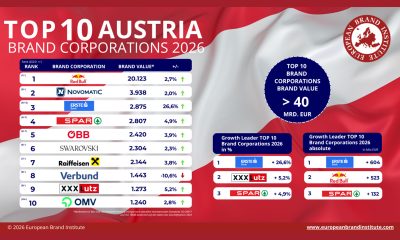
Austrian Brand Value Study: NOVOMATIC Defends Top Ranking
-
Amusnet7 days ago
Amusnet Releases its Latest Video Slot “Golden Snake”
-
Africa7 days ago
PopOK Gaming sponsors Botswana’s TT Cup Challenge horse racing event
-
Betsson CEO Pontus Lindwall7 days ago
Gaming in the Nordics launch event sets annual Copenhagen conference from 2027
-
Azerbaijani Parliament7 days ago
Azerbaijan to Impose Tougher Penalties for Illegal Online Gambling
-
Amusnet7 days ago
Weekend Reels | Week 27: Slot Drops & Trends