Latest News
An unequivocal decision for prediction markets in Brazil

Brazil’s National Monetary Council Resolution 5.298 marks a clear regulatory boundary for prediction markets such as Polymarket and Kalshi.
In this analysis, Carlos Akira Sato examines how the measure reflects a deeper shift in Brazil’s financial architecture, redefining what qualifies as a legitimate financial instrument and setting limits on the financialisation of non-economic events.
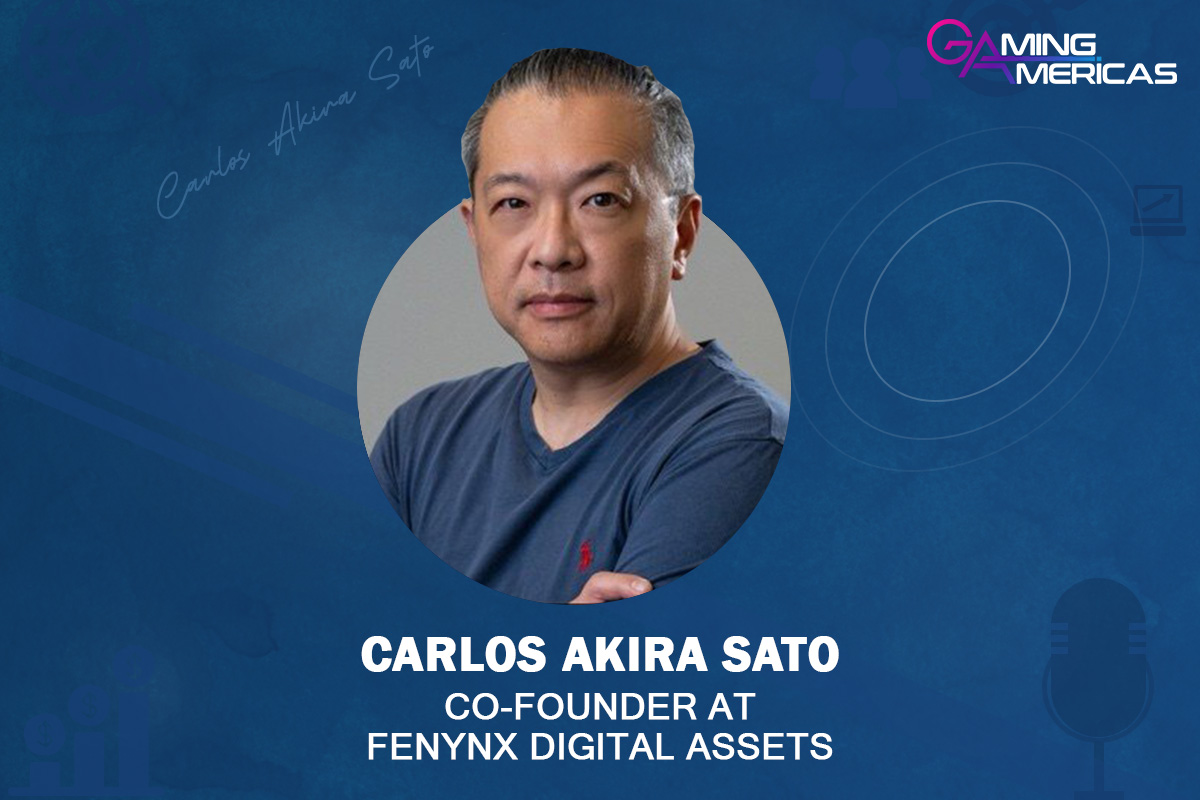
Carlos Akira Sato is co-founder of Fenynx Digital Assets and a specialist in regulated markets, financial infrastructure and responsible gambling.
In this op-ed, he argues that Brazil’s Resolution 5.298 is less about banning Polymarket and Kalshi than about defining the boundaries of the next generation of the financial system.
Brazil’s National Monetary Council Resolution 5.298 sets an unambiguous limit for platforms such as Polymarket and Kalshi in the country. The conclusion is straightforward: these models no longer find regulatory space in Brazil. But the significance of the decision lies not in the prohibition itself, it lies in what it reveals about the future of financial architecture.
Resolution 5.298 does not explicitly address prediction markets. It operates at a deeper level, redefining what can be considered a legitimate financial instrument. By requiring that contracts be tied to economic variables with objective price formation, the regulator eliminates the possibility of structuring instruments, however sophisticated in appearance, based on political, social or behavioural events. This is not a peripheral adjustment. It is a conceptual repositioning.
For years, platforms like Polymarket and Kalshi thrived precisely on ambiguity. They are not traditional bookmakers, nor do they fit neatly as derivatives exchanges. They operate in an intermediate territory, contracts based on probabilities, financial language and an implicit promise of efficient price discovery about the future. That grey zone was always their main asset, and their greatest regulatory risk. What Brazil has now done is eliminate it.
The most sophisticated aspect of the resolution lies in its design. The CMN did not target the technology, the format of the platforms, or their location. It targeted the essence: the nature of the risk being traded. In doing so, it made irrelevant whether the operation occurs through bilateral contracts, offshore platforms or blockchain-based protocols. If the risk is not economic, the contract is not admissible. It is a form of regulation that privileges substance over form — and is, for that reason, likely to prove more resilient.
This decision projects effects well beyond the gambling debate. It speaks directly to the discussion around tokenisation and the widely held idea in recent years that any event could be converted into a digital asset. Brazil signals the opposite. Innovation is welcome, but not unlimited. Tokenisation finds legitimacy when anchored in the real economy, credit, receivables, productive assets, and loses it when it attempts to capture behaviour, opinion or social events as the basis for trading.
It is at this point that the resolution also reveals an institutional tension. The normative text itself assigns to the CVM the responsibility of issuing complementary regulation. The choice is legally understandable, but institutionally questionable.
If the regulator’s own diagnosis recognises that these are hybrid instruments, moving between derivatives, securities and fundraising structures, the absence of a joint initiative from the outset is notable. The option for sequential regulation, with the CMN setting guidelines and the CVM filling in the detail, introduces a lag that may temporarily reopen the very grey zone it intends to close.
The paradox is evident. The resolution is sophisticated in attacking the economic essence of contracts, but fragments regulatory execution by distributing competencies non-simultaneously.
In an environment where financial innovation occurs at the intersection of different regimes, banking, capital markets and, in certain cases, gambling, coordination ceases to be desirable and becomes necessary. The lack of synchrony may generate divergent interpretations, legal uncertainty and, above all, residual arbitrage opportunities.
Even so, the core of the decision remains solid. By restricting what can be considered a financial asset, Brazil establishes a silent but powerful limit on the financialisation of reality. Not every event can be turned into a contract. Not every expectation can be converted into a price. And not everything that can be tokenised should necessarily be traded.
To say that Polymarket and Kalshi cannot operate in Brazil is therefore correct, but it is only the surface. What is at stake is the definition of boundaries for the next generation of the financial system. A system that will continue to incorporate technology and innovation, but that, at least in the Brazilian case, will remain anchored in the real economy. And in that process, the quality of coordination between regulators will be as decisive as the clarity of the rules themselves.
Carlos Akira Sato is co-founder of Fenynx Digital Assets and a specialist in regulated markets, financial infrastructure and responsible gambling. In this op-ed, he argues that Brazil’s Resolution 5.298 is less about banning Polymarket and Kalshi than about defining the boundaries of the next generation of the financial system.
The post An unequivocal decision for prediction markets in Brazil appeared first on Americas iGaming & Sports Betting News.















BOYLE Sports is expanding its Serbia-based technology hub after hiring just over 65 people in the past 12 months, the company said on 14th July, 2026. The hires are based in Belgrade and support BOYLE Sports’ next phase of development as an omni-channel betting operator.
BOYLE Sports said it aims to increase headcount in Serbia by an additional 30% over the next few months. The company positioned the hub as a way to access experienced developers with gaming industry knowledge, as it continues to build out its technology capability.
Jim Parkins, Chief Technology Officer at BOYLE Sports, said: “Serbia gives us access to exceptional technology talent, with the development experience and gaming-sector knowledge we need to support our continued growth. We have been deliberate in how we have built the team, and are delighted with the calibre of people on board.
“AI is changing how technology teams work and we are embracing that while simultaneously continuing to invest in people, because the strongest businesses will be those that combine smart technology with talented teams who know how to apply it.”
The Serbia expansion follows BOYLE Sports’ recent announcement of a partnership with AWS, which the company said is intended to bolster its technology stack and support growth across the markets where it operates.
The post BOYLE Sports adds 65 hires to Belgrade tech hub, targets further growth appeared first on EE Gaming | Global iGaming & Tech Intelligence Hub.

Kaizen Gaming has released betting data from its Betano sportsbook indicating users are backing Argentina and France to reach the World Cup final. The company said the data was extracted on the morning of 13 July 2026 across 18 markets, excluding the UK.
In Betano’s “To Qualify” market for the semi-finals, Kaizen said 71% of users backed Argentina to qualify over England. France was a stronger favourite in the same market, with 79% of users expecting France to beat Spain.
Kaizen also shared player scoring selections for the semi-finals. It said Kylian Mbappe was backed by 60% of players to score in the first semi-final, while Lionel Messi led the “any time” scoring selections in the second semi-final at 34%.
For England’s match, Kaizen said users were backing Jude Bellingham to score (28%), ahead of captain Harry Kane (20%). The company noted that “The international data sources may vary according to betting option availability per market.”
The post Betano betting data favours Argentina and France to reach World Cup final appeared first on EE Gaming | Global iGaming & Tech Intelligence Hub.

Aviatrix has strengthened its position in Brazil after going live with Betnacional, one of the country’s leading online betting and gaming brands, and part of Flutter Entertainment.
The partnership brings Aviatrix’s classic crash game, which has rapidly become a fan favourite in Brazil, to Betnacional players for the first time.
Frederico Cunha, Head of Games at Flutter Brazil, said: “Our strategy is centered on building a gaming portfolio that reflects the evolving preferences of Brazilian players. By continuously introducing innovative and high-quality content, we strengthen the overall player experience and reinforce Betnacional’s position as one of Brazil’s leading entertainment platforms. The addition of Aviatrix is another step in delivering on that commitment”.
Anastasia Rimskaya, Chief Account Officer at Aviatrix, said: “Brazil continues to be one of the most important markets for Aviatrix, and going live with Betnacional is a major milestone for us. Betnacional is one of the leading brands in the country and this partnership is a strong endorsement of the momentum Aviatrix is building in Brazil. We are excited to bring Aviatrix to even more players in the country.”
The launch with Betnacional marks another major step in Aviatrix’s Brazilian expansion, following the company’s certification for Brazil’s federal regulated market. To find out more, please visit: www.aviatrix.bet.
The post Aviatrix expands in Brazil with Flutter brand Betnacional appeared first on EE Gaming | Global iGaming & Tech Intelligence Hub.

-

 Latest News6 days ago
BetMakers Technology Group Selected to Distribute ATG Horse Racing Content Across Australia and New Zealand
-
Latest News7 days ago
Belatra signs cooperation deal to distribute slots via VeliGames
-
Compliance Updates7 days ago
Pernambuco court revokes Spribe’s interim relief in Aviator trademark dispute
-
Compliance Updates6 days ago
ACMA Warns MMA Fighter Jamie Mullarkey for Breaches of Online Gambling Laws
-
 Compliance Updates4 days ago
Arizona Department of Gaming Issues Cease-and-Desist Orders to Multiple Operators Linked to Underage Gambling and Illegal Activity
-
Canada6 days ago
Gaming Corps expands Entain partnership with major Canadian rollout
-
Latest News6 days ago
DEGEN Studios unleashes the Plague City chase
-
Latest News5 days ago
PG Soft appoints Hugo Baungartner as General Manager LatAm