Latest News
FlexPlay: building a platform made to grow with its partners

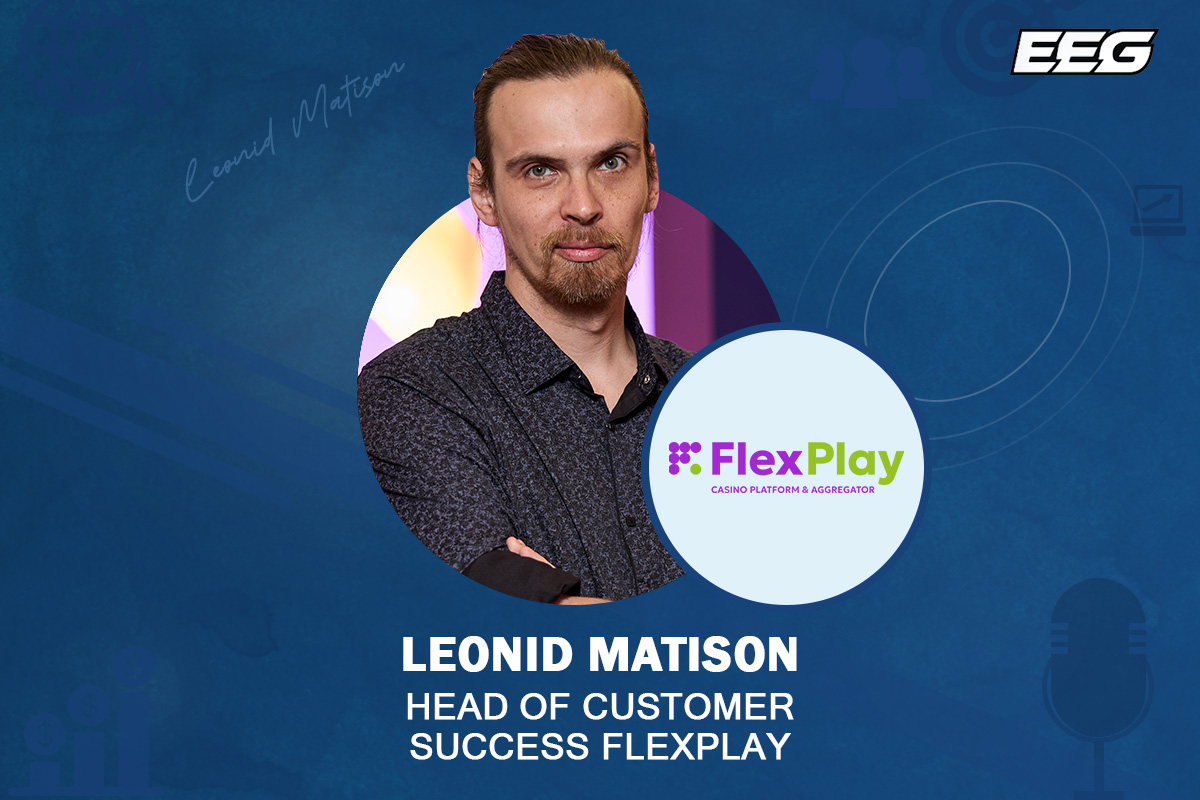
FlexPlay is entering a new phase with the launch of its own casino platform. Leonid Matison, Head of Customer Success, speaks with EEGaming about what inspired the company’s evolution, how it is helping partners adapt to change, and why a focus on flexibility, creativity, and collaboration is driving its vision for the future.
What inspired the move into the platform space, and how did that background shape your approach to creating it?
FlexPlay was born from EvenBet Gaming out of working closely with operators and studios as an aggregator, so we had a very clear view of where existing platforms were falling short. Many operators were forced to adapt their business models to rigid technology instead of the other way around.
Moving into the platform space was a natural evolution. We wanted to build a product that reflects how the market actually works today: fragmented regulation, fast-changing player behaviour, and the need to launch, test, and adapt quickly. That background shaped our approach significantly. Instead of building a “one-size-fits-all” platform, we focused on modularity, flexibility, and speed, so operators can grow without having to rebuild their infrastructure every time their strategy changes.
The platform market is full of established names. What makes FlexPlay stand out, and what kind of identity are you building for the brand?
Our differentiation isn’t about being louder or bigger — it’s about being more adaptable. FlexPlay is designed as a partner-centric platform, not a closed ecosystem.
We are building an identity around flexibility, transparency, and collaboration. Operators can customise their product, UX, content strategy, and growth roadmap instead of fitting into predefined templates. Commercially, we also remove unnecessary pressure at early stages, for example with models where partners don’t pay content fees until they actually start growing.
In a crowded market, identity comes from how you work with partners day-to-day, not just from features on a website.
You have described FlexPlay as a platform that “evolves alongside its partners.” What does that look like in practice for operators working with you?
We don’t treat launch as the finish line. We stay actively involved after go-live.
Operators receive ongoing support in analysing performance, adjusting content portfolios, testing new mechanics, and refining player engagement strategies. Our platform allows operators to add, remove, or prioritise content quickly, run experiments, and respond to real player data instead of assumptions.
We also actively listen to partner feedback and translate it into platform improvements. If a feature or workflow doesn’t serve operators in real conditions, we adjust it.
How does that flexibility help brands entering fast-changing or emerging markets where conditions can shift quickly?
Emerging markets rarely follow a stable or predictable path. This year, we are going to SiGMA Africa for the first time, and this continent is just the right example of how quickly and often market transforms. Regulation changes, payment preferences evolve, and player behaviour can shift very quickly.
FlexPlay’s flexibility allows operators to adapt without disruption: adjusting payment flows, reconfiguring bonuses, changing content focus, or localising UX. The platform isn’t locked into rigid structures, so operators can react to market signals in weeks rather than months.
This is especially important for brands entering highly volatile markets in Africa or LatAm, where the ability to pivot often determines success.
AI is a hot topic right now. How are you exploring its potential at FlexPlay, and what do you find most exciting about how it can genuinely support operators and players?
We approach AI very pragmatically. For us, it’s not about replacing people or creating black-box systems, but about enhancing decision-making.
We are exploring AI in areas like player segmentation, behavioural analysis, and content recommendations. It may help operators understand what players actually want and when. AI can also support smarter lobbies, more relevant promotions, and better detection of engagement patterns.
What excites us most is AI’s ability to reduce noise. It can highlight what truly matters and help them act faster and more confidently. But it can’t and will not fully replace strategic decision-making by humans.
Personalisation has become an essential part of modern player engagement. What does it mean to you in practice, and how is FlexPlay helping operators bring it to life?
For us, personalisation means relevance. Not just visuals or messages, but the entire player journey. FlexPlay enables operators to segment players based on behaviour, preferences, and performance, and then tailor content, bonuses, and communication accordingly. This helps players discover games that actually match their interests instead of scrolling through endless lobbies.
Good personalisation improves retention and trust. Players feel understood rather than pushed, and operators benefit from stronger long-term engagement.
But we suggest avoiding over-personalisation: if the players see only the recommended “long tail”, it may affect the operator’s revenue. Manual curation in addition to personalisation (like featuring a seasonal game during a holiday, or an operator’s personal favourite) allows for strategic promotions and branding.
Growth can be exciting but also challenging for operators. How do you and your team at FlexPlay support partners as they take that next step?
Growth often exposes weaknesses in technology or strategy. Our role is to help operators scale without losing control.
We support partners with analytics, reviews, and strategic guidance, helping them prioritise what to scale and what to optimise first. Technically, the platform is built to handle growth without forcing structural changes. Commercially, we remain flexible so that a transition is easier for operators.
Looking ahead, what are the key milestones or developments you are focused on for the year ahead?
Our focus is on deepening platform intelligence and partner value. This includes expanding AI-driven tools, improving content discoverability, and enhancing automation where it adds efficiency.
We are also investing in better insights for operators: not just reporting, but actionable recommendations that help them make smarter decisions faster.
Another priority is continuing to refine our platform based on real partner use cases, not theoretical ones.
And finally, when you think about FlexPlay’s future, what do you hope the company will represent within the wider iGaming industry?
I hope FlexPlay will be seen as a trusted growth partner — a company that helped operators build sustainable businesses rather than short-term results.
In an industry that often focuses on speed and scale, we want to represent balance: technology that adapts, content that makes sense, and partnerships built on mutual success.
If operators look back and say, “FlexPlay helped us grow the right way,” that will be the real measure of success.
The post FlexPlay: building a platform made to grow with its partners appeared first on Eastern European Gaming | Global iGaming & Tech Intelligence Hub.








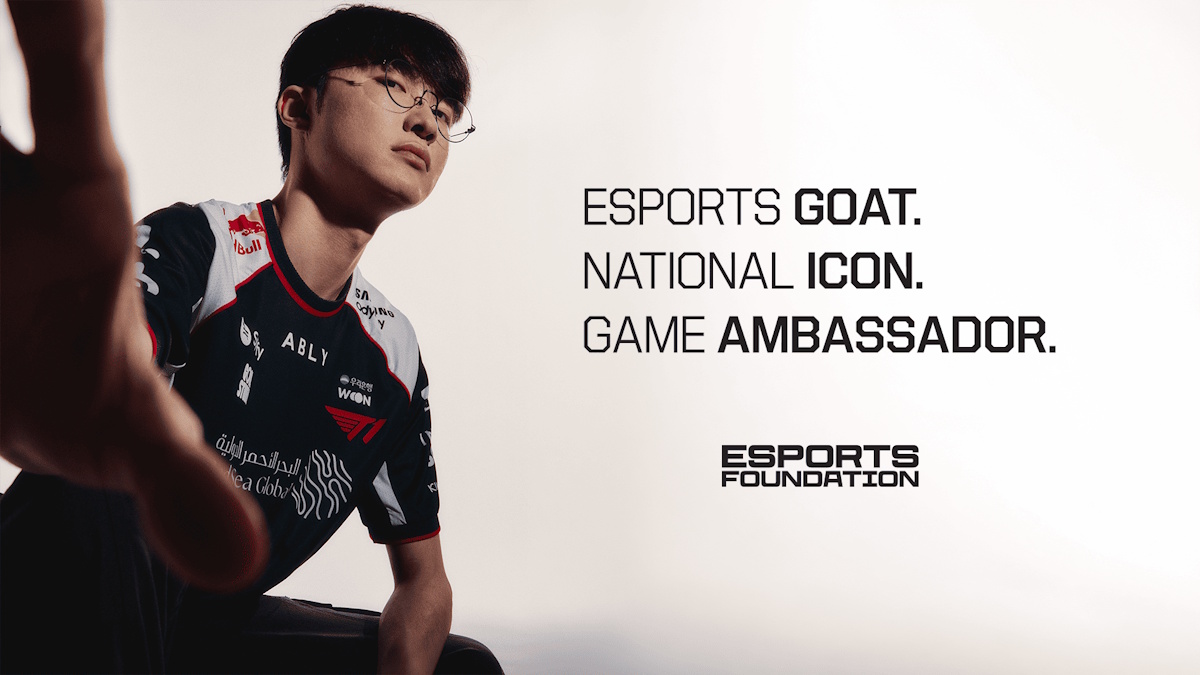
Lee “Faker” Sang-hyeok joins Cristiano Ronaldo and Magnus Carlsen in the Esports Foundation’s Ambassador Program.
The Esports Foundation (EF) has appointed Lee “Faker” Sang-hyeok as a Game Ambassador for the Esports World Cup (EWC) and Esports Nations Cup (ENC) through 2028, the organization said on July 15, 2026 in a statement issued from Riyadh and Paris.
EF said Faker joins Cristiano Ronaldo, listed as the Foundation’s Global Ambassador, and Magnus Carlsen as part of the Esports Foundation Ambassador Program. The Foundation said Faker will represent “the perspective of esports players” across its international events, athlete initiatives, media engagements and leadership forums.
“You can’t talk about esports without mentioning Faker. He is the defining athlete of competitive gaming: a champion whose excellence, discipline and longevity have inspired an entire generation,” said Ralf Reichert, Chief Executive Officer of the Esports Foundation. “As our Game Ambassador, Faker represents something fundamental to the Ambassador Program: esports creates its own global sporting icons. Across EWC, ENC and NGSC, he will help ensure that the players who built this sport have a voice in shaping where it goes next.”
Faker said: “Competition has shaped my life, and I am proud to join the Esports Foundation as Game Ambassador. I want to continue competing for the biggest titles with T1 while representing the players and fans who have helped esports grow worldwide. Through the Esports World Cup, Esports Nations Cup and the Foundation’s wider platforms, I hope to inspire the next generation to pursue excellence, remain resilient and believe in how far competitive gaming can take them. There is still much more to achieve.”
EF highlighted Faker’s competitive record, describing him as a six-time League of Legends World Champion, EWC 2024 winner, two-time MSI champion and ten-time domestic champion with T1. The Foundation also said Faker became the first esports athlete to receive the Blue Dragon Medal in 2026, describing it as the Republic of Korea’s highest sporting honor awarded by President Lee Jae-myung.
The post Esports Foundation names Faker Game Ambassador for EWC and ENC through 2028 appeared first on EE Gaming | Global iGaming & Tech Intelligence Hub.
Midnite has agreed a partnership with Middlesbrough FC that will see the UK bookmaker become the club’s principal partner and front-of-shirt sponsor for the 2026/27 campaign, which Middlesbrough describes as its landmark 150th season.
The companies announced the deal alongside a fan activation at Riverside Stadium on Thursday, July 9, branded “This Season’s On Us”. The initiative offered supporters prizes including 2026/27 season tickets, 2026/27 shirts, match tickets, or a £25 club shop voucher, with fans required to answer Middlesbrough trivia and complete a football challenge.
Middlesbrough former players Craig Hignett and David Wheater attended the event, and, according to the company, took bonus attempts on behalf of participants who missed out.
Andrew Mook, Midnite’s Head of Brand Marketing, said:
“Middlesbrough have a storied history and we’re delighted to announce this partnership during such a monumental year with the club celebrating their 150th anniversary.
“It was great to see so many Middlesbrough fans at the “This Season’s On Us” activation, we hope they enjoyed taking part and meeting club legends, with David Wheater hitting top bins on several occasions and allowing fans to win big with season tickets.
“We can’t wait to get to Riverside Stadium in August to kick-off a new season and we’re excited to say that we have plenty of new and captivating campaigns planned.”
Lee Fryett, Middlesbrough FC Chief Commercial Officer, added:
“We’re delighted to welcome Midnite as our new Principal Partner.
“We’re looking forward to working closely with Midnite to develop engaging campaigns, content and unique experiences that bring our fans even closer to the club.
“We’re confident this partnership will provide real value for our supporters while supporting our ambitions both on and off the pitch.”
The post Midnite signs as Middlesbrough FC principal partner for 2026/27 season appeared first on EE Gaming | Global iGaming & Tech Intelligence Hub.

ThrillTech has been awarded a Gaming-Related Supplier licence by the Alcohol and Gaming Commission of Ontario (AGCO), clearing the company to launch in Ontario’s regulated market.
The licence allows ThrillTech to deploy its opt-in side bet jackpots technology with regulated online casino, sports betting and lottery operators across the province.
Benjamin Bradtke, Co-Founder of ThrillTech, said: “Securing our AGCO licence is a major step in our mission to transform how jackpots are delivered at scale across regulated markets. This latest certification is testament to our robust technology and trusted compliance frameworks, allowing us to continue our global growth trajectory. We are thrilled to bring our proven, compliant jackpot technology to Ontario, empowering locally licensed operators to uplift revenue without cannibalising existing spend.”
The company said its “ThrillPots” mechanics sit as an independent, player-funded side bet and do not alter the underlying game’s return-to-player mathematics.
ThrillTech said the Ontario approval enables its existing multinational partners that also operate in the province to launch its side bet jackpots locally, while it also holds talks with potential new operator partners. The company lists its regulated footprint as including the United Kingdom, Sweden, the Netherlands, Romania, Malta, Gibraltar, Brazil and Peru.
The post ThrillTech secures AGCO supplier licence for Ontario launch appeared first on EE Gaming | Global iGaming & Tech Intelligence Hub.

-

 Compliance Updates5 days ago
Arizona Department of Gaming Issues Cease-and-Desist Orders to Multiple Operators Linked to Underage Gambling and Illegal Activity
-
 Latest News7 days ago
ELA Games releases Flames Fruits Frenzy Hold and Win slot
-
Latest News7 days ago
PG Soft appoints Hugo Baungartner as General Manager LatAm
-
Compliance Updates6 days ago
KONAMI GROUP’s Konami Gaming Inc. First to Submit Manufacturer License Application in Japan’s Emerging IR Market
-
Canada7 days ago
Canada’s Safer Gambling Gap: Why Market Success Doesn’t Always Equal Player Safety
-
Latest News7 days ago
Tom Horn Gaming ships Royal Ruby FeatureStorm slot worldwide on 14 July 2026
-
Latest News7 days ago
Booming Games launches Fish Tales: Double Catch Max Scatter
-
Latest News7 days ago
BC.GAME names Guillermo Ochoa brand ambassador for Mexico push