Latest News
PayRam Unveils Private Stablecoin Payment Gateway Built for iGaming

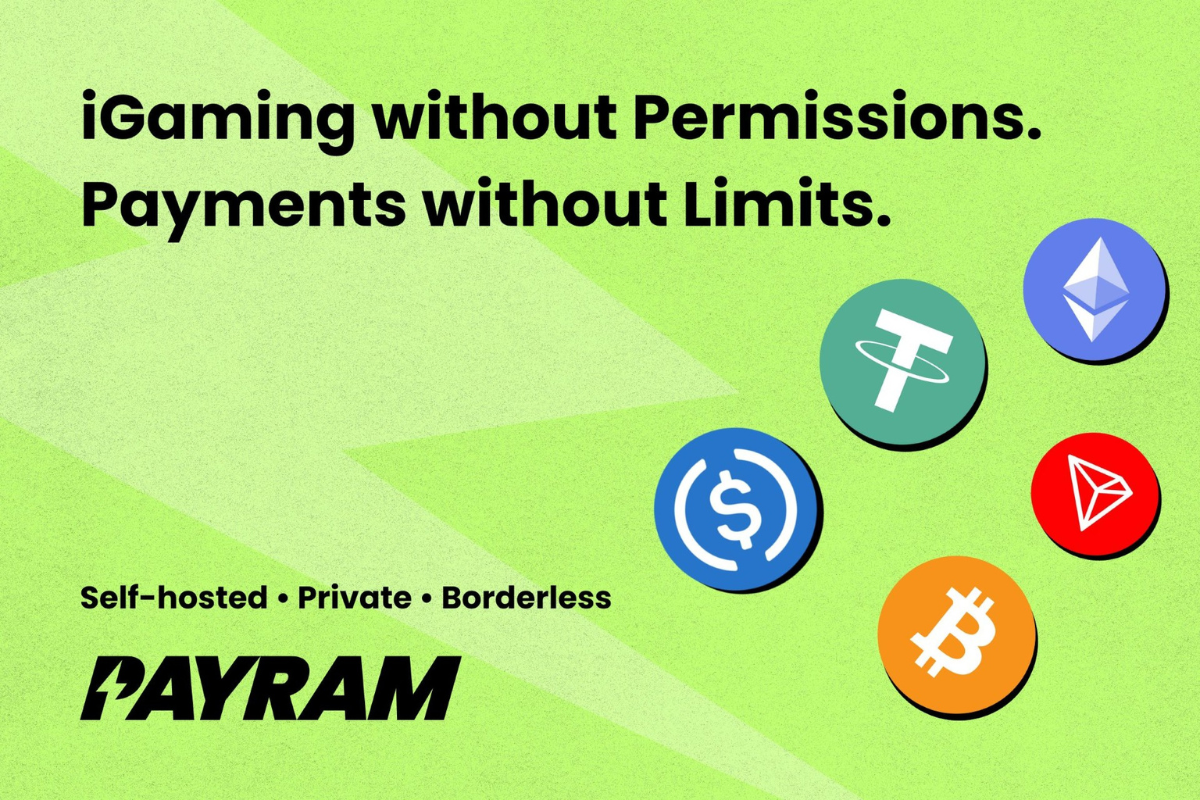
PayRam has launched its private stablecoin payment gateway for iGaming operators, gaming platforms, and affiliates that require fast, borderless, and censorship-resistant payments.
Built on the belief that payments should operate as freely as the internet itself, PayRam delivers decentralized PayFi infrastructure that allows iGaming businesses to accept and manage stablecoin payments through fully self-hosted infrastructure. Operators no longer rely on banks, custodians, or centralized processors to control their revenue.
In an industry plagued by frozen balances, chargebacks, delayed settlements, and compliance shutdowns, PayRam gives operators direct control over funds, payouts, and transaction infrastructure. Platforms retain ownership of their payment flow without platform risk. Operators can now accept private stablecoin deposits, launch without intermediaries, and expand globally on their own terms.
Stablecoins Are the Future of Global iGaming Payments
Stablecoins now drive the most significant transformation in payments in decades. With a market capitalization exceeding $300 billion, stablecoins now function as real-world settlement infrastructure rather than speculative assets. For iGaming businesses that operate across borders, stablecoins deliver instant payouts, low transaction costs, and continuous global liquidity.
Governments also continue to formalize regulatory frameworks. Initiatives such as the GENIUS Bill in the United States signal that stablecoins will soon function as foundational financial infrastructure for both traditional commerce and emerging agent-driven economies.
Yet most existing stablecoin fiat gateways still copy legacy banking structures. They custodian funds, over-monitor transactions, delay settlements, and restrict high-risk industries such as iGaming. Operators continue to face frozen balances, withheld profits, and sudden account closures.
Instead of decentralizing commerce, centralized processors reintroduce single points of failure. They strip merchants of privacy, predictability, and true ownership of funds.
PayRam removes these bottlenecks by allowing iGaming operators to deploy and operate their own self-hosted stablecoin payment nodes. This sovereign infrastructure restores payment autonomy, protects funds from blacklisting, enables private deposits, and eliminates third-party revenue risk.
Permissionless Commerce Underpinned By Privacy
PayRam embodies a mission to decentralize the global payments ecosystem. Its founder, Siddharth Menon, who previously co-founded WazirX, India’s largest cryptocurrency exchange, helped bring crypto to more than 15 million users. Today, he’s channeling that experience into building a decentralized PayFi layer engineered for privacy, autonomy, and self-custody.
“The future of payments is decentralized stablecoin payments. As the world moves beyond custodial systems, PayRam is building the foundation for permissionless commerce, where every merchant, creator, or platform can host and own their own payment infrastructure,” said Siddharth Menon, Founder of PayRam. “Just as Uniswap reimagined trading through decentralization, PayRam is reimagining how money moves across the internet.”
iGaming Operators Go Live in Minutes and Expand Into Underserved Regions
PayRam removes all onboarding friction. Operators need no approvals, no vetting, and no centralized onboarding process. Any business can deploy PayRam, configure it, and begin processing private stablecoin payments within 10 minutes.
This instant deployment allows operators to enter underserved and payment-restricted regions, unlock new player bases, and launch real-money gaming operations without waiting on banks, payment processors, or jurisdictional approvals.
PayRam is built as a merchant-first ecosystem, offering advanced accounting analytics, scalable APIs, and automated payments orchestration tools. It also arrives with integrated growth tools like referral and payout systems. Merchants and individuals can issue payment requests, share unique payment links, and monitor transactions through programmable APIs, all operated on infrastructure that users self-host and fully control. The built-in SmartSweep feature uses a family of smart contracts to move funds securely and periodically, eliminating the need to store private keys on servers.
PayRam supports stablecoin and cryptocurrency payments across major networks including Bitcoin, Ethereum, Base, and Tron, with integrations for Polygon, BNB Smart Chain, Solana, Ripple, Monero, and TON next in line.
“We’ve used several crypto payment providers over the years, including BTCPay Server, NOWPayments, and others, but PayRam stands out as truly open and built for the modern internet economy. It gives us full control over our payments and funds, along with stablecoin support, privacy, multi-chain flexibility, and faster global settlements,” said an iGaming operator using PayRam.
PayRam Prepares to Support Agentic Betting With Privacy and Automation
Agentic betting represents the next evolution of iGaming, where autonomous software agents will place bets, execute strategies, manage bankrolls, and settle wagers in real time without human intervention. These systems already power algorithmic trading in financial markets, and iGaming infrastructure now begins to move in the same direction.
Most existing betting and payment infrastructure cannot support this shift. Centralized processors expose transaction logic, restrict automated flows, and introduce settlement delays that break agent-driven wagering models at scale.
PayRam is actively adopting the foundational standards and infrastructure required to support agentic betting in the future. The platform is positioning itself as a privacy-first, decentralized payment layer that will allow autonomous betting systems to operate with:
- Private stablecoin deposits
- Real-time settlement logic
- Automated treasury and bankroll flows
- Programmable payout execution
- Full self-custody and non-custodial risk isolation
By preparing to adopt open standards such as x402 and ERC-8004, PayRam aims to support interoperable and intelligent payment flows between autonomous betting systems, sportsbooks, and gaming platforms when the agentic wagering ecosystem reaches production maturity.
Through this approach, PayRam is building the foundation for a future where payments are private, programmable, and permissionless.
About PayRam
PayRam is the world’s first self-hosted private stablecoin processor, giving merchants and individuals complete control over their payments stack. Built for the next era of permissionless commerce, it merges stablecoin payments with self-hosted infrastructure to enable borderless, censorship-resistant transactions.













Former WBC cruiserweight champion to appear at PartyPoker Tour UK stops and take part in online activations.
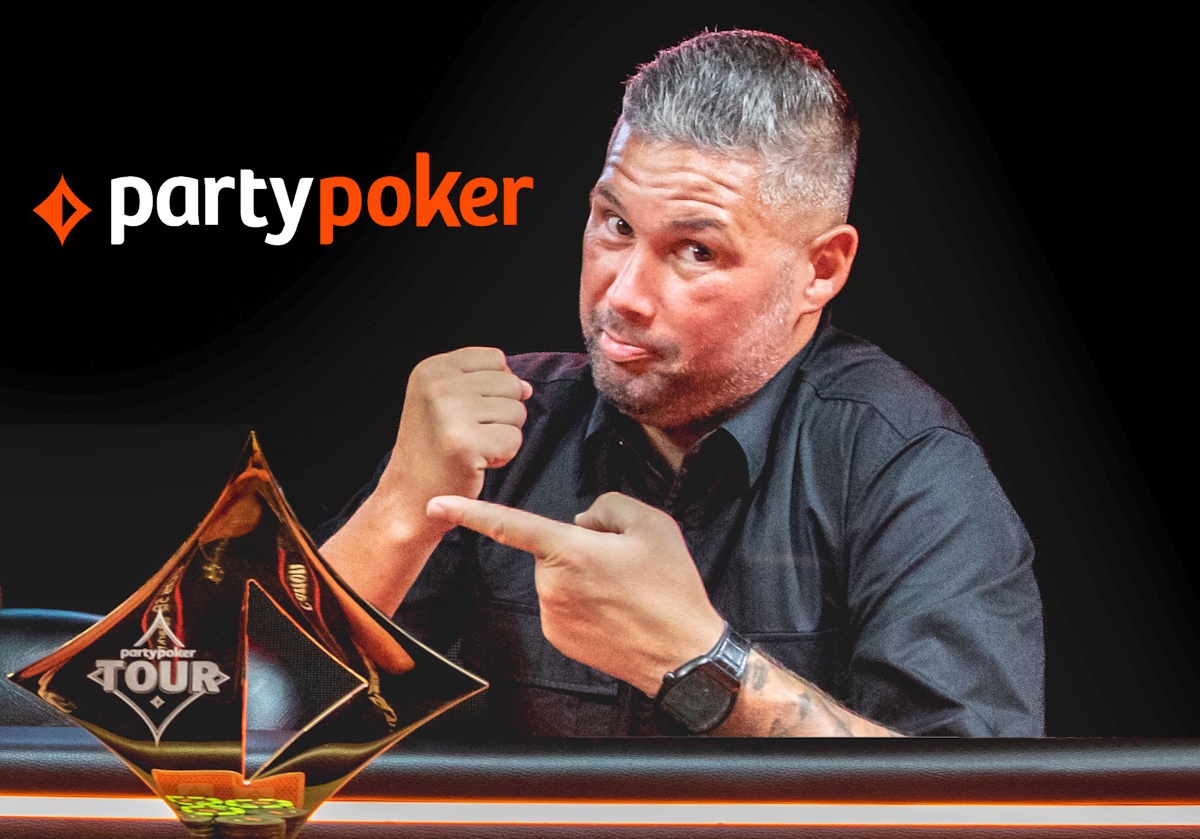
PartyPoker has appointed former WBC Cruiserweight World Champion Tony Bellew as a brand ambassador for the remainder of 2026, with appearances tied to the operator’s live PartyPoker Tour and online poker offering.
The company said Bellew will be “a regular face” at its remaining UK tour stops this season following an earlier appearance at the PartyPoker Tour Birmingham. Bellew will also take part in online activity linked to the PartyPoker schedule.
“I had such a great time at the PartyPoker Tour Birmingham. The atmosphere, the people and the passion for the game were incredible. I’m really excited to be joining the PartyPoker team for the rest of the year, getting involved at the live events, meeting players and seeing where the cards take me,” Bellew said.
PartyPoker said Bellew is scheduled to attend each remaining UK stop on the 2026 PartyPoker Tour: London in July, Glasgow in August, Cork in November, and London in December. The operator also referenced a series of exclusive online events running alongside the live calendar.
The post Tony Bellew signs as PartyPoker brand ambassador through 2026 appeared first on EE Gaming | Global iGaming & Tech Intelligence Hub.

Cease-and-desist letters cite alleged felonies and underage access tied to BetOpenly, Bookmaker, Club WPT Online Poker, Kutt Inc., and Raffle Creator.
The Arizona Department of Gaming said it has issued cease-and-desist orders to five online platforms—BetOpenly, Bookmaker, Club WPT Online Poker, Kutt Inc., and Raffle Creator—after investigations that the Department says involved alleged illegal gambling activity and underage access in Arizona.
In its announcement, the Department said each enforcement action alleges conduct giving rise to three felonies under Arizona law: promotion of gambling, illegal control of an enterprise, and money laundering. The agency cited Arizona’s prohibition on gambling unless specifically authorized (Ariz. Rev. Stat. Tit. 13, Ch. 33) and said the legal gambling age in the state is 21.
“Arizona is taking decisive action against illegal gambling operators that put Arizonans at risk,” said Jackie Johnson, Department Director. “Our top priority is protecting Arizonans and I’m grateful for the efforts of our intelligence unit led by Chief Law Enforcement Officer Doug Jensen to do just that. Through these cease-and-desist orders we are putting operators on notice: their conduct runs contrary to Arizona law and they must stop promoting illegal gambling.”
The Department’s letters describe different alleged violations by operator. For BetOpenly, the Department said peer-to-peer gambling rules prohibit third-party benefit, and alleged the platform benefited via a commission structure while enabling event wagering and daily fantasy sports contests without the required state licenses, including availability to underage Arizonans. For Bookmaker, the Department said its investigation found wagering on horse racing, casino games, and sports betting without an event wagering license or an advanced deposit wagering provider license, adding that online casino games are not legal in Arizona.
For Club WPT Online Poker, the Department alleged the platform enabled individuals under 21 in Arizona to enter pay-to-play online poker tournaments for prizes while using deceptive “no purchase necessary” language; the Department said online poker is illegal in Arizona. For Kutt Inc., the Department said Arizona “social” gambling prohibits third-party benefit and directed the operator to stop allowing Arizona users to deposit money and wager on sports, politics, pop culture, and casino-style games. For Raffle Creator, the Department said the operator did not meet requirements that allow Arizona nonprofits to conduct lawful raffles and alleged it allowed people under 21 to purchase tickets for prize chances.
The Department said the notified entities are directed to immediately stop all gambling operations and activities in Arizona “whether through mobile applications, online, or otherwise,” and to cease any future illegal gambling in the state. It added that future actions may include criminal charges or civil action against entities, principals, and employees, and that operators “may be subject to a potential award of restitution” and forfeiture of monies acquired due to the alleged conduct.
The post Arizona regulator orders five operators to stop alleged illegal gambling activity appeared first on EE Gaming | Global iGaming & Tech Intelligence Hub.

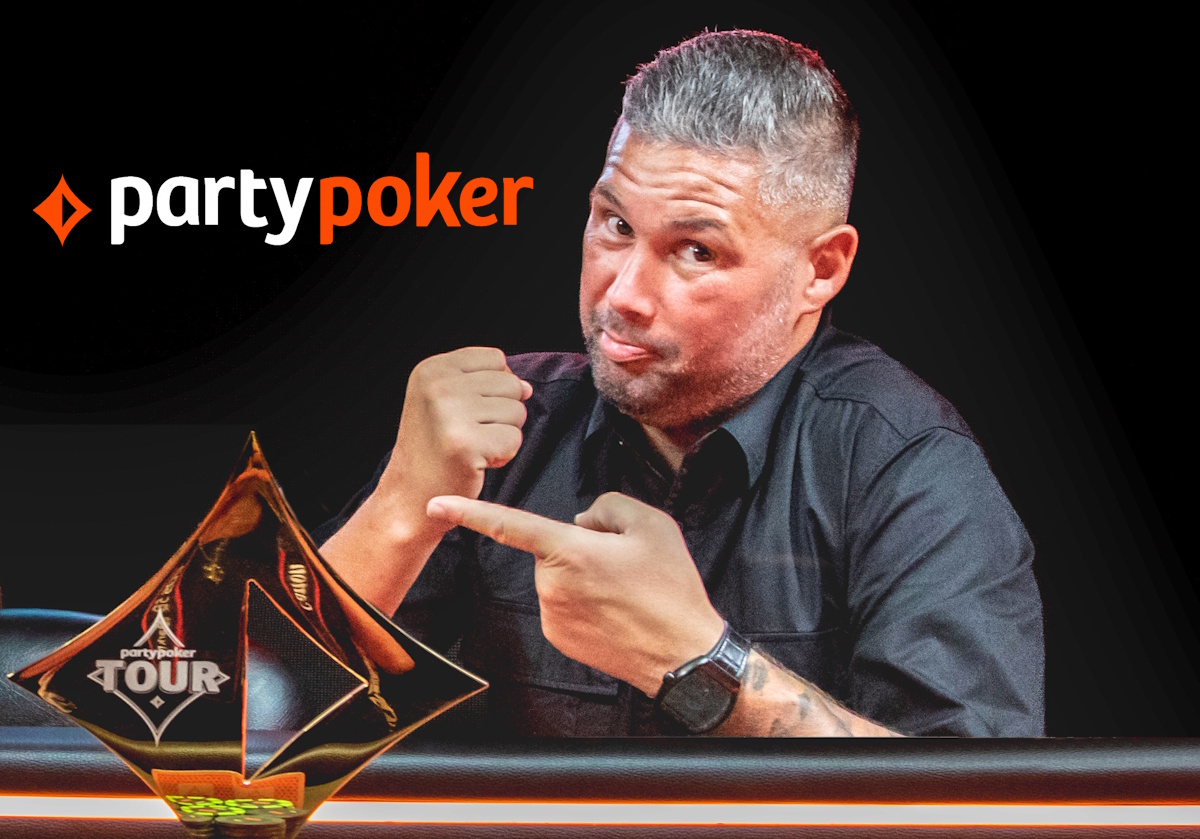
Tony Bellew has officially joined the PartyPoker Brand Ambassador team for the remainder of 2026, strengthening the brand’s growing roster of ambassadors and reinforcing its commitment to bringing poker to a wider audience.
A former WBC Cruiserweight World Champion and one of Britain’s most recognisable sporting personalities, Bellew will play an active role across both PartyPoker’s live tour and online offering throughout the rest of the year.
Speaking about joining the team, Tony Bellew said: “I had such a great time at the PartyPoker Tour Birmingham. The atmosphere, the people and the passion for the game were incredible. I’m really excited to be joining the PartyPoker team for the rest of the year, getting involved at the live events, meeting players and seeing where the cards take me.”
His return follows a hugely successful appearance at the PartyPoker Tour Birmingham earlier this year, where he embraced the atmosphere, spent time with players and immersed himself in the event. After thoroughly enjoying the experience, Bellew will now become a regular face at the remaining UK stops on the PartyPoker Tour throughout the rest of the 2026 season.
As part of his ambassadorial role, Bellew will attend every remaining UK stop PartyPoker Tour in 2026:
- London – July
- Glasgow – August
- Cork – November
- London – December
With four live festival stops and a series of exclusive online events still to come, players will have plenty of opportunities to meet Bellew at the tables throughout the remainder of the 2026 PartyPoker calendar. Look out for opportunities to take him on online, and at the PartyPoker Tour in Glasgow, Cork and London.
Stay Connected PartyPoker
- Instagram: @partypoker
- Twitter/X: @partypoker
- YouTube: partypokeryt
- Facebook: partypoker
- Discord: PartyPoker Tour
The post Former WBC World Champion Tony Bellew Joins PartyPoker as Brand Ambassador appeared first on Americas iGaming & Sports Betting News.

-

 10bet6 days ago
Ellis Park Stadium signs five-year naming rights deal with 10bet
-
central asia6 days ago
Groove confirms attendance at SBC Summit Tbilisi 2026
-
Bucharest5 days ago
Eeze opens 1,200 sqm Bucharest hub for technical teams
-
API integration5 days ago
Belatra signs cooperation deal to distribute slots via VeliGames
-
AB Trav och Galopp4 days ago
BetMakers Technology Group Selected to Distribute ATG Horse Racing Content Across Australia and New Zealand
-
Aviator5 days ago
Pernambuco court revokes Spribe’s interim relief in Aviator trademark dispute
-
affiliate marketing6 days ago
SEOBROTHERS’ Aleksandra Drigo flags higher barriers for affiliates in regulated Alberta
-
Compliance Updates6 days ago
KSA Updates Guidelines for Conducting Means Test