Compliance Updates
The UAE Gambling License May Become the Most Valuable to Get in 2026


The current decade is proving truly transformative for the whole global gaming industry, given the rollout of new licensing regimes and major upgrades to already established frameworks. Many of the latest frameworks have emerged offshore, with jurisdictions such as Nevis and Tobique using low taxes, a remote application process, lower licensing fees, and light-touch oversight to secure additional budget inflows.
On the other side, “onshore” hubs, especially in Europe, are doubling down on ever-stricter oversight, making it more complex and expensive to run a gambling business from there. Quite unexpectedly, therefore, a jurisdiction where gambling has historically been prohibited by religion and criminal law moved to introduce a comprehensive licensing regime. This was literally a shock for many; only one in a million industry enthusiasts would have predicted that this country would be the United Arab Emirates (UAE).
Two years ago, the UAE established the General Commercial Gaming Regulatory Authority (GCGRA), the first-in-history federal regulator in the Gulf to oversee gambling across all emirates. Since then, the GCGRA is rolling out gradually, brick by brick, issuing the first few B2B vendor licenses to a select few of internationally recognized suppliers while setting B2C licensing aside and approaching it with caution.
Today, the UAE gambling regulator is authorized to grant licenses for gaming operators (a B2C gambling license issued for a casino, sports wagering, land-based gaming facilities, lottery, and lottery retailers), gaming-related vendors (B2B gambling license), and key persons (affiliates, stakeholders, and employees). Even though the GCGRA has laid down an essential foundation ahead of B2C license issuance, however, the actual B2C regulations are still developing and unavailable to the public, apart from certain provisions on responsible gaming and anti-money laundering (AML) obligations.
As of this second, just a single B2C online gaming license has been issued. Detailed rulebooks on license conditions and the scope of onsite and online gaming activities, however, are still under development and remain subject to ongoing discussion. In essence, while the sector is gradually progressing toward a formal B2C licensing regime, the key details and timing are largely unclear.
In contrast, the B2B regime is already in full swing, with over fifteen UAE gaming licenses already granted to date. The regulator made it clear to everyone that its first priority is to establish a robust B2B ecosystem of technology, payment, content, and other aggregators before opening the door for B2C companies. Considering this, early GCGRA-licensed gambling aggregators get a rare first-mover advantage: legal setup in a business hub like the UAE with privileged access to serve the first wave of B2C UAE gaming license holders (B2C) and secure an unmatched level of trust among banks, investors, and other stakeholders for meeting rigorous regulatory expectations.
With the largely untapped market potential, many industry analysts argue that the UAE gambling license could become the single most valuable license to get in the next year.
The assumption is based on the fact that the UAE always plays the long game. The country’s goal is not merely closing fiscal gaps, as is often the case with offshore jurisdictions, but to drive meaningful economic diversification, expand tourism, and compete with other global entertainment hubs – all reinforcing confidence for entering the market. What’s more, even though the framework is relatively new, the country has an impeccable track record in building high-end regimes, namely in crypto, setting a benchmark for operators and aggregators.
Yet, what truly stands out is the license scarcity: the current GCGRA framework foresees only a limited number of approvals per emirate granted to B2B operators that meet stringent regulatory, operational, and integrity thresholds. The combination of high demand and limited supply significantly amplifies the license’s commercial value, given that the future B2C operator market – projected to generate billions in annual revenue – will be exclusively served by a select pool of qualified B2B vendors.
Beyond this, the UAE’s combination of robust economy, attractive taxation, political stability, and high consumer trust sets it apart from offshore jurisdictions launching gambling licensing regimes.
Taking all factors into account, the UAE gaming license could become the new “golden standard” as one of the most respected regulatory regimes worldwide, turning into the license every operator wants to add to their portfolio. Unsurprisingly, therefore, aggregators are already preparing to move ahead with licensing, bracing for what may become one of the most scrutinized application and approval processes of all time.
With this in mind, joining the ranks of the select few UAE gambling license holders (B2B) will hinge on early, meticulous preparation of necessary documentation and specialized region-specific professional advice. Among these are qualified consultants at Inteliumlaw, a UAE local law firm with on-the-ground representatives in the country and extensive experience in supporting gambling businesses. Having spent years navigating gambling frameworks and establishing relations with regulators, Inteliumlaw is emerging as a top legal partner for operators looking to capitalize on what is set to become the most valuable licensing opportunity of 2026: the UAE gaming license.










Central Register for Exclusion from Gambling
KSA Publishes Studies and Provides Guidance on the Duty of Care

The Dutch Gambling Regulator (KSA) has published two studies and provided additional guidance on the fulfillment of the duty of care by online gambling licensees. The documents provide insight into practice and offer clarification on personal interviews and the submission of notifications for registration in the Central Register for Exclusion from Gambling (Cruks).
The KSA conducted research into these topics in 2025. The results were discussed in December 2025 during a roundtable discussion with license holders. During this discussion, practical experiences and bottlenecks were gathered. Based on this, the KSA has drawn up guidelines to provide more clarity regarding implementation.
Personal maintenance
The personal interview is a far-reaching intervention that license holders are required to implement when there is a suspicion of excessive gambling behaviour or gambling addiction. Research shows that license holders implement this differently and encounter bottlenecks, such as a low response rate from players. The guidance explains, among other things, the timing of the intervention, the form of contact and the content of the conversation. In doing so, room remains for customisation and professional judgment.
Notices
If a license holder observes serious signs of problematic gambling behaviour or suspects a gambling addiction, the player must be advised to register with Cruks. If the player does not follow this advice, the license holder must report this to the KSA (a notification). The KSA may subsequently decide to involuntarily register the player in Cruks.
The research shows that license holders apply this measure differently and that there are questions in practice regarding its implementation. For example, it is difficult for the license holder to verify whether a player has actually registered, and it is not always clear when a notification must be submitted.
The guidance provides practical explanation regarding this, including the timing of reporting and the information required.
Guidelines
The guidelines do not contain new rules, but provide further explanation regarding the application of existing obligations. This gives permit holders more clarity regarding the fulfillment of their duty of care.
The post KSA Publishes Studies and Provides Guidance on the Duty of Care appeared first on Eastern European Gaming | Global iGaming & Tech Intelligence Hub.
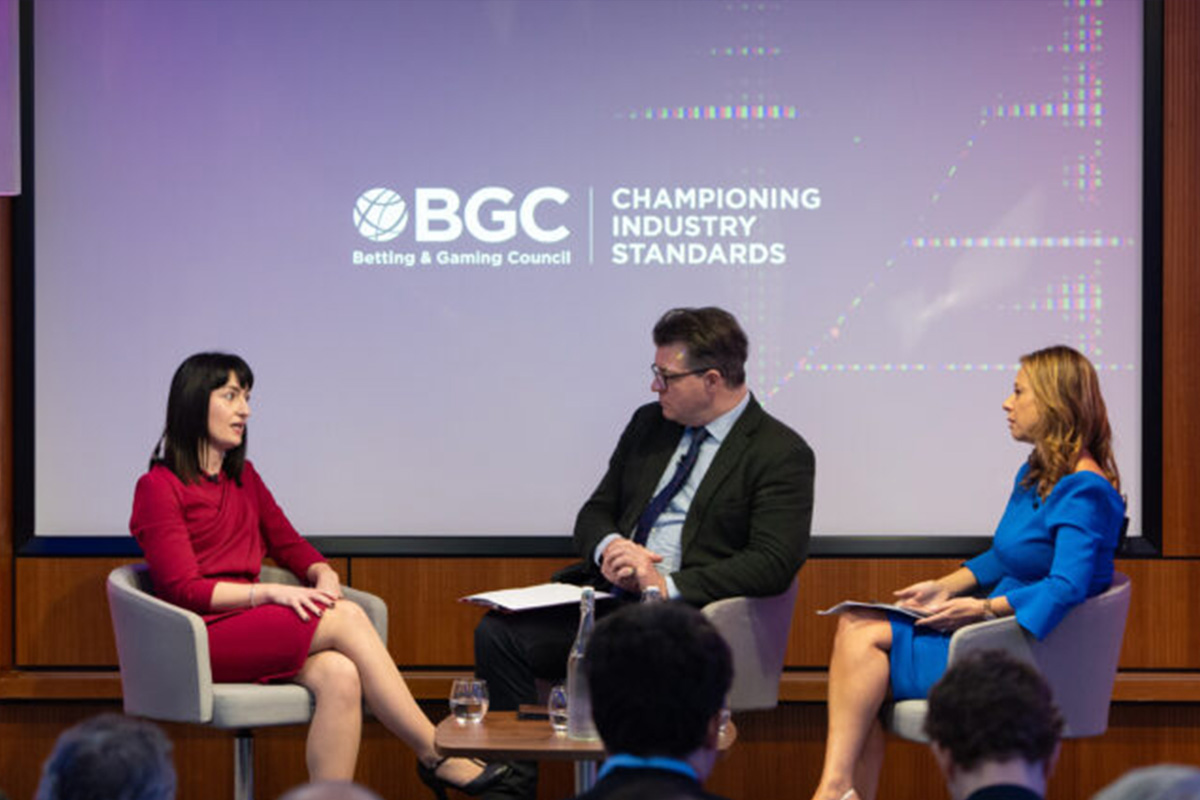
The Betting and Gaming Council AGM 2026 has discussed about the surging illegal gambling black market. As speakers repeatedly highlighted, 1.5 million people in Britain are already gambling on unlicensed sites and staking around £10bn a year outside UK regulation.
That concern is only set to intensify in the coming weeks as the Government considers further regulatory changes. In particular, Financial Risk Assessments (FRAs), which would require customers to provide detailed financial information such as bank statements and will only drive more customers towards unlicensed operators.
Chaired by broadcasters Gloria de Piero and Liam Halligan, the event began with a keynote from the Gambling Minister, followed by a discussion with BGC Chief Executive Grainne Hurst. A panel on the illegal market and the Gambling Commission’s assessment of the challenge followed, alongside research, polling and personal testimony from across the industry highlighting the scale of the problem.
Baroness Fiona Twycross, Parliamentary Under Secretary of State and Minister for Gambling, opened proceedings by addressing the tensions in current policy. She acknowledged that the gambling duty changes announced in November’s Budget were “extremely challenging for the sector, particularly for online operators,” and that they would “significantly affect business decisions and staff.” She defended the government’s position, arguing the changes were necessary to support public finances and would raise over a billion pounds a year for the Treasury.
The minister was clear: “Illegal gambling causes harm to vulnerable consumers,” she said, adding that it also damages the regulated sector. She announced an additional £26m for the Gambling Commission over the next three years and publicly confirmed the establishment of an Illegal Gambling Taskforce. This will bring together major companies including Google, Mastercard, TikTok and Visa alongside law enforcement and advertising bodies with a focus on illegal payments, advertising and cross-agency collaboration. She also announced a forthcoming consultation on the banning of unlicensed sport sponsorships, including in the Premier League. For many in the industry, this welcome action on enforcement will sit uneasily alongside tax policy that they believe is actively driving consumers towards the harmful black market.
The post BGC AGM 2026 Discussed About Surging Illegal Gambling Black Market appeared first on Eastern European Gaming | Global iGaming & Tech Intelligence Hub.

New approvals in U.S. states and applications in Canadian provinces drive Catalist Sports’ latest expansion across regulated North American markets
Catalist Sports, a leading licensed supplier of sports betting content to the regulated U.S. marketplace, has continued to expand its regulated market footprint with new supplier licenses secured in Arkansas and Nebraska, alongside recently submitted Canadian applications in Ontario and Alberta.
Arkansas’ regulated sports betting market is set for significant growth, with major operators including DraftKings and FanDuel entering the state in March 2026. In addition to Arkansas, Catalist Sports has successfully obtained a supplier license in Nebraska.
Following the approval of its supplier license in Missouri, the latest state to regulate online gambling, in December, Catalist Sports is now licensed in 30 U.S. jurisdictions, with two Canadian provinces expected to follow.
These license updates reinforce Catalist Sports’ commitment to serving both U.S. and Canadian regulated betting markets with compliant, high-quality content and services.
“Securing licenses in new jurisdictions and strengthening our regulatory standing is fundamental to serving as a trusted, key supplier to our operator partners,” said James Monk, Vice President & General Manager of Catalist Sports.
“Arkansas represents an exciting next step for us, particularly as major brands prepare to enter the market. At the same time, our licenses in Nebraska, along with applications in Ontario and Alberta, and ongoing license upgrades, position Catalist to continue delivering scalable, compliant, and differentiated services to our partners.”
Catalist Sports’ expanding North American footprint supports the company’s broader strategy to provide licensed operators with premium data, live streaming, and advanced trading capabilities, helping partners maximize in-play engagement, product innovation, and long-term growth in regulated markets.
Catalist Sports distributes official data and live streaming rights from a vast portfolio of events to licensed U.S. sportsbooks. This includes top-tier tennis properties such as the Australian Open, ITF World Tour, Davis Cup, and Billie Jean King Cup, as well as events across soccer, basketball, and ice hockey, which power year-round engagement for sportsbooks seeking continuous, high-frequency, high-quality live betting content.
The post CATALIST SPORTS SECURES NEW SUPPLIER LICENSES IN ARKANSAS AND NEBRASKA appeared first on Americas iGaming & Sports Betting News.

-

 BIS SIGMA SOUTH AMERICA 20267 days ago
VeliTech makes its Brazil debut at BiS SiGMA South America 2026
-
Canada7 days ago
Peter & Sons Goes Live in Ontario with Ellipse Entertainment
-
Austria7 days ago
Wazdan strengthens European foothold with Austrian market entry via win2day
-
AMUSEBOX7 days ago
Casino Iveria Tbilisi Installs Amusnet’s Type S 50 F Slot Cabinets at its Gaming Floor
-
Canada7 days ago
Peter & Sons Goes Live in Ontario with Ellipse Entertainment
-
ELA Games7 days ago
Endless Super Free Spins in ELA’s Spring Release, Golden Bunny
-
eSports7 days ago
Esports Nations Cup 2026 Awards Official Partner Status Across 100+ Nations to Build the Future of Nation-Based Esports
-
Africa4 days ago
Virgin Bet goes live in South Africa