Gambling in the USA
Las Vegas Casino Culture Suffers Rejection by New Gen Gamblers

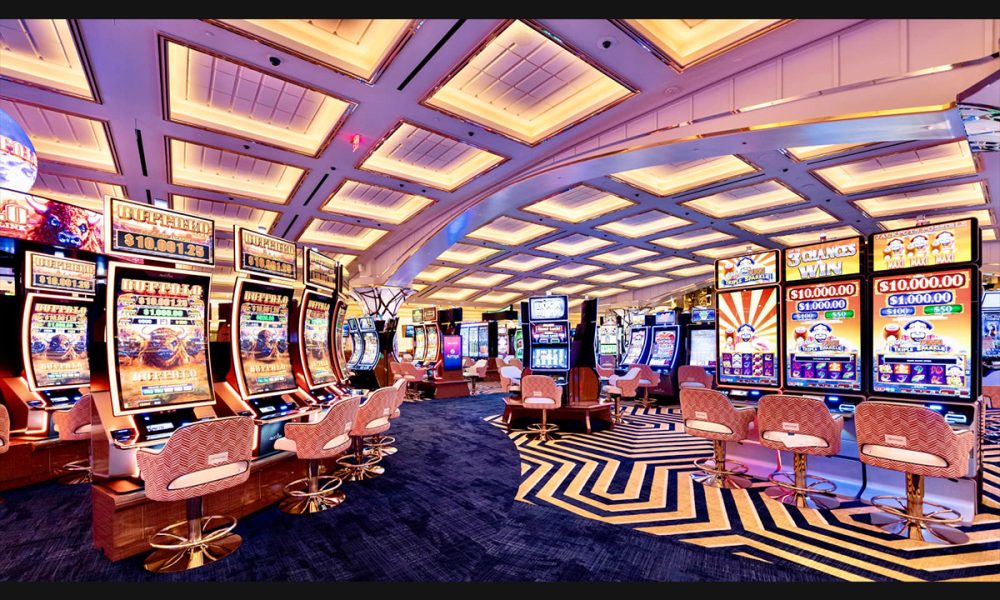
The latest statistics confirm the social chatter that Las Vegas tourism has hit a dramatic low, with some even calling Vegas an experience of the past.
Only 3.1 million people visited Sin City in June, down 11.3% compared to last year, according to the Las Vegas Convention and Visitors Authority (LVCVA).
Social media users have called out the high prices of everything from dining to parking, citing these and other reasons for staying away.
Robby Starbuck, conservative activist and host of “The Robby Starbuck Show,” says it is not just prices that are keeping people out of Vegas.
“Now nearly everyone under 40 who bets seems to do it online,” Starbuck said.
“I don’t know one person under 40 who goes to Vegas regularly to bet or play slots,” he added.
“This trend will continue with younger people because, honestly, our minds are wired differently.”
The U.S. online gambling market in 2024 was estimated at $12.68 billion, according to Grand View Research.
Starbuck said generational differences also could be pushing down the popularity of visiting Las Vegas.
“Another differentiator is that older generations focused on real-life interaction, while younger generations feel just as content with parasocial online experiences,” he said.
“The Vegas marketing image is one centered on slots and showgirls, two things young people have no interest in,” said Starbuck.
He added: “The typical casino feel and marketing just won’t be as successful with young people who have 40 options to gamble on their phones from the comfort of their own home.”
An additional generational difference, Starbuck pointed out, is that younger generations are ditching the bottle.
“Younger generations drink alcohol at lower rates than older generations did at their age. That’s going to have a material impact on the Vegas business model if young people drink less,” he said.
The number of people in their 20s who chose to abstain from alcohol more than doubled between 2001 and 2019, going from 9% to 22%, according to a 2019 National Drug Strategy Household survey. And a recent Gallup survey found that roughly 38% of adults under age 35 now identify as fully abstaining from alcohol.
In addition, more than a quarter of Gen Z respondents felt “very concerned” about the potential health effects of drinking alcohol, according to Civic Science.
The hotel industry is also feeling the burn of fewer visitors.
Occupancy rates dropped 6.5%, while average daily room rates have lowered to $163.64 – down 6.6%, according to the LVCVA.
Meanwhile, a 43-story hotel and casino has been put on an indefinite pause, SF Gate reported.
The property has a prime location on the Vegas strip and will remain an empty lot for parking for now.
Starbuck said he’s been to Las Vegas a number of times in his life and doesn’t see himself visiting again unless there is a change.
“If it feels like a place where I can see the future and bring my whole family, then you’ll see me in Vegas again,” he said.
“Without that kind of transformation, Vegas is in trouble in the coming decades,” he predicted.
“If Vegas wants to win with young people in the future, it’s going to have to transition to a must-see destination that makes you feel like you have just entered the future.”
The post Las Vegas Casino Culture Suffers Rejection by New Gen Gamblers appeared first on Gaming and Gambling Industry in the Americas.












G2 Digital, the iGaming operator founded by industry veterans Greg Carlin and Dan Alexander, has launched Vegas Club Casino in New Jersey on White Hat Gaming’s Player Account Management (PAM) platform. The site is now live at NJ.PLAYVEGASCLUB.COM, with apps available for iOS and Android, the companies said on July 22, 2026.
Under an exclusive agreement, White Hat Gaming will provide its PAM solution to support G2 Digital as it targets regulated jurisdictions across the United States and Canada. The platform scope includes CRM marketing support, a proprietary cashier, RGS integrations, and White Hat’s Travelling Wallet feature, positioned by the supplier as enabling cross-state flexibility and scalability.
Phil Gelvan, CEO at White Hat Gaming, said: “Greg and Dan are incredibly well-respected in the industry, so we are proud that they have chosen White Hat Gaming’s first-class PAM solution to supplement G2 Digital as it expands its operations in the US iGaming space with Vegas Club Casino. We are dedicated to delivering a highly optimized PAM product that ensures G2 Digital provides its players with a seamless, high-performance gaming environment.”
Greg Carlin, Co-Founder and CEO at G2 Digital, said: “After conducting a thorough analysis of all available platforms approved in the US market, White Hat’s PAM solution stood out as the winner, both in terms of the technology and the leadership team behind that product.”
White Hat noted its PAM is also used by operators including Bally’s, Jackpocket, and Choctaw Nation, and framed the deal as expanding its presence in regulated US markets.
The post G2 Digital launches Vegas Club Casino in New Jersey on White Hat Gaming PAM appeared first on Americas iGaming & Sports Betting News.
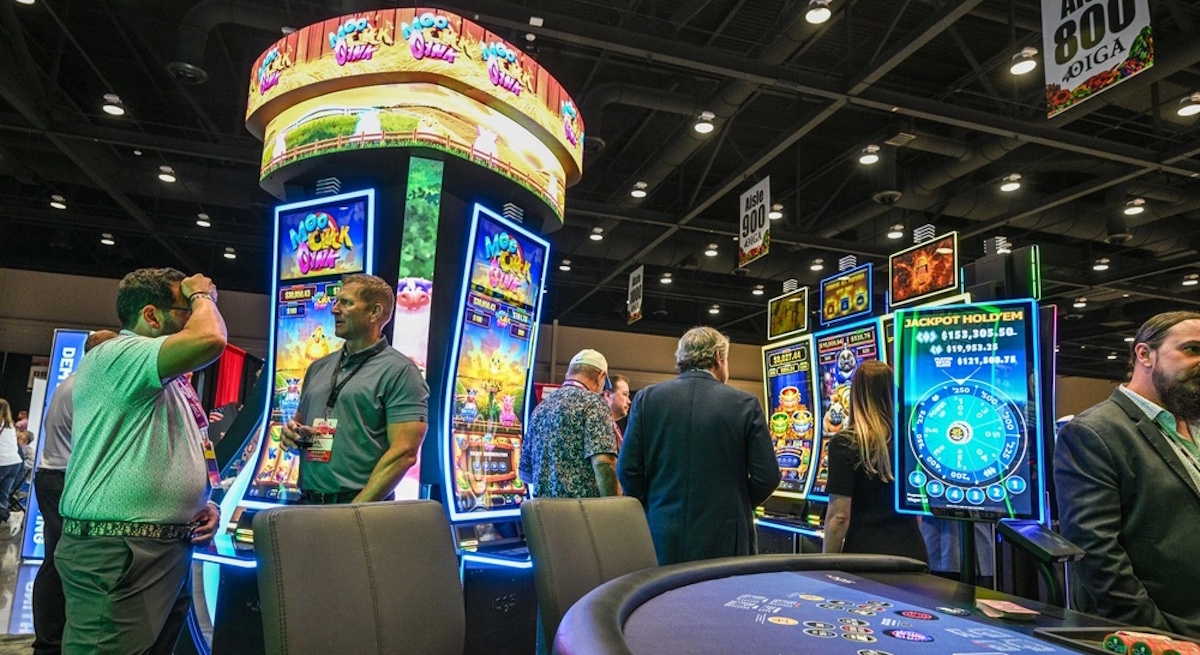
AGS today announced it will be attending the 2026 Oklahoma Indian Gaming Association (OIGA) Conference and Trade Show, taking place July 20-22 at the Oklahoma City Convention Center.
With deep seated roots in Oklahoma, where AGS was founded and where its primary warehouse and production facility is located, AGS is eager to return to OIGA with a continued commitment to serving the needs of tribal operators.
”Oklahoma is not just another dot on the map for us. It’s where we started and where we learned how to be a true gaming supplier,” said David Lopez, CEO and President of AGS. “You can’t fake it in Oklahoma. Tribal customers know the games, they know the math, they know service, and they know who shows up every time. That has been great for AGS, because it forced us to get better. It made us more disciplined while keeping us honest. We’ve grown a lot since then – Class III, tables, interactive, offices all over the place – but our history in Oklahoma and Class II is not something we moved on from. It’s part of the AGS engine.”
The Company’s product showcase will include the large-format, specialty cabinet Spectra SL75+. Designed to support the entire Spectra game library, including premium titles when leased, Spectra SL75+ gives operators added flexibility to mix and match content to fit their unique casino floor.
The cabinet acts as the perfect canvas to highlight five new titles including Rakin’ Bacon! Fu Zhu Bao Bao and Rakin’ Bacon! 5 Prosperity Pots, Cash Carriage Looter, Da Da Luo Boom, and Frightful Fortunes Popping Pumpkins.
AGS’ high-performing mechanical stepper cabinet Revel® – available in both Class II and Class III – is redefining the category by blending traditional mechanical gameplay with video-inspired features, creating an engaging experience for all player types. The latest Revel portfolio includes Crystal Reels® and Royal Reels®, available in both Class II and Class III. Expanding the lineup, Jackpot Legends – a new cash-on-reels title featuring an exciting Jackpot Bonus Wheel – and So Hot Cash®, which delivers classic stepper gameplay and can be linked to the So Hot Grand progressive, are set to debut in Class III later this year, with Class II launches following in 2027.
On the table side, AGS’ award-winning progressive platform Bonus Spin Xtreme® (BSX) has been hugely successful in turning small side bets into massive jackpots throughout the tribal casino market. Linking all table games – from the pit to the poker room – BSX has been elemental in allowing operators to offer the flexibility at the tables to make these life-changing wins become more common.
AGS’ participation in OIGA reflects the Company’s history in Oklahoma and its longstanding commitment to the tribal gaming community. More than a trade show presence, OIGA is an opportunity for AGS to reconnect with valued partners, strengthen relationships, and reaffirm its respect for the Oklahoma Tribes that have played such an important role in the Company’s growth.
Attendees are invited to visit AGS at booth 732 throughout the show.
For more information, visit newsroom.playags.com.
©2026 AGS LLC. All® notices signify marks registered in the United States. All notices signify trademarks which are currently not registered on any country-wide basis. Products referenced herein are sold by AGS LLC or its affiliates.
The post AGS Reflects on Their Class II Roots at OIGA 2026 appeared first on Americas iGaming & Sports Betting News.
Gambling in the USA
UpUp Casino Opens to U.S. Players with Premium Games Free, Faster Redemptions, and a Player-first Rewards Program
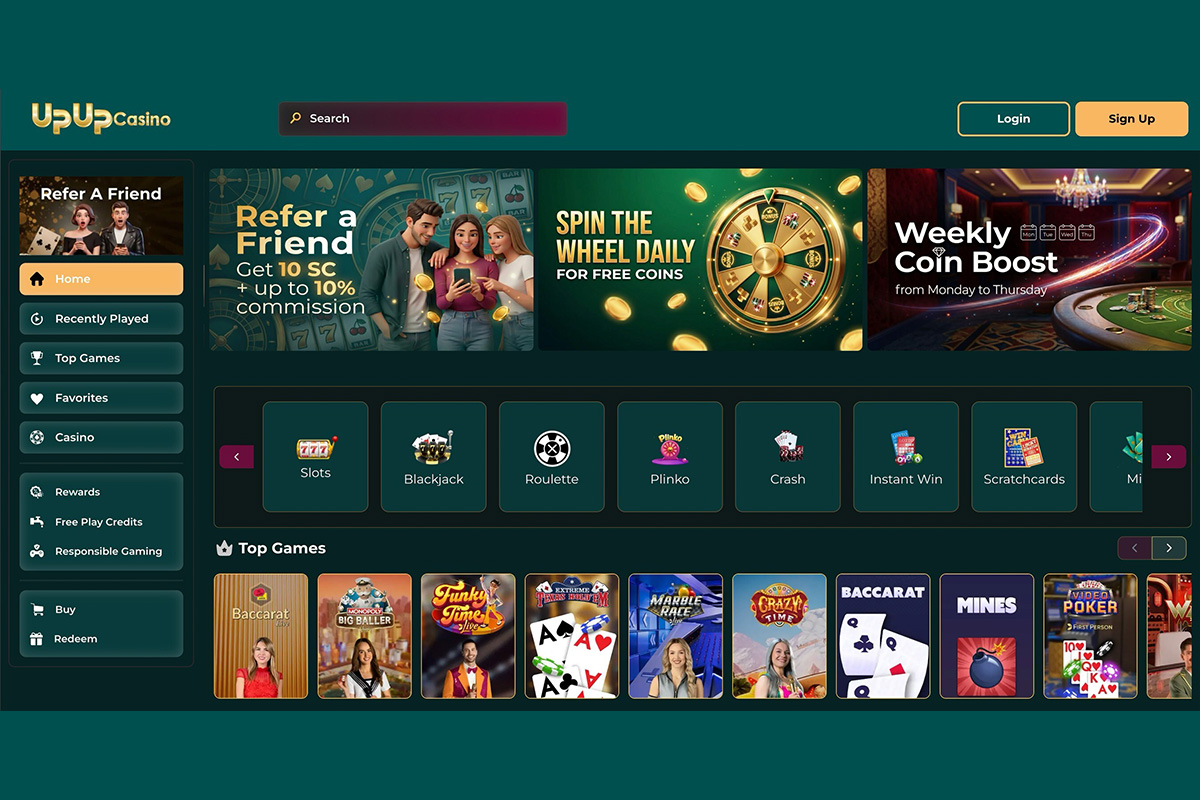
UpUp Casino, a free-to-play social sweepstakes platform built on player-first principles, officially launched in the US at upupcasino.com. The platform debuts with a premium game library, independently audited systems, and a legally compliant sweepstakes model that never requires a purchase or deposit to play or redeem real cash prizes.
UpUp Casino features a diverse collection of social and live games from globally recognised studios that power leading international iGaming brands — premium titles that are traditionally paid-to-play, now available free within the UpUp Casino sweepstakes experience. The platform operates using two virtual currencies: Gold Coins (GC) for entertainment gameplay and Sweep Coins (SC), which can be redeemed for real cash prizes.
Built around a player-first rewards experience, UpUp Casino offers every new player a welcome gift upon signup, alongside a wide range of ongoing promotions and benefits. Players can enjoy daily rewards, weekly bonuses, coin package bonuses, limited-time coin boosts, refer-a-friend incentives, and more. The platform’s VIP program further enhances the experience with boosted promotions, priority support, and exclusive tier-based rewards.
All eligible SC balances can be redeemed for real cash prizes through a redemption process designed for speed, security, and low minimum thresholds — ensuring rewards remain accessible to players.
UpUp Casino has been independently audited for security and fair-play integrity prior to launch and operates in compliance with U.S. sweepstakes promotional regulations. Player accounts are protected through industry-standard encryption, identity verification systems, and dedicated 24/7 customer support staffed by real people.
“Players deserve more — premium games without paywalls, faster redemptions, better rewards, and support from real people who genuinely care. We built UpUp Casino around those principles. This is what a modern player-first sweepstakes casino should look like,” said Angelina Upton, Founder of UpUp Casino.
The post UpUp Casino Opens to U.S. Players with Premium Games Free, Faster Redemptions, and a Player-first Rewards Program appeared first on Americas iGaming & Sports Betting News.

-

 Alberta6 days ago
Greentube strengthens Canadian presence with Alberta debut as market opens
-
Compliance Updates6 days ago
The MGA Publishes Notice on Websites Impersonating Licensed Operators
-
Alberta6 days ago
Greentube goes live in Alberta as province opens regulated iGaming
-
hold and respin6 days ago
Spinomenal releases new slot 3 Fuego Chillies
-
Brazil5 days ago
Hunch cites 78% matchday retention for Super World Cup free-to-play suite
-
Anne Marie Caulfield4 days ago
Irish Gambling Regulator Threatens Prediction Market with High Court Action
-
Brazil5 days ago
Hunch reports 78% matchday retention for Brazil World Cup free-to-play push
-
Canada5 days ago
Tonybet player in Canada claims $20,000 CAD golden World Cup card prize