DraftKings
The Great Gambling Class Action Wave: A Payout For Lawyers, Not Players


Class action lawsuits in the gambling industry are everywhere, but a closer look reveals a startling truth: They have become a new, industrialized legal business model where the lawyers get paid, but most players see little to nothing.
From DraftKings to sweepstakes casinos, law firms are filing often, promising justice and accountability for operators. The headlines certainly make it sound like players are winning big. We hear of a $155 million settlement against Big Fish Games, a $12 million payment from FanDuel and DraftKings, and a $3.5 million settlement from SpinX Games. Even Coinbase paid $2.25 million over a crypto sweepstakes controversy.
But these numbers tell only half the story. The journey from a lawsuit filing to a meaningful payout is a brutal one for class members, but often a highly profitable one for the legal firms behind the litigation.
The filing frenzy: a numbers game
The class action landscape is a numbers game. While filing a lawsuit might seem straightforward, the journey is not. According to empirical studies, nearly four out of every five lawsuits initially filed as class actions are never actually certified. That’s an 80% failure rate right out of the gate. These cases are often dismissed or revert to individual claims too small to pursue economically.
As John Holden, a law professor at Oklahoma State University, explains, “When you announce that you’re filing a class action lawsuit against DraftKings or a sweepstakes company, you’re at the starter pistol of an ultra marathon.”
This high-volume, high-risk approach is particularly evident in the gambling industry. Multiple class actions against VGW Holdings (the company behind LuckyLand Slots and Chumba Casino) were dismissed, often due to enforceable arbitration clauses that force disputes into individual arbitration, fundamentally undermining the class action’s purpose.
This industrialized approach to litigation — where a law firm files a similar case against different companies dozens of times — is a strategy of volume. The hope is that a few will survive the “significant early filters” of the motion to dismiss and motion for class certification, which the Institute for Legal Reform highlights as key hurdles.
Another issue: making sure people in the “class” want to be part of the whole shebang.
“Class actions do have a number of unique hurdles, such as class certification motions and fairness hearings, that we don’t see in other forms of litigation, but it’s due to the fact that attorneys are hoping to represent individuals who usually haven’t affirmatively opted in to such a representation and will lose the right to sue individually if they don’t opt out of the class,” said Evan Davis, head of the gaming and sports practice at Royer Cooper Cohen Braunfeld LLC. “The court needs to ensure that these individuals are being treated fairly by the court system and that they are receiving an appropriate benefit from the litigation.”
The settlement reality check
Even when cases survive and result in settlements, the outcomes for individual players are often underwhelming. A study of federal court class actions found that in over half of all cases studied, members of the proposed class received zero relief.
When settlements are reached, the gap between the headline amount and what players actually receive is enormous. The Federal Trade Commission (FTC) reported that the median claims rate was just 9% in 2019. For settlements involving over 2.7 million class members, the average claims rate dropped to a mere 1.4%, as reported by Harvard Law professor William B. Rubenstein.
This leaves a significant portion of the settlement pool unclaimed. While the lawyers take a guaranteed, substantial cut — often in the millions — the payouts for individuals are typically modest, often in the double and low triple digits. The low participation rates are due to practical frustrations: Settlement notifications often look like junk mail, and the claim process can be onerous. The extended timeline of class action litigation, which adds “many additional months to your case,” as Holden said, also creates financial pressure that pushes firms toward settlement.
“They take even longer than regular litigation because you’ve got to go find the class, you’ve got to get the class certified,” Holden noted. “So basically you’re having this other legal process play out before you get to the next legal process. You’re adding on many additional months to your case.”
This extended timeline creates financial pressure, especially when facing well-resourced defendants.
“If you were to bring a class action against Google or something, they have infinite money — they can litigate forever if they wanted to,” Holden explained. “Certainly the top tiers of the gambling industry are incredibly well resourced, so efficiency sort of pushes towards settlement for a lot of these.”
As one analysis noted, sweepstakes casino operators “will invariably settle” to avoid a jury trial that could fundamentally dismantle their business models. This creates a cycle where companies pay to continue operating while plaintiffs’ attorneys develop increasingly sophisticated strategies for the next round of litigation.
But settling may be losing some luster, Davis points out.
“Some of the recent gaming-related class actions that have been filed are somewhat unique because they are being brought pursuant to state laws and in some cases limited to individuals within certain states — they are not traditional nationwide class actions like you’d typically see in antitrust or pharmaceutical cases,” Davis said. “This means that a settlement of one case won’t necessarily affect the cases that have been filed alleging violations of other states’ laws, which in turn means that a defendant may be less likely to settle because it will still be incurring significant legal costs in defending the remaining cases.”
The new legal playbook
Gaming companies aren’t sitting idle. The rise of this legal cottage industry has spurred a sophisticated defense playbook that goes well beyond seeking quick settlements. Arbitration clauses have become powerful weapons, forcing disputes into individual arbitration rather than collective lawsuits.
Perhaps the most intriguing development is the increasing use of civil RICO claims. Attorneys are drawing parallels to successful litigation against the opioid industry, alleging that gambling companies use systemic fraudulent practices to foster addiction.
The approach got a boost when Schlesinger Law Offices publicly committed to taking legal action against online sports betting platforms, explicitly drawing parallels to their work against Big Tobacco and stating their intent to pursue companies for “allegedly pushing problem gamblers into debt through deceptive, predatory, and harmful business practices.”
Holden sees these cases as potentially a world apart from typical consumer protection class actions.
“When you see particular individuals associated with them, like a lawyer who litigated tobacco litigation, it triggers that this is perhaps different than some of these other ones that are out there,” he said.
This is a stark contrast to the historical context of gambling litigation, where compulsive gamblers had a “long, unsuccessful history” of lawsuits against the industry. The rapid expansion of online gambling has created new vulnerabilities that this new legal cottage industry is actively exploiting.
The great gambling class action wave is not about to end. As long as the potential for multimillion-dollar legal fees exists, a steady stream of lawsuits from opportunistic lawyers will follow.
For the law firms involved, the odds are in their favor, as this is a high-volume business. But for individual players hoping for significant compensation, the odds remain stubbornly long — much like the games themselves.
Source: sports.yahoo.com
The post The Great Gambling Class Action Wave: A Payout For Lawyers, Not Players appeared first on Gaming and Gambling Industry in the Americas.













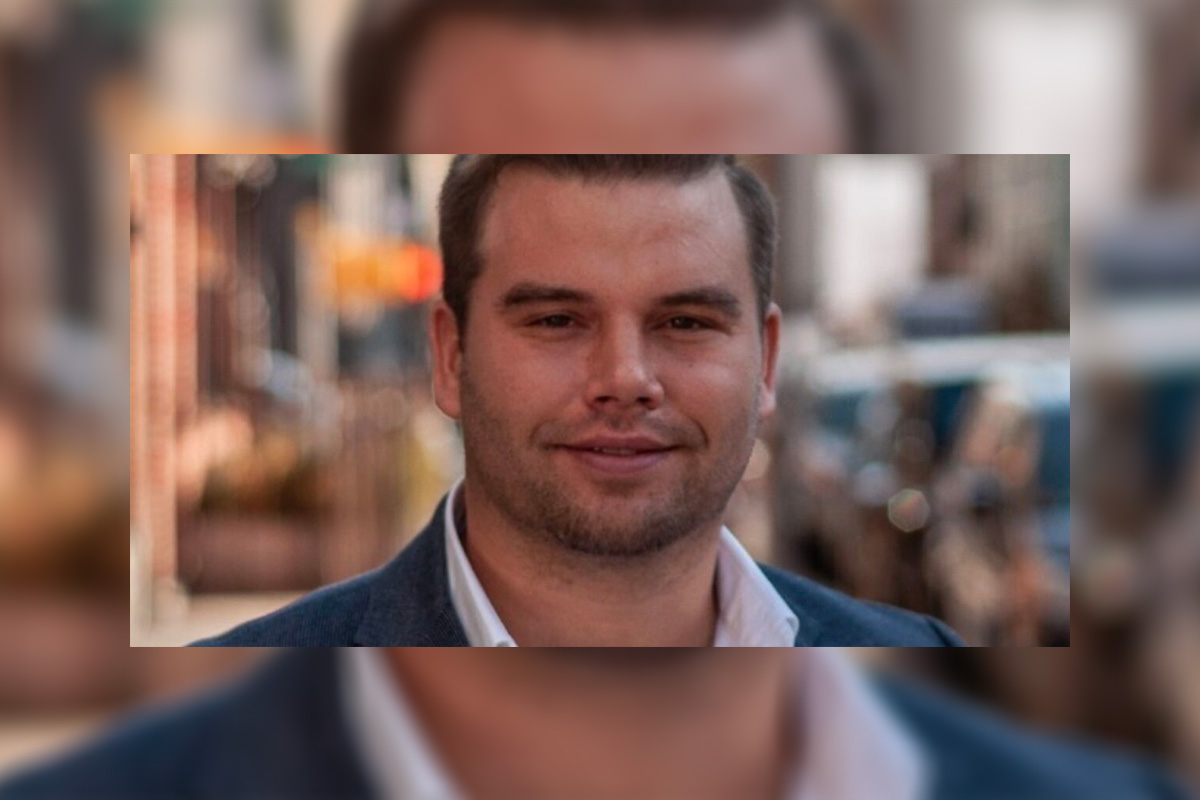
Jackpocket founder Peter Sullivan is stepping back from his day-to-day role as senior vice president of lottery at DraftKings following the company’s acquisition by the operator.
Sullivan, the co-founder of the lottery game and ticket supplier, set the company up in 2013 and ultimately led it toward a $750m takeover by DraftKings in 2024.
DraftKings completed its acquisition of Jackpocket in 2024 and has made note of its continued influence on its earnings since then.
After spending two years integrating Jackpocket’s operations into DraftKings, Sullivan, who is moving into an advisory role, said he wants to spend more time with his family and explore new opportunities.
“After 13 incredible years building Jackpocket and helping bring it together with DraftKings, I’ve decided that the time has come for me to step away from my day-to-day operating role,” he said.
“What started in 2013 as an idea to modernise how people participate in the lottery became a journey beyond anything I could have imagined.
“Along the way, we built an amazing team, navigated countless challenges, expanded across the country, helped create millions of lottery winners, and ultimately joined forces with DraftKings to accelerate our vision on an even larger scale.
“I’m incredibly proud of what we’ve accomplished and deeply grateful to the employees, partners, investors, regulators, retailers and customers who believed in us along the way. Most importantly, I’m thankful for the teammates who dedicated years of their lives to building something special together.”
Advisory role for Sullivan
“As I transition into an advisory capacity, I’m excited to watch the next chapter unfold. I remain extremely bullish on the future of Lottery at DraftKings and the opportunity for its continued growth,” Sullivan added.
“Personally, I’m looking forward to spending more time with my family, pursuing new ventures and exploring other opportunities. While I’m excited for what’s ahead, I’ll always be proud of what we built and the impact we’ve made.”
The post Jackpocket Founder Peter Sullivan Steps Back After DraftKings integration appeared first on Americas iGaming & Sports Betting News.


FIRST.bet has announced the appointment of Ian Bradley as its co-CEO. Bradley – most recently SVP at DraftKings, and a former colleague of Tom from SBTech – joins as a partner in the business alongside founder Tom Light, the two leading FIRST.bet together as the company enters its next phase of growth across LATAM, Europe and beyond.
Ian Bradley brings more than 20 years of sportsbook and trading heritage, beginning in spread betting and trading at Sporting Index and Sporting Solutions before joining SBTech – the sportsbook business whose technology became part of DraftKings through their 2020 merger. As SVP at DraftKings, he was a central figure in the company’s sportsbook success in the years that followed, with responsibility for all of its consumer sportsbook revenue.
FIRST.bet was itself founded by former SBTech leaders, making Ian Bradley’s appointment a return to the sportsbook roots where he built his career.
Bradley joins not simply as a senior executive but as a partner in the business alongside Tom Light, the two sharing ownership of FIRST.bet’s strategy and direction as co-CEOs. Having first worked together at SBTech, they combine Tom’s vision and product leadership as founder with Ian’s track record in scaling sportsbook businesses, jointly driving growth across product, technology and trading as the company expands across its core markets.
“Ian is one of the most respected leaders in our industry, and I worked alongside him at SBTech, so I’ve seen first-hand what he builds. I’ve wanted him alongside me at FIRST.bet for some time – that he’s only now free to join tells you how highly DraftKings valued him. Asking Ian to run the business with me as co-CEO is the clearest statement of intent we could make: FIRST.bet is building the platform serious operators choose, and together we’ll get there faster,” said Tom Light, Founder and co-CEO of FIRST.bet
“FIRST.bet has built something rare – a world-class team and genuinely Tier-1 technology, with the trading depth and product to back it. I wanted to work alongside a team like this and help build on the success they’ve already created. Running the company alongside Tom as co-CEO is exactly the challenge I wanted next, and the opportunity in B2B right now – across LATAM, Europe and beyond – is enormous,” said Ian Bradley, Co-CEO of FIRST.bet.
The post FIRST.bet Appoints Former DraftKings SVP Ian Bradley as Co-CEO appeared first on EE Gaming | Global iGaming & Tech Intelligence Hub.

DraftKings has renewed a multi-year agreement with GeoComply to continue providing real-time geolocation and compliance services, the companies said.
The extension comes after DraftKings’ Super App launch, a unified platform approach that lets customers access either sportsbook or sports predictions depending on their location. The press release positions the renewal as supporting scale, fraud controls, geolocation and compliance requirements tied to that rollout.
GeoComply said its geolocation signals are embedded into DraftKings’ internal risk workflows, including step-up authentication and automated decisioning. The vendor said it processes 2.5 billion checks a month across its platform.
Under the extended agreement, the companies said GeoComply will continue to support DraftKings with dedicated forward-deployed engineering support.
“The operators winning this next cycle are treating geolocation intelligence as critical trust infrastructure,” said Kip Levin, CEO of GeoComply. “DraftKings has done that for years. This extension reflects how seriously they take the architecture behind player trust—and it’s what lets them keep moving fast on everything else.”
The post DraftKings renews multi-year geolocation deal with GeoComply appeared first on EE Gaming | Global iGaming & Tech Intelligence Hub.

-

 10bet7 days ago
Ellis Park Stadium signs five-year naming rights deal with 10bet
-
Bucharest6 days ago
Eeze opens 1,200 sqm Bucharest hub for technical teams
-
central asia7 days ago
Groove confirms attendance at SBC Summit Tbilisi 2026
-
AB Trav och Galopp5 days ago
BetMakers Technology Group Selected to Distribute ATG Horse Racing Content Across Australia and New Zealand
-
API integration5 days ago
Belatra signs cooperation deal to distribute slots via VeliGames
-
BETANO6 days ago
Play’n GO strengthens Latin American presence with Betano Colombia launch
-
affiliate marketing6 days ago
SEOBROTHERS’ Aleksandra Drigo flags higher barriers for affiliates in regulated Alberta
-
Aino Lahti6 days ago
Kasinohai Audit: Most Slots Could Be Affected by Finland’s Draft Gambling Rules