DraftKings
The Great Gambling Class Action Wave: A Payout For Lawyers, Not Players


Class action lawsuits in the gambling industry are everywhere, but a closer look reveals a startling truth: They have become a new, industrialized legal business model where the lawyers get paid, but most players see little to nothing.
From DraftKings to sweepstakes casinos, law firms are filing often, promising justice and accountability for operators. The headlines certainly make it sound like players are winning big. We hear of a $155 million settlement against Big Fish Games, a $12 million payment from FanDuel and DraftKings, and a $3.5 million settlement from SpinX Games. Even Coinbase paid $2.25 million over a crypto sweepstakes controversy.
But these numbers tell only half the story. The journey from a lawsuit filing to a meaningful payout is a brutal one for class members, but often a highly profitable one for the legal firms behind the litigation.
The filing frenzy: a numbers game
The class action landscape is a numbers game. While filing a lawsuit might seem straightforward, the journey is not. According to empirical studies, nearly four out of every five lawsuits initially filed as class actions are never actually certified. That’s an 80% failure rate right out of the gate. These cases are often dismissed or revert to individual claims too small to pursue economically.
As John Holden, a law professor at Oklahoma State University, explains, “When you announce that you’re filing a class action lawsuit against DraftKings or a sweepstakes company, you’re at the starter pistol of an ultra marathon.”
This high-volume, high-risk approach is particularly evident in the gambling industry. Multiple class actions against VGW Holdings (the company behind LuckyLand Slots and Chumba Casino) were dismissed, often due to enforceable arbitration clauses that force disputes into individual arbitration, fundamentally undermining the class action’s purpose.
This industrialized approach to litigation — where a law firm files a similar case against different companies dozens of times — is a strategy of volume. The hope is that a few will survive the “significant early filters” of the motion to dismiss and motion for class certification, which the Institute for Legal Reform highlights as key hurdles.
Another issue: making sure people in the “class” want to be part of the whole shebang.
“Class actions do have a number of unique hurdles, such as class certification motions and fairness hearings, that we don’t see in other forms of litigation, but it’s due to the fact that attorneys are hoping to represent individuals who usually haven’t affirmatively opted in to such a representation and will lose the right to sue individually if they don’t opt out of the class,” said Evan Davis, head of the gaming and sports practice at Royer Cooper Cohen Braunfeld LLC. “The court needs to ensure that these individuals are being treated fairly by the court system and that they are receiving an appropriate benefit from the litigation.”
The settlement reality check
Even when cases survive and result in settlements, the outcomes for individual players are often underwhelming. A study of federal court class actions found that in over half of all cases studied, members of the proposed class received zero relief.
When settlements are reached, the gap between the headline amount and what players actually receive is enormous. The Federal Trade Commission (FTC) reported that the median claims rate was just 9% in 2019. For settlements involving over 2.7 million class members, the average claims rate dropped to a mere 1.4%, as reported by Harvard Law professor William B. Rubenstein.
This leaves a significant portion of the settlement pool unclaimed. While the lawyers take a guaranteed, substantial cut — often in the millions — the payouts for individuals are typically modest, often in the double and low triple digits. The low participation rates are due to practical frustrations: Settlement notifications often look like junk mail, and the claim process can be onerous. The extended timeline of class action litigation, which adds “many additional months to your case,” as Holden said, also creates financial pressure that pushes firms toward settlement.
“They take even longer than regular litigation because you’ve got to go find the class, you’ve got to get the class certified,” Holden noted. “So basically you’re having this other legal process play out before you get to the next legal process. You’re adding on many additional months to your case.”
This extended timeline creates financial pressure, especially when facing well-resourced defendants.
“If you were to bring a class action against Google or something, they have infinite money — they can litigate forever if they wanted to,” Holden explained. “Certainly the top tiers of the gambling industry are incredibly well resourced, so efficiency sort of pushes towards settlement for a lot of these.”
As one analysis noted, sweepstakes casino operators “will invariably settle” to avoid a jury trial that could fundamentally dismantle their business models. This creates a cycle where companies pay to continue operating while plaintiffs’ attorneys develop increasingly sophisticated strategies for the next round of litigation.
But settling may be losing some luster, Davis points out.
“Some of the recent gaming-related class actions that have been filed are somewhat unique because they are being brought pursuant to state laws and in some cases limited to individuals within certain states — they are not traditional nationwide class actions like you’d typically see in antitrust or pharmaceutical cases,” Davis said. “This means that a settlement of one case won’t necessarily affect the cases that have been filed alleging violations of other states’ laws, which in turn means that a defendant may be less likely to settle because it will still be incurring significant legal costs in defending the remaining cases.”
The new legal playbook
Gaming companies aren’t sitting idle. The rise of this legal cottage industry has spurred a sophisticated defense playbook that goes well beyond seeking quick settlements. Arbitration clauses have become powerful weapons, forcing disputes into individual arbitration rather than collective lawsuits.
Perhaps the most intriguing development is the increasing use of civil RICO claims. Attorneys are drawing parallels to successful litigation against the opioid industry, alleging that gambling companies use systemic fraudulent practices to foster addiction.
The approach got a boost when Schlesinger Law Offices publicly committed to taking legal action against online sports betting platforms, explicitly drawing parallels to their work against Big Tobacco and stating their intent to pursue companies for “allegedly pushing problem gamblers into debt through deceptive, predatory, and harmful business practices.”
Holden sees these cases as potentially a world apart from typical consumer protection class actions.
“When you see particular individuals associated with them, like a lawyer who litigated tobacco litigation, it triggers that this is perhaps different than some of these other ones that are out there,” he said.
This is a stark contrast to the historical context of gambling litigation, where compulsive gamblers had a “long, unsuccessful history” of lawsuits against the industry. The rapid expansion of online gambling has created new vulnerabilities that this new legal cottage industry is actively exploiting.
The great gambling class action wave is not about to end. As long as the potential for multimillion-dollar legal fees exists, a steady stream of lawsuits from opportunistic lawyers will follow.
For the law firms involved, the odds are in their favor, as this is a high-volume business. But for individual players hoping for significant compensation, the odds remain stubbornly long — much like the games themselves.
Source: sports.yahoo.com
The post The Great Gambling Class Action Wave: A Payout For Lawyers, Not Players appeared first on Gaming and Gambling Industry in the Americas.









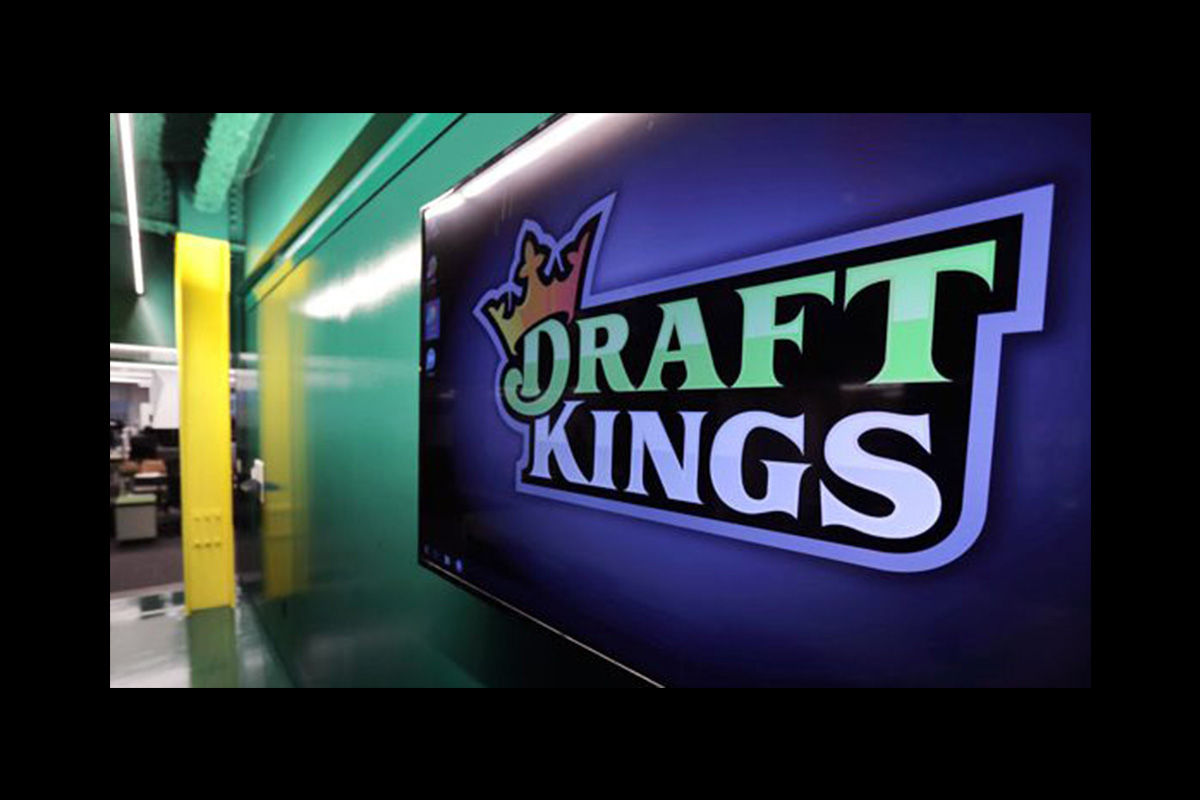
DraftKings has launched its online sportsbook in Puerto Rico, further expanding DraftKings top-rated product to sports fans across the island. DraftKings’ online sportsbook is available to Puerto Rico residents beginning February 23, 2026, following the recent opening of the DraftKings retail sportsbook at Foxwoods El San Juan Casino in November.
DraftKings’ online sportsbook is currently only available to residents of Puerto Rico. Eligible new customers must register in person at Foxwoods El San Juan Casino before accessing the online sportsbook. Once registration is completed on-site, local customers will have full access to DraftKings’ online sportsbook features, including same-game parlays, in-game wagering, and special odds boosts, across a wide range of sporting events and leagues such as MLB, NFL, NBA, and more.
Non-residents are not currently eligible to access DraftKings’ online sportsbook in Puerto Rico. However, visitors may place wagers in person at the DraftKings retail sportsbook located at Foxwoods El San Juan Casino.
“Puerto Rico has a passionate sports community and launching our online sportsbook allows us to meet fans where they are. With retail already live at Foxwoods El San Juan Casino, mobile represents the next step in expanding the DraftKings experience across the island—giving eligible local customers a seamless, exciting, and responsible way to engage with sports,” said Gregory Karamitis, DraftKings Executive Vice President and General Manager of Sports.
Responsible gaming remains a shared priority for DraftKings, the Mashantucket Pequot Tribal Nation, and Foxwoods El San Juan Casino. DraftKings offers a comprehensive suite of responsible gaming tools, including My Budget Builder and My Stat Sheet, available through the DraftKings Responsible Gaming Center to help customers play responsibly.
The post DraftKings Launches Online Sportsbook in Puerto Rico appeared first on Americas iGaming & Sports Betting News.
DraftKings
PGA TOUR, DraftKings, ESPN launch PGA TOUR LIVE Betcast, the first all-day, watch-and-bet experience for golf fans
A new era has arrived for golf bettors, as the PGA TOUR and ESPN are doubling sports betting coverage for the 2026 PGA TOUR Season with a first-of-its-kind watch-and-bet experience from sunup to sundown.
PGA TOUR LIVE Betcast presented by DraftKings will air on ESPN during 12 marquee PGA TOUR events throughout the year, beginning with this week’s WM Phoenix Open, Feb. 5-8 at TPC Scottsdale.
The Betcast at each event will air more than eight hours during each of the four days of play on the ESPN App, alongside the Main Feed, Featured Group and Featured Hole streams. With more than 400 hours in total across the 2026 PGA TOUR Season, the Betcast will feature golf-related betting discussion, live betting analysis, upcoming previews, tournament features (tournament winner, matchups, etc.) and more.
PGA TOUR LIVE Betcast, which debuted in the 2025 season with 50 hours of coverage across six events, is now presented by DraftKings. The expanded coverage brings fans interested in betting content more of the coverage they’re looking for, complete with detailed insights and informed analysis.
Jonathan Coachman will serve as host, joined by Matt Every and Michael Collins as the show’s analysts. Graham DeLaet, Jeff Eisenband, Steve Scott and Kevin Sylvester will offer additional hosting and analyst support, while Rick Gehman will contribute across the betting feeds throughout the season. Additional talent pending on a tournament-by-tournament basis.
Set to premiere this Thursday, Feb. 5, with the first round of the WM Phoenix Open, the Betcast will be available to fans throughout the 2026 PGA TOUR Season, continuing with The Genesis Invitational at The Riviera Country Club in Pacific Palisades and concluding with the season-ending TOUR Championship at East Lake Golf Club.
Scott Warfield, PGA TOUR Vice President, Gaming, said, “The PGA TOUR is pleased to present more than 400 hours of live betting coverage in 2026 alongside our collaborators at ESPN and DraftKings. Building on the success of last year’s feed, we are excited to further expand this season with the support of DraftKings and its world-class golf product, as fans will have a host of new betting markets and storylines to follow as they watch along with the broadcast.”
“Our collaboration with the PGA TOUR and ESPN reflects a shared, forward-looking approach to fan engagement,” said Stephanie Sherman, Chief Marketing Officer, DraftKings. “For those who see betting as part of their entertainment experience, by integrating our industry-leading golf offerings into PGA TOUR LIVE Betcast, we’re creating a more immersive, real-time way to follow the action from the first tee shot to the final putt, while fostering a sense of connection and community around the sport.”
Said John Suchenski, Sr. Director, Programming & Acquisitions at ESPN: “At ESPN, we want to provide fans with more access, insight and ways to connect with sports. The Betcast gives fans another option to engage with PGA TOUR LIVE and be an attraction to those who desire alternative ways to traditional feeds. We’re always discussing new and innovative approaches to golf coverage with the PGA TOUR, and these shows are the newest evolution of those efforts.”
DraftKings, ESPN and the PGA TOUR take responsible gaming seriously by promoting educational information and tools to help players enjoy sports betting responsibly. The DraftKings Sportsbook app offers consumers a number of responsible gaming tools, including My Stat Sheet, a gaming tool that gives players the ability to assess, track and interact with their personal gaming stats as well as limit setting, cool-off periods and self-exclusion.
The post PGA TOUR, DraftKings, ESPN launch PGA TOUR LIVE Betcast, the first all-day, watch-and-bet experience for golf fans appeared first on Americas iGaming & Sports Betting News.


Reading Time: 2 minutes
Welcome to our weekly roundup of American gambling news again! Here, we are going through the weekly highlights of the American gambling industry which include the latest news and new partnerships. Read on and get updated.
Latest News
VGO Promo, a long-standing platform known for bridging the worlds of cryptocasinos, cryptocurrency exchanges and CSGO skins gaming, has announced a comprehensive expansion of its verification framework designed to bring transparency to online promotional offers. The updated system enhances how users evaluate bonuses across three intersecting ecosystems. Founded during the peak of the CSGO skins economy, VGO Promo originally provided referral codes for case opening websites and virtual item platforms. As the industry evolved towards blockchain based gaming, Bitcoingambling and crypto trading, VGO Promo expanded its scope to support modern platforms including Roobet, Stake, Rollbit, CSGORoll, Duelbits, Binance, OKX, ByBit, Bitget and various case opening services within the CSGO community. The updated verification framework applies a structured, cross industry methodology to help users navigate rapidly changing promotional conditions.
FanDuel has announced the launch of Pass The Leg, a first-of-its-kind in-app feature that transforms traditional parlay betting into a shared, social experience just in time for holiday gatherings. Pass The Leg allows customers to build a single group parlay collaboratively, with each participant adding their own leg before placing individual bets using their own funds. Designed to bring friends and family together around one of the biggest football days of the year whether near or far, the feature allows users to start or join a Group Build, invite others to contribute picks, and then add the completed parlay to their personal betslip. Each contributor can also take advantage of a dedicated Pass The Leg Profit Boost, amplifying the excitement and potential payout of the shared pick. Available exclusively for the three NFL games taking place on Thanksgiving Day, Pass The Leg marks the first true multi-user parlay-building experience offered by a major U.S. sportsbook operator.
Partnerships
The St. Louis Blues announced an agreement designating DraftKings an Official Sports Betting and Daily Fantasy Operator of the Blues. The announcement comes ahead of the launch of legal sports betting in Missouri scheduled for Dec. 1, 2025. DraftKings has been an Official Sports Betting, Daily Fantasy Sports and iGaming Partner of the National Hockey League since 2021. As part of the agreement, DraftKings will spotlight responsible gaming through a pregame, in-arena feature, encouraging fans to play responsibly, have fun and access DraftKings’ comprehensive suite of responsible gaming tools and resources. DraftKings will have rights to use St. Louis Blues intellectual property — including team trademarks and logos — across marketing and promotional materials. The collaboration will feature in-arena signage, brand integrations across television and radio and exclusive hospitality experiences throughout the season, all designed to elevate fan engagement at the Enterprise Centre and beyond.
Signature Systems Inc (SSI) has announced a new partnership with Yellow Dog Software. The integration connects Yellow Dog’s advanced inventory capabilities with SSI’s PDQ POS system, enabling operators to streamline operations, improve cost control and gain real-time visibility across their properties. The partnership was initiated to meet the inventory needs of Osage Casinos, a major name in tribal gaming. The integration, which went live in September, was first deployed to support convenience store reporting and ordering across the properties.
The post Gaming Americas Weekly Roundup – November 24-30 appeared first on European Gaming Industry News.

-

 BIS SIGMA SOUTH AMERICA 20267 days ago
VeliTech makes its Brazil debut at BiS SiGMA South America 2026
-
Canada7 days ago
Peter & Sons Goes Live in Ontario with Ellipse Entertainment
-
Austria7 days ago
Wazdan strengthens European foothold with Austrian market entry via win2day
-
AMUSEBOX7 days ago
Casino Iveria Tbilisi Installs Amusnet’s Type S 50 F Slot Cabinets at its Gaming Floor
-
Canada7 days ago
Peter & Sons Goes Live in Ontario with Ellipse Entertainment
-
ELA Games7 days ago
Endless Super Free Spins in ELA’s Spring Release, Golden Bunny
-
eSports7 days ago
Esports Nations Cup 2026 Awards Official Partner Status Across 100+ Nations to Build the Future of Nation-Based Esports
-
Africa4 days ago
Virgin Bet goes live in South Africa