Latest News
Crush Test for iGaming Projects: SOFTSWISS on Why High Load Performance Defines Operator Success

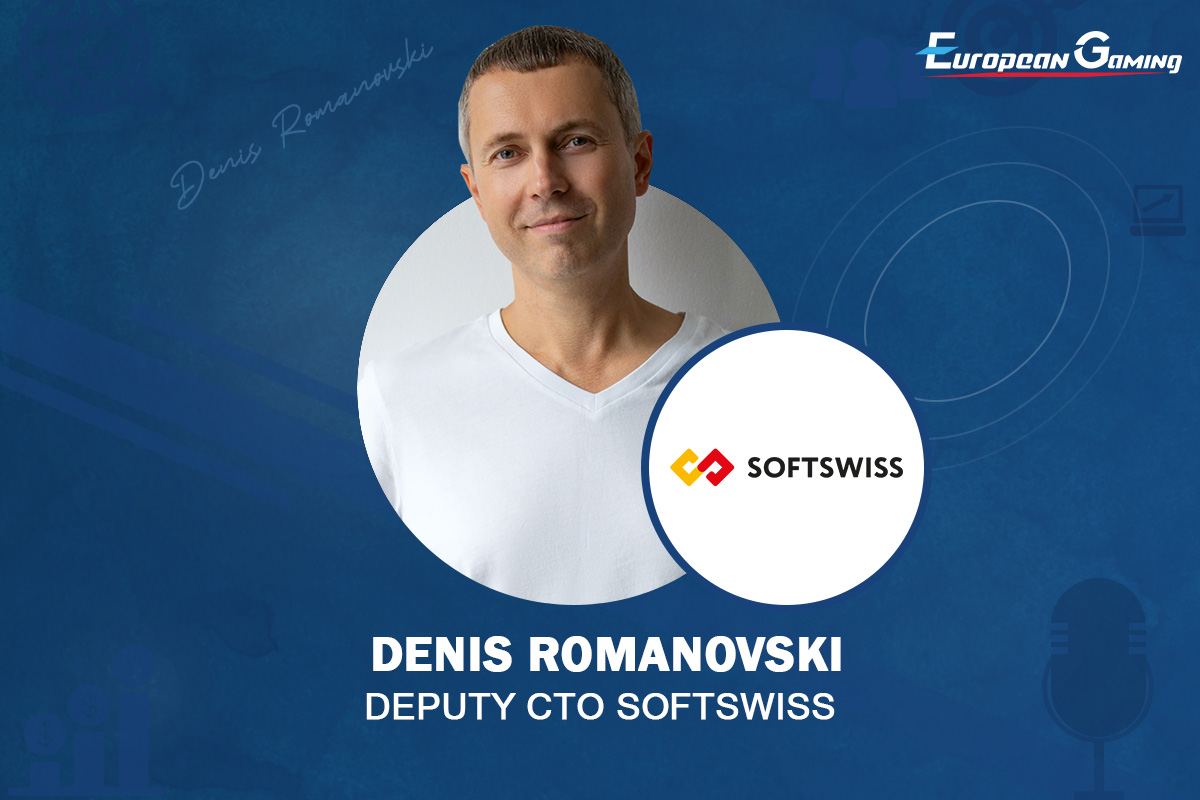
For iGaming operators, success depends not only on content and marketing but on their ability to stay online when it matters most. We spoke with a SOFTSWISS expert, Deputy CTO Denis Romanovski, to understand what’s really at stake during high load events, what mistakes others make, and what architectural decisions allow platforms like the SOFTSWISS Game Aggregator to consistently deliver 99.999% uptime – even at peak moments.
When a platform fails under high load, what are the main negative consequences for operators?The fallout hits three fronts at once. First of all, you lose revenue. Every failed bet is a direct GGR gone. In a one-minute outage during peak hours, you could lose tens of thousands of euros before you even spot the issue. Second, frustrated players flood the support team with refund claims and bad reviews. Most of them switch to your competitor. Getting those players back costs far more than keeping them happy in the first place. And third, in the scramble, tech teams try to spin up extra cloud capacity at premium rates or engage pricey third-party consultants. Those crisis-mode costs often hit the usual infrastructure budget for weeks afterwards.
So in short, downtime isn’t just an IT problem – it’s a full-blown business crisis that affects finance, marketing, and customer experience.
How does SOFTSWISS prevent those failures? Which patterns are most effective for operating without breaks?
Our resilience comes from layering proven patterns. We run Kubernetes in multiple regions – Europe, Latin America, and South Africa – so player connections go to the nearest point of presence. Databases replicate asynchronously, enabling instant failover if one zone degrades.
We develop containerised microservices, which means that some of our features and tools run in isolated pods. Rolling updates and canary deployments let us push fixes to a tiny slice of traffic first; if any metric goes beyond the threshold, Kubernetes automatically rolls back.
Static assets and game binaries are cached on regional Content Delivery Networks to reduce the load on central servers. Players receive data from the closest edge node with round-trip times of under 100 milliseconds, even on 3G connections. We also have an efficient system for DDoS Defence. Our stable partnership with Cloudflare provides multi-terabit scrubbing. Malicious traffic is cleanly filtered at the network edge, leaving genuine players uninterrupted.
But one more piece is just as crucial as technology: the team behind it. You can invest in the cutting-edge hardware and build the best architecture, but if engineers lack experience working under pressure, reaction times slow down, and players notice.
SOFTSWISS brings together experienced SREs, database experts, and network architects with deep knowledge of real-world stress situations. This means we don’t just detect issues quickly – we fix them before operators lose trust.
Together, these layers of design and expertise ensure that, no matter what stress tests occur, our platform consistently delivers on its 99.999% uptime promise.
From an operator’s standpoint, what scenarios trigger the greatest anxiety during traffic surges – flash promotions, major sporting events, or something else?
Operators worry most about the unknown spikes. Scheduled events are planned for, like a Champions League kickoff or a midnight bonus reset. But unexpected surges, for example, when a progressive jackpot hits 10 million euros or a social-media post goes viral, can triple traffic in hours, if not minutes. These are the moments when lobbies freeze and players see spinning wheels that never load.
The fear is not theoretical. I think every operator is familiar with this feeling when you see the queue at the support service filling up with complaints. Every frozen second undermines the player trust that operators spent months building. That’s why they need a reliable tech partner with proven protocols for handling traffic spikes and a track record of keeping the software running without downtime.
Can you walk us through a real “crash test” you’ve seen: what operators see on their dashboards when systems go down?
I can describe a typical scenario that happens in one form or another quite often. Let’s say it’s a Saturday free spins sale on a new slot, paired with double loyalty points. Traffic can jump from 5,000 to 15,000 concurrent users in ten minutes. On the dashboard, CPU usage rises above 90 per cent, Redis cache miss latency jumps from 5ms to over 50ms, and the error rate exceeds 5 per cent. Players see “502 Bad Gateway” errors or simply blank game tiles.
Behind the scenes, operators struggle to issue refunds, while marketing watches their promotional budget turn into failed KPIs. That kind of slippery slope, where one service slowdown affects another, can turn a simple spike into a full-scale outage.
Another case we had at SOFTSWISS involved a live stream event run by one of our operators. They hadn’t properly forecasted the traffic surge, and the load hit fast. We saw system strain building within minutes – API response times climbing, queues backing up. Our team had to act quickly to rebalance and optimise the infrastructure on the fly by adding resources and redistributing load.
Are there any general recommendations or lifehacks operators can use to ensure the stability of their platforms under high load?
Sure – stability is not just about servers and code; it starts with the way people work together and the processes they follow. Regardless of the platform, there are some crucial questions and data points operators should agree on with their provider’s technical account manager before any big launch.
First, operators need to track traffic dynamics closely – how many players arrive, how many register, and how many stay in play. They should share these forecasts with their provider and flag any risk of actual traffic far exceeding expectations.
The provider, in turn, will map its load models against planned promotions or events. That way, capacity gets reserved in advance instead of scrambling when reality outpaces the plan. At SOFTSWISS, for example, we continuously monitor load on our core components and build in redundancy to absorb traffic spikes.
Operators also need clarity on which SLAs guarantee that extra capacity or failover will be authorised the moment it’s needed. When seconds count, no one should be hunting for the required approvals.
Finally, a new brand or promo campaign must be introduced gradually. Operators can start with low-traffic markets or off-peak windows, verify performance in real‐world conditions, and only then ramp up traffic. This approach will let them avoid unpleasant surprises when the big day arrives.
Nevertheless, high-load incidents do occur. If this happens, blaming is the last thing to think about. However, the tech partner must provide a copy of its post-mortem playbook with root cause analysis, updated runbooks, and clear remediation steps.
Following these checkpoints, operators can trust their tech partner to handle any traffic surge. Potential failures that once threatened to crash the system become routine operations, no matter how intense the load.
The post Crush Test for iGaming Projects: SOFTSWISS on Why High Load Performance Defines Operator Success appeared first on European Gaming Industry News.












DuelBits has published results from its JUSTIN2026 marketing campaign, saying the UFC-focused activation generated more than 122 million verified video views and contributed to one of the company’s strongest MMA betting events “in recent years.”
The crypto sportsbook and casino operator said the campaign launched ahead of UFC event Freedom 250 at the White House and centred on former UFC lightweight champion Justin Gaethje. DuelBits framed the partnership as an early bet on Gaethje, before broader commercial interest.
According to the company, the campaign set a KPI to exceed 100 million impressions across owned, paid and partnered media, and ultimately delivered more than 122 million verified clip views via a network of more than 140 creators. The asset mix included a hero film, six short-form cutdowns, behind-the-scenes content and still imagery, distributed via DuelBits’ social channels, MMA publishers, creator partnerships and clipping pages.
DuelBits said the hero content was also integrated into Gaethje’s “Art of Violence” YouTube series. The operator added that the activation drove promotional code engagement and helped convert attention into sportsbook activity.
Jasper Hoekert, Chief Marketing Officer at Duelbits, said: “We wanted to support Justin before everyone else recognised the opportunity. Instead of following the hype once he has already achieved greatness, we wanted to back a champion before anybody else did.
“The campaign wasn’t measured purely on views. Of course, surpassing 122 million verified views and exceeding our 100 million KPI was a huge achievement, but the real success was seeing that attention convert into one of our strongest UFC betting nights in recent years.
“It also reinforced something that’s key to DuelBits as a brand, which is that we don’t do small campaigns. Whether it’s the production quality, creator network, or distribution strategy, we want every activation to show what’s possible when sportsbook marketing is treated like premium entertainment.”
The post DuelBits says UFC creator campaign delivers 122m verified video views appeared first on EE Gaming | Global iGaming & Tech Intelligence Hub.

Slotegrator’s platform solution now offers progressive web app (PWA) functionality, enabling operators to provide installable casino apps with push notifications, flexible branding, and seamless access across changing domains.
The Casino Builder module in Slotegator’s platform solution has been upgraded with a Progressive Web Application (PWA) feature that allows casinos to deliver an app-like experience without relying on the App Store or Google Play.
Native apps are powerful tools for building customer loyalty and enhancing engagement. However, iGaming brands face serious obstacles, such as strict marketplace policies, long review processes, geographic restrictions, and the constant threat of app removal. Slotegrator’s PWA functionality eliminates these barriers, allowing players to install a casino app directly from their browser and enjoy many of the same benefits as a native app.
After installation, the PWA opens from the user’s home screen, loads fast, and supports push notification integration that enhances player engagement and retention.
“Mobile is still the leading channel for user acquisition and retention; however, it’s difficult to distribute native apps in iGaming,” says Olga Ivanchik, COO at Slotegrator. “Our new PWA feature gives operators an alternative that will be familiar to their players, while eliminating the complications related to conventional app stores. Operators can launch quickly, retain full control over updates, and ensure a perfect mobile gaming experience for any market.”
Within the next 2 months, operators will also have the ability to determine when the PWA install bar will be visible to the player. For example, displaying the install bar immediately after the first deposit, as part of a broader retention strategy, helps drive long-term player LTV. The operator can also set up frequency of the install offer — daily, weekly, just once, etc.
Some operators have to consider UX for multiple frontends. Luckily, the installation widgets are highly flexible, helping them drive maximum conversion without sacrificing user experience. Operators can select a top bar or a top banner installation widget, both of which are fully customizable with branded icons, messaging, and backgrounds.
Operators can limit the visibility of their installation campaigns to specific devices — desktop, mobile, Android, or iOS — thanks to special targeting options. Operators can also design acquisition strategies specific to each platform, driving installs only where they offer the best user experience.
When players install the PWA, operators can connect it to push notification services, so they can re-engage them even when the application isn’t actively open.
Mirror domain compatibility addresses a common operational challenge in restricted markets. If an operator has to change domains due to licensing or regulatory requirements, players who have already installed the PWA will be able to continue using it without reinstallation.
Unlike native applications, PWAs don’t require App Store or Google Play approval, effectively eliminating possible delays and the risk of removal from the market. Instead, operators can deploy updates instantly to every user.
The new PWA functionality is now available in Slotegrator’s Casino Builder module, alongside other tools for improving mobile acquisition, engagement, and player retention.
ABOUT THE COMPANY
Since 2012, Slotegrator has been one of the iGaming industry’s leading software and business solution providers for online casino and sportsbook operators.
The company’s main focus is software development and support for online casino platforms, as well as the integration of game content and payment systems.
The company works with licensed game developers and offers a vast portfolio of casino content: slots, live casino games, poker, virtual sports, table games, lotteries, casual games, and data feeds for betting.
Slotegrator also provides consulting services in gambling license acquisition and business incorporation.
The post Slotegrator now provides native app experience for iGaming platforms with PWA function appeared first on EE Gaming | Global iGaming & Tech Intelligence Hub.


Slotegrator’s platform solution now offers progressive web app (PWA) functionality, enabling operators to provide installable casino apps with push notifications, flexible branding, and seamless access across changing domains.
The Casino Builder module in Slotegator’s platform solution has been upgraded with a Progressive Web Application (PWA) feature that allows casinos to deliver an app-like experience without relying on the App Store or Google Play.
Native apps are powerful tools for building customer loyalty and enhancing engagement. However, iGaming brands face serious obstacles, such as strict marketplace policies, long review processes, geographic restrictions, and the constant threat of app removal. Slotegrator’s PWA functionality eliminates these barriers, allowing players to install a casino app directly from their browser and enjoy many of the same benefits as a native app.
After installation, the PWA opens from the user’s home screen, loads fast, and supports push notification integration that enhances player engagement and retention.
“Mobile is still the leading channel for user acquisition and retention; however, it’s difficult to distribute native apps in iGaming,” says Olga Ivanchik, COO at Slotegrator. “Our new PWA feature gives operators an alternative that will be familiar to their players, while eliminating the complications related to conventional app stores. Operators can launch quickly, retain full control over updates, and ensure a perfect mobile gaming experience for any market.”
Within the next 2 months, operators will also have the ability to determine when the PWA install bar will be visible to the player. For example, displaying the install bar immediately after the first deposit, as part of a broader retention strategy, helps drive long-term player LTV. The operator can also set up frequency of the install offer — daily, weekly, just once, etc.
Some operators have to consider UX for multiple frontends. Luckily, the installation widgets are highly flexible, helping them drive maximum conversion without sacrificing user experience. Operators can select a top bar or a top banner installation widget, both of which are fully customizable with branded icons, messaging, and backgrounds.
Operators can limit the visibility of their installation campaigns to specific devices — desktop, mobile, Android, or iOS — thanks to special targeting options. Operators can also design acquisition strategies specific to each platform, driving installs only where they offer the best user experience.
When players install the PWA, operators can connect it to push notification services, so they can re-engage them even when the application isn’t actively open.
Mirror domain compatibility addresses a common operational challenge in restricted markets. If an operator has to change domains due to licensing or regulatory requirements, players who have already installed the PWA will be able to continue using it without reinstallation.
Unlike native applications, PWAs don’t require App Store or Google Play approval, effectively eliminating possible delays and the risk of removal from the market. Instead, operators can deploy updates instantly to every user.
The new PWA functionality is now available in Slotegrator’s Casino Builder module, alongside other tools for improving mobile acquisition, engagement, and player retention.
ABOUT THE COMPANY
Since 2012, Slotegrator has been one of the iGaming industry’s leading software and business solution providers for online casino and sportsbook operators.
The company’s main focus is software development and support for online casino platforms, as well as the integration of game content and payment systems.
The company works with licensed game developers and offers a vast portfolio of casino content: slots, live casino games, poker, virtual sports, table games, lotteries, casual games, and data feeds for betting.
Slotegrator also provides consulting services in gambling license acquisition and business incorporation.
The post Slotegrator now provides native app experience for iGaming platforms with PWA function appeared first on Americas iGaming & Sports Betting News.

-

 Compliance Updates6 days ago
Arizona Department of Gaming Issues Cease-and-Desist Orders to Multiple Operators Linked to Underage Gambling and Illegal Activity
-
 Compliance Updates6 days ago
KONAMI GROUP’s Konami Gaming Inc. First to Submit Manufacturer License Application in Japan’s Emerging IR Market
-
Latest News6 days ago
Enjoy Gaming Builds on Slot success with Diamond Slam: Xtra Power
-
Latest News6 days ago
Weekend Reels | Week 28: Slot Drops & Trends
-
Compliance Updates6 days ago
Spillemyndigheden Publishes Report on Illegal Gambling
-
Canada6 days ago
High 5 Games Expands Across Alberta’s Open iGaming Market Following AGLC Supplier Approval
-
Compliance Updates6 days ago
Arizona regulator orders five operators to stop alleged illegal gambling activity
-
Compliance Updates6 days ago
TaDa Gaming Accelerates LatAm Growth with Peru Licence Approval