AGCO
What’s next for online gambling in Canada?

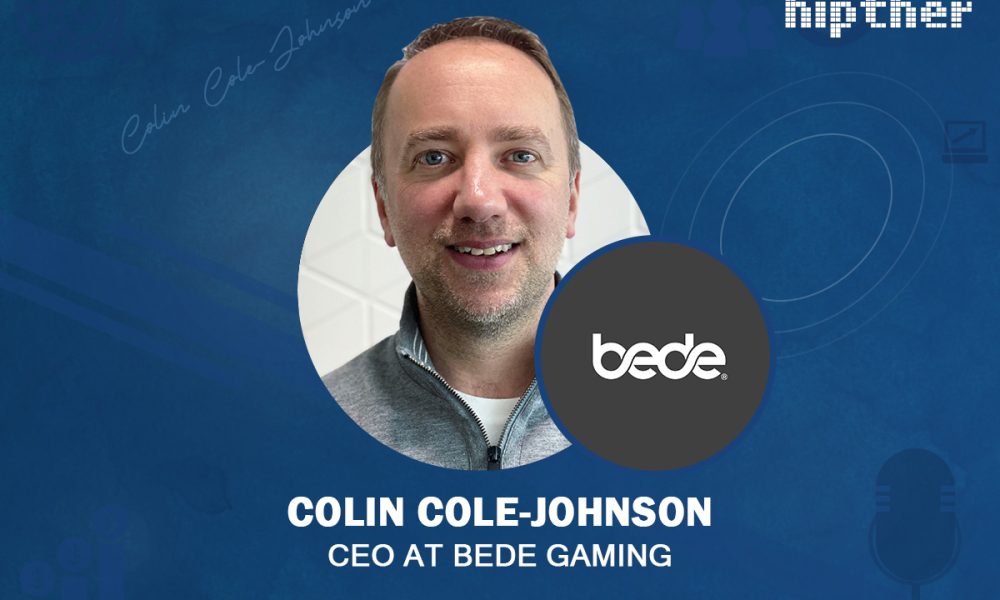
Having provided the perfect case study for the benefits of legalised online gambling in Canada, we caught up with Bede’s Chief Executive Officer, Colin Cole-Johnson, to discuss why other provinces may look to follow Ontario’s example in the future and what challenges operators will need to be ready for when they do.
With the regulated online gambling market in Ontario recently being recognised as one of the largest in the world, operators will feel there’s plenty of untapped potential to be realised not just in the province itself, but in Canada as a whole, over the coming months. And for good reason too.
Since legalising online gambling in 2022, the Alcohol and Gaming Commission of Ontario (AGCO) has established a go-to framework for how regulators introduce rules and standards that protect players and enable operators to flourish – and no better is this illustrated than in the performance of the Ontario Lottery and Gaming Corporation (OLG), which has continued to make a hugely positive contribution in the province over the past few years.
Having already paved the way for successful open market regulation through a number of progressive initiatives, with even more yet to come – such as the proposed centralised self-exclusion model – it certainly wouldn’t be a surprise to see other organisations turn to AGCO as an example of how regulations can be introduced both sustainably and profitably; and this will likely present several opportunities for operators as well.
From Bede’s experience in the country, Canadian regulators are thorough and well organised. Any province looking to follow the success of Ontario will no doubt look to AGCO for inspiration, and this may lead to similar regulatory frameworks in other new territory launches. As the gaming community in Canada is so connected, we’ve already seen cross-operator interest in sharing regulatory knowledge, meaning there’s a wealth of information waiting to be leveraged.
As the most likely province to regulate next, Alberta has already shown a preference for following an open-market model similar to Ontario’s, with the input of various industry stakeholders set to guide the way. The onboarding process for operators seeking to enter this potentially vibrant new market is likely to follow promptly after the new framework is enacted, so existing experience and relationships within the Ontario market should prove advantageous for those looking to hit the ground running.
For Bede, our years working closely with AGCO leave us well positioned to enter additional provinces in the future, and we greatly value the guidance and support we gain from having a direct relationship with the regulator. We aspire to grow even further in Canada by forming more provincial partnerships, and our learnings from Ontario will undoubtedly form a key part of this.
Internally, we have a strong framework for new market entry and regulatory compliance that includes cross-functional representation across the business. We understand the heavy lifting that goes into a launch and the complexity of licensing and delivering a new technical solution. Our approach always involves an analysis of the requirements from a compliance, risk, audit and financial perspective, as well as identifying any gaps where our products can make an impact with the right strategic solutions.
Taking the Ontario market as an example, we’ve seen some noticeable changes in player behaviour in recent years, meaning operators must be prepared to adapt in order to keep up with emerging trends. Although we’ve seen growth for our partners in the digital space, retail remains a predominant revenue stream for Canadian operators. As digital continues to grow, it’s important to provide a seamless end-to-end experience for players across channels, to be effective omni-channel solutions.
As more choice becomes available in the market, offering competitive payment and withdrawal options will be important. A critical part of the player journey that is often overlooked is the preference among players for easy access to preferred payment methods. A great example of innovation in this area is our Lottery Direct Pay method, where players can purchase tickets directly from their card without first having to load their wallet – creating a faster user journey that appeals to a wider audience.
Aside from these payment considerations, it’s worth noting that community engagement features and personalisation are both playing a more prominent role in the Canadian gaming landscape. Particularly among younger audiences, having the ability to offer a shared experience is becoming increasingly important to generating sustained engagement. For example, we’ve already seen OLG enjoy a significant uplift in overall ticket sales since launching the innovative Lottery Group Play tool.
Similarly, the power of personalisation cannot be understated when it comes to building player activity and retention. Through partnerships with companies such as XtremePush and Future Anthem, Bede has endeavoured to utilise more machine learning and AI systems that can broaden the customisation options available for customers, while our dynamic segmentation tool enables them to target user groups more effectively and automate the player journey in real time.
Of course, from the moment Ontario launched a legalised online gambling framework, regulators were required to focus their efforts on keeping up with increased accessibility and, therefore, increased risk of harm to the public. Should another province like Alberta also legalise online gambling in future, the same challenges will exist – and this presents an important opportunity for operators to both educate players on responsible gaming protocol and enforce it.
Given Bede has been operating in highly regulated markets for over 13 years, we have both an established suite of RG tools and in-depth knowledge of how to use them effectively. Evidenced in the UK market and beyond – Bede has developed its platform to meet the tightening controls that have been issued over every aspect of online gambling – enabling operators to create their own tailored mix of tools that best support their players.
Notably, the upper limit functionality in our RG toolset gives our customers the option to monitor and respond to potential problem behaviour by setting maximum limits for specific players. The players may opt to further decrease their own limits, but they’ll be unable to exceed the maximum setting until/unless the operator removes them, reducing the harm they could potentially experience. As well as outright prevention, being able to educate a player in such a moment is equally important – and using our platform, operators can send appropriate, personalised messages to users that encourage them to alter their play and even think about setting time out periods where necessary. For example, our partners can use our Player Interaction feature to set alerts from the front end based on pre-defined player behaviours, and then use that information for RG activities; if a player returns to a page a certain number of times, it can automatically trigger personalised messages to encourage the player to set a limit.
As responsible gaming is a constantly evolving topic in Ontario and other new markets in Canada are likely to experience similar growing pains, supporting regulatory efforts through the smart adoption of harm prevention tools will be a key part of gaining a foothold. This, coupled with the other regional considerations we’ve outlined in this article will be crucial to any operator’s future success in the country; and there are definitely big opportunities on offer for those who get it right.
The post What’s next for online gambling in Canada? appeared first on Gaming and Gambling Industry in the Americas.










TitanPlay, a regulated iGaming operator in Ontario’s licensed market, announced its commitment to treating responsible gambling not as a compliance checkbox, but as a foundational principle embedded across all aspects of product design, marketing, and operations.
While Ontario’s regulatory framework — established by the Alcohol and Gaming Commission of Ontario (AGCO) and iGaming Ontario (iGO) — sets clear minimum standards for licensed operators, TitanPlay says it views those standards as a starting point for its broader responsible gambling framework.
“For us, responsible gambling is not an afterthought, but the foundation on which TitanPlay is built,” said the Chief Compliance Officer of TitanPlay.
Designing for Player Well-Being from Day One
TitanPlay evaluates every product feature through a player-protection lens at the development stage. The platform offers clear, accessible limit-setting tools for deposits, losses, and time — available at registration and adjustable within prescribed cooling-off periods. Players also benefit from prominent real-time displays of account activity, friction-based interventions such as time reminders and proactive check-ins when play patterns shift, and seamless access to self-exclusion options.
Data-Driven Safeguards
Rather than using behavioral analytics to maximize short-term spending, TitanPlay deploys data to identify potential indicators of risk. When patterns suggest a player may be experiencing harm, trained Responsible Gambling specialists engage proactively in a personalized and supportive way, connecting players with available tools and independent resources such as ConnexOntario. All customer-facing teams undergo ongoing training aligned with AGCO standards.
Marketing with Integrity
TitanPlay applies rigorous internal review processes to all advertising and promotional campaigns, going beyond Ontario’s standards prohibiting targeting of minors, misleading claims, and public advertising of inducements or bonuses. The company prioritizes transparency, age-gating, and responsible messaging to ensure entertainment is never misrepresented as a financial solution.
A Shared Responsibility Across the Organization
Responsible gambling at TitanPlay is owned across product, marketing, compliance, and leadership — influencing roadmap decisions, user interface design, customer communications, and executive strategy.
The post TitanPlay Highlights Responsible Gambling Approach in Platform Design appeared first on Americas iGaming & Sports Betting News.
AGCO
Canada’s Ontario iGaming Market in 2026: Advertising Rules, Self-Exclusion and the Next Phase of Regulation

Ontario’s regulated iGaming market has moved beyond its launch phase. In 2026, the bigger story is no longer market entry. The focus has shifted to advertising oversight, player protection, and long-term regulatory credibility.
Ontario launched its competitive iGaming framework in April 2022. Since then, it has become one of North America’s most important regulated online gambling markets. Today, the province stands out not only for its size, but also for the way it is refining rules around compliance and responsible gambling.
Ontario’s iGaming market is entering a more mature phase
The market has already reached a significant scale. According to iGaming Ontario’s 2024–25 annual report, Ontario recorded C$82.7 billion in wagers and C$2.9 billion in gaming revenue during the fiscal year. The market also counted 50 operators and more than 2.6 million active player accounts by year-end.
These figures show that Ontario is no longer an early-stage regulatory experiment. It is now a large and established online gambling market. That matters because mature markets face different questions. At this stage, success depends not only on growth but also on visibility, public trust, and consumer safeguards.
Advertising rules are becoming more important in 2026
Advertising has become one of Ontario’s most important regulatory themes. Operators must still follow AGCO’s Registrar’s Standards for Internet Gaming, which set rules on marketing, inducements, and protections for vulnerable groups.
A new layer of scrutiny now adds to that framework. From January 1, 2026, Ad Standards began accepting complaints under the Canadian Code for Advertising of Gambling. This change gives the market a more visible complaint and review structure for gambling ads.
This development matters for several reasons. It strengthens accountability. It also shows that gambling regulation in Ontario is expanding beyond licensing and market launch. Regulators and industry bodies are now paying closer attention to how operators communicate with players and the wider public.
Ontario is entering a new stage of public scrutiny
As regulated gambling grows, public attention tends to shift. Early debate usually focuses on whether the market should exist. Later, it focuses on how the market behaves. Ontario now appears to be in that second phase.
Ad Standards’ review of gambling advertising complaints from April 2022 to April 2025 reflects that shift. In the early period, many complaints challenged the overall presence of gambling ads. Later, more complaints focused on the content of specific ads. Ontario also generated the largest share of gambling advertising complaints in the most recent period covered by the report.
That change suggests a more mature public conversation. People are no longer reacting only to the existence of the market. They are paying closer attention to how the market presents itself.
Centralized self-exclusion marks a major regulatory step
Ontario is also moving forward on player protection. In December 2025, the AGCO announced standards for a centralized self-exclusion program for iGaming. iGaming Ontario has also identified this initiative as a major strategic priority.
This step matters because it moves the system beyond operator-by-operator self-exclusion. A centralized model can create a more consistent approach across the regulated market. It also shows that Ontario is trying to strengthen responsible gambling tools in practical ways, not only through policy language.
For the industry, this signals a broader shift. Ontario is no longer focused only on market growth. It is also building the infrastructure needed for long-term oversight and safer play.
Strong channelization does not end the policy debate
Ontario has performed well on channelization. According to an AGCO-commissioned Ipsos study, 86.4% of Ontario online gamblers used regulated sites in early 2024. iGaming Ontario later reported an 83.7% channelization rate for 2024–25, noting that the change remained within the survey’s margin of error.
These numbers matter because they show that the legal market is attracting users away from unregulated alternatives. That is one of the main goals of a regulated online gambling model.
Still, strong channelization does not settle every issue. Once a regulated market captures most of the activity, expectations rise. Policymakers, media, and the public begin asking harder questions about advertising pressure, player safety, and the overall tone of the market. Ontario is now entering that stage.
Why Ontario matters for the wider Gaming Americas market
Ontario remains one of the clearest case studies in North America. It shows what happens after a successful market launch. Many jurisdictions still focus on legalization, licensing, and tax structure. Ontario shows that the next challenge is maintaining legitimacy once a market becomes large, visible, and commercially successful.
That is why Ontario deserves attention in 2026. The province is no longer trying to prove that regulated iGaming can work. It is showing how a mature market handles advertising oversight, public scrutiny, and stronger player protection measures.
The next phase is about credibility
Ontario’s next chapter will likely depend on balance. The market must remain competitive and attractive to operators. At the same time, it must show that regulation can support player protection and public confidence.
That makes Ontario one of the most important gambling regulation stories in North America this year. The biggest question is no longer whether the model works. The real question is whether the model can keep its credibility as the market grows and public scrutiny increases.
The post Canada’s Ontario iGaming Market in 2026: Advertising Rules, Self-Exclusion and the Next Phase of Regulation appeared first on Americas iGaming & Sports Betting News.
The Alcohol and Gaming Commission of Ontario (AGCO) has updated several lottery policies to remove the cap on seller commission for Paper Raffles and Media Bingo, along with removing the prohibition on Catch the Ace paper lotteries, to align with other charitable lottery products.
Licensed charities may now negotiate commissions directly with sellers and determine commissions, provided they are reasonable and tied to the cost of service provided by the seller.
These updates further the AGCO’s commitment to adopt an outcomes-based regulatory approach and reduce burden for the charitable gaming sector. Local charitable organizations will have greater flexibility to make decisions that best serve their fundraising objectives.
Important Reminders
• Charities must still receive approval for other expenses incurred under their licence and retain receipts for seller commission paid.
• Licensing authorities will not require documentation to be submitted as part of the application process, however, charities are still subject to audit to determine compliance.
• Charities are reminded of their legal requirement to meet their obligations under the Criminal Code and with respect to conducting and managing a charitable gaming scheme.
• As with all licensed charitable lottery events, charities must take the necessary steps to ensure that they are conducting and managing the lottery event within Ontario.
For charitable gaming-related inquiries, email an AGCO Eligibility Officer at [email protected] or call AGCO Customer Service at 1-800-522-2876, Monday to Friday from 8:30 a.m. to 5 p.m.
The post AGCO Removes Cap on Seller Commission for Charitable Lottery Products appeared first on Gaming and Gambling Industry in the Americas.

-

 Booming Games5 days ago
Booming Games releases Ultra Buffalo Hold and Win
-
Big Time Gaming5 days ago
BTG brings iconic board game action to the reels with MONOPOLY MEGAPOTS™
-
Baroness Fiona Twycross6 days ago
BGC AGM 2026 Discussed About Surging Illegal Gambling Black Market
-
Latest News4 days ago
ELA Games Contributes to Discussions on Scalable iGaming Ecosystems and Studio Innovation at HIPTHER Prague Summit
-
Bonus Rush6 days ago
RAW iGaming launches BONUS RUSH® – a new family of feature-focused games
-
Arkansas6 days ago
CATALIST SPORTS SECURES NEW SUPPLIER LICENSES IN ARKANSAS AND NEBRASKA
-
Brazil6 days ago
EGT to showcase its gaming portfolio for Brazil at SiGMA Americas 2026
-
Brazil5 days ago
Brazil advances integrity agenda amid strong market growth