Compliance Updates
Dutch Gaming Authority Intensifies Supervision of Advertising Rules for Sports Sponsorship


The Dutch Gaming Authority (KSA) will tighten its supervision of the ban on sports sponsorship that will come into effect on 1 July of this year this summer. The supervisor announced this in an information letter to Dutch providers of online gambling.
On 1 July 2023, the ban on non-targeted advertising for online gambling came into effect. This put an end to advertising in public places and in buildings accessible to the public. Because long-term contracts are often concluded for sports sponsorship, a transitional arrangement applied to this form of advertising until July 2025. This will expire this summer. Sponsorship of athletes, teams of athletes, but also, for example, of clubs, competitions, shirts and other (promotional) material will no longer be permitted from that moment on.
The KSA will be extra vigilant this summer for violations of the advertising ban and will take immediate enforcement action. In the run-up to the ban, the supervisor is also in talks with industry associations about the impact of the ban and any questions that may still be relevant to the industry.
Michel Groothuizen, chairman of the board of the Gaming Authority, said: “In other countries with a similar ban, we see that gambling providers try to circumvent the ban in creative ways. As far as I’m concerned, that is not the case in the Netherlands. This law was drawn up to protect young adults and other vulnerable groups. You do that by preventing them from being exposed to gambling advertising, regardless of who the advertising comes from. We at KSA will be very vigilant about that.”
The post Dutch Gaming Authority Intensifies Supervision of Advertising Rules for Sports Sponsorship appeared first on European Gaming Industry News.










The German Gambling Authority (GGL) has published its latest activity report for 2025. The report highlights the GGL’s measures in supervising legal providers and its latest work against illegal gambling.
Supervision and Licensing of Legal Providers Further Systematised
While previous years focused primarily on granting licenses, in 2025 the emphasis shifted significantly to the structured supervision of licensed providers. Key instruments included supervisory discussions, both ad hoc and proactive measures based on reports and market observations. Internal collaboration between the relevant departments was further intensified, contributing to a uniform and consistent supervisory practice.
Further Development of the Technical Infrastructure and Supervisory Systems
The expansion of the technical infrastructure was further advanced. The goal is to create a reliable and comparable data basis for supervision, analysis and future regulatory decisions. Enforcing the mandatory and correct use of the safe servers by the authorised providers remained a challenging process in 2025, but it is the foundation for the necessary improvement in data quality.
Focusing the Fight Against Illegal Gambling on the Entire Market Environment
In 2025, the approach to combating illegal online gambling was further refined and consistently aligned with the entire market environment. In addition to measures against the operators themselves, the focus is increasingly shifting to the service providers involved. This approach ensures that illegal offerings are not viewed in isolation, but rather addressed within their market and process contexts.
In 2025, GGL worked closely with platform operators to further reduce the visibility of illegal content in the digital space.
Market measurement has been further developed scientifically. Due to its opaque and dynamic structure, the evaluation of the development of the illegal gambling market requires a particularly robust methodological basis. The 2025 activity report therefore does not include any independent figures on the size of the illegal market for the year 2025. Instead, the presentation is based on the results of the scientific study “Investigation of the black market and channeling of gambling on the internet based on a survey of gamblers”.
GGL deliberately chose this approach to increase the validity and comparability of the market data and to ensure methodologically sound results.
This study, already published, shows that in 2024 the market volume of illegal and therefore unregulated online gambling will be 23%. This results in a channeling rate of 77%. This means that legal or regulated offerings account for more than three-quarters of the online gambling market.
The existing study will be continued so that a scientifically sound data basis on the development of the illegal market can be provided.
Outlook 2026: 5 Years of GGL Mean Evaluation and Further Development
The developments so far show an increasing consolidation of the supervisory and enforcement structures within the framework of the State Treaty on Gambling 2021.
The focus in the coming years will be on the legally required evaluation, the preparation of the new licensing cycle from 2027 onwards, and the further strengthening of data-based and scientifically sound supervisory instruments.
The 2025 activity report can be found under Publications of the Joint Gambling Authority of the Federal States – Annual Reports.
The post GGL Publishes Activity Report 2025 appeared first on EE Gaming | Global iGaming & Tech Intelligence Hub.
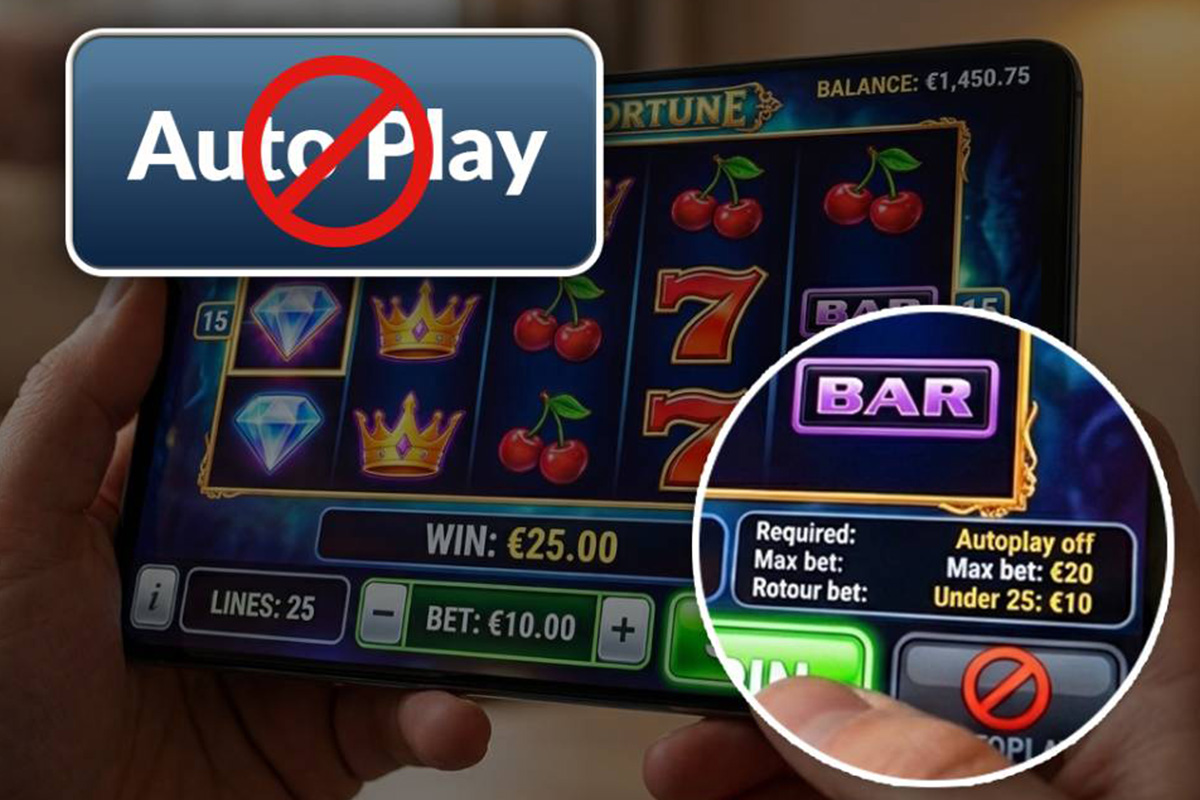
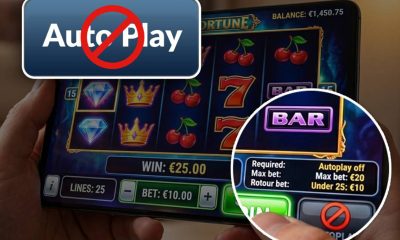
With the public consultation period closing on 5 August 2026, international operators eyeing Finland’s newly regulated gambling market face strict product limitations, including a total ban on autoplay and a €10 slot cap for players under 25.
According to a new regulatory analysis released by Kasinohai, the Finnish Ministry of the Interior’s draft legislation (Project SM053:00/2022) introduces significant technical and commercial challenges. While players aged 25 and over will see stakes capped at €20 per spin, the tiered age limit requires operators to implement complex backend adjustments. This includes integrating dynamic KYC and age-verification systems capable of enforcing stake-limiting logic per demographic, adding substantial compliance costs.
92% of Tested Slots Use Autoplay as Standard
In the first audit, Kasinohai researcher Lilli Partanen tested 49 of the site’s most reviewed slot titles. Of those, 45 included autoplay as a built-in feature, representing 91.84% of the sample. The draft legislation proposes a full ban on autoplay, requiring players to initiate every round manually and preventing a new spin from starting before the previous one has fully concluded.
While the sample size is limited, the results point to a broader pattern. Autoplay is not a niche function but a near-standard element in contemporary slot design, meaning the proposed restriction would affect a significant share of games available to Finnish players.
“Of the 49 slot games tested, 45 include autoplay, meaning the feature appears in approximately 91.84% of the games reviewed, even though the sample is relatively small,” said Helena Rautio, iGaming journalist at Kasinohai.
398 Live Casinos Depend on a Mechanic the Draft Could Outlaw
A second audit, conducted by researchers Mimmi Malmström and Laura Korhonen, focused on 398 live casino platforms where game show titles such as Crazy Time and Monopoly Live are central to the offering. The review found that all examined platforms support automatic continuation of bets between rounds, allowing players to remain in the game without repeated manual input.
If these game show formats were to be classified as slots under the Finnish framework, that functionality could be disrupted. Each round would require active player input, effectively removing the continuous betting flow that defines the format.
“The draft regulations do not mention game show products explicitly, and there is no clear definition for them. This leaves room for interpretation as to which limits and rules would apply,” said Aino Lahti, content producer at Kasinohai.
Other Key Changes in the Draft
Taken together, the two audits highlight a broader structural challenge. Features that have become standard across both slots and live casino environments may require substantial redesign if the draft is implemented in its current form. This applies regardless of operator size or licensing status.
The proposed rules also introduce stake limits tied to player age, with a general cap of €20 per spin and a stricter €10 limit for players under 25. Additional measures include a minimum round duration of 2.5 seconds and mandatory reality checks every 15 minutes, reinforcing the draft’s focus on player protection.
The post Kasinohai Audit: Most Slots Could Be Affected by Finland’s Draft Gambling Rules appeared first on EE Gaming | Global iGaming & Tech Intelligence Hub.

Scotland has launched a new funding to support the people impacted by gambling-related mental health problems in the country.
Organisations can now apply for a share of £375,000 to support projects and research linked to gambling harms and mental health, including suicide prevention.
The funding forms part of the £7.9 million allocated to Scotland through the UK-wide statutory Gambling Levy – supporting Scotland’s Population Health Framework commitments on prevention, early intervention and treatment services delivered across the NHS, local authorities and the third sector.
It is the second year the fund, which is administered by Health and Social Care Alliance Scotland (the ALLIANCE), has opened for applications, with a total of 16 projects supported in 2025-26.
Minister for Mental Health Maree Todd said: “Gambling affects too many people in Scotland – and while it is often normalised, it is linked to many hidden harms. Earlier this year we announced £7.9 million to tackle gambling harm across Scotland, and this fund is a key part of that commitment.
“Last year, our funding supported exploratory projects which found that gambling harms are strongly linked to, but often hidden by other issues including substance use, housing insecurity and debt.
“This funding will help many other organisations working with some of those most affected, and I urge all eligible groups to apply.”
The ALLIANCE Chief Officer, Sara Redmond, said: “For many people gambling has become part of their everyday life – but research shows it can evolve into a slow often invisible decline that places individuals at heightened risk of harm and impacts on their mental health and wellbeing. In serious cases it can lead to severe mental distress and even suicide.
“We need to understand more about the support that is needed within our communities – and that’s why the ALLIANCE welcomes this funding from the Scottish Government to do just that. Too often the most marginalised people and communities, those that face the biggest barriers already to better health, are the ones most at risk from gambling.
“The ALLIANCE’s work understanding communities in Scotland through our membership, and projects, gives us a good grounding to manage this fund. Communities provide solutions and on the local projects often have the answers. Solving the significant problems caused by gambling in Scotland has become a non-negotiable.”
The post Scotland: Tackling Gambling Harms, Supporting Mental Health appeared first on EE Gaming | Global iGaming & Tech Intelligence Hub.

-

 Africa7 days ago
SpringbokCasino ties July free spins to ‘Minions in the Wild’ campaign
-
 Arizona Department of Gaming7 days ago
Arizona Department of Gaming Concludes Legislative Session with Approved Agency Continuation and Enhanced Spending Authority for Problem Gambling
-
Amusnet6 days ago
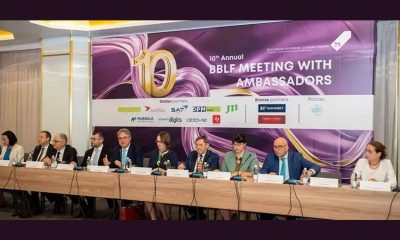
Connecting Business and Diplomacy: Amusnet Supports BBLF’s Annual Meeting of the Diplomatic Corps
-
Arizona7 days ago
Arizona extends Gaming Department for six years; problem gambling budget rises 20%
-
AGCO5 days ago
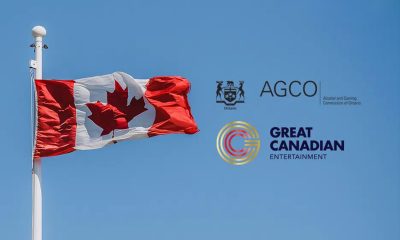
AGCO Fines Great Canadian Entertainment $120,000 for Using Unauthorised Gaming System Software at Four Casinos
-
Affiliate Industry4 days ago
Hub Affiliations Triumphs at the iGB Affiliate Awards 2026: Winner of Programme/Network Campaign of the Year
-
certification6 days ago
PopOK Gaming secures certification for Portugal iGaming market
-
Latest News5 days ago
LEON announces LEON.bet Masters, a new CS2 tournament in Portugal