Intelitics
My big predictions for 2025


Intelitics CEO Allan Stone talks sweepstakes, influencers and personalised player experiences
This is a fast-moving sector and over the next 12 months operators and suppliers will once again have to strap in for a roller-coaster ride. Ups and downs are guaranteed as they navigate the shifting sands of the global online gambling industry.
This makes predicting what the coming year has in store a tough task – player preferences can quickly change, regulations can suddenly update and innovations catch companies off guard. But I like a challenge, so here are big predictions for 2025 below.
The sweepstakes hype will become a reality
If 2024 was the hype year for sweepstakes, 2025 is the year they will become a reality despite the sector being under immense pressure. That said, most operators are staying the course with stakeholders at the state level duking it out over regulations and class action lawsuits.
This will bring changes in certain areas, but I think there will be a move away from heavy-handed measures and instead, the public markets will be left to figure things out – this will give good companies the room to grow and adapt.
We are already seeing established companies address problem areas by embracing best practices around areas such as player verification and responsible gambling which in turn is helping to legitimise their business and the wider sweepstakes vertical.
Operators will become more strategic with their marketing efforts (and spend)
Sportsbook operators finally read the room in 2024 and understood that consumers were getting tired of seeing the same national TV ads over and over, especially in states where sports betting isn’t legal.
This saw many brands pull back on national campaigns amid diminishing returns on blanketing the airwaves with generic ads to become more strategic. This is a trend I expect to see continue in 2025.
This will mean more localised advertising with hyper-vigilance in spending – every ad dollar will be carefully allocated to ensure it delivers results. Expect refined top-of-funnel tactics with companies moving away from noisy, generic campaigns in favour of targeted consumer-first strategies.
Don’t underestimate the power of Meta
Meta is the second-largest controller of digital ad inventory in the world and is arguably the best platform out there for targeting and segmenting specific audiences. But it’s important to play by their rules – if Meta bans you, you’re essentially removing yourself from the equation.
It’s next to impossible to come back from and we’ve seen this happen time and again with clients coming to use after a ban asking for a fix. The reality is, there isn’t one.
This is why it’s so important to take your time with Meta – taking a strategic approach and ensuring compliance with its rules means you don’t get burned when playing with what is one of the hottest marketing platforms in the world.
Personalised experiences will become mission-critical to operator success
The operators succeeding in sports betting right now understand that players want experiences tailored to them. This means ensuring they can quickly access the bets they want to place, whether that be for specific teams or players, and even the markets and bet types they prefer.
Personalisation is about adapting to how players bet, not the other way around. This helps operators and brands to build long-term engagement by tailoring the experience, which in turn keeps players coming back.
If operators can create something that feels personal and intuitive they don’t need to keep pushing heavy promotions or generic options.
Fanatics have proven how powerful this approach can be – they weren’t the first to market, but they filled gaps their competition left wide open and have achieved great success by doing so. Ultimately, operators need to remember to build for players and not for themselves.
Influencers will enter the marketing mix in a meaningful way
Influencers have proved to be an effective marketing tool but an influencer strategy without a strong way to measure attribution is useless, and two things you need to be extremely clear about with influencers is “can you actually send me players” and “how valuable are these players to me?”.
These are easy questions to ask but much harder to answer.
This is why you need to test, track and iterate. I’d suggest starting with a promotion and closely monitoring data. You should also ask yourself things like:
How many people saw the promotion?
How many clicked?
Of those clicks, how many created accounts?
Are those accounts funded?
Are these new users actively playing over time?
But remember, influencers aren’t just an acquisition tool. They are a way to amplify your message to an audience you might already engage with but need help reaching consistently. This is hard to track, but with the right technology and attribution systems, it can be done.
The post My big predictions for 2025 appeared first on Gaming and Gambling Industry in the Americas.













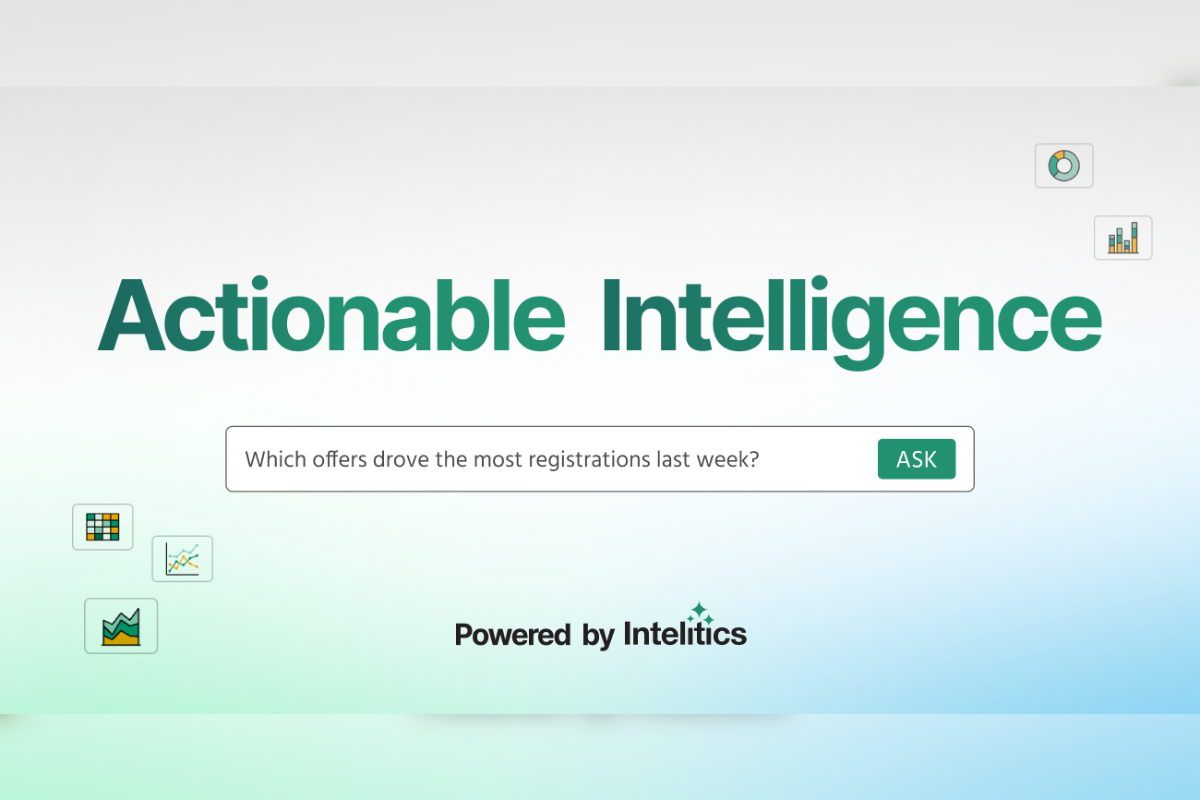
Intelitics has launched Actionable Intelligence, a generative AI reporting feature designed to let iGaming and sports betting marketing teams create custom data visualisations on demand using plain-language questions.
The company said the tool builds on Intelitics’ existing reporting stack used to track partner performance, campaign ROI and acquisition metrics. Instead of commissioning a new report or writing code, users can query the same dataset and receive a chart or visualisation in response.
Use cases cited by Intelitics include comparing partner performance by traffic source, drilling into individual campaigns, and breaking down player value by acquisition channel. Intelitics said the feature interprets iGaming and affiliate marketing terms including partners, offers, traffic sources, player value, acquisition channels, GGR and NGR, without requiring users to translate requests into SQL.
“The data our customers need to make better decisions has always been inside Intelitics,” said Allan Stone, founder and CEO of Intelitics. “Actionable Intelligence makes it accessible on their terms, with no technical skills required and no waiting for a report to be built. We designed it so that everyone on a marketing team, not just the analysts, can explore their data and act on what they find – and we built it to understand the way iGaming and affiliate marketers actually talk about their business, from partners and offers to GGR and NGR.”
On data governance, Intelitics said Actionable Intelligence runs within each customer’s Intelitics environment. The company stated that customer data is not pooled across accounts, shared with third parties, or used to train any model outside that environment, and that each visualisation is generated only from the customer’s own Intelitics data. The feature is available to Intelitics customers.
The post Intelitics adds generative AI visual reporting tool for iGaming marketers appeared first on EE Gaming | Global iGaming & Tech Intelligence Hub.
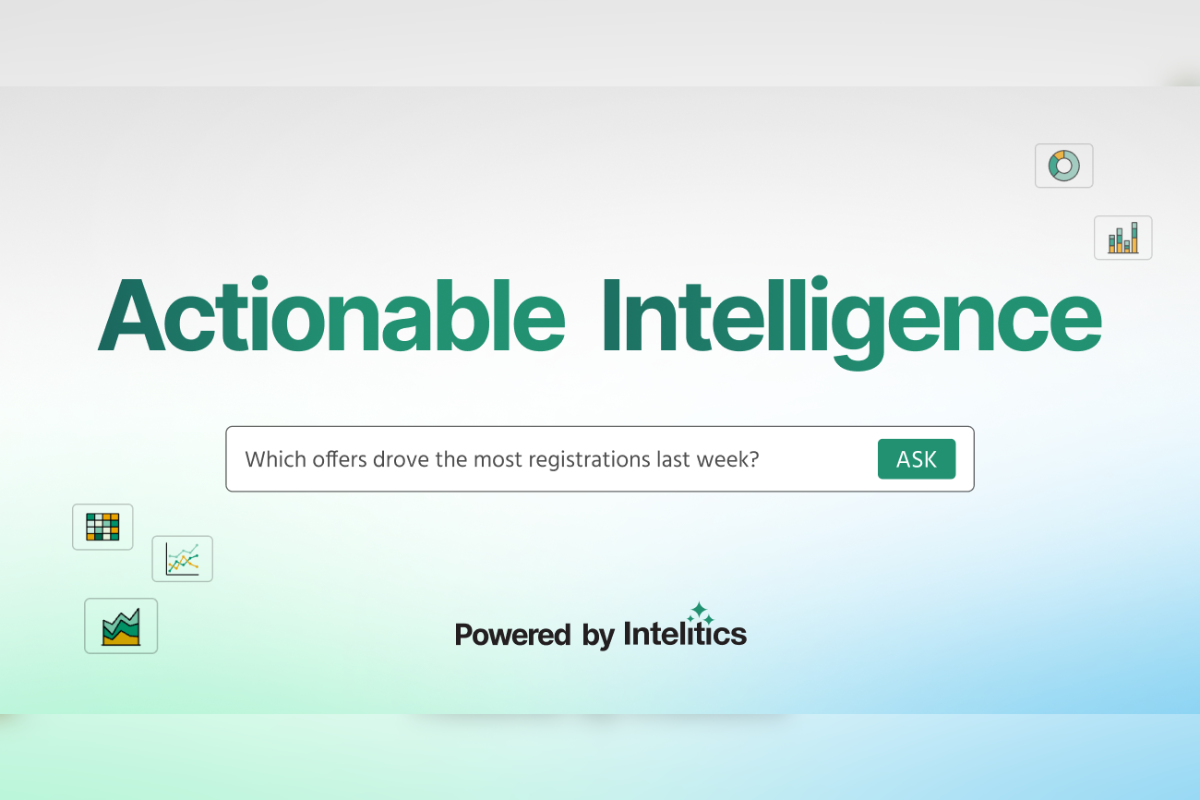
Intelitics today announced the launch of Actionable Intelligence, a generative AI reporting feature designed to let iGaming, sports betting and real-money marketing teams create custom data visualisations on demand by asking questions in plain language.
The company said the tool builds on Intelitics’ existing reporting suite used to track partner performance, campaign ROI and acquisition metrics. With Actionable Intelligence, operators can query their Intelitics data directly and receive a visualisation without commissioning a new report or writing code.
Use cases cited by Intelitics include comparing partner performance by traffic source, drilling into individual campaigns and breaking down player value by acquisition channel. Intelitics said that if a visualisation is useful, its customer support team can add it to a customer’s standard dashboard as a permanent report.
“The data our customers need to make better decisions has always been inside Intelitics,” said Allan Stone, founder and CEO of Intelitics. “Actionable Intelligence makes it accessible on their terms, with no technical skills required and no waiting for a report to be built. We designed it so that everyone on a marketing team, not just the analysts, can explore their data and act on what they find – and we built it to understand the way iGaming and affiliate marketers actually talk about their business, from partners and offers to GGR and NGR.”
The feature is built to interpret iGaming and affiliate marketing terms including partners, offers, traffic sources, player value, acquisition channels, GGR and NGR, Intelitics said. The company also said the feature operates within each customer’s Intelitics environment, with customer data not pooled across accounts, shared with third parties, or used to train any model outside that environment—positioning the tool for operators in regulated markets with data governance and licensing requirements.
The post Intelitics rolls out generative AI reporting tool for iGaming marketers appeared first on Americas iGaming & Sports Betting News.
Allan Stone CEO at Intelitics
Volume-based bidding: why it fails and what smart marketers do instead

Allan Stone, CEO at Intelitics, says that volume bidding is showing its cracks amid rising acquisition costs and the need for increased accountability, with a value mindset now required for the best results
Volume-based bidding has long been the default approach in performance marketing with marketers focusing on more clicks, more installs and more traffic.
The idea behind this being that the more scale you can generate at the top of the funnel, the more conversions you will achieve downstream.
In the past, this approach did make some sense. Platforms were less mature, attribution was simpler and growth often came from sheer expansion.
But the market has changed – user acquisition costs are sky high, consumer behavior is fragmented and finance teams now demand accountability beyond surface-level metrics.
In short, the approach of pushing more traffic into the funnel and letting scale do the rest no longer works.
Today, volume-based bidding doesn’t just under-perform, it actively hides inefficiencies that prevent sustainable growth.
The illusion of scale:
This is because volume-based activities are optimized for activity, not outcomes. If you measure success by clicks, impressions or installs, campaigns can look healthy on the dashboard but with incredibly poor real-world performance.
Clicks, impressions and installs mean nothing if they don’t ultimately lead to conversions. And this means they are quietly failing the business.
These are just some of the deeper structural issues that volume-based bidding can hide:
- Low-intent users that never convert
- Inflated acquisition costs downstream
- Poor retention and lifetime value
- Volatile and unpredictable revenue performance.
Essentially, volume creates motion but not momentum.
But it’s momentum that needs to be used as the true indicator of success as it provides the ability to translate acquisition spend into measurable and repeatable business outcomes.
However, this requires actionable intelligence and not vanity metrics – this is the only way operators can make smarter decisions and ultimately acquire high-quality players.
Why cheap traffic is often the most expensive:
This also means moving away from “cheap” traffic – one of the most common traps in volume-based bidding is the pursuit of lower-cost acquisition metrics.
Reduced CPCs or CPAs can feel like progress, but they frequently correlate with lower-quality users who churn quickly or, worse, never generate meaningful value.
Platforms will do what they are incentivized to do, so if your bidding strategy rewards quantity over quality, you’ll get more of the cheap traffic, regardless of its intent, engagement or long-term contribution.
The result is an all-too-familiar paradox where marketing teams pay less per click but far more per meaningful outcome, regardless of whether that’s a first-time depositor, repeat customer or sustained revenue.
Volume breaks when budgets tighten:
And this invariably happens when volume-driven campaigns fail to deliver – when budgets are scrutinized and economic pressure increases, marketing leaders are forced to ask harder questions like:
- Which channels actually drive FTDs?
- Which partners generate long-term value and not just short-term activity?
- Where is spend being wasted and why?
Volume-based models usually struggle to answer these questions because they lack the clear line of sight into downstream performance.
Without such clarity, optimization becomes reactive rather than strategic, and scaling feels risky instead of repeatable.
The attribution gap: why most bidding strategies are blind:
One of the main reasons why volume-bidding fails is not intent – it’s visibility, or, rather, the lack of it.
Most acquisition strategies are built on incomplete or delayed data. Platforms optimize to the signals they can see fastest – clicks, installs first events.
But the metrics that actually matter – FTD, repeat behavior, lifetime value – come days, weeks or even months downstream and are disconnected from the bidding logic that drives the traffic in the first instance.
This creates a deep and fundamental attribution gap.
When bidding decisions are made without reliable downstream feedback, marketers are effectively optimizing in the dark.
Channels that look efficient at the top of the funnel are scaled, while those that drive real value but convert later are deprioritized or cut.
Over time, this leads to three compounding issues:
- High-performing sources are misclassified as under-performers
- Low-quality traffic is repeatedly rewarded
- Budget allocation becomes more disconnected from real revenue impact
Without closing the loop between acquisition activity and downstream outcomes, even well-intentioned optimization effects reinforce the wrong behaviors.
Issues with volume-bidding identified, but what should marketers do instead?
What smart marketers are doing instead:
Leading performance marketing teams are moving away from volume-based bidding and towards value-driven decision making instead.
But that means reorienting acquisition strategies around signals that reflect real business impact.
What does that look like? Instead of asking “What traffic did we buy?”, ask the following:
- Which users convert downstream?
- Which campaigns drive repeat behavior?
- Which sources contribute to long-term value?
The shift doesn’t mean buying less traffic, it means buying better traffic. Traffic that aligns with business outcomes and not just platform and vanity KPIs.
From volume to value:
Today, the most successful acquisition strategies aren’t built on bigger funnels, they’re built on clearer ones. When teams understand user value beyond the first click, bidding becomes more precise, spend more predictable and growth more sustainable.
Volume-based bidding fails because it optimizes the wrong goal while value-based thinking succeeds because it aligns acquisition with actual outcomes.
As performance marketing continues to evolve, the real question isn’t how much traffic you can buy, it’s how much of that traffic actually delivers.
At Intelitics, we are building value-based technology that connects acquisition activity to downstream performance, helping operators move from noise to insight and from scale to sustainability.
For teams looking to evolve beyond volume and unlock smarter growth, this shift has already begun and we are here to support them in making that transition.
The post Volume-based bidding: why it fails and what smart marketers do instead appeared first on Americas iGaming & Sports Betting News.

-

 10bet5 days ago
Ellis Park Stadium signs five-year naming rights deal with 10bet
-
central asia5 days ago
Groove confirms attendance at SBC Summit Tbilisi 2026
-
Bucharest4 days ago
Eeze opens 1,200 sqm Bucharest hub for technical teams
-
API integration4 days ago
Belatra signs cooperation deal to distribute slots via VeliGames
-
affiliate marketing5 days ago
SEOBROTHERS’ Aleksandra Drigo flags higher barriers for affiliates in regulated Alberta
-
AB Trav och Galopp3 days ago
BetMakers Technology Group Selected to Distribute ATG Horse Racing Content Across Australia and New Zealand
-
game content4 days ago
R. Franco Digital releases fighting game-themed slot Spin Fighters
-
Big Bass Blast5 days ago
Pragmatic Play adds Big Bass Blast to Big Bass slot series