Latest News
Cross-Selling and Upselling in Poker Stores: How to Increase the Average Check


Revenue optimization has emerged as one of the key success factors in the highly competitive online poker industry. With the growing costs of acquiring players and the challenge of retaining them, poker operators need more ways of generating revenue. In this light, the In-Store feature developed by EvenBet Gaming has brought a new change in the industry: boosting the operator’s revenue while offering engaging game perks for the players.
The mechanics of online poker rooms
Historically, online poker rooms have been able to attract a variety of players with diverse games, starting from the more common Texas Hold’em to the less known Razz. In the past, poker platforms have depended on rake, which is a small percentage of every pot, or tournament fees as their main sources of income.
However, nowadays, these models have become less dependable as poker operators face a number of challenges. They are always torn between the need to meet regulatory requirements, maintain their profit margins, and keep the players happy. This has led to the need to increase the average revenue per user (ARPU) without losing customers in this competitive environment.
Welcome cross-sell and upsell — two effective techniques successfully implemented in niches like e-commerce and are now actively used in the poker segment. These strategies have been effective in increasing the LTV and customer retention rates. For poker rooms, this could mean the difference between going bust and holding out for the long term.
Cross-selling in poker
Cross-selling is the practice of selling related products or services to existing customers. In the poker context, this could take several forms:
- Basic cross-sell: advertising casino games to sports bettors and the other way around. For example, a poker room may recommend slot games to the players who frequently play Texas Hold’em.
- Intermediate cross-sell: the use of player data to develop more specific campaigns. For instance, if data reveal that poker tournament players like to play blackjack, the room may target blackjack to tournament players.
- Advanced cross-sell: a more complex approach that employs dynamic and data-driven models to provide the player with customized suggestions. For example, when a player’s activity and their preferences are used to recommend new games or tournaments that may be interesting.
Upselling in poker
Upselling persuades the customer to choose a better version of the product they are already using. In poker rooms, this might involve:
- Providing VIP tournament seats to the ordinary cash game participants.
- Offering higher risk and reward tables to players who play at lower limits.
- Offering additional services such as higher level statistics or time bank top-up.
Through these strategies, poker operators can develop multi-players — customers who interact with several products. Multi-players have higher retention rates and an average future value of 50% higher than that of single-product players.
For poker room operators, understanding these cross-sell and up-sell strategies might be the only way to not only survive but prosper in the highly saturated online gaming market. It’s about the long-term perspective and the audience that will provide constant revenues.
Applying cross-selling and upselling to poker platforms
The poker industry is one of the most suitable for cross-sell and upsell strategies. The EvenBet Gaming In-Store feature is a game-changer for operators as it provides a range of virtual items that can improve the players’ experience.
Items available for cross-selling include:
- Play money packages: for those who wish to play or warm up with other games without staking their real money.
- Time bank extensions: allowing the players to spend more time making strategic moves over the course of the game.
- Rabbit hunting feature: enabling the players to see the cards that would have been dealt in the next round once a round is over.
- Opponent game statistics: informing the players about the actions and strategies of their opponents during the game.
Upselling opportunities in the store include:
- VIP cards with bundled perks: EvenBet store offers customisable sets of benefits that come at a lower price when bought together.
Yet another option are loyalty programme incentives that can come in different styles:
- Premium tournament entries: as players accumulate cash game points or achieve a certain hand count, they can unlock access to exclusive tournaments.
- Exclusive game access: higher-tier loyalty members might gain entry to special cash games or tables not available to the general player base.
These features are beneficial for the platform’s revenue, and they also boost the gaming experience and bring greater satisfaction to the players.
Strategies for increasing the cash flow
To optimize revenue in online poker stores, operators should implement a comprehensive strategy that encompasses several key elements:
- Strategic offer placement: display relevant promotions in the lobby and during the game, so that they do not interfere with the gameplay. This approach keeps the audience interested in your offer without being annoying.
- Personalized marketing: use player data to create specific promotions that will appeal to the players’ preferences and activities.
- Value-driven bundles: offer appealing promotional offers like “two for the price of one” and combo packages. Such offers have high perceived value for the players, as in a bundle they receive more than each separate item’s worth.
- Time-sensitive promotions: take advantage of the FOMO effect by offering time-sensitive products or services. This creates urgency, which in turn leads to faster buying decisions.
- Integrated loyalty schemes: integrate cross-selling and upselling opportunities in the loyalty programme. This helps retain the players for a long time and makes them use the platform more frequently.
By implementing these strategies, poker room operators can create a more engaging and profitable store environment. This holistic approach not only drives revenue but also enhances the overall player experience, fostering loyalty and sustained growth in the competitive online poker market.
Seizing the opportunity
Well-adopted cross-sell and upsell strategies can greatly improve both the cash flow and the players’ experience. This way, operators can increase their user lifetime value while enhancing the quality of the game. If you want to transform your poker platform’s monetisation model, learn more about EvenBet Gaming’s advanced store options and find out how these enhancements can help you increase player worth and involvement. The operators able to balance the revenue targets and player satisfaction will be in good standing to succeed in this competitive market.
The post Cross-Selling and Upselling in Poker Stores: How to Increase the Average Check appeared first on European Gaming Industry News.

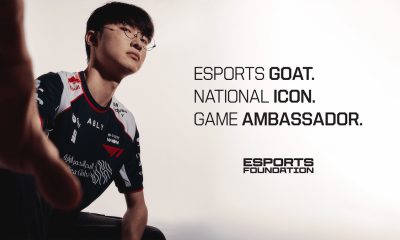









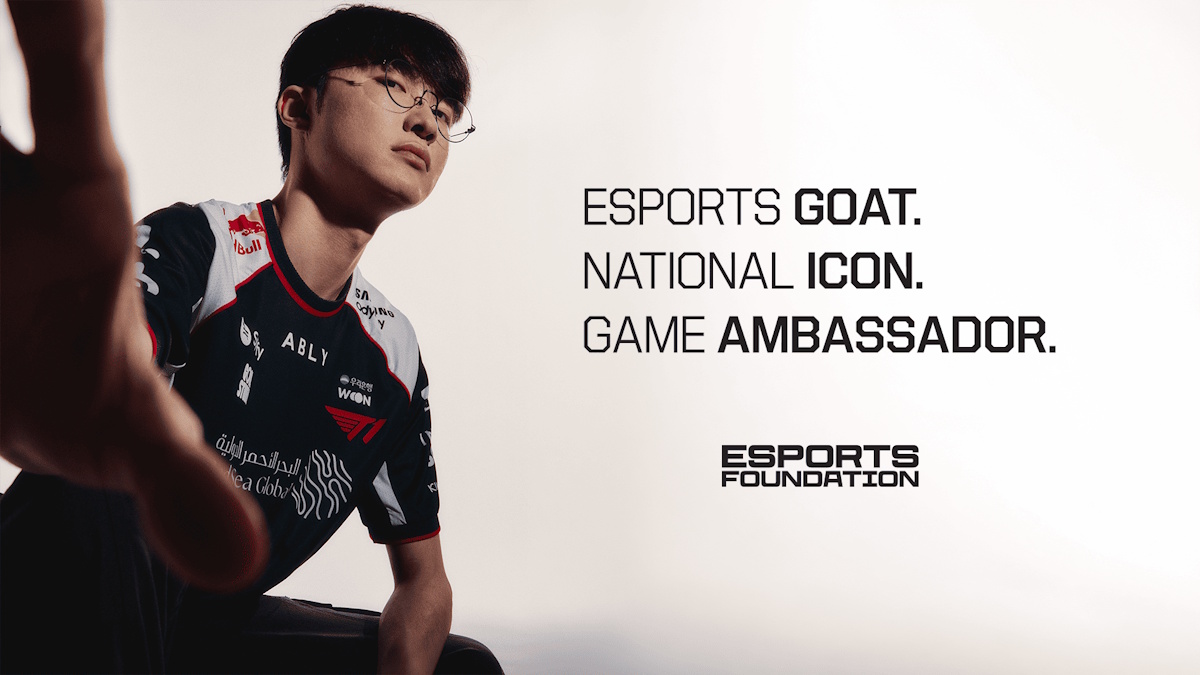
Lee “Faker” Sang-hyeok joins Cristiano Ronaldo and Magnus Carlsen in the Esports Foundation’s Ambassador Program.
The Esports Foundation (EF) has appointed Lee “Faker” Sang-hyeok as a Game Ambassador for the Esports World Cup (EWC) and Esports Nations Cup (ENC) through 2028, the organization said on July 15, 2026 in a statement issued from Riyadh and Paris.
EF said Faker joins Cristiano Ronaldo, listed as the Foundation’s Global Ambassador, and Magnus Carlsen as part of the Esports Foundation Ambassador Program. The Foundation said Faker will represent “the perspective of esports players” across its international events, athlete initiatives, media engagements and leadership forums.
“You can’t talk about esports without mentioning Faker. He is the defining athlete of competitive gaming: a champion whose excellence, discipline and longevity have inspired an entire generation,” said Ralf Reichert, Chief Executive Officer of the Esports Foundation. “As our Game Ambassador, Faker represents something fundamental to the Ambassador Program: esports creates its own global sporting icons. Across EWC, ENC and NGSC, he will help ensure that the players who built this sport have a voice in shaping where it goes next.”
Faker said: “Competition has shaped my life, and I am proud to join the Esports Foundation as Game Ambassador. I want to continue competing for the biggest titles with T1 while representing the players and fans who have helped esports grow worldwide. Through the Esports World Cup, Esports Nations Cup and the Foundation’s wider platforms, I hope to inspire the next generation to pursue excellence, remain resilient and believe in how far competitive gaming can take them. There is still much more to achieve.”
EF highlighted Faker’s competitive record, describing him as a six-time League of Legends World Champion, EWC 2024 winner, two-time MSI champion and ten-time domestic champion with T1. The Foundation also said Faker became the first esports athlete to receive the Blue Dragon Medal in 2026, describing it as the Republic of Korea’s highest sporting honor awarded by President Lee Jae-myung.
The post Esports Foundation names Faker Game Ambassador for EWC and ENC through 2028 appeared first on EE Gaming | Global iGaming & Tech Intelligence Hub.

Midnite has agreed a partnership with Middlesbrough FC that will see the UK bookmaker become the club’s principal partner and front-of-shirt sponsor for the 2026/27 campaign, which Middlesbrough describes as its landmark 150th season.
The companies announced the deal alongside a fan activation at Riverside Stadium on Thursday, July 9, branded “This Season’s On Us”. The initiative offered supporters prizes including 2026/27 season tickets, 2026/27 shirts, match tickets, or a £25 club shop voucher, with fans required to answer Middlesbrough trivia and complete a football challenge.
Middlesbrough former players Craig Hignett and David Wheater attended the event, and, according to the company, took bonus attempts on behalf of participants who missed out.
Andrew Mook, Midnite’s Head of Brand Marketing, said:
“Middlesbrough have a storied history and we’re delighted to announce this partnership during such a monumental year with the club celebrating their 150th anniversary.
“It was great to see so many Middlesbrough fans at the “This Season’s On Us” activation, we hope they enjoyed taking part and meeting club legends, with David Wheater hitting top bins on several occasions and allowing fans to win big with season tickets.
“We can’t wait to get to Riverside Stadium in August to kick-off a new season and we’re excited to say that we have plenty of new and captivating campaigns planned.”
Lee Fryett, Middlesbrough FC Chief Commercial Officer, added:
“We’re delighted to welcome Midnite as our new Principal Partner.
“We’re looking forward to working closely with Midnite to develop engaging campaigns, content and unique experiences that bring our fans even closer to the club.
“We’re confident this partnership will provide real value for our supporters while supporting our ambitions both on and off the pitch.”
The post Midnite signs as Middlesbrough FC principal partner for 2026/27 season appeared first on EE Gaming | Global iGaming & Tech Intelligence Hub.
ThrillTech has been awarded a Gaming-Related Supplier licence by the Alcohol and Gaming Commission of Ontario (AGCO), clearing the company to launch in Ontario’s regulated market.
The licence allows ThrillTech to deploy its opt-in side bet jackpots technology with regulated online casino, sports betting and lottery operators across the province.
Benjamin Bradtke, Co-Founder of ThrillTech, said: “Securing our AGCO licence is a major step in our mission to transform how jackpots are delivered at scale across regulated markets. This latest certification is testament to our robust technology and trusted compliance frameworks, allowing us to continue our global growth trajectory. We are thrilled to bring our proven, compliant jackpot technology to Ontario, empowering locally licensed operators to uplift revenue without cannibalising existing spend.”
The company said its “ThrillPots” mechanics sit as an independent, player-funded side bet and do not alter the underlying game’s return-to-player mathematics.
ThrillTech said the Ontario approval enables its existing multinational partners that also operate in the province to launch its side bet jackpots locally, while it also holds talks with potential new operator partners. The company lists its regulated footprint as including the United Kingdom, Sweden, the Netherlands, Romania, Malta, Gibraltar, Brazil and Peru.
The post ThrillTech secures AGCO supplier licence for Ontario launch appeared first on EE Gaming | Global iGaming & Tech Intelligence Hub.

-

 Compliance Updates5 days ago
Arizona Department of Gaming Issues Cease-and-Desist Orders to Multiple Operators Linked to Underage Gambling and Illegal Activity
-
 Latest News7 days ago
ELA Games releases Flames Fruits Frenzy Hold and Win slot
-
Compliance Updates6 days ago
KONAMI GROUP’s Konami Gaming Inc. First to Submit Manufacturer License Application in Japan’s Emerging IR Market
-
Latest News7 days ago
PG Soft appoints Hugo Baungartner as General Manager LatAm
-
Canada7 days ago
Canada’s Safer Gambling Gap: Why Market Success Doesn’t Always Equal Player Safety
-
Latest News7 days ago
Tom Horn Gaming ships Royal Ruby FeatureStorm slot worldwide on 14 July 2026
-
Latest News7 days ago
Booming Games launches Fish Tales: Double Catch Max Scatter
-
Latest News7 days ago
BC.GAME names Guillermo Ochoa brand ambassador for Mexico push