Latest News
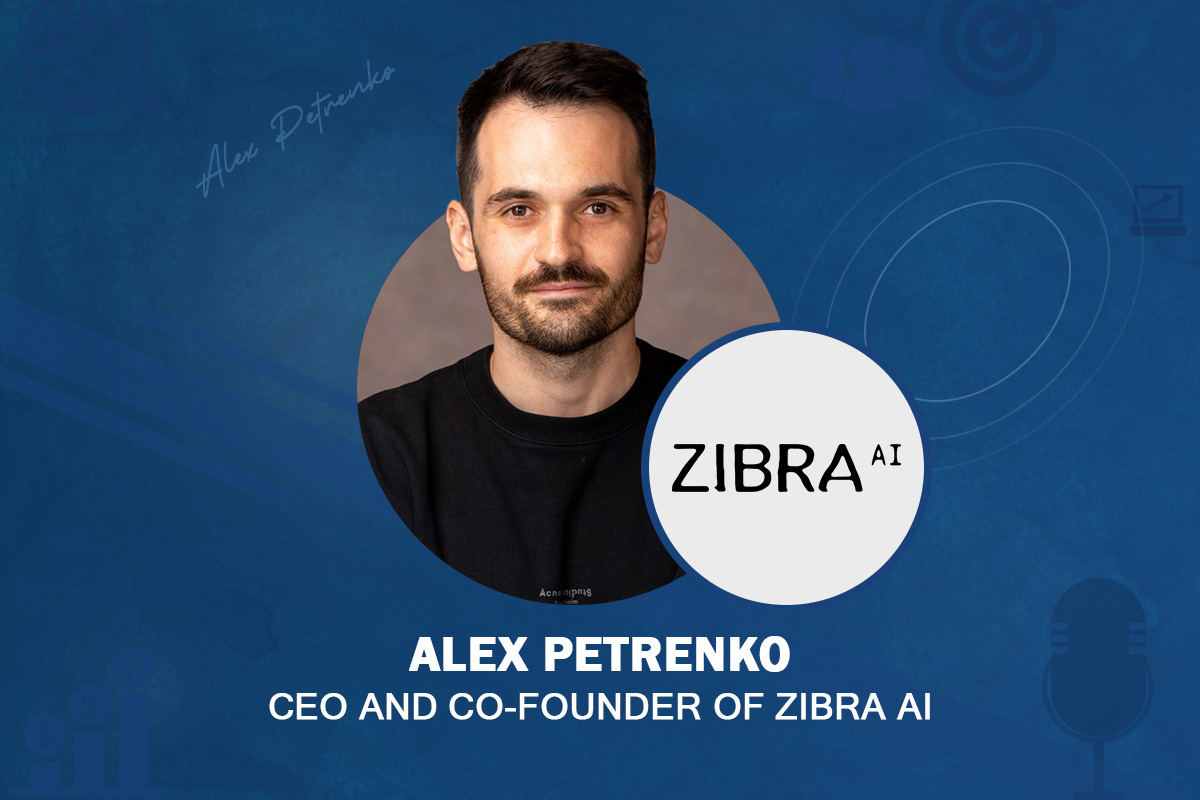
Exclusive Q&A w/ Alex Petrenko, CEO and Co-Founder of Zibra AI

- Could you share some insights into your journey and professional background, highlighting key experiences that led you to initiate Zibra?
My journey in the tech and gaming world began after graduating from the National Aviation University in Kyiv, specialising in management and logistics. Prior to Zibra AI, I held senior business development roles at CoWorking Platforma and Talkable, gaining valuable insights and experience working on business strategies and development dynamics with companies like General Assembly, Y-Combinator and influencers like Steve Wozniak to organise offline events for the tech community and build a separate revenue stream around educational events.
As a passionate gamer and technology enthusiast, I’ve always been interested in new game titles, but as games become more complex, their development has become lengthier. Game developers now require considerably more time and resources to craft immersive and sophisticated gaming experiences that can cater to the ever-growing demands of the player community.
The desire to change this and aid developers of all sizes to create amazing titles and experiences for gamers, led me to create Zibra AI alongside our amazing co-founding team of Vladyslav Zavadskyi and Den Dmytrenko. Earlier this year, with the help of our fantastic team, we succeeded in securing funding from both the inaugural a16z Games SPEEDRUN (the only company to be chosen from Eastern Europe) and from Epic’s MegaGrant program. Witnessing the potential of Generative AI, particularly in streamlining game development and enhancing VFX (Visual Effects) creation, ignited the vision for Zibra AI. Our mission is clear: enabling game developers, VFX artists, and creators to revolutionise their workflows and create exceptional experiences.
- Delving into Zibra, what sparked the creation of the platform? What were the core founding principles for Zibra?
Being a gamer with a strong interest in emerging technologies, I was always inspired by what these advancements could offer to the gaming world, both behind the scenes on the development side but also the impact to the end-user, the players. Game development, though rewarding, often faces lengthy and challenging development cycles. Recognising the potential of AI to alleviate these hurdles, especially in the realm of asset and VFX creation, sparked the inception of Zibra AI in 2021. Our core founding principles revolve around leveraging Generative AI to simplify the creation of 3D assets and VFX, empowering game developers and artists to enhance their workflows and bring their visions to life with efficiency and creativity.
- Generative AI has the potential to democratise creativity. How is Zibra AI making this technology accessible and user-friendly for a broader audience of content game developers and Visual Effects artists, including those with varying levels of technical expertise?
Zibra AI is dedicated to democratising game development and visual effects through the creation of easy and affordable products. All the solutions with our platform are designed with a user-friendly interface, ensuring accessibility for creators of all skill levels. We’ve placed a strong emphasis on intuitive tools and a seamless user experience, allowing content developers, from beginners to experts, to utilise the power of Generative AI effortlessly. We’ve worked tirelessly to ensure our platform caters to varying technical proficiencies, enabling a diverse audience to embrace AI-generated 3D assets and VFX, ultimately democratising the creative process in the gaming and visual effects spheres.
- Zibra aims to streamline 3D content generation. Could you quantify the success achieved in simplifying and democratising this process? Providing data on user numbers and the time required to create 3D content using the platform would be valuable.
We are thrilled that Zibra AI has recently surpassed 100,000 users, primarily consisting of game developers leveraging our platform for VFX creation. The feedback from our growing community has been overwhelmingly positive, empowering even indie developers to swiftly craft high quality VFX without requiring specific prior expertise. This allows them to test and validate their creative concepts, without any delay. Zibra AI solutions enable easy creation of new immersive experiences and game mechanics based on real-world physics (liquid, smoke & fire). Soon, Zibra AI tools will also make it possible for creators to easily generate in-game assets based on almost any input, whether it be text, video or image references. Our mission is to give game developers of all levels unprecedented amounts of freedom to experiment and customise their games, (using a single prompt) to create the best experience possible for players.
- Looking at the global market, how do you envision Generative AI shaping the future of visual effects and media production, and what role do you foresee Zibra AI playing in this transformative journey?
Generative AI holds immense potential in shaping the future of visual effects and media production. As the technology advances, we foresee a future where Generative AI seamlessly integrates with creative workflows, significantly accelerating content creation and enhancing the overall quality of visual effects. Zibra AI aims to be at the forefront of this transformation, empowering artists and developers with efficient AI-powered solutions that enhance their capabilities and artistic visions. Our role is to continually innovate, ensuring our platform remains aligned with the evolving needs of the industry, ultimately contributing to a future where creativity and technology harmoniously coexist. We are not trying to replace human jobs but instead empower those and maintain a community who help each other and create more amazing gaming experiences.
- Please elaborate on the standout features of Zibra powered by AI, which captivate users and developers in the realm of 3D content creation.
One of our primary platform offerings is Zibra Effects. A powerful AI-assisted solution to create dynamic smoke, fire, liquid, and clothing Visual Effects for games. All Zibra Effects products are equipped with a unique AI-layer that speeds up object prototyping and accelerates the performance of the simulation itself. What sets Zibra Effects apart is its ability to provide real-time interactivity, enhancing the immersivity. It’s a low-code tool that drastically simplifies the complex process of VFX creation, saving developers significant time. Additionally, we offer a free version of Zibra Effects for users to explore and experiment with, allowing them to experience firsthand the transformative capabilities of AI-assisted tools.
- Data privacy and ethical AI use are growing concerns. How does Zibra AI ensure responsible use of Generative AI and maintain a strong commitment to data security and user privacy in your products and services?
At Zibra AI, data privacy and ethical AI usage are paramount. Our platform only uses proprietary models and data sources to build our features. We are committed to not creating or using an open source model that scrapes the internet and users’ data. We remain committed to transparent communication with our community and ensuring that our technology is harnessed responsibly and ethically, respecting both user privacy and societal norms.
- Are there upcoming features within the Zibra pipeline that you can share with us, offering a glimpse into the platform’s evolving capabilities?
This autumn we’ll be announcing an important step forward for file compression of visual effects (ZibraVDB). This tool will allow something that was previously close to impossible to achieve – having volumetric/3D VFX in games. VFX will look much more realistic, whilst the significant compression of file sizes (up to 100x smaller than the current standard) allows for a wider use of high-fidelity VFX within different environments and across platforms previously unable to compute such large files. It’s a huge milestone in our mission to continually evolve and empower creators with cutting-edge tools and capabilities.
- Can you showcase some instances of 3D content generated using Zibra, underlining its prowess in empowering creators?
Absolutely. Creators regularly share their works within our Discord community, showcasing how our solutions can be applied in various use cases. One notable instance was a simulation involving a pool cleaning scenario, where the water physics generated were lauded as even superior to those in renowned games like Starfield. Additionally, we’ve seen impressive 3D AR/VR reconstructions that underscore the prowess of Zibra AI in empowering creators to realise their visions in the virtual world. Our community loves to share their first hand experiences using Zibra Effects. For example, game developer Lee Vermeulen’s social media videos earlier this year, showcasing Zibra Effects real-time liquid, smoke and fire simulations in AR have gone viral!
- Lastly, reflecting on your role as the Co-founder and CEO of Zibra AI, what advice or insights would you share with aspiring entrepreneurs trying to get into the fields of AI and Gaming?
You need to embrace your passion for AI and/or gaming and stay relentlessly curious and up-to-date as both are ever-evolving fields. Much like the journey of a lifelong learner, remember that success often emerges from a foundation of persistence. Above all, stay true to your vision and persevere through challenges. Entrepreneurship and building a product/company should be an exciting journey. Try to keep this front of mind and enjoy the process through all the ups and downs.











Here are this weeks latest slots releases compiled by Eastern European Gaming
Spinomenal has released 3 Fuego Chillies, a new 5×3 video slot themed around a Mexican street fiesta. The game ships with a feature-led Bonus Game and a top prize billed as a Grand Jackpot of x3,000 the total bet.

CT Interactive has released its latest slot game, 40 Mega Star. As the night sky comes alive with countless shimmering lights, only a select few stars have the power to capture attention and become true Mega Stars.

TaDa Gaming has expanded its popular Unlimited Fortune mechanic with the launch of Joker Coins Unlimited Fortune. Combining Lock & Respin, progressive bonus expansion, jackpots, multipliers and the signature Unlimited Fortune feature, this compact three-reel release delivers layered gameplay and win potential of up to 5000x.

Blueprint Gaming is releasing an upgraded version of Super Graphics Upside Down exclusively on Lottomart, giving Lottomart’s UK players early access to the title. Originally launched in 2021, Super Graphics Upside Down is being re-released with a new bonus wheel feature and an increased max win potential, rising from 250X to 3000X, according to the companies.

ICONIC21 has released Wild Gold Mine 2, a high-volatility sequel to its Wild Gold Mine slot. The game is played across 243 ways and launches with multiple RTP configurations, with a stated top prize of 10,000x.

Games Global has launched Rumble Kong CASHINGO , a new jungle-themed online slot developed with exclusive studio partner Alchemy Gaming. The title went live on 23rd July 2026. Rumble Kong CASHINGO is a 5×5, 3,125 ways-to-win game built around an expanding CASHINGO collection grid.

Swintt has released a new slot from its Elysium Studios label, titled Odyssey Hold & Win. The supplier said the game is built around a Hold & Win collection mechanic and features a stated maximum win of 3,317x. Odyssey Hold & Win runs on a 4×4 grid that can expand to 4×8 when Athena appears, according to the company.

ELA Games has released a new slot, Age of Cleopatra, adding another ancient-Egypt theme title to its portfolio. The studio positions the game as a medium-volatility release and says it is available to demo now. Age of Cleopatra runs on a 5×3 reel set-up with 25 paylines.

Endorphina has launched Zalatar, a new myths-and-legends themed online slot, expanding its recent run of fantasy-leaning releases. The supplier said Zalatar is a 5-reel, 3-row game with 25 fixed paylines, 96.03% RTP and high volatility.

The post Weekend Reels | Week 30: Slot Drops & Trends appeared first on EE Gaming | Global iGaming & Tech Intelligence Hub.
Slotsoo is proud to announce the winners of the Slotsoo Awards 2026, recognising the online casinos and game providers that have delivered the best player experiences over the past year. Now firmly established as an annual celebration of excellence, the awards continue to recognise the companies setting new standards for quality and innovation across the iGaming industry.
Spotlighting the Best Game Providers of 2026
Following last year’s successful debut, the Slotsoo Game Provider Awards returned for a second year to recognise the studios pushing online slots forward through original ideas, engaging gameplay, and consistently high-quality releases. This year’s winners are:
- The Machine MVP – Pragmatic Play
- Bonus Buyer – Eurasian Gaming
- Volatility Virtuoso – 1spin4win
- Jackpot Jumbo – Platipus Gaming
- Symphony Spinner – Peter & Sons
- Reel Renegade – TaDa Gaming
- Promising Prodigy – EXCO Game Studio
Pragmatic Play retained the prestigious Machine MVP award for a second consecutive year, while every other category crowned a new winner, highlighting the emergence of fresh talent and new ideas among game providers.
Casino Awards Return for a Fourth Year
Since their debut in 2023, the Slotsoo Casino Awards have celebrated the operators raising the standard for online casino experiences. This year’s winners continue that tradition, earning recognition for excellence across bonuses, withdrawals, gamification, and overall quality. The seven winners for 2026 are:
- The Gambling GOAT – Lunar Spins
- The Bonus Buff – Go4Casino
- The Loyalty Lord – Valhalla Wins
- The Withdrawal Wizard – Taste Vegas
- The Gamification Guru – Lucky Fuel
- The Payout Professor – Stupid Casino
- The Noisy Newcomer – Kudos Bet
While the Game Provider Awards saw several first-time winners, the Casino Awards reflected the continued strength of a few established operators. C24 Partners enjoyed a particularly successful year, with four awards going to brands from its portfolio, including the main trophy The Gambling GOAT.
Recognition That Goes Beyond Popularity
Unlike many industry awards, the Slotsoo Awards are not decided by public voting. Winners are selected by the Slotsoo team after evaluating casino operators and game providers throughout the year. Each nominee is assessed on factors such as player value and innovation.
This approach ensures that both established industry leaders and ambitious newcomers have an equal opportunity to be recognised. Whether it’s a casino redefining loyalty rewards or a game studio introducing fresh mechanics, the awards highlight companies that genuinely move the industry forward.
Other News from Slotsoo.com This Summer
The Slotsoo Awards weren’t the only milestone for the company this summer. In June, the team attended the HIPTHER Baltics & Nordics Gaming Conference in Tallinn, connecting with industry professionals, exploring the latest developments in iGaming, and returning home with plenty of inspiration.
July marked the publication of Slotsoo’s first book, The Casino Player’s ABC, written by Markus Björk, Head of Content. This tongue-in-cheek ABC book for adults takes a humorous look at the ups and downs in slot gaming. Markus Björk comments:
“The awards and the book may seem like very different projects, but they share the same goal. Both are about celebrating what makes this industry unique and helping players navigate it with a sense of humour.”
With another successful awards season, the publication of their first book, and an active presence at industry events, 2026 has been one of Slotsoo’s busiest and most exciting years to date.
The post Slotsoo Awards 2026 Celebrate the Best Casinos and Game Providers appeared first on EE Gaming | Global iGaming & Tech Intelligence Hub.
BETBY, the Tier 1 sportsbook supplier, has continued its strong start to 2026, delivering solid year-on-year growth across its business during the first half of the year. Building on the positive Q1 results reported in April, the supplier’s performance was supported by continued market expansion, product innovation, and strong activity across its operator partnerships.
During the first half of 2026, BETBY’s sportsbook Gross Gaming Revenue (GGR) increased by 42.7% compared to H1 2025. The number of active players across the provider’s partner network grew by 47%, while the total number of bets placed rose by 21.2%, reflecting sustained growth across both new and existing operator partnerships.
The period also saw BETBY further expand its product ecosystem through several key launches and developments. Among them was BETBY Predictions, the industry’s first fixed-odds prediction markets feed, opening a new betting vertical for operators. The supplier also introduced Stories, an engagement feature built around a familiar, interactive content format and delivered directly within the sportsbook experience.
The FIFA World Cup provided an additional boost during the last three weeks of June, generating high levels of betting activity across BETBY’s partner network and demonstrating the scalability and reliability of its sportsbook during the world’s largest sporting event.
BETBY’s proprietary esports feed, Betby Games, also delivered continued growth during H1 2026, recording a 28% year-on-year increase in Gross Gaming Revenue. Active players grew by 46%, while the number of bets placed rose by 14.8%. These figures reinforce Betby Games’ importance within BETBY’s broader product portfolio.
Leonid Pertsovskiy, Chief Executive Officer at BETBY, said: “After a strong first quarter, we are pleased to see that the positive trend continued throughout the first half of the year. These results reflect the strength of our long-term strategy, combining continued market expansion with a clear focus on product innovation and helping our partners grow.
“The launch of products such as BETBY Predictions and features like Stories, alongside the continued evolution of Betby Games, demonstrate our commitment to delivering solutions and technology that create measurable value for operators. We are proud of what we have achieved so far this year and remain focused on continuing this progress throughout H2.”
The post BETBY Builds on a Strong Start to 2026 with Solid H1 Sportsbook Growth appeared first on EE Gaming | Global iGaming & Tech Intelligence Hub.

-

 Compliance Updates6 days ago
The MGA Publishes Notice on Websites Impersonating Licensed Operators
-
Alberta6 days ago
Greentube strengthens Canadian presence with Alberta debut as market opens
-
Alberta6 days ago
Greentube goes live in Alberta as province opens regulated iGaming
-
hold and respin6 days ago
Spinomenal releases new slot 3 Fuego Chillies
-
Brazil5 days ago
Hunch cites 78% matchday retention for Super World Cup free-to-play suite
-
Anne Marie Caulfield4 days ago
Irish Gambling Regulator Threatens Prediction Market with High Court Action
-
Brazil5 days ago
Hunch reports 78% matchday retention for Brazil World Cup free-to-play push
-
Canada4 days ago
Tonybet player in Canada claims $20,000 CAD golden World Cup card prize